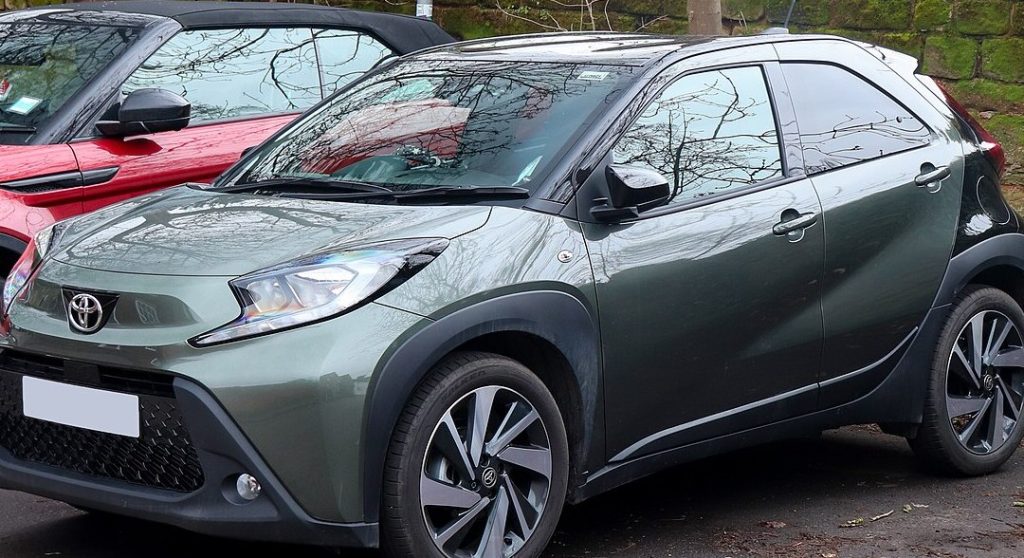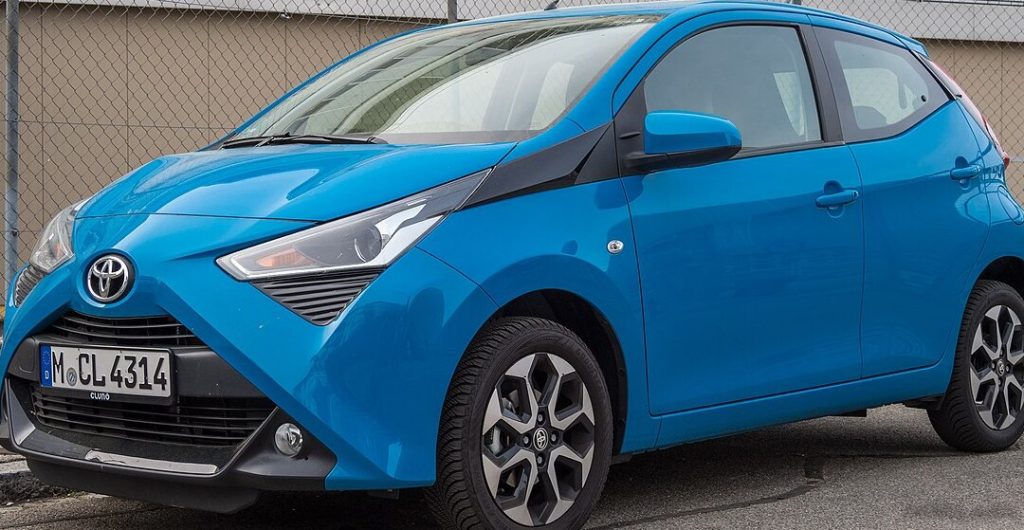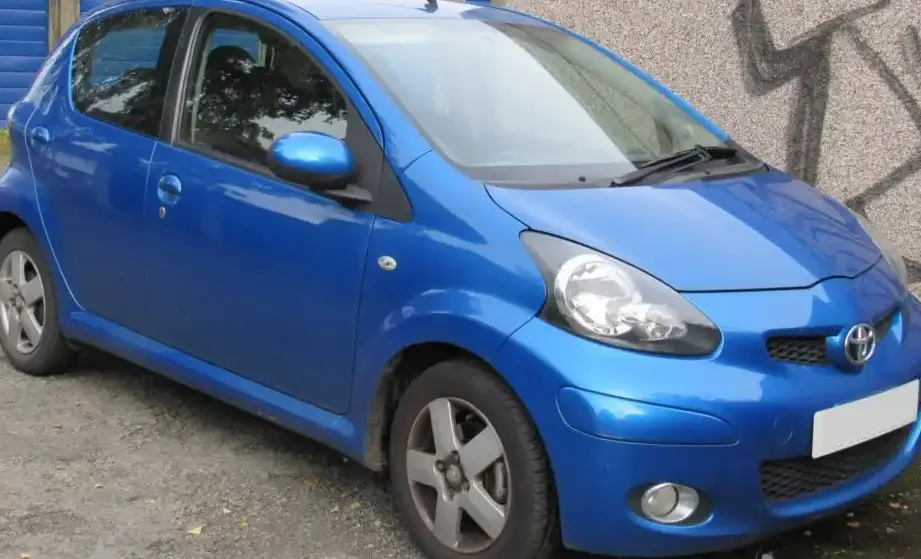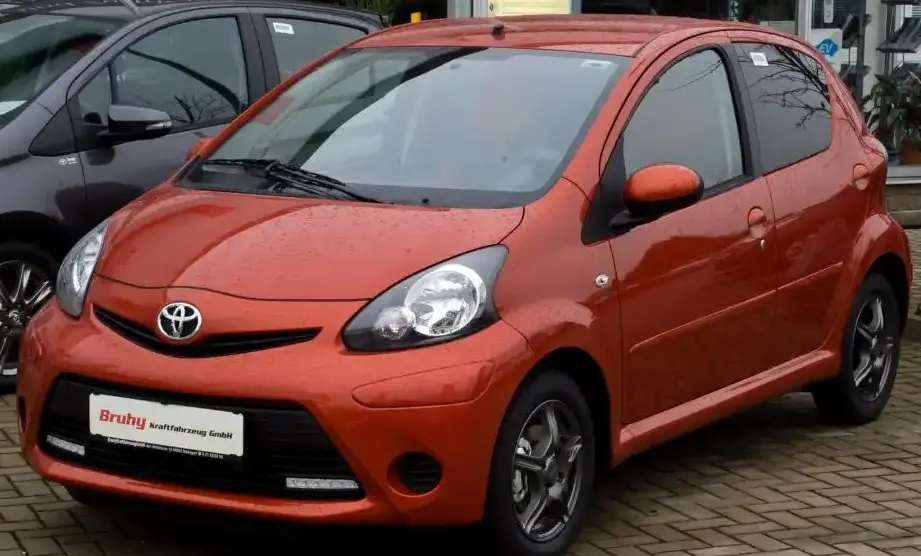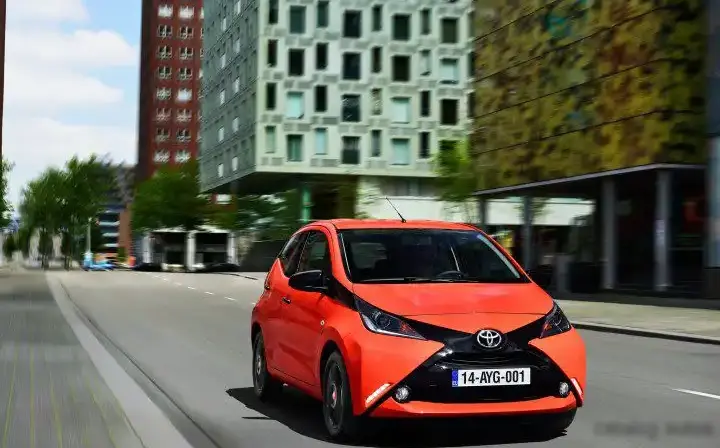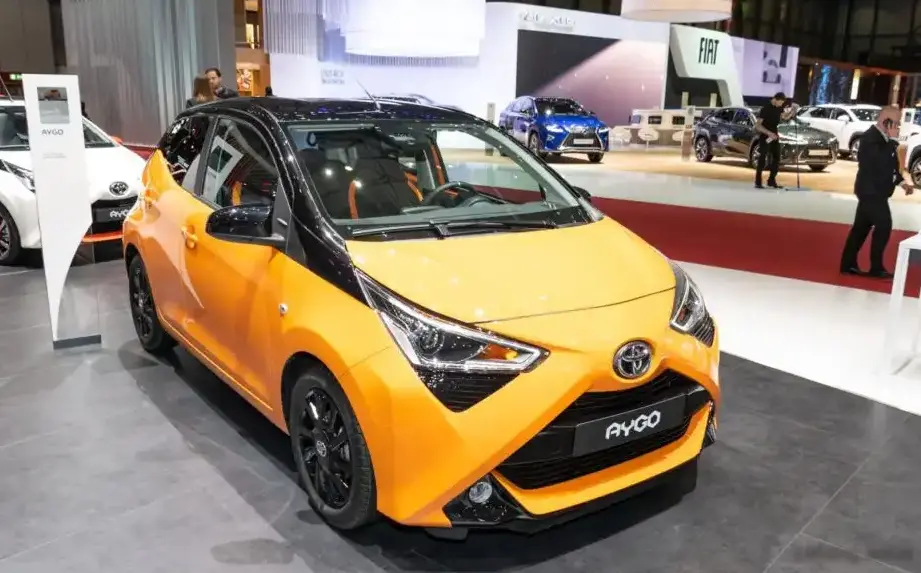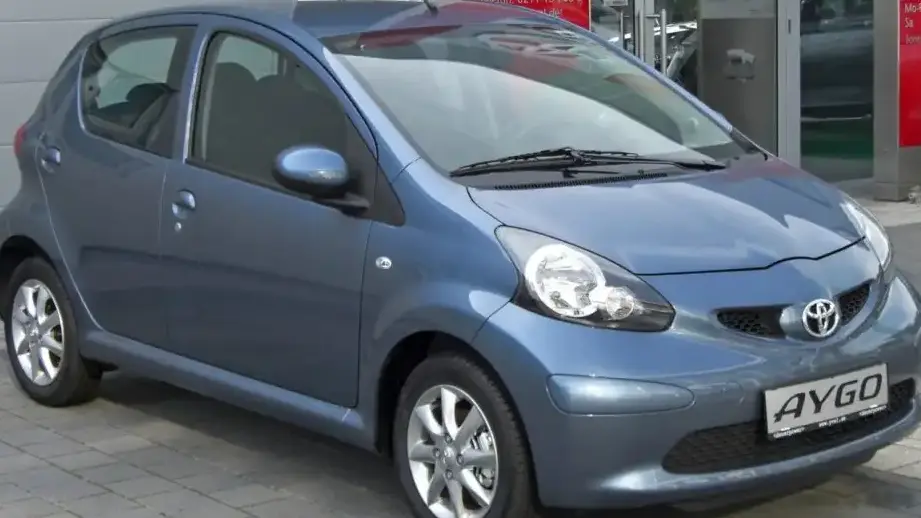
The Toyota Aygo 1.0i 12V, producing 67 horsepower, was a key entry point into the first generation Aygo (WNB1) model range, produced from 2005 to 2009. Positioned as the most affordable variant, it targeted first-time car buyers and those seeking an economical city car. The Aygo, a collaborative effort between Toyota, Peugeot, and Citroën (resulting in the Peugeot 107 and Citroën C1), was designed to offer a practical and budget-friendly alternative in the European microcar segment. This particular 1.0i 12V model played a significant role in establishing the Aygo’s reputation for fuel efficiency and low running costs.
Technical Specifications
| Brand | Toyota |
| Model | Aygo |
| Generation | Aygo (WNB1) |
| Type (Engine) | 1.0i 12V (67 Hp) |
| Start of production | 2005 |
| End of production | 2009 |
| Powertrain Architecture | Internal Combustion Engine |
| Body type | Hatchback |
| Seats | 4 |
| Doors | 5 |
| Fuel consumption (urban) | 4.6 l/100 km (51.1 US mpg, 61.4 UK mpg, 21.7 km/l) |
| Fuel consumption (extra urban) | 3.4 l/100 km (69.2 US mpg, 83.1 UK mpg, 29.4 km/l) |
| Fuel consumption (combined) | 3.8 l/100 km (61.9 US mpg, 74.3 UK mpg, 26.3 km/l) |
| Fuel Type | Petrol (Gasoline) |
| Acceleration 0 – 100 km/h | 14.2 sec |
| Acceleration 0 – 62 mph | 14.2 sec |
| Acceleration 0 – 60 mph | 13.5 sec |
| Maximum speed | 157 km/h (97.56 mph) |
| Weight-to-power ratio | 11.8 kg/Hp |
| Weight-to-torque ratio | 8.5 kg/Nm |
| Power | 67 Hp @ 6000 rpm |
| Power per litre | 67.1 Hp/l |
| Torque | 93 Nm @ 3600 rpm (68.59 lb.-ft. @ 3600 rpm) |
| Engine layout | Front, Transverse |
| Engine Model/Code | 1KR-FE |
| Engine displacement | 998 cm3 (60.9 cu. in.) |
| Number of cylinders | 3 |
| Engine configuration | Inline |
| Cylinder Bore | 71 mm (2.8 in.) |
| Piston Stroke | 84 mm (3.31 in.) |
| Compression ratio | 10.5:1 |
| Number of valves per cylinder | 4 |
| Fuel injection system | Multi-port manifold injection |
| Engine aspiration | Naturally aspirated |
| Valvetrain | DOHC |
| Engine oil capacity | 3.1 l (3.28 US qt, 2.73 UK qt) |
| Coolant capacity | 4 l (4.23 US qt, 3.52 UK qt) |
| Kerb Weight | 790 kg (1741.65 lbs.) |
| Max. weight | 1160 kg (2557.36 lbs.) |
| Max load | 370 kg (815.71 lbs.) |
| Trunk (boot) space – minimum | 139 l (4.91 cu. ft.) |
| Trunk (boot) space – maximum | 751 l (26.52 cu. ft.) |
| Fuel tank capacity | 35 l (9.25 US gal, 7.7 UK gal) |
| Length | 3405 mm (134.06 in.) |
| Width | 1615 mm (63.58 in.) |
| Height | 1465 mm (57.68 in.) |
| Wheelbase | 2340 mm (92.13 in.) |
| Front track | 1420 mm (55.91 in.) |
| Rear track | 1410 mm (55.51 in.) |
| Minimum turning circle | 9.4 m (30.84 ft.) |
| Drivetrain Architecture | Front Wheel Drive |
| Drive wheel | Front wheel drive |
| Number of gears | 5 gears, manual transmission |
| Front suspension | Spring Strut |
| Rear suspension | Torsion |
| Front brakes | Ventilated discs |
| Rear brakes | Drum |
| Assisting systems | ABS (Anti-lock braking system) |
| Steering type | Steering rack and pinion |
| Tires size | 155/65 R14 |
| Wheel rims size | 4.5J x 14 |
Powertrain & Engine Architecture
The heart of the Aygo 1.0i 12V is the 1KR-FE engine, a 998cc inline-three cylinder petrol engine. This engine is characterized by its lightweight construction and relatively simple design, contributing to its fuel efficiency. It utilizes a multi-port fuel injection system and a double overhead camshaft (DOHC) valvetrain with four valves per cylinder. The 1KR-FE engine is known for its durability, though it doesn’t offer particularly high performance. The 5-speed manual transmission was the standard offering for this variant, chosen for its cost-effectiveness and contribution to fuel economy. The transmission’s gear ratios were optimized for city driving, providing adequate acceleration from a standstill but not excelling at higher speeds.
Driving Characteristics
The 67 horsepower and 68.59 lb-ft of torque delivered by the 1.0i 12V engine resulted in modest, but adequate, performance. Acceleration from 0-60 mph took around 13.5 seconds, and the top speed was approximately 97.56 mph. In real-world driving, the Aygo 1.0i 12V felt most comfortable in urban environments. The engine required frequent gear changes to maintain momentum, especially when tackling hills or overtaking. Compared to higher-spec Aygo models with more powerful engines, the 1.0i 12V felt noticeably slower. However, its light weight and nimble handling made it easy to maneuver in tight spaces. The manual transmission provided a direct connection to the engine, allowing for precise control, but it wasn’t particularly sporty.
Equipment & Trim Levels
The Aygo 1.0i 12V typically came with a basic, but functional, level of equipment. Standard features included power steering, central locking, and an immobilizer. Interior upholstery was typically a simple cloth material. Air conditioning, alloy wheels, and electric windows were often offered as optional extras, allowing buyers to customize their vehicle. The dashboard layout was straightforward and easy to use, prioritizing practicality over luxury. The focus was on providing essential features at an affordable price point.
Chassis & Braking
The Aygo’s chassis was designed to be lightweight and cost-effective. It featured a spring strut front suspension and a torsion beam rear suspension. The front brakes were ventilated discs, providing adequate stopping power, while the rear brakes were drums, a cost-saving measure. ABS (Anti-lock Braking System) was standard, enhancing safety. The relatively narrow tires (155/65 R14) contributed to fuel efficiency but offered limited grip. The suspension setup prioritized ride comfort over sporty handling, providing a reasonably smooth ride on typical urban roads.
Market Reception & Comparison
The Toyota Aygo 1.0i 12V was generally well-received by critics as an affordable and economical city car. Its fuel efficiency was a major selling point, and its compact size made it easy to park and maneuver in urban environments. Compared to other trims in the Aygo lineup, the 1.0i 12V offered the lowest price of entry, making it attractive to budget-conscious buyers. However, its lack of power and basic equipment level were noted as drawbacks. Against competitors like the Peugeot 107 and Citroën C1 (which shared the same platform and engine), the Aygo 1.0i 12V was largely comparable in terms of performance and fuel economy, with brand preference often being the deciding factor.
Legacy
The 1.0i 12V powertrain in the first-generation Toyota Aygo has proven to be remarkably reliable over the long term. The 1KR-FE engine is known for its durability and relatively low maintenance costs. In the used car market, Aygo 1.0i 12V models are still relatively common and can be found at very affordable prices. While they may not offer the performance or features of more modern vehicles, they remain a practical and economical option for those seeking a basic and reliable city car. The Aygo’s success helped establish Toyota as a major player in the European microcar segment, paving the way for subsequent generations of the model.