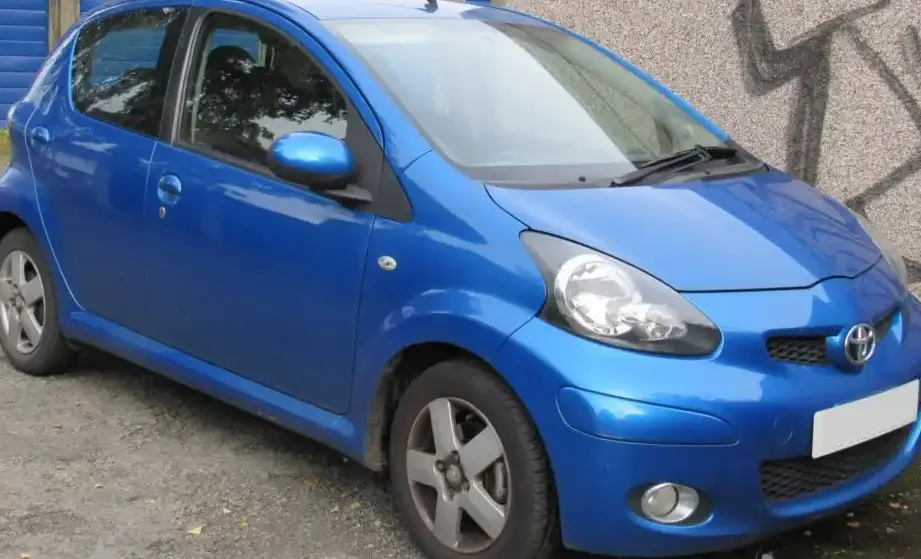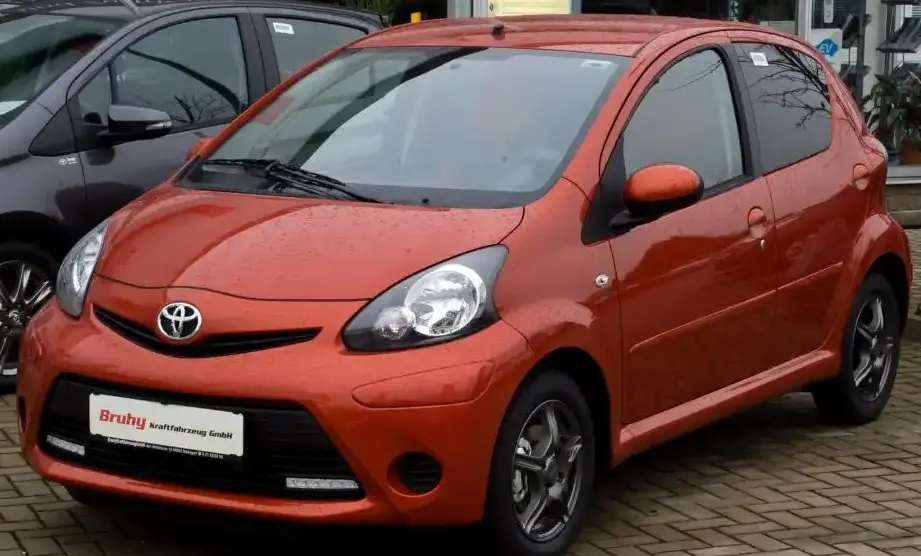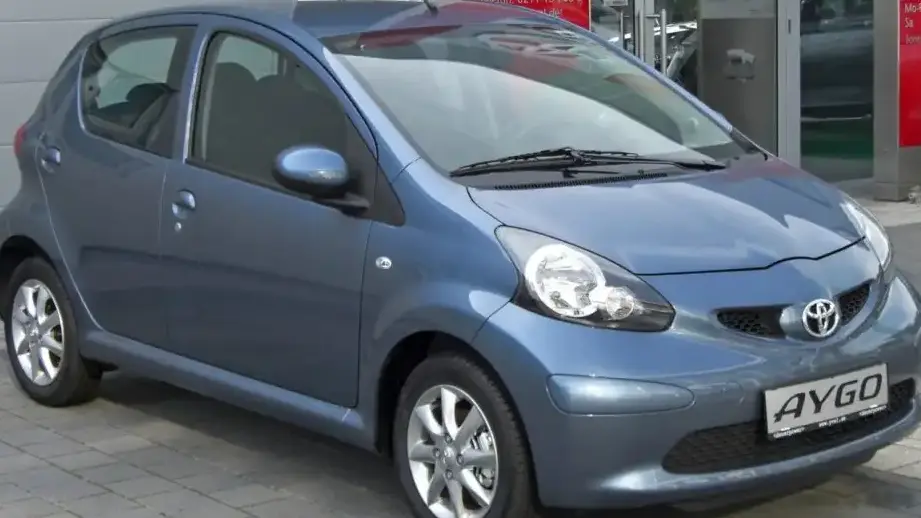
The Toyota Aygo 1.0i 12V (67 hp) Automatic, produced between 2005 and 2009, represents an entry-level offering within the first generation (P10) Aygo range. Developed as part of a joint venture between Toyota, Peugeot, and Citroën – resulting in the Peugeot 107 and Citroën C1 – the Aygo was designed as an affordable and practical city car primarily targeted at the European market. This particular variant, combining the 1.0-liter engine with a four-speed automatic transmission, aimed to provide ease of use for urban drivers, albeit at the expense of outright performance. It occupied the base trim level, focusing on affordability and basic transportation needs.
Technical Specifications
| Brand | Toyota |
| Model | Aygo |
| Generation | Aygo (P10) |
| Type (Engine) | 1.0i 12V (67 Hp) Automatic |
| Start of production | 2005 |
| End of production | 2009 |
| Powertrain Architecture | Internal Combustion Engine |
| Body type | Hatchback |
| Seats | 4 |
| Doors | 5 |
| Fuel consumption (urban) | 4.7 l/100 km (50 US mpg, 60.1 UK mpg, 21.3 km/l) |
| Fuel consumption (extra urban) | 3.4 l/100 km (69.2 US mpg, 83.1 UK mpg, 29.4 km/l) |
| Fuel consumption (combined) | 3.8 l/100 km (61.9 US mpg, 74.3 UK mpg, 26.3 km/l) |
| Fuel Type | Petrol (Gasoline) |
| Acceleration 0 – 100 km/h | 14.9 sec |
| Acceleration 0 – 62 mph | 14.9 sec |
| Acceleration 0 – 60 mph | 14.2 sec |
| Maximum speed | 157 km/h (97.56 mph) |
| Weight-to-power ratio | 11.8 kg/Hp |
| Weight-to-torque ratio | 8.5 kg/Nm |
| Power | 67 Hp @ 6000 rpm |
| Power per litre | 67.1 Hp/l |
| Torque | 93 Nm @ 3600 rpm (68.59 lb.-ft. @ 3600 rpm) |
| Engine layout | Front, Transverse |
| Engine Model/Code | 1KR-FE |
| Engine displacement | 998 cm3 (60.9 cu. in.) |
| Number of cylinders | 3 |
| Engine configuration | Inline |
| Cylinder Bore | 71 mm (2.8 in.) |
| Piston Stroke | 84 mm (3.31 in.) |
| Compression ratio | 10.5:1 |
| Number of valves per cylinder | 4 |
| Fuel injection system | Multi-port manifold injection |
| Engine aspiration | Naturally aspirated |
| Valvetrain | DOHC |
| Engine oil capacity | 3.1 l (3.28 US qt, 2.73 UK qt) |
| Coolant capacity | 4 l (4.23 US qt, 3.52 UK qt) |
| Kerb Weight | 790 kg (1741.65 lbs.) |
| Max. weight | 1160 kg (2557.36 lbs.) |
| Max load | 370 kg (815.71 lbs.) |
| Trunk (boot) space – minimum | 139 l (4.91 cu. ft.) |
| Trunk (boot) space – maximum | 751 l (26.52 cu. ft.) |
| Fuel tank capacity | 35 l (9.25 US gal, 7.7 UK gal) |
| Length | 3405 mm (134.06 in.) |
| Width | 1615 mm (63.58 in.) |
| Height | 1465 mm (57.68 in.) |
| Wheelbase | 2340 mm (92.13 in.) |
| Front track | 1420 mm (55.91 in.) |
| Rear track | 1410 mm (55.51 in.) |
| Minimum turning circle | 9.4 m (30.84 ft.) |
| Drivetrain | Front wheel drive |
| Number of gears | 5 |
| Gearbox type | Automatic transmission |
| Front suspension | Spring Strut |
| Rear suspension | Torsion |
| Front brakes | Ventilated discs |
| Rear brakes | Drum |
| Assisting systems | ABS (Anti-lock braking system) |
| Steering type | Steering rack and pinion |
| Tires size | 155/65 R14 |
| Wheel rims size | 4.5J x 14 |
Powertrain & Engine Architecture
The Aygo 1.0i Automatic is powered by Toyota’s 1KR-FE engine, a 998cc three-cylinder petrol engine. This engine is characterized by its lightweight construction and relatively simple design, prioritizing fuel efficiency over outright power. The 1KR-FE utilizes a multi-point fuel injection system and a double overhead camshaft (DOHC) valvetrain with four valves per cylinder. The engine’s 10.5:1 compression ratio contributes to its efficiency. Paired with this engine is a four-speed automatic transmission. This transmission, while providing convenience, is not known for its responsiveness or efficiency compared to manual counterparts. It features standard torque converter technology and relatively wide gear ratios, optimized for smooth, low-speed operation rather than spirited acceleration.
Driving Characteristics
The 1.0i Automatic Aygo delivers modest performance. With only 67 horsepower, acceleration is slow, taking approximately 14.9 seconds to reach 62 mph (100 km/h). The automatic transmission further diminishes performance, as it lacks the direct control and efficiency of a manual gearbox. Gear changes are noticeable, and the engine can feel strained during uphill climbs or when overtaking. However, the car excels in urban environments, where its compact size and light steering make it easy to maneuver. The wide gear ratios of the automatic transmission prioritize fuel economy over rapid acceleration, making it suitable for city driving. Compared to the five-speed manual version, the automatic suffers a noticeable performance penalty and slightly reduced fuel economy.
Equipment & Trim Levels
The 1.0i Automatic Aygo typically came with a basic level of equipment. Standard features included power steering, central locking, electric front windows, and an ABS anti-lock braking system. Interior upholstery was typically a simple cloth material. Optional extras included air conditioning, alloy wheels, and a radio/CD player. The dashboard layout was functional and straightforward, prioritizing usability over aesthetics. This trim level was designed to be the most affordable option, focusing on essential features for basic transportation.
Chassis & Braking
The Aygo utilizes a front-wheel-drive layout with a simple suspension setup. The front suspension consists of MacPherson strut springs, while the rear employs a torsion beam axle. This configuration provides a comfortable ride quality, particularly on smooth roads. Braking duties are handled by ventilated discs at the front and drum brakes at the rear. The ABS system enhances braking performance and stability, especially in wet or slippery conditions. The relatively light weight of the Aygo (790 kg / 1741.65 lbs) helps to compensate for the modest braking power.
Market Reception & Comparison
The Aygo 1.0i Automatic was generally well-received as an affordable and practical city car. Critics praised its fuel efficiency and ease of use, but noted its lack of performance. Compared to other trims in the Aygo lineup, such as the manual transmission versions or those with optional extras, the automatic variant was considered less engaging to drive. However, it appealed to drivers who prioritized convenience and ease of operation over sporty handling. The Peugeot 107 and Citroën C1, being mechanically identical, offered similar driving experiences and market positioning.
Legacy
The 1KR-FE engine, while not known for its longevity or complexity, has proven to be reasonably reliable in the Aygo. Common issues are typically related to wear and tear on components such as the timing chain and water pump. The four-speed automatic transmission, while generally dependable, can be prone to occasional issues with solenoid valves or torque converter failure. Today, the Aygo 1.0i Automatic represents an affordable entry point into city car ownership. Its low running costs and simple mechanicals make it a popular choice for first-time drivers or those seeking a basic, reliable vehicle for urban commuting. However, potential buyers should be aware of its limited performance and the potential for age-related maintenance issues.