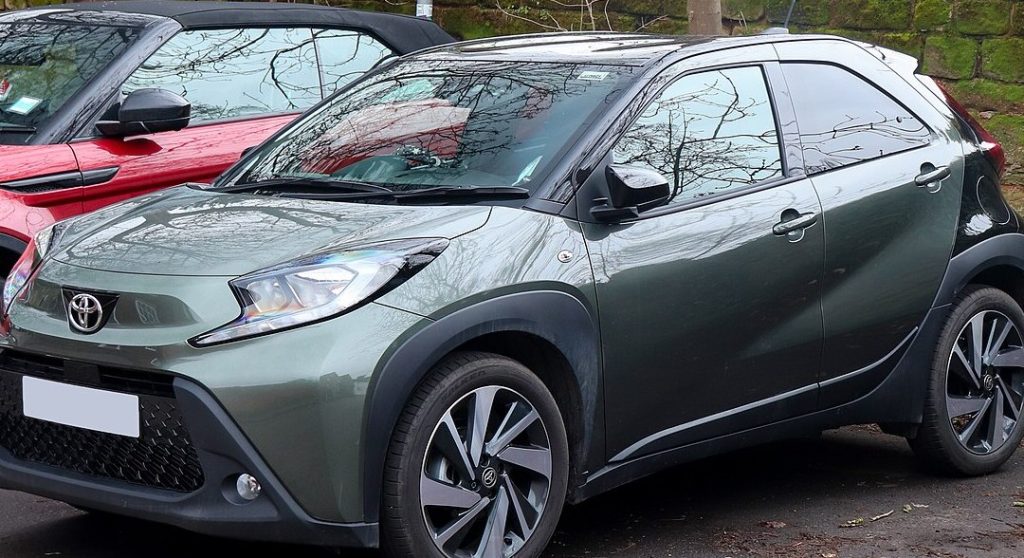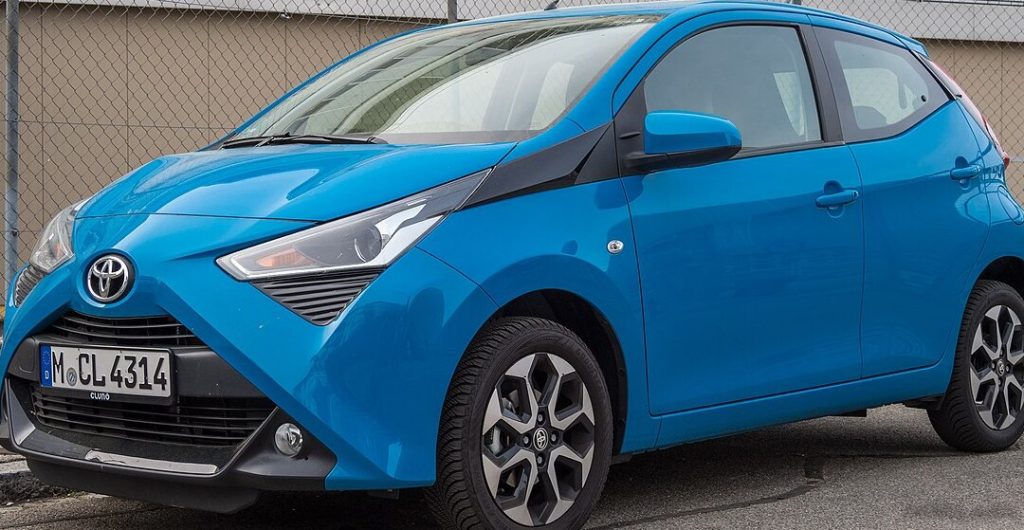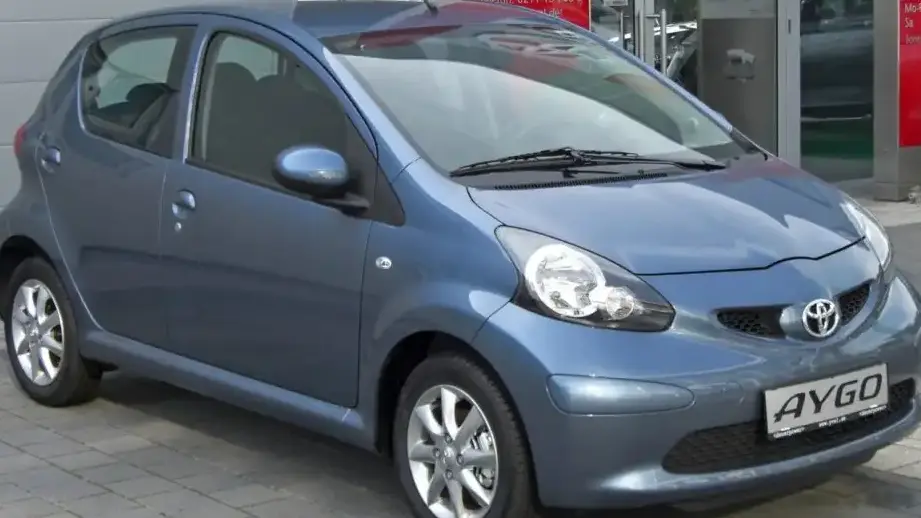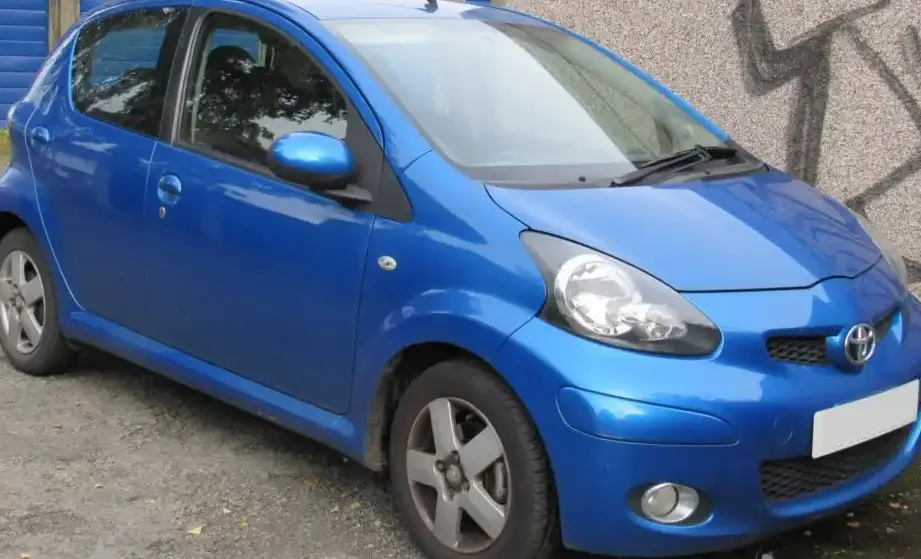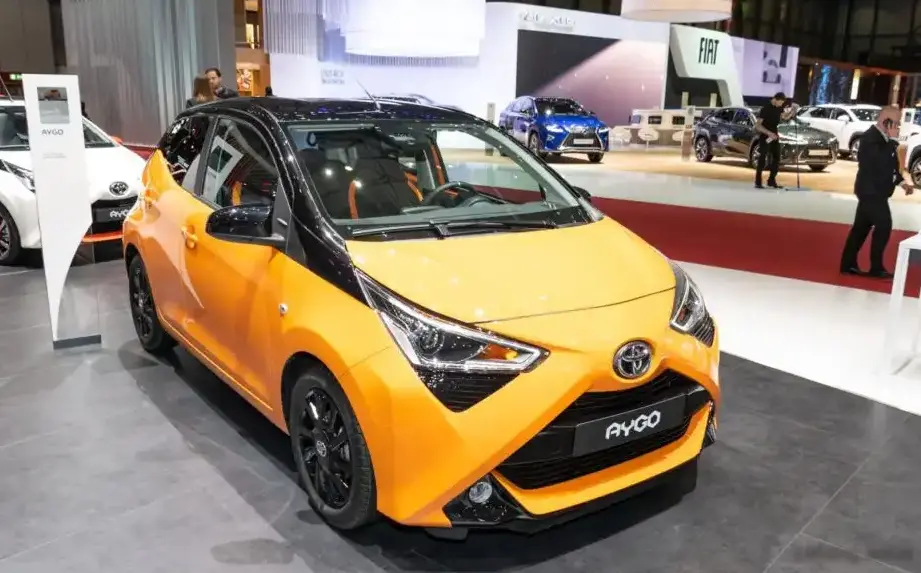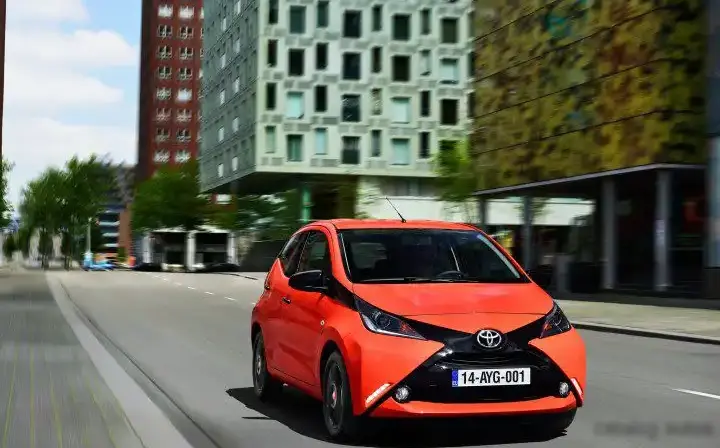
The Toyota Aygo II 1.0 VVT-i (69 hp) represents an entry-level offering within the second generation Aygo (XP10) model range, produced from 2014 to 2018. Positioned as a city car, the Aygo II was developed as part of a joint venture with Peugeot and Citroën, sharing its platform and many components with the Peugeot 108 and Citroën C1. This collaborative effort aimed to reduce development costs and offer a competitive product in the burgeoning European microcar segment. The 1.0 VVT-i variant served as the foundation of the lineup, prioritizing fuel efficiency and affordability over outright performance. It was primarily marketed towards young drivers, urban commuters, and those seeking a low-cost vehicle for short journeys.
Technical Specifications
| Brand | Toyota |
| Model | Aygo |
| Generation | Aygo II |
| Type (Engine) | 1.0 VVT-i (69 Hp) |
| Start of production | 2014 |
| End of production | 2018 |
| Powertrain Architecture | Internal Combustion engine |
| Body type | Hatchback |
| Seats | 4 |
| Doors | 3/5 |
| Fuel consumption (urban) | 5 l/100 km (47 US mpg, 56.5 UK mpg, 20 km/l) |
| Fuel consumption (extra urban) | 3.6 l/100 km (65.3 US mpg, 78.5 UK mpg, 27.8 km/l) |
| Fuel consumption (combined) | 4.1 l/100 km (57.4 US mpg, 68.9 UK mpg, 24.4 km/l) |
| CO2 emissions | 95 g/km |
| Fuel Type | Petrol (Gasoline) |
| Acceleration 0 – 100 km/h | 14.2 sec |
| Acceleration 0 – 62 mph | 14.2 sec |
| Acceleration 0 – 60 mph | 13.5 sec |
| Maximum speed | 160 km/h (99.42 mph) |
| Emission standard | Euro 5 J |
| Power | 69 Hp @ 6000 rpm |
| Power per litre | 69.1 Hp/l |
| Torque | 95 Nm @ 4300 rpm (70.07 lb.-ft. @ 4300 rpm) |
| Engine layout | Front, Transverse |
| Engine Model/Code | 1KR-FE |
| Engine displacement | 998 cm3 (60.9 cu. in.) |
| Number of cylinders | 3 |
| Engine configuration | Inline |
| Cylinder Bore | 71 mm (2.8 in.) |
| Piston Stroke | 84 mm (3.31 in.) |
| Compression ratio | 11.5:1 |
| Number of valves per cylinder | 4 |
| Fuel injection system | Multi-port manifold injection |
| Engine aspiration | Naturally aspirated engine |
| Valvetrain | DOHC |
| Engine oil capacity | 2.8 l (2.96 US qt | 2.46 UK qt) |
| Coolant | 3.6 l (3.8 US qt | 3.17 UK qt) |
| Trunk (boot) space (minimum) | 168 l (5.93 cu. ft.) |
| Fuel tank capacity | 35 l (9.25 US gal | 7.7 UK gal) |
| Max. roof load | 50 kg (110.23 lbs.) |
| Length | 3455 mm (136.02 in.) |
| Width | 1615 mm (63.58 in.) |
| Height | 1460 mm (57.48 in.) |
| Wheelbase | 2340 mm (92.13 in.) |
| Front track | 1430 mm (56.3 in.) |
| Rear track | 1420 mm (55.91 in.) |
| Drag coefficient (Cd) | 0.29 |
| Minimum turning circle | 9.6 m (31.5 ft.) |
| Drivetrain Architecture | Front wheel drive |
| Number of gears | 5 |
| Gearbox type | Manual transmission |
| Front suspension | Independent type McPherson |
| Rear suspension | Semi-independent, coil spring |
| Front brakes | Ventilated discs |
| Rear brakes | Drum |
| Assisting systems | ABS (Anti-lock braking system) |
| Steering type | Steering rack and pinion |
Introduction
The Toyota Aygo II 1.0 VVT-i (69 hp) is a supermini hatchback designed for urban environments. Introduced in 2014, it represents the second generation of the Aygo, a model initially launched in 2005. Built on the Toyota New Global Architecture (TNGA) ‘B’ platform – shared with the Peugeot 108 and Citroën C1 – the Aygo II aimed to provide a more refined and efficient driving experience than its predecessor. The 69 hp variant, equipped with a five-speed manual transmission, served as the entry point to the Aygo II range, offering a balance of affordability and practicality. Both 3-door and 5-door body styles were available.
Powertrain & Engine Architecture
At the heart of the Aygo II 1.0 VVT-i is the 1KR-FE engine, a 998 cc inline-three cylinder petrol engine. This engine utilizes Toyota’s Variable Valve Timing-intelligent (VVT-i) technology, which optimizes valve timing based on engine speed and load to improve fuel efficiency and power delivery. The 1KR-FE employs multi-point fuel injection and a compression ratio of 11.5:1. The engine is naturally aspirated, meaning it does not utilize a turbocharger or supercharger. The five-speed manual transmission is a conventional setup, offering a straightforward driving experience. Gear ratios are tuned for maximizing fuel economy rather than providing rapid acceleration. The transmission is known for its light shift action, but the long gearing can feel sluggish when attempting to overtake or climb hills.
Driving Characteristics
The Aygo II 1.0 VVT-i delivers modest performance, prioritizing fuel economy over outright speed. With 69 horsepower and 95 Nm of torque, acceleration from 0 to 60 mph takes approximately 13.5 seconds, and top speed is around 99 mph. The engine feels strained at higher speeds, and the car is best suited for city driving and short trips. The light weight of the vehicle (around 985 kg) helps to mitigate the lack of power. The steering is light and precise, making it easy to maneuver in tight spaces. The suspension is tuned for comfort, absorbing bumps and imperfections in the road reasonably well, although it can feel somewhat bouncy on uneven surfaces. The manual transmission provides a direct connection to the engine, but the long gear ratios require frequent shifting to maintain momentum.
Equipment & Trim Levels
The base-level Aygo II 1.0 VVT-i typically came equipped with features such as power steering, central locking, electric front windows, and an audio system with USB connectivity. Safety features included ABS, Vehicle Stability Control (VSC), and multiple airbags. Higher trim levels, such as the x-wave and x-pression, added features like air conditioning, alloy wheels, a touchscreen infotainment system, and rear parking sensors. Interior upholstery was typically cloth, with a simple and functional dashboard layout. Optional extras included paint customization options (allowing for different body and roof colors) and a navigation system.
Chassis & Braking
The Aygo II utilizes a McPherson strut front suspension and a semi-independent torsion beam rear suspension. This setup provides a good balance of comfort and handling for a city car. The front brakes are ventilated discs, while the rear brakes are drums. This configuration is typical for vehicles in this weight class, prioritizing cost-effectiveness. The ABS system helps to prevent wheel lockup during hard braking, enhancing safety. The steering is a rack and pinion system, providing precise and responsive steering feel.
Market Reception & Comparison
The Toyota Aygo II 1.0 VVT-i was generally well-received by critics for its fuel efficiency, affordability, and ease of driving. However, its lack of power was a common criticism. Compared to other trims in the Aygo lineup, such as the 1.0 VVT-i with the automated manual transmission (MultiMode), the manual version offered a more engaging driving experience but required more driver involvement. Against competitors like the Peugeot 108 and Citroën C1 (which shared the same powertrain), the Aygo II distinguished itself through Toyota’s reputation for reliability and build quality. Fuel economy figures consistently ranked among the best in its class.
Legacy
The Toyota Aygo II 1.0 VVT-i has proven to be a reliable and economical city car. The 1KR-FE engine is known for its durability and low running costs. On the used car market, these models remain popular due to their affordability and practicality. While not a performance car, the Aygo II 1.0 VVT-i provides a sensible and efficient transportation solution for urban drivers. Maintenance is generally straightforward and inexpensive, making it an attractive option for first-time car buyers or those seeking a low-cost vehicle.