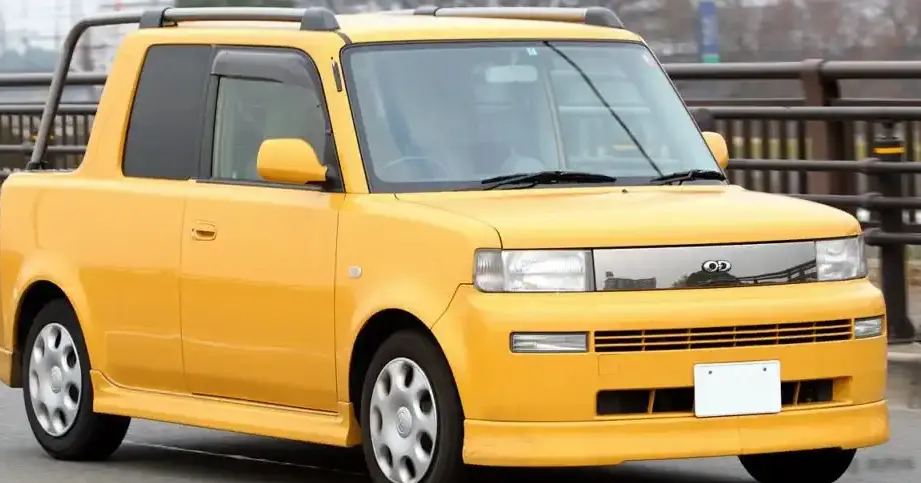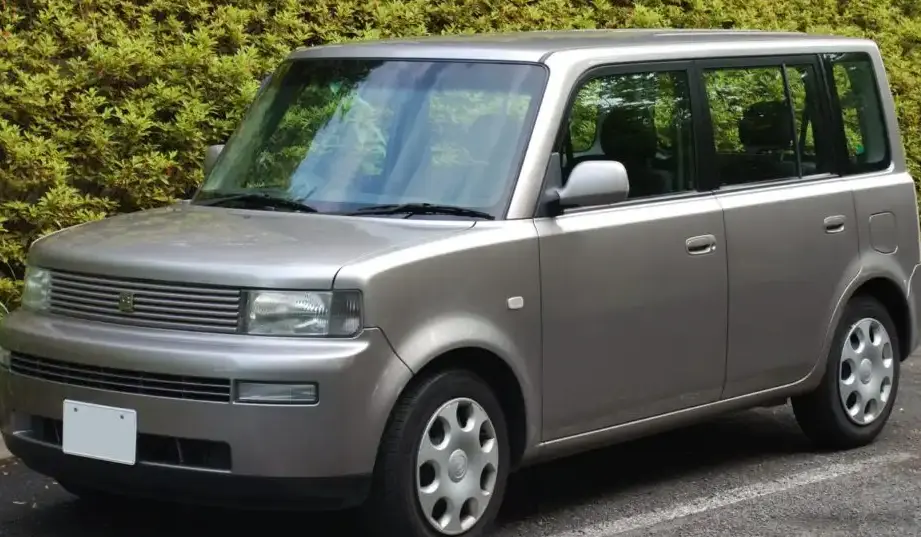
The Toyota bB 1.3 i 16V, produced between 2000 and 2005, represents an entry-level variant within the second generation of Toyota’s distinctive boxy microvan, known as the bB. This model, part of the XP30 series, was primarily marketed in Japan, catering to a demographic seeking a practical, stylish, and compact vehicle for urban environments. The 1.3L engine and automatic transmission combination aimed to provide affordability and ease of use, making it a popular choice for first-time car buyers and those prioritizing convenience over outright performance. It sat below the 1.5L variants in the lineup, offering a more economical option.
Technical Specifications
| Brand | Toyota |
| Model | bB |
| Generation | bB (XP30) |
| Type (Engine) | 1.3 i 16V (88 Hp) |
| Start of production | 2000 |
| End of production | 2005 |
| Powertrain Architecture | Internal Combustion engine |
| Body type | Minivan |
| Seats | 5 |
| Doors | 5 |
| Fuel consumption (urban) | 9 l/100 km (26.1 US mpg) |
| Fuel consumption (extra urban) | 6 l/100 km (39.2 US mpg) |
| Fuel Type | Petrol (Gasoline) |
| Acceleration 0 – 100 km/h | 14 sec |
| Acceleration 0 – 62 mph | 14 sec |
| Acceleration 0 – 60 mph | 13.3 sec |
| Maximum speed | 155 km/h (96.31 mph) |
| Weight-to-power ratio | 11.7 kg/Hp |
| Weight-to-torque ratio | 8.4 kg/Nm |
| Power | 88 Hp @ 6000 rpm |
| Power per litre | 67.7 Hp/l |
| Torque | 123 Nm @ 4400 rpm (90.72 lb.-ft. @ 4400 rpm) |
| Engine layout | Front, Transverse |
| Engine Model/Code | 2NZ-FE |
| Engine displacement | 1299 cm3 (79.27 cu. in.) |
| Number of cylinders | 4 |
| Engine configuration | Inline |
| Cylinder Bore | 75 mm (2.95 in.) |
| Piston Stroke | 73.5 mm (2.89 in.) |
| Compression ratio | 10.5:1 |
| Number of valves per cylinder | 4 |
| Fuel injection system | Multi-port manifold injection |
| Engine aspiration | Naturally aspirated engine |
| Valvetrain | DOHC |
| Engine oil capacity | 3.7 l (3.91 US qt | 3.26 UK qt) |
| Coolant capacity | 4.4 l (4.65 US qt | 3.87 UK qt) |
| Kerb Weight | 1030 kg (2270.76 lbs.) |
| Max. weight | 1305 kg (2877.03 lbs.) |
| Max load | 275 kg (606.27 lbs.) |
| Fuel tank capacity | 45 l (11.89 US gal | 9.9 UK gal) |
| Length | 3825 mm (150.59 in.) |
| Width | 1690 mm (66.54 in.) |
| Height | 1640 mm (64.57 in.) |
| Wheelbase | 2500 mm (98.43 in.) |
| Front track | 1450 mm (57.09 in.) |
| Rear track | 1435 mm (56.5 in.) |
| Drivetrain Architecture | Front wheel drive |
| Number of gears | 4 |
| Gearbox type | Automatic transmission |
| Front suspension | Wishbone |
| Rear suspension | Coil spring |
| Front brakes | Ventilated discs |
| Rear brakes | Drum |
| Assisting systems | ABS (Anti-lock braking system) |
| Steering type | Steering rack and pinion |
| Power steering | Hydraulic Steering |
| Tires size | 185/65 R15 S |
Introduction
The Toyota bB, launched in 2000 as a second-generation model (XP30), was a key player in the burgeoning Japanese “kei car” inspired segment of compact, boxy vehicles. While not a kei car itself due to its dimensions exceeding the kei car regulations, it adopted the aesthetic and practical benefits of the class. The 1.3 i 16V variant, powered by the 2NZ-FE engine and paired with a four-speed automatic transmission, was positioned as the entry point to the bB range. It aimed to provide affordable transportation with a focus on fuel efficiency and ease of driving, particularly appealing to younger drivers and those in urban settings. The bB’s distinctive styling, resembling a miniature crossover, quickly gained popularity, and it became a cultural icon in Japan.
Powertrain & Engine Architecture
The heart of the bB 1.3 i 16V is the 2NZ-FE, a 1.3-liter inline-four cylinder engine. This engine utilizes a multi-port fuel injection system, delivering fuel directly into the intake ports, optimizing combustion efficiency. The engine features a double overhead camshaft (DOHC) valvetrain, operating 16 valves (four per cylinder) to enhance airflow and improve performance. The 2NZ-FE is known for its reliability and relatively simple design. The four-speed automatic transmission, a common choice for this segment, was selected for its smooth operation and ease of use. While not offering the sporty engagement of a manual transmission, it prioritized convenience for everyday driving. The transmission’s gear ratios were tuned for fuel economy and acceptable acceleration in urban conditions.
Driving Characteristics
The 1.3L engine and automatic transmission combination in the bB delivered modest performance. Acceleration from 0-60 mph took approximately 13.3 seconds, and top speed was limited to 96.31 mph. The focus wasn’t on speed, but on usability. The automatic transmission provided smooth, if somewhat leisurely, gear changes. Compared to the 1.5L variants, the 1.3L felt noticeably less powerful, particularly when fully loaded or tackling inclines. However, the lighter engine weight contributed to slightly better fuel economy. The steering was light and responsive, making it easy to maneuver in tight city streets. The suspension, tuned for comfort, absorbed bumps reasonably well, providing a pleasant ride quality.
Equipment & Trim Levels
The bB 1.3 i 16V typically came equipped with basic amenities. Standard features included power steering, air conditioning, and a basic audio system. Interior upholstery was typically cloth, with a simple, functional dashboard layout. Optional extras included alloy wheels, upgraded audio systems, and power windows. Higher trim levels within the bB range offered more luxurious features, such as leather upholstery and a sunroof, but these were not typically found on the base 1.3L model. The interior design prioritized space and practicality, with a relatively flat floor and ample headroom.
Chassis & Braking
The bB 1.3 i 16V utilized a front-wheel-drive layout with a wishbone front suspension and a coil spring rear suspension. This configuration provided a comfortable ride and predictable handling. The front brakes were ventilated discs, offering adequate stopping power, while the rear brakes were drums, a cost-saving measure common in this class of vehicle. Anti-lock Braking System (ABS) was standard, enhancing safety by preventing wheel lockup during hard braking. The chassis was designed to be lightweight, contributing to fuel efficiency and maneuverability.
Market Reception & Comparison
The Toyota bB 1.3 i 16V was generally well-received in the Japanese market as an affordable and practical urban vehicle. Critics praised its distinctive styling and spacious interior. However, the 1.3L engine was often criticized for its lack of power, particularly when compared to the 1.5L variants. Fuel economy was a strong point, and the automatic transmission was appreciated for its ease of use. Compared to competitors like the Honda Fit (Jazz), the bB offered a more unique and stylish design, but the Fit often provided slightly better performance and handling. The bB’s focus was more on individuality and practicality than outright driving dynamics.
Legacy
The Toyota bB, including the 1.3 i 16V variant, has proven to be a reliable and durable vehicle. The 2NZ-FE engine is known for its longevity, and the automatic transmission, while not particularly sophisticated, is generally dependable. In the used car market, the bB remains a popular choice for those seeking an affordable and distinctive vehicle. Its unique styling and practical interior continue to appeal to a wide range of buyers. While not a performance car, the 1.3L automatic version offers a comfortable and economical driving experience, making it a viable option for urban commuting and everyday transportation. Parts availability remains good, contributing to its continued appeal and relatively low maintenance costs.