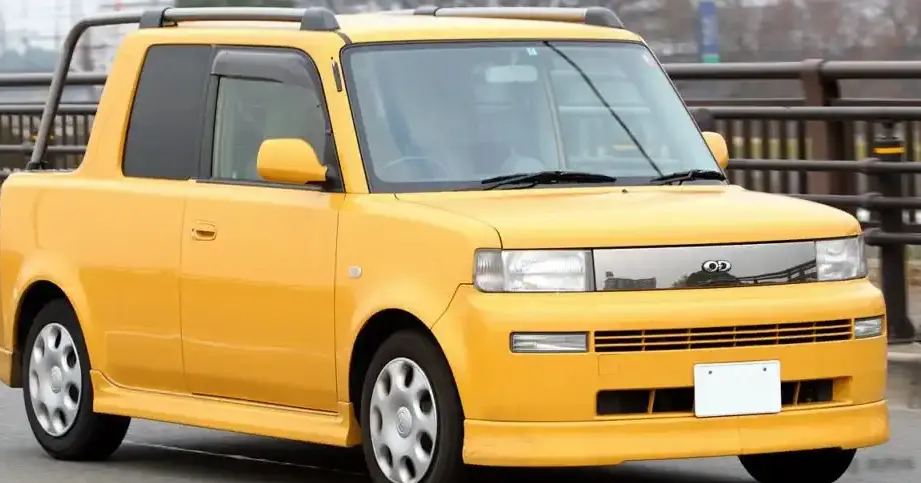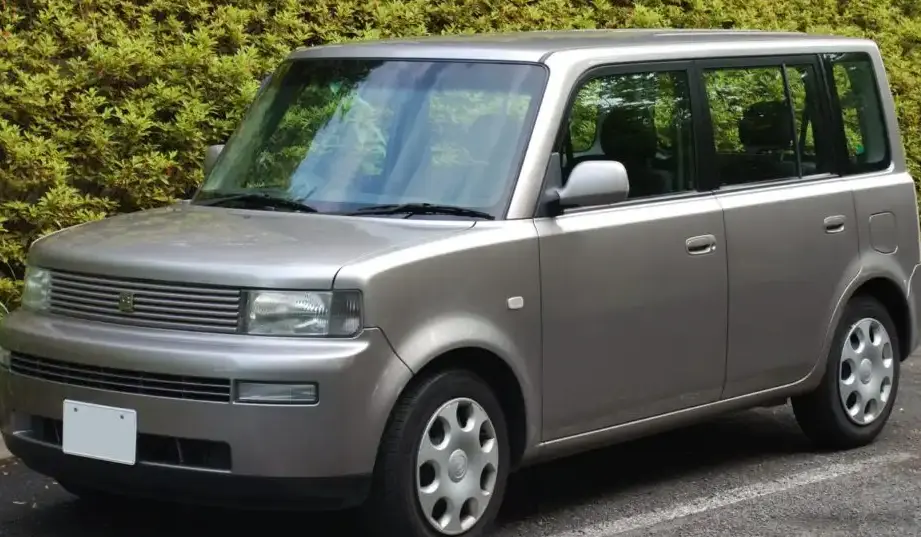
The Toyota bB 1.5 i 16V, producing 105 horsepower and equipped with a four-wheel drive system, was a distinctive offering within the second generation of the bB (also known as the Daihatsu Boon in some markets). Produced between 2000 and 2005, this variant occupied a unique position in Toyota’s lineup, appealing to a demographic seeking a compact, versatile, and stylish vehicle. The bB, overall, was designed to bridge the gap between a traditional hatchback and a small MPV, offering a spacious interior within a relatively small footprint. This particular 1.5L 4WD automatic configuration was aimed at buyers prioritizing ease of use and all-weather capability over outright performance.
Technical Specifications
| Brand | Toyota |
| Model | bB |
| Generation | bB |
| Type (Engine) | 1.5 i 16V (105 Hp) 4WD |
| Start of production | 2000 |
| End of production | 2005 |
| Powertrain Architecture | Internal Combustion engine |
| Body type | Minivan |
| Seats | 5 |
| Doors | 5 |
| Fuel consumption (urban) | 10 l/100 km (23.5 US mpg) |
| Fuel consumption (extra urban) | 6 l/100 km (39.2 US mpg) |
| Fuel Type | Petrol (Gasoline) |
| Maximum speed | 175 km/h (108.74 mph) |
| Weight-to-power ratio | 9.9 kg/Hp |
| Weight-to-torque ratio | 7.5 kg/Nm |
| Power | 105 Hp @ 6000 rpm |
| Power per litre | 70.2 Hp/l |
| Torque | 138 Nm @ 4200 rpm (101.78 lb.-ft. @ 4200 rpm) |
| Engine layout | Front, Transverse |
| Engine Model/Code | 1NZ-FE |
| Engine displacement | 1496 cm3 (91.29 cu. in.) |
| Number of cylinders | 4 |
| Engine configuration | Inline |
| Cylinder Bore | 75 mm (2.95 in.) |
| Piston Stroke | 84.7 mm (3.33 in.) |
| Compression ratio | 10.5:1 |
| Number of valves per cylinder | 4 |
| Fuel injection system | Multi-port manifold injection |
| Engine aspiration | Naturally aspirated engine |
| Valvetrain | DOHC |
| Engine oil capacity | 3.7 l (3.91 US qt | 3.26 UK qt) |
| Coolant | 4.3 l (4.54 US qt | 3.78 UK qt) |
| Kerb Weight | 1040 kg (2292.81 lbs.) |
| Fuel tank capacity | 45 l (11.89 US gal | 9.9 UK gal) |
| Length | 3825 mm (150.59 in.) |
| Width | 1690 mm (66.54 in.) |
| Height | 1640 mm (64.57 in.) |
| Wheelbase | 2500 mm (98.43 in.) |
| Front track | 1450 mm (57.09 in.) |
| Rear track | 1435 mm (56.5 in.) |
| Drive wheel | All wheel drive (4×4) |
| Number of gears and type of gearbox | 4 gears, automatic transmission |
| Front suspension | Wishbone |
| Rear suspension | Coil spring |
| Front brakes | Ventilated discs |
| Rear brakes | Drum |
| Assisting systems | ABS (Anti-lock braking system) |
| Steering type | Steering rack and pinion |
| Power steering | Hydraulic Steering |
| Tires size | 185/65 R15 |
Powertrain & Engine Architecture
The heart of the bB 1.5 i 16V is the 1NZ-FE engine, a 1.5-liter inline-four cylinder gasoline engine. This engine is known for its reliability and fuel efficiency, utilizing a multi-port fuel injection system and a double overhead camshaft (DOHC) valvetrain. The 1NZ-FE is a naturally aspirated engine, meaning it doesn’t employ a turbocharger or supercharger. This contributes to its smooth, predictable power delivery, albeit at the expense of peak horsepower. The engine produces 105 hp at 6000 rpm and 138 Nm (101.78 lb-ft) of torque at 4200 rpm. Paired with this engine is a four-speed automatic transmission, designed for ease of use and convenience. This transmission, while not offering the most advanced gear ratios, was well-suited to the engine’s characteristics and the intended use case of the vehicle.
Driving Characteristics
The 1.5L engine and four-speed automatic combination in the bB delivers adequate, but not exhilarating, performance. Acceleration is modest, with a focus on smooth, linear power delivery. The automatic transmission is tuned for fuel economy, meaning it upshifts quickly to maintain lower engine speeds. This can sometimes result in the engine feeling strained during overtaking maneuvers or when climbing hills. Compared to the more powerful engine options available in the bB range, such as the 1.8L, this variant prioritizes fuel efficiency and ease of driving over outright speed. The all-wheel drive system provides enhanced traction, particularly in inclement weather conditions, making it a practical choice for regions experiencing rain or snow.
Equipment & Trim Levels
The bB 1.5 i 16V 4WD typically came with a reasonable level of standard equipment. Interior features generally included cloth upholstery, air conditioning, power windows, and a basic audio system. The dashboard layout was functional and straightforward, prioritizing usability over luxury. Optional extras could include alloy wheels, upgraded audio systems, and a sunroof. The trim level of this variant generally positioned it as a mid-range offering, providing a good balance of features and affordability. It wasn’t the most basic bB available, but it also didn’t offer the premium features found in higher-spec models.
Chassis & Braking
The bB’s chassis features a front wishbone suspension and a rear coil spring setup, providing a comfortable ride quality. The suspension is tuned for everyday driving, absorbing bumps and imperfections in the road reasonably well. Braking duties are handled by ventilated discs on the front wheels and drum brakes on the rear. While adequate for normal driving conditions, the rear drum brakes are a point of differentiation from higher-spec models which often featured rear discs. The inclusion of ABS (Anti-lock Braking System) was a standard safety feature, enhancing braking performance and stability.
Market Reception & Comparison
The Toyota bB 1.5 i 16V 4WD was generally well-received in the Japanese domestic market, where it was popular among younger buyers and those seeking a stylish and practical vehicle. Critics praised its spacious interior, distinctive styling, and ease of driving. However, some noted that the 1.5L engine felt underpowered, particularly when the vehicle was fully loaded. Compared to other trims in the bB lineup, this variant offered a compelling value proposition for buyers prioritizing fuel economy and all-weather capability. The 1.8L models offered more power, while the diesel variants (where available) provided even better fuel efficiency but with a different driving experience.
Legacy
The 1NZ-FE engine has proven to be remarkably durable and reliable over the long term. The bB 1.5 i 16V 4WD, when properly maintained, can provide many years of trouble-free service. In the used car market, these vehicles are often sought after for their affordability, practicality, and reputation for reliability. While not a performance icon, the bB 1.5 i 16V 4WD remains a popular choice for those seeking a compact, versatile, and dependable vehicle. Its unique styling and spacious interior continue to appeal to a wide range of buyers, solidifying its place as a distinctive offering in Toyota’s history.