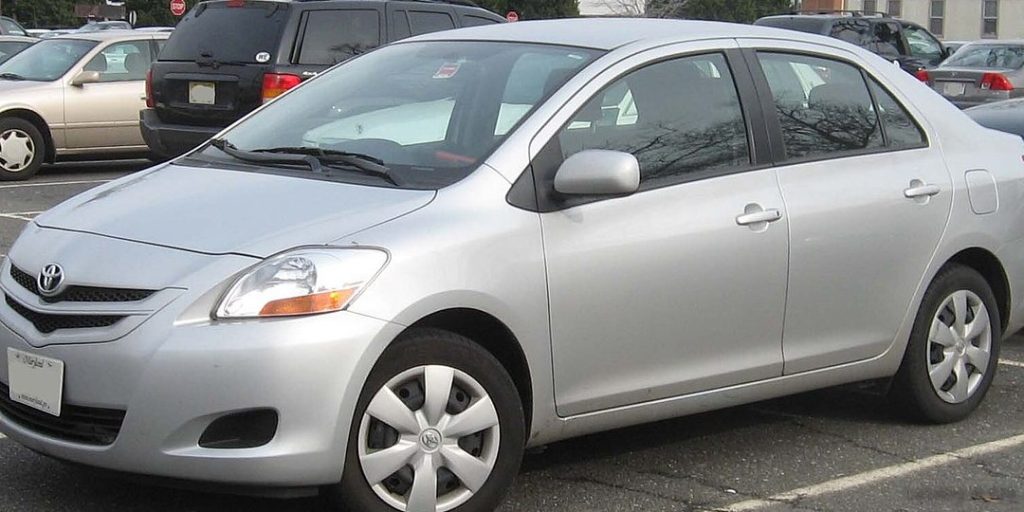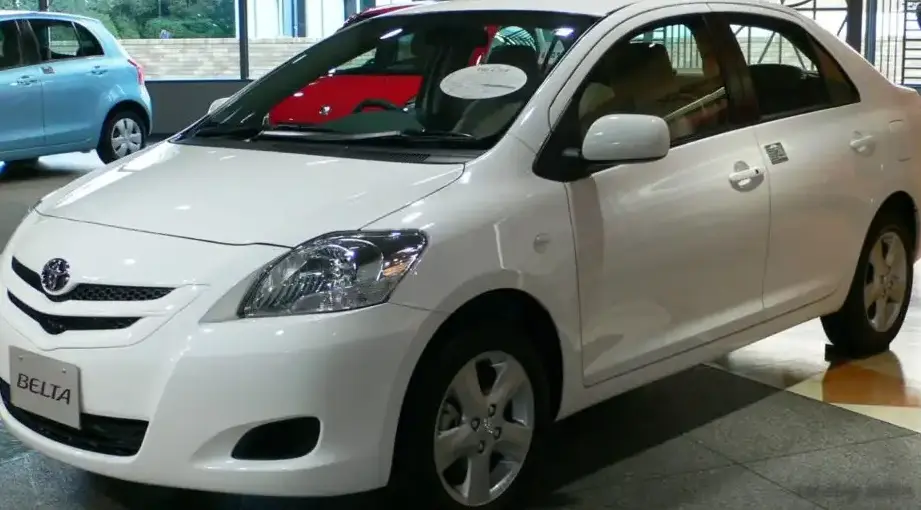
The Toyota Belta 1.5 (106 hp) Automatic, produced between November 2005 and June 2012, was a compact sedan primarily aimed at the Asian market, particularly countries like Indonesia, Thailand, and the Philippines. It represented Toyota’s entry-level offering in the B-segment, positioned below the Corolla and Vios. The Belta, essentially a rebadged and slightly modified version of the Japanese-market Toyota Yaris sedan (XP90/XP120 series), offered a practical and affordable transportation solution. This specific 1.5-liter, automatic transmission variant occupied a middle ground within the Belta lineup, offering a balance between fuel efficiency and ease of use, appealing to a broad customer base seeking a comfortable daily driver.
Technical Specifications
| Brand | Toyota |
| Model | Belta |
| Generation | Belta |
| Type (Engine) | 1.5 (106 Hp) Automatic |
| Start of production | November, 2005 |
| End of production | June, 2012 |
| Powertrain Architecture | Internal Combustion engine |
| Body type | Sedan |
| Seats | 5 |
| Doors | 4 |
| Fuel Type | Petrol (Gasoline) |
| Power | 106 Hp @ 6000 rpm |
| Power per litre | 70.8 Hp/l |
| Torque | 145 Nm @ 4200 rpm |
| Torque (lb-ft) | 106.95 lb.-ft. @ 4200 rpm |
| Engine layout | Front, Transverse |
| Engine Model/Code | 1NZ-FE |
| Engine displacement | 1497 cm3 |
| Engine displacement (cu. in.) | 91.35 cu. in. |
| Number of cylinders | 4 |
| Engine configuration | Inline |
| Cylinder Bore | 75 mm |
| Cylinder Bore (in.) | 2.95 in. |
| Piston Stroke | 84.7 mm |
| Piston Stroke (in.) | 3.33 in. |
| Compression ratio | 10.5:1 |
| Number of valves per cylinder | 4 |
| Fuel injection system | Multi-port manifold injection |
| Engine aspiration | Naturally aspirated engine |
| Valvetrain | DOHC |
| Engine oil capacity | 3.4 l |
| Engine oil capacity (US qt) | 3.59 US qt |
| Engine oil capacity (UK qt) | 2.99 UK qt |
| Fuel tank capacity | 42 l |
| Fuel tank capacity (US gal) | 11.1 US gal |
| Fuel tank capacity (UK gal) | 9.24 UK gal |
| Length | 4300 mm |
| Length (in.) | 169.29 in. |
| Width | 1895 mm |
| Width (in.) | 74.61 in. |
| Height | 1460 mm |
| Height (in.) | 57.48 in. |
| Wheelbase | 2550 mm |
| Wheelbase (in.) | 100.39 in. |
| Drivetrain Architecture | The Internal combustion engine (ICE) drives the front wheels of the vehicle. |
| Drive wheel | Front wheel drive |
| Number of gears | 4 |
| Type of gearbox | automatic transmission |
Introduction
The Toyota Belta emerged as a key model for Toyota in several Southeast Asian markets, offering a cost-effective and reliable sedan option. Built on the XP90/XP120 platform shared with the Yaris sedan, the Belta aimed to provide a comfortable and practical vehicle for families and commuters. The 1.5-liter engine with an automatic transmission was a popular configuration, designed to appeal to buyers prioritizing convenience and ease of driving over outright performance. Production spanned from 2005 to 2012, with minor cosmetic and feature updates occurring throughout its lifecycle.
Powertrain & Engine Architecture
The heart of the Belta 1.5 Automatic is the 1NZ-FE engine, a 1.5-liter inline-four cylinder gasoline engine. This engine is known for its reliability and fuel efficiency. The 1NZ-FE utilizes a multi-port fuel injection system, delivering fuel directly into the intake ports, optimizing combustion. It features a double overhead camshaft (DOHC) valvetrain, enhancing volumetric efficiency and contributing to improved power output. The engine’s 106 horsepower at 6000 rpm and 145 Nm (106.95 lb-ft) of torque at 4200 rpm are respectable figures for its class. Paired with a four-speed automatic transmission, the powertrain prioritizes smooth shifts and ease of use. This transmission, while not offering the latest technology, proved durable and reliable in service. The automatic transmission’s gear ratios were tuned for fuel economy and comfortable cruising, rather than aggressive acceleration.
Driving Characteristics
The Belta 1.5 Automatic delivers a comfortable, if not particularly sporty, driving experience. Acceleration is adequate for everyday driving, but it won’t win any races. The four-speed automatic transmission, while smooth, lacks the responsiveness of more modern transmissions with a greater number of gears. Compared to the manual transmission versions of the Belta, the automatic sacrifices some fuel economy and responsiveness. The power delivery is linear, making it easy to modulate the throttle. The suspension is tuned for comfort, absorbing bumps and imperfections in the road reasonably well. However, this comfort comes at the expense of handling precision; the Belta isn’t a car designed for spirited cornering.
Equipment & Trim Levels
The Belta 1.5 Automatic typically came equipped with standard features such as air conditioning, power windows, and a basic audio system. Higher trim levels offered additional features like alloy wheels, a more sophisticated audio system with CD player, and optional features like fog lamps and a rear spoiler. Interior upholstery was typically cloth, with a simple and functional dashboard layout. Safety features were generally basic, including dual front airbags and seatbelts. The overall interior design prioritized practicality and durability over luxury.
Chassis & Braking
The Belta utilizes a front-wheel-drive layout with a MacPherson strut suspension in the front and a torsion beam suspension in the rear. This suspension setup provides a good balance between ride comfort and handling. Braking duties are handled by disc brakes in the front and drum brakes in the rear. While adequate for normal driving conditions, the rear drum brakes are less effective than disc brakes, particularly during hard braking. The Belta’s chassis is relatively lightweight, contributing to its fuel efficiency. Stabilizer bars were typically included to reduce body roll during cornering, but the overall handling characteristics remained geared towards comfort rather than performance.
Market Reception & Comparison
The Toyota Belta 1.5 Automatic was generally well-received in its target markets. Critics praised its reliability, fuel efficiency, and affordability. However, some reviewers noted its lack of refinement and its relatively basic interior. Compared to other trims in the Belta lineup, the 1.5 Automatic offered a good compromise between performance and fuel economy. The 1.5-liter engine provided sufficient power for most drivers, while the automatic transmission made it easy to drive in congested urban environments. Compared to the more powerful (but less fuel-efficient) engine options, the 1.5 Automatic appealed to buyers prioritizing practicality and cost-effectiveness.
Legacy
The Toyota Belta, and specifically the 1.5 Automatic variant, has proven to be a durable and reliable vehicle. In the used car market, these models are often sought after for their affordability and Toyota’s reputation for dependability. The 1NZ-FE engine is known for its longevity, and with proper maintenance, can easily exceed 200,000 kilometers. While the four-speed automatic transmission is not as technologically advanced as newer units, it has also proven to be relatively trouble-free. The Belta remains a popular choice for budget-conscious buyers seeking a reliable and practical sedan.