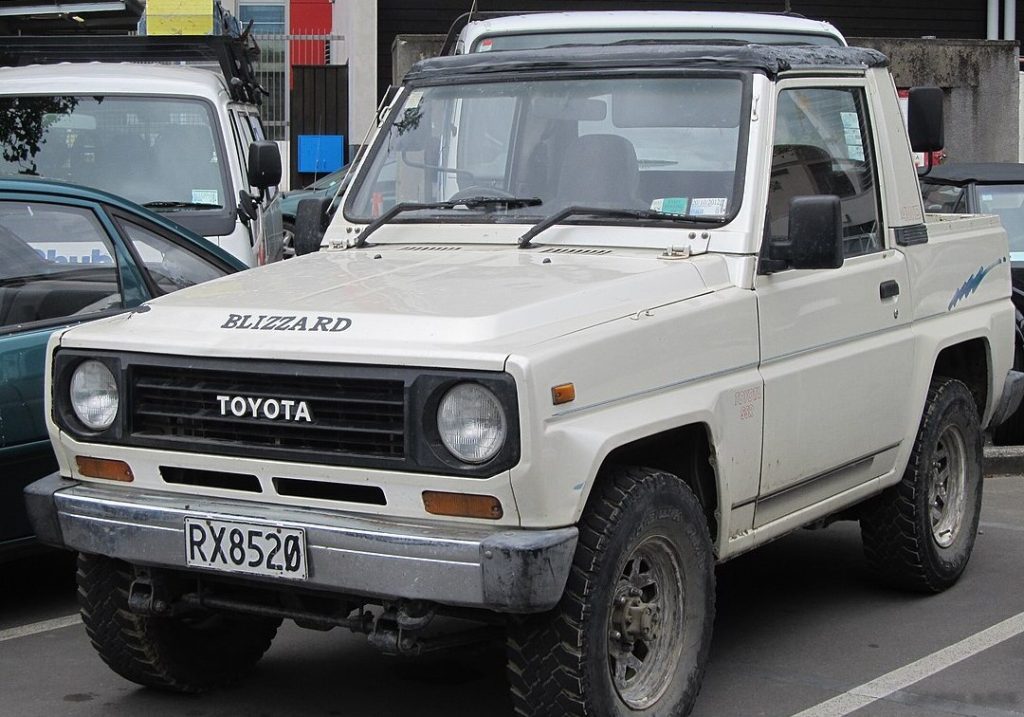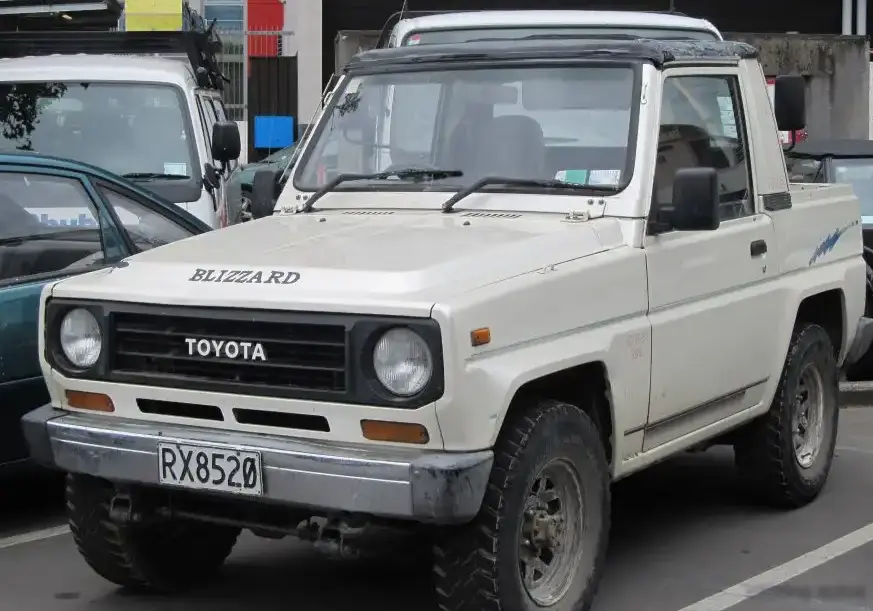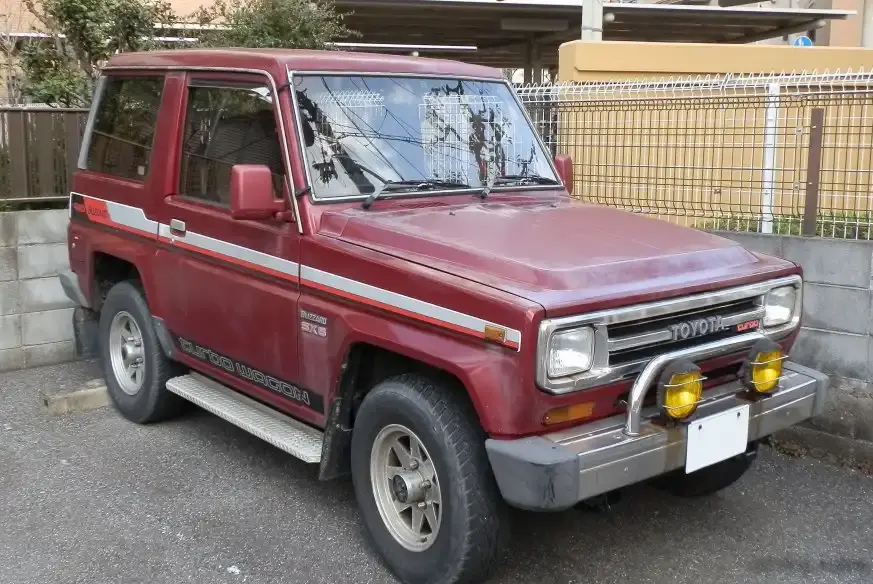
The Toyota Blizzard 2.45 TD (85 hp) 4WD was a rugged, body-on-frame, off-road vehicle produced by Toyota from 1984 to 1993. Positioned as a utilitarian workhorse and recreational vehicle, the Blizzard was primarily sold in European and Australasian markets, where demand for capable four-wheel drive vehicles was strong. It was based on the Toyota Hilux chassis, but featured a unique, more enclosed body with seating for up to seven passengers. The Blizzard filled a niche between traditional pickup trucks and larger, more expensive SUVs, offering a blend of practicality, durability, and affordability. It represented Toyota’s attempt to cater to a specific segment seeking a versatile vehicle for both work and leisure.
Technical Specifications
| Brand | Toyota |
| Model | Blizzard |
| Generation | Blizzard |
| Type (Engine) | 2.45 TD (85 Hp) 4WD |
| Start of production | 1984 |
| End of production | 1993 |
| Powertrain Architecture | Internal Combustion engine |
| Body type | Off-road vehicle |
| Seats | 7 |
| Doors | 3 |
| Fuel consumption (urban) | 13 l/100 km (18.1 US mpg, 21.7 UK mpg) |
| Fuel consumption (extra urban) | 8 l/100 km (29.4 US mpg, 35.3 UK mpg) |
| Fuel Type | Diesel |
| Maximum speed | 135 km/h (83.89 mph) |
| Weight-to-power ratio | 16 kg/Hp |
| Weight-to-torque ratio | 7.2 kg/Nm |
| Power | 85 Hp @ 4000 rpm |
| Power per litre | 34.8 Hp/l |
| Torque | 188 Nm @ 2400 rpm (138.66 lb.-ft. @ 2400 rpm) |
| Engine layout | Front, Longitudinal |
| Engine displacement | 2445 cm3 (149.2 cu. in.) |
| Number of cylinders | 4 |
| Engine configuration | Inline |
| Cylinder Bore | 92 mm (3.62 in.) |
| Piston Stroke | 92 mm (3.62 in.) |
| Compression ratio | 20:1 |
| Number of valves per cylinder | 2 |
| Fuel injection system | Precombustion chamber injection |
| Engine aspiration | Turbocharger |
| Kerb Weight | 1360 kg (2998.29 lbs.) |
| Fuel tank capacity | 60 l (15.85 US gal | 13.2 UK gal) |
| Length | 3655 mm (143.9 in.) |
| Width | 1580 mm (62.2 in.) |
| Height | 1830 mm (72.05 in.) |
| Wheelbase | 2205 mm (86.81 in.) |
| Front track | 1320 mm (51.97 in.) |
| Rear track | 1300 mm (51.18 in.) |
| Drive wheel | All wheel drive (4×4) |
| Number of gears and type of gearbox | 5 gears, manual transmission |
| Front suspension | Coil spring |
| Rear suspension | Coil spring |
| Front brakes | Disc |
| Rear brakes | Drum |
| Assisting systems | ABS (Anti-lock braking system) |
| Power steering | Hydraulic Steering |
| Tires size | 215/80 R15 |
| Wheel rims size | 6Jx15 ET10 5×139.7 |
Powertrain & Engine Architecture
The heart of the Blizzard 2.45 TD was Toyota’s 2L-T diesel engine, a 2.445-liter inline-four cylinder unit. This engine utilized precombustion chamber injection, a system common in diesel engines of the era, to improve combustion efficiency and reduce noise. The 2L-T was turbocharged, which helped to boost power output to 85 horsepower at 4000 rpm and 188 Nm (138.66 lb.-ft.) of torque at 2400 rpm. The engine featured a relatively high compression ratio of 20:1, contributing to its fuel efficiency. The five-speed manual transmission was the only gearbox option available, chosen for its durability and suitability for off-road driving. The transmission’s gear ratios were geared towards providing ample low-end torque for tackling challenging terrain.
Driving Characteristics
The 2.45 TD engine, while not particularly powerful, provided adequate performance for the Blizzard’s intended purpose. Acceleration was modest, but the engine’s strong low-end torque made it well-suited for climbing steep hills and navigating rough terrain. The five-speed manual transmission allowed drivers to keep the engine in its optimal power band. Compared to potential gasoline engine options (which were not widely available on this model), the diesel offered significantly better fuel economy, a crucial factor for owners who used the vehicle for work or long-distance travel. The Blizzard’s four-wheel drive system, coupled with its robust suspension, provided excellent traction and stability on a variety of surfaces. It wasn’t a fast vehicle, but it was a capable and dependable one.
Equipment & Trim Levels
The Toyota Blizzard 2.45 TD was generally offered with a fairly basic level of equipment, reflecting its utilitarian nature. Standard features typically included a vinyl interior, basic instrumentation, and a heater. Power steering was often included, but air conditioning and other comfort features were typically optional extras. The interior was designed for practicality and durability, with easily cleanable surfaces. Trim levels were limited, with most variations stemming from optional equipment packages. The focus was on providing a functional and reliable vehicle rather than luxury.
Chassis & Braking
The Blizzard’s chassis was based on the Toyota Hilux, providing a strong and durable foundation. The suspension consisted of coil springs all around, offering a reasonable balance between ride comfort and off-road capability. The front brakes were discs, while the rear brakes were drums. ABS (Anti-lock braking system) was available on some models, enhancing safety. The vehicle’s relatively high ground clearance and robust suspension allowed it to navigate challenging terrain with ease. The tires, typically 215/80 R15, were chosen for their durability and all-terrain capability.
Market Reception & Comparison
The Toyota Blizzard 2.45 TD was generally well-received in markets where it was sold. Critics praised its durability, off-road capability, and fuel efficiency. However, some noted its relatively basic interior and modest performance. Compared to other vehicles in its class, such as the Land Rover Defender or Nissan Patrol, the Blizzard offered a more affordable and accessible option. It was often seen as a more practical alternative to larger, more expensive SUVs. The diesel engine, while not as refined as some gasoline alternatives, provided excellent fuel economy and reliability.
Legacy
The Toyota Blizzard 2.45 TD has developed a loyal following among enthusiasts and off-roaders. The 2L-T diesel engine is known for its durability and longevity, and many examples are still in use today. Parts availability can be a challenge, but the engine’s robust construction means that it can withstand considerable wear and tear. In the used car market, the Blizzard is often sought after by those looking for a capable and affordable off-road vehicle. Its simple design and robust construction make it relatively easy to maintain and repair. The Blizzard represents a unique chapter in Toyota’s history, showcasing the company’s ability to produce durable and versatile vehicles for a variety of applications.