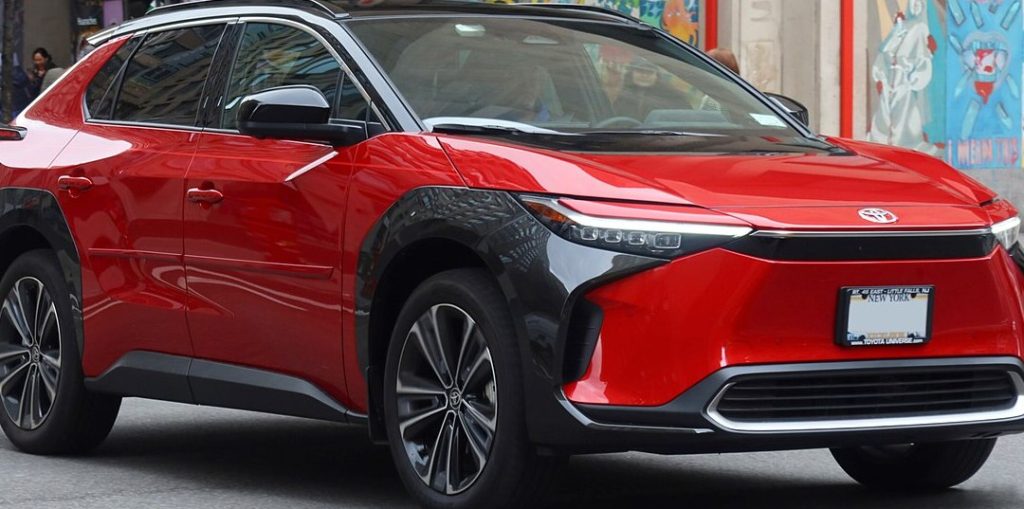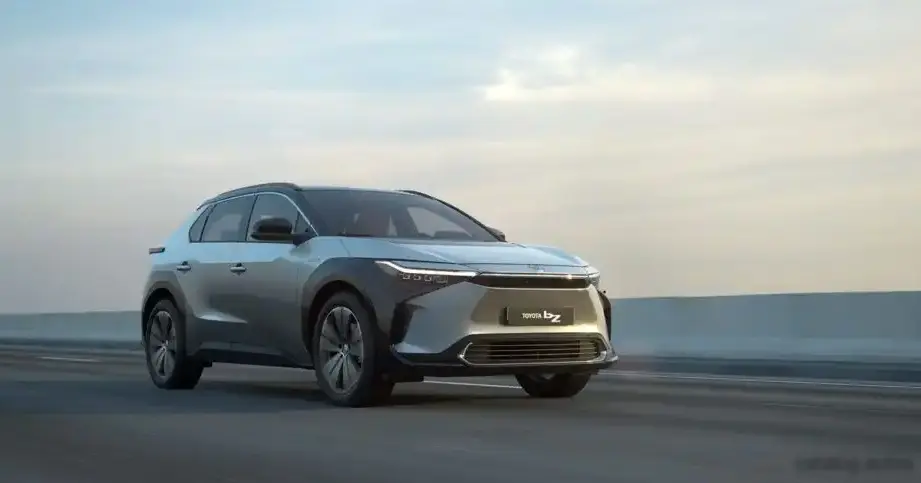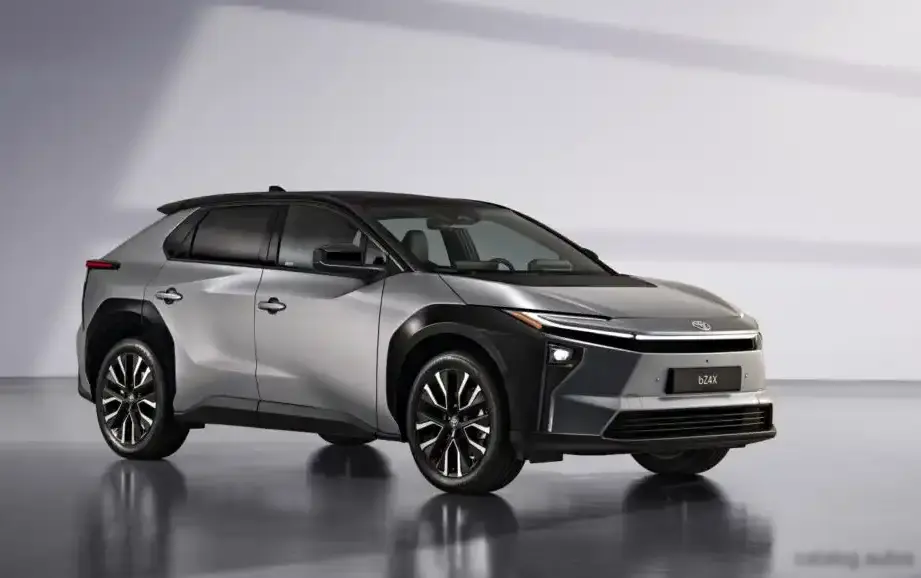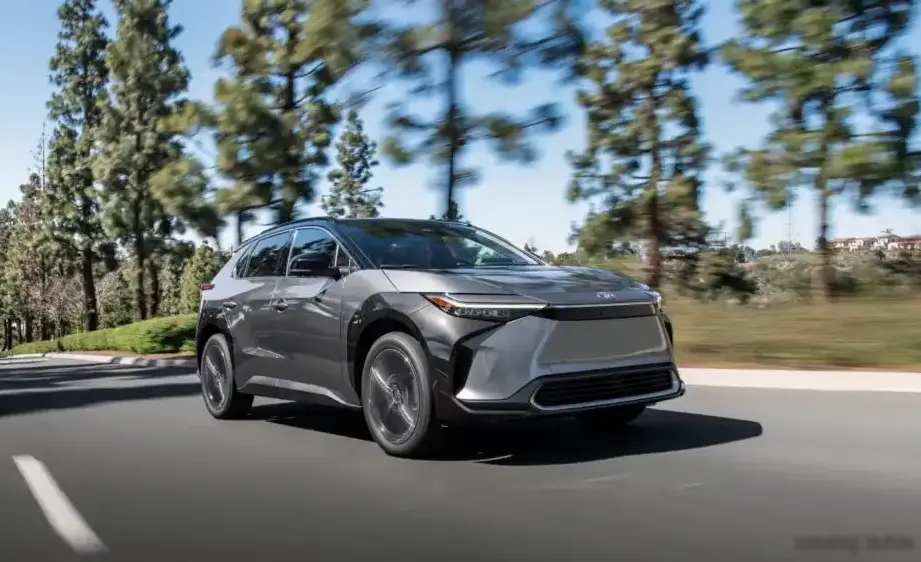
The Toyota bZ4X 72.8 kWh (214 Hp) BEV AWD is an all-electric compact SUV produced by Toyota from April 2022 to May 2025. It represents Toyota’s first dedicated battery electric vehicle (BEV), developed in collaboration with Subaru (which markets a similar vehicle as the Solterra). The bZ4X is part of Toyota’s broader “Beyond Zero” initiative, aiming for carbon neutrality. This particular variant, equipped with the 72.8 kWh battery pack and dual-motor all-wheel drive system, served as a key offering in the initial bZ4X lineup, positioned as a balance between range, performance, and price.
Technical Specifications
| Brand | Toyota |
| Model | bZ4X |
| Generation | bZ4X |
| Type (Engine) | 72.8 kWh (214 Hp) BEV AWD |
| Start of production | April, 2022 |
| End of production | May, 2025 |
| Powertrain Architecture | BEV (Electric Vehicle) |
| Body type | SUV |
| Seats | 5 |
| Doors | 5 |
| Fuel Type | Electricity |
| Acceleration 0 – 60 mph | 6.5 sec |
| Emission standard | ZEV |
| Weight-to-power ratio | 9.2 kg/Hp, 108.9 Hp/tonne |
| Gross battery capacity | 72.8 kWh |
| Battery voltage | 355 V |
| Battery technology | Lithium-ion (Li-Ion) |
| Battery location | Below the floor |
| All-electric range (EPA) | 357-367 km (221.83 – 228.04 mi) |
| Average Energy consumption (EPA) | 20.1-20.5 kWh/100 km (32.35 – 32.99 kWh/100 mi) |
| MPGe | 104 – 102 |
| km/kWh | 5 – 4.9 |
| mi/kWh | 3.1 – 3 |
| Electric motor power (Front) | 107 Hp |
| Electric motor Torque (Front) | 168 Nm (123.91 lb.-ft.) |
| Electric motor location (Front) | Front axle, Transverse |
| Electric motor type (Front) | Synchronous |
| Electric motor power (Rear) | 107 Hp |
| Electric motor Torque (Rear) | 168 Nm (123.91 lb.-ft.) |
| Electric motor location (Rear) | Rear axle, Transverse |
| Electric motor type (Rear) | Synchronous |
| System power | 214 Hp |
| Kerb Weight | 1965-2025 kg (4332.08 – 4464.36 lbs.) |
| Max. weight | 2465-2549 kg (5434.39 – 5619.58 lbs.) |
| Max load | 500-524 kg (1102.31 – 1155.22 lbs.) |
| Trunk (boot) space – minimum | 731 l (25.82 cu. ft.) |
| Length | 4689 mm (184.61 in.) |
| Width | 1859 mm (73.19 in.) |
| Height | 1651 mm (65 in.) |
| Wheelbase | 2850 mm (112.2 in.) |
| Ride height (ground clearance) | 206 mm (8.11 in.) |
| Minimum turning circle | 12.2 m (40.03 ft.) |
| Drivetrain Architecture | One electric motor drives the front wheels, one electric motor drives the rear wheels. |
| Drive wheel | All wheel drive (4×4) |
| Number of gears | 1 |
| Gearbox type | Automatic transmission |
| Front suspension | Independent, type McPherson with coil spring and anti-roll bar |
| Rear suspension | Independent multi-link spring suspension with stabilizer |
| Front brakes | Ventilated discs, 328 mm |
| Rear brakes | Ventilated discs, 318 mm |
| Assisting systems | ABS (Anti-lock braking system) |
| Steering type | Steering rack and pinion |
| Power steering | Electric Steering |
| Tires size | 235/60 R18; 235/50 R20 |
| Wheel rims size | 18; 20 |
Powertrain & Engine Architecture
The bZ4X 72.8 kWh AWD utilizes a dual-motor, all-wheel-drive powertrain. Each motor produces 107 horsepower and 168 Nm (123.91 lb.-ft.) of torque, resulting in a combined system output of 214 horsepower. The motors are permanent magnet synchronous motors, known for their efficiency and smooth operation. The 72.8 kWh lithium-ion battery pack is located under the floor, contributing to a low center of gravity and improved handling. The battery utilizes a high-voltage system operating at 355V. The bZ4X employs a single-speed automatic transmission, typical for electric vehicles, as the electric motors provide instant torque across a wide range of speeds. The vehicle features regenerative braking, which helps recapture energy during deceleration and extend the driving range.
Driving Characteristics
The dual-motor AWD configuration of the bZ4X provides confident traction and acceleration. The 0-60 mph time of 6.5 seconds is respectable for a compact SUV. The instant torque delivery characteristic of electric motors provides brisk acceleration from a standstill. Compared to front-wheel-drive bZ4X models, the AWD variant offers enhanced stability and grip, particularly in inclement weather. While not as sporty as some performance-oriented EVs, the bZ4X offers a comfortable and composed driving experience. The single-speed transmission simplifies operation, and the regenerative braking system can be adjusted to suit driver preferences.
Equipment & Trim Levels
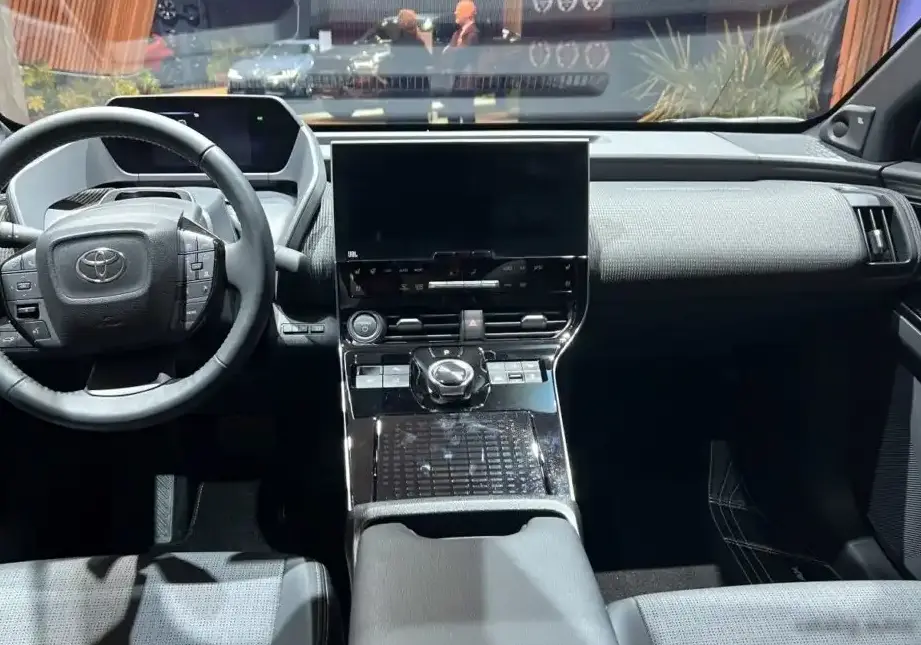
The bZ4X 72.8 kWh AWD was offered in various trim levels, including XLE and Limited. Standard features typically included an 8-inch touchscreen infotainment system (upgradable to 12.3-inch), Apple CarPlay and Android Auto compatibility, Toyota Safety Sense 3.0 (a suite of advanced driver-assistance systems), and automatic climate control. Higher trims added features such as heated and ventilated front seats, a panoramic sunroof, premium audio system, and SofTex-trimmed upholstery. Optional extras included a charging cable, all-weather floor mats, and paint options.
Chassis & Braking
The bZ4X utilizes a McPherson strut front suspension and a multi-link rear suspension, providing a comfortable ride and stable handling. The suspension is tuned to balance ride comfort with handling performance. The vehicle is equipped with ventilated disc brakes on all four wheels, providing ample stopping power. Anti-lock braking system (ABS) is standard, along with other safety features like electronic brake-force distribution and brake assist. The bZ4X’s relatively low center of gravity, thanks to the underfloor battery pack, contributes to reduced body roll during cornering.
Market Reception & Comparison
The bZ4X received mixed reviews upon its launch. Critics praised its spacious interior, comfortable ride, and standard safety features. However, some criticisms were directed at its relatively slow charging speeds compared to some competitors, and the initial software glitches. Compared to other electric SUVs in its class, such as the Tesla Model Y and Hyundai IONIQ 5, the bZ4X offered a competitive range and price point. The AWD variant provided a compelling alternative to front-wheel-drive models, particularly for buyers in regions with harsh weather conditions. Fuel economy, expressed as MPGe, ranged from 102-104, and energy consumption was between 20.1-20.5 kWh/100km.
Legacy
The Toyota bZ4X represents a significant step for Toyota into the electric vehicle market. While early production models experienced some recalls related to software and potential wheel detachment, Toyota addressed these issues with updates and revisions. The 72.8 kWh AWD variant remains a popular choice in the used EV market, offering a good balance of range, performance, and features. The bZ4X’s impact extends beyond its direct sales figures, as it signals Toyota’s commitment to electrification and paves the way for future EV models. Long-term reliability data is still emerging, but the Toyota brand’s reputation for durability suggests that the bZ4X powertrain should prove to be reasonably reliable with proper maintenance.