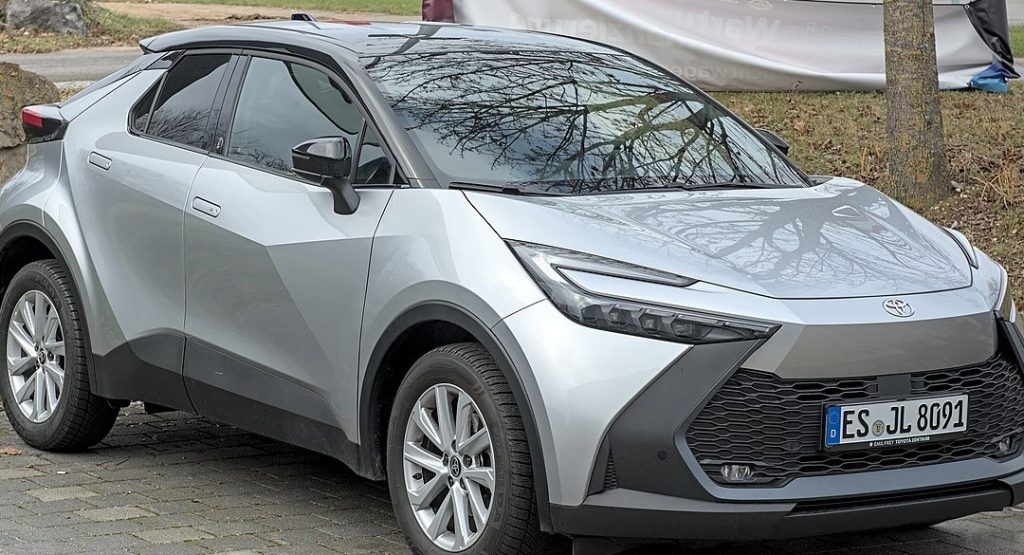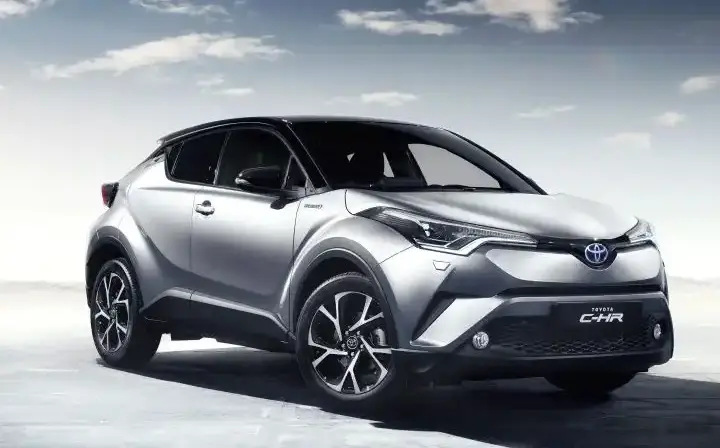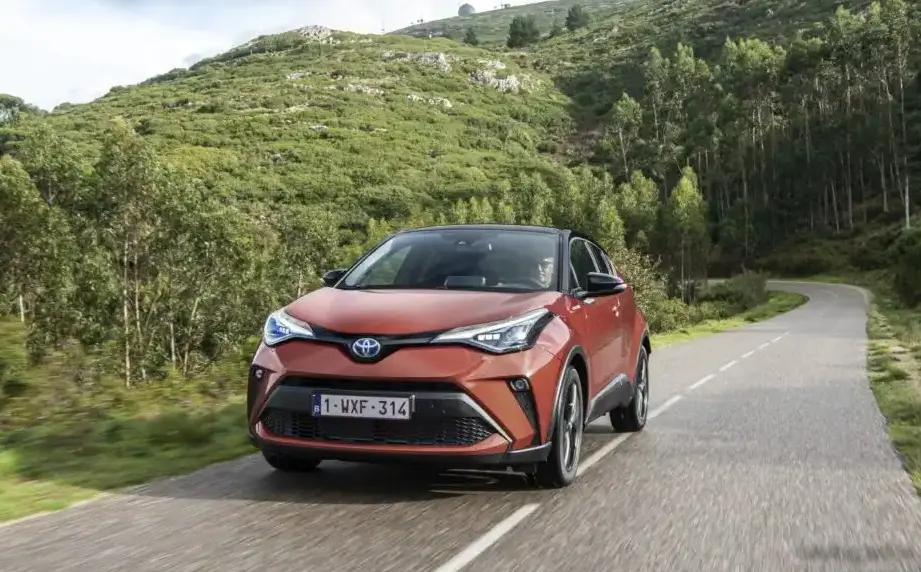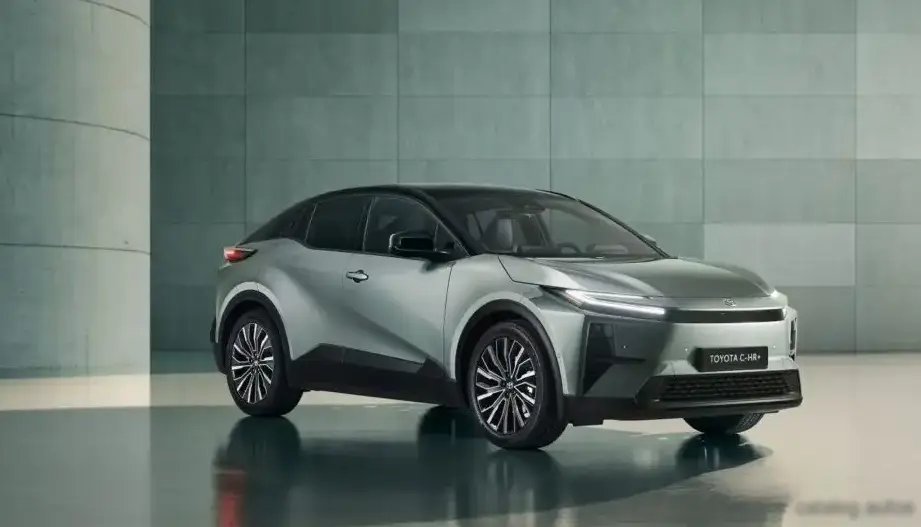
The Toyota C-HR+ 77 kWh, producing 227 horsepower, represents Toyota’s entry into the fully electric compact crossover segment. Introduced in October 2025, this variant builds upon the existing C-HR platform (though significantly revised for EV application) and is positioned as a technologically advanced and efficient option within the broader C-HR lineup. It aims to appeal to buyers seeking a stylish, practical, and zero-emission vehicle. The C-HR+ is primarily targeted towards the European and Asian markets, with limited availability in North America initially.
Technical Specifications
| Brand | Toyota |
| Model | C-HR+ |
| Generation | C-HR+ |
| Type (Engine) | 77 kWh (227 Hp) Electric |
| Start of production | October, 2025 |
| Powertrain Architecture | BEV (Electric Vehicle) |
| Body type | Coupe, SUV |
| Seats | 5 |
| Doors | 5 |
| Fuel Type | Electricity |
| Acceleration 0 – 100 km/h | 7.4 sec |
| Acceleration 0 – 62 mph | 7.4 sec |
| Acceleration 0 – 60 mph | 7 sec |
| Maximum speed | 160 km/h (99.42 mph) |
| Weight-to-power ratio | 8.3 kg/Hp, 120.4 Hp/tonne |
| Weight-to-torque ratio | 7 kg/Nm, 142.7 Nm/tonne |
| Gross battery capacity | 77 kWh |
| Net (usable) battery capacity | 72 kWh |
| Battery voltage | 384.8 V |
| Battery technology | Lithium-ion (Li-Ion) |
| Battery location | Below the floor |
| All-electric range (WLTP) | 600 km (372.82 mi) |
| Average Energy consumption (WLTP) | 13.8 kWh/100 km (22.21 kWh/100 mi) |
| MPGe | 152 |
| km/kWh | 7.2 |
| mi/kWh | 4.5 |
| Electric motor power | 227 Hp |
| Electric motor Torque | 269 Nm (198.4 lb.-ft.) |
| Electric motor model/code | QK10 |
| Electric motor location | Front axle, Transverse |
| Electric motor type | Synchronous |
| System power | 227 Hp |
| System torque | 269 Nm (198.4 lb.-ft.) |
| Kerb Weight | 1885-1940 kg (4155.71 – 4276.97 lbs.) |
| Trunk (boot) space – minimum | 416 l (14.69 cu. ft.) |
| Length | 4520 mm (177.95 in.) |
| Width | 1870 mm (73.62 in.) |
| Height | 1595 mm (62.8 in.) |
| Wheelbase | 2750 mm (108.27 in.) |
| Front overhang | 915 mm (36.02 in.) |
| Rear overhang | 855 mm (33.66 in.) |
| Drivetrain Architecture | One electric motor drives the front wheels. |
| Drive wheel | Front wheel drive |
| Number of gears and type of gearbox | 1 gears, automatic transmission |
| Front suspension | Independent type McPherson |
| Rear suspension | Independent multi-link suspension |
| Front brakes | Ventilated discs |
| Rear brakes | Disc |
| Assisting systems | ABS (Anti-lock braking system) |
| Steering type | Steering rack and pinion |
| Power steering | Electric Steering |
| Wheel rims size | 18 |
Powertrain & Engine Architecture
The C-HR+ utilizes a dedicated Battery Electric Vehicle (BEV) powertrain. At its heart is a 77 kWh lithium-ion battery pack positioned under the vehicle floor, contributing to a low center of gravity and improved handling. The battery pack delivers a usable capacity of 72 kWh. The electric motor, designated QK10, is a synchronous motor mounted transversely on the front axle, producing 227 horsepower and 269 Nm (198.4 lb-ft) of torque. The single-speed automatic transmission is a standard component in most BEVs, providing seamless acceleration. The charging system supports both AC and DC fast charging, allowing for convenient replenishment of the battery at home or on the go. The battery management system (BMS) is crucial for optimizing battery life, performance, and safety.
Driving Characteristics
The C-HR+ 77 kWh offers brisk acceleration, achieving 0-60 mph in approximately 7 seconds. The instant torque delivery characteristic of electric motors provides responsive performance in urban driving conditions. While not a performance-oriented vehicle, the C-HR+ offers sufficient power for confident highway merging and overtaking. The single-speed transmission ensures smooth and linear acceleration. Compared to potential future higher-performance C-HR variants, this model prioritizes efficiency and range over outright speed. The front-wheel-drive configuration provides predictable handling, although it may lack the all-weather capability of an all-wheel-drive system.
Equipment & Trim Levels
The C-HR+ comes standard with a comprehensive suite of features, including a touchscreen infotainment system with smartphone integration (Apple CarPlay and Android Auto), a digital instrument cluster, automatic climate control, and a range of advanced driver-assistance systems (ADAS) such as adaptive cruise control, lane departure alert, and automatic emergency braking. Interior upholstery is typically a combination of fabric and synthetic leather, with higher trims offering full leather options. Optional extras include a premium sound system, a panoramic sunroof, and heated/ventilated front seats. The exterior styling features unique EV-specific design elements, such as a closed-off grille and aerodynamic enhancements.
Chassis & Braking
The C-HR+ utilizes an independent McPherson strut suspension at the front and an independent multi-link suspension at the rear, providing a comfortable and controlled ride. The suspension is tuned to balance handling and ride quality, taking into account the added weight of the battery pack. Ventilated disc brakes are used at the front, while solid discs are employed at the rear. The anti-lock braking system (ABS) and electronic stability control (ESC) are standard safety features. Electric power steering provides precise and responsive steering feel. The vehicle’s low center of gravity contributes to reduced body roll during cornering.
Market Reception & Comparison
Initial reviews of the C-HR+ have been generally positive, with critics praising its stylish design, comfortable interior, and impressive electric range. The 600 km (372.82 mi) WLTP range is competitive within the compact EV crossover segment. Fuel economy, expressed as energy consumption, is rated at 13.8 kWh/100 km (22.21 kWh/100 mi), translating to 152 MPGe. Compared to other C-HR trims (which are primarily gasoline-powered), the C-HR+ offers significantly lower running costs and zero tailpipe emissions. However, the higher purchase price of the EV variant may be a barrier for some buyers. Reliability is expected to be good, based on Toyota’s reputation for building durable vehicles, but long-term data is still limited.
Legacy
The Toyota C-HR+ 77 kWh represents a significant step in Toyota’s electrification strategy. As one of the first fully electric C-HR models, it establishes a benchmark for future EV offerings from the brand. The powertrain’s long-term reliability will be a key factor in its success in the used car market. The C-HR+’s impact extends beyond its technical specifications; it contributes to the growing adoption of electric vehicles and promotes a more sustainable transportation future. Its design and technology are likely to influence future Toyota models, shaping the brand’s identity in the electric era.