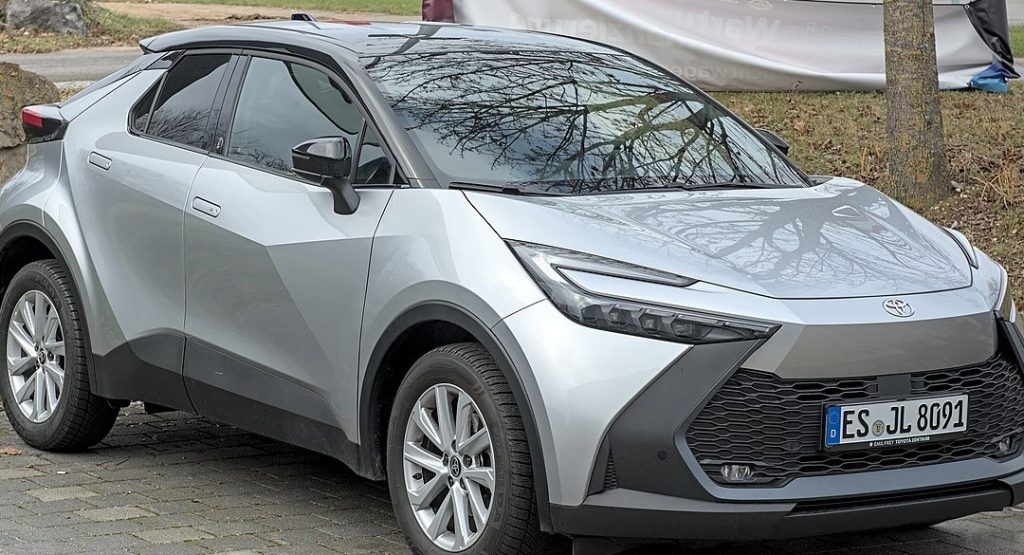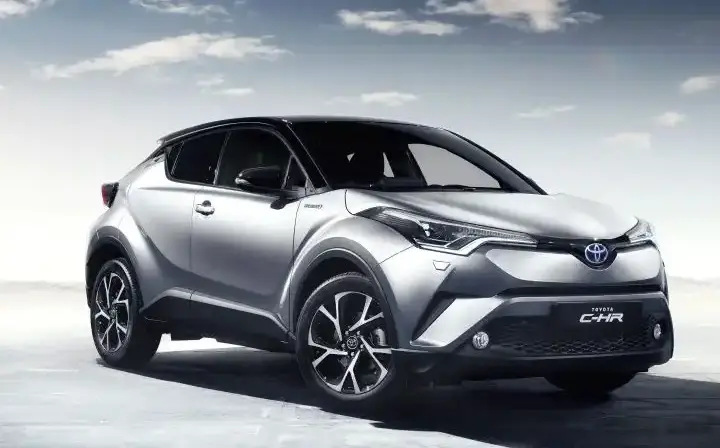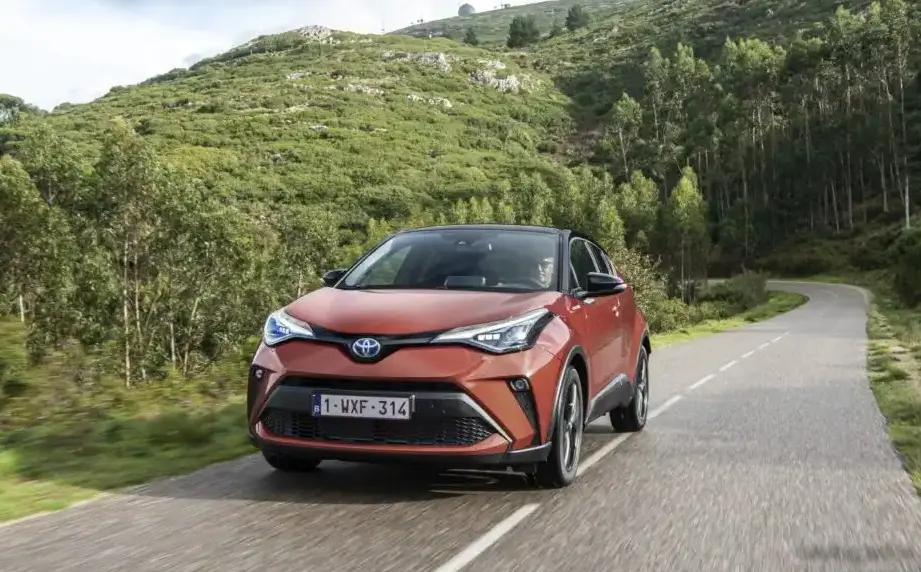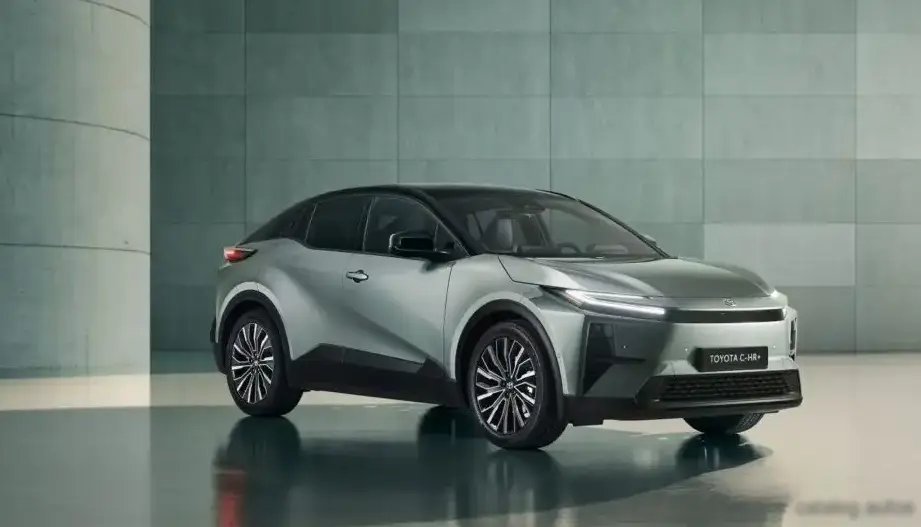
The Toyota C-HR+ 77 kWh, producing 348 horsepower, represents Toyota’s entry into the fully electric crossover market, launched in October 2025. Positioned as a premium offering within the second-generation C-HR lineup (internally designated as the C-HR+), this variant distinguishes itself through its dual-motor all-wheel-drive (AWD-i) system and extended range. It builds upon the distinctive styling of the C-HR, aiming to attract buyers seeking a stylish, efficient, and technologically advanced electric vehicle. The C-HR+ is primarily targeted towards the European and Asian markets, with limited availability in North America.
Technical Specifications
| Brand | Toyota |
| Model | C-HR+ |
| Generation | C-HR+ |
| Type (Engine) | 77 kWh (348 Hp) Electric AWD-i |
| Start of production | October, 2025 |
| Powertrain Architecture | BEV (Electric Vehicle) |
| Body type | Coupe, SUV |
| Seats | 5 |
| Doors | 5 |
| Fuel Type | Electricity |
| Acceleration 0 – 100 km/h | 5.2 sec |
| Acceleration 0 – 62 mph | 5.2 sec |
| Acceleration 0 – 60 mph | 4.9 sec |
| Maximum speed | 180 km/h (111.85 mph) |
| Weight-to-power ratio | 5.8 kg/Hp, 173.1 Hp/tonne |
| Weight-to-torque ratio | 4.6 kg/Nm, 217.9 Nm/tonne |
| Gross battery capacity | 77 kWh |
| Net (usable) battery capacity | 72 kWh |
| Battery voltage | 384.8 V |
| Battery technology | Lithium-ion (Li-Ion) |
| Battery location | Below the floor |
| All-electric range (WLTP) | 475 km (295.15 mi) |
| Average Energy consumption (WLTP) | 15.4 kWh/100 km (24.78 kWh/100 mi, 136 MPGe, 6.5 km/kWh, 4 mi/kWh) |
| Electric motor 1 power | 227 Hp |
| Electric motor 1 Torque | 269 Nm (198.4 lb.-ft.) |
| Electric motor 1 model/code | QK10 |
| Electric motor 1 location | Front axle, Transverse |
| Electric motor 1 type | Synchronous |
| Electric motor 2 power | 121 Hp |
| Electric motor 2 Torque | 169 Nm (124.65 lb.-ft.) |
| Electric motor 2 model/code | QN10 |
| Electric motor 2 location | Rear axle, Transverse |
| Electric motor 2 type | Synchronous |
| System power | 348 Hp |
| System torque | 438 Nm (323.05 lb.-ft.) |
| Kerb Weight | 2010-2080 kg (4431.29 – 4585.62 lbs.) |
| Trunk (boot) space – minimum | 416 l (14.69 cu. ft.) |
| Length | 4520 mm (177.95 in.) |
| Width | 1870 mm (73.62 in.) |
| Height | 1595 mm (62.8 in.) |
| Wheelbase | 2750 mm (108.27 in.) |
| Front overhang | 915 mm (36.02 in.) |
| Rear overhang | 855 mm (33.66 in.) |
| Drivetrain Architecture | One electric motor drives the front wheels, one electric motor drives the rear wheels. |
| Drive wheel | All wheel drive (4×4) |
| Number of gears and type of gearbox | 1 gears, automatic transmission |
| Front suspension | Independent type McPherson |
| Rear suspension | Independent multi-link suspension |
| Front brakes | Ventilated discs |
| Rear brakes | Disc |
| Assisting systems | ABS (Anti-lock braking system) |
| Steering type | Steering rack and pinion |
| Power steering | Electric Steering |
| Wheel rims size | 18 |
Powertrain & Engine Architecture
The C-HR+ 77 kWh utilizes a dual-motor, all-wheel-drive (AWD-i) battery electric vehicle (BEV) powertrain. The front motor, designated QK10, delivers 227 horsepower and 269 Nm (198.4 lb-ft) of torque, while the rear motor, QN10, produces 121 horsepower and 169 Nm (124.65 lb-ft) of torque. Combined, the system generates a total output of 348 horsepower and 438 Nm (323.05 lb-ft) of torque. Both motors are synchronous type. The 77 kWh lithium-ion battery pack is positioned under the vehicle floor, contributing to a low center of gravity and improved handling. The battery operates at 384.8V. The vehicle employs a single-speed automatic transmission, typical of electric vehicles, delivering seamless acceleration. The charging ports are located and support both AC and DC fast charging capabilities.
Driving Characteristics
The dual-motor AWD-i system provides the C-HR+ with brisk acceleration, achieving 0-60 mph in approximately 4.9 seconds. The instant torque delivery characteristic of electric motors results in responsive performance in various driving situations. Compared to potential future, higher-performance C-HR variants, the 77 kWh model prioritizes a balance between performance and range. The AWD system enhances traction and stability, particularly in adverse weather conditions. The single-speed transmission provides linear acceleration, without the gear changes found in traditional internal combustion engine vehicles. The low center of gravity, thanks to the underfloor battery pack, contributes to confident cornering.
Equipment & Trim Levels
The C-HR+ 77 kWh comes standard with a comprehensive suite of features, reflecting its premium positioning. Interior appointments include high-quality upholstery, a modern dashboard layout with a large touchscreen infotainment system, and advanced driver-assistance systems (ADAS). Standard features typically include a panoramic sunroof, heated and ventilated front seats, a premium audio system, and a suite of safety technologies such as adaptive cruise control, lane departure warning, and automatic emergency braking. Optional extras may include a head-up display, upgraded interior trim materials, and advanced parking assistance features.
Chassis & Braking
The C-HR+ utilizes an independent McPherson strut suspension at the front and an independent multi-link suspension at the rear, optimized for both comfort and handling. Ventilated disc brakes are employed at the front, while solid discs are used at the rear. The braking system is augmented by an Anti-lock Braking System (ABS) and electronic brake-force distribution. Electric power steering provides precise and responsive steering feel. The vehicle is equipped with 18-inch alloy wheels as standard.
Market Reception & Comparison
Initial reviews of the C-HR+ 77 kWh have been largely positive, with critics praising its stylish design, impressive range (475 km / 295.15 miles WLTP), and engaging driving dynamics. Compared to other trims in the C-HR lineup, the 77 kWh model represents the top-tier offering, commanding a higher price point. Its fuel economy, measured in kWh/100km, is competitive with other electric crossovers in its class. Reliability assessments are still emerging, given the vehicle’s recent launch, but Toyota’s reputation for build quality and durability suggests a strong long-term outlook.
Legacy
The Toyota C-HR+ 77 kWh is a significant step in Toyota’s electrification strategy. Its dual-motor AWD-i system and extended range position it as a compelling option in the growing electric crossover segment. The long-term reliability of the powertrain remains to be seen, but the use of proven battery technology and Toyota’s engineering expertise suggest a durable and dependable vehicle. On the used car market, the C-HR+ is expected to hold its value well, particularly as demand for electric vehicles continues to increase. The vehicle’s innovative design and advanced technology are likely to establish it as a desirable and collectible model in the future.