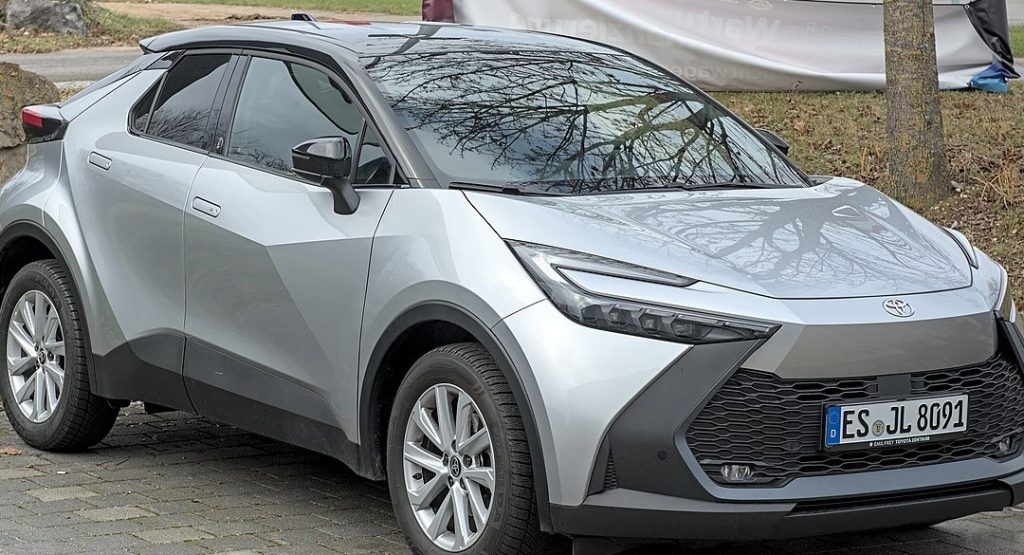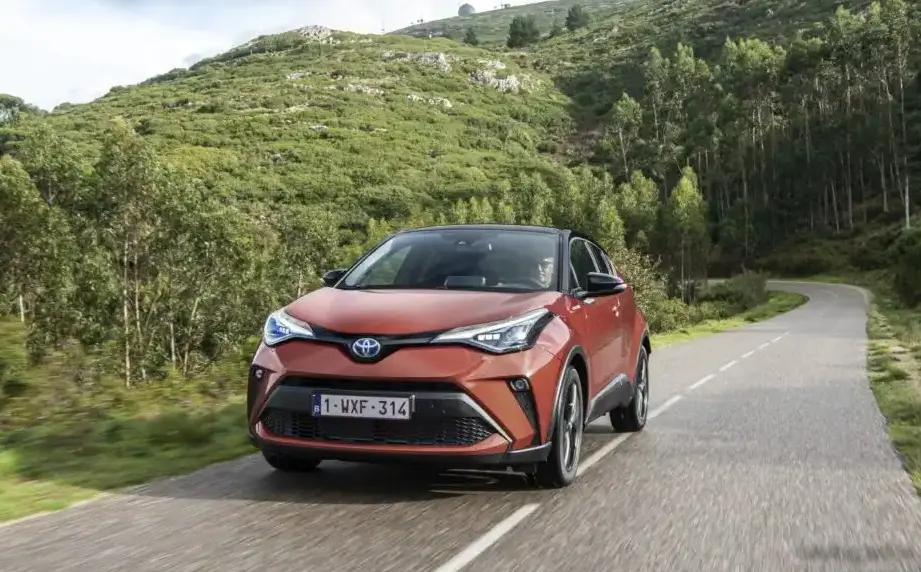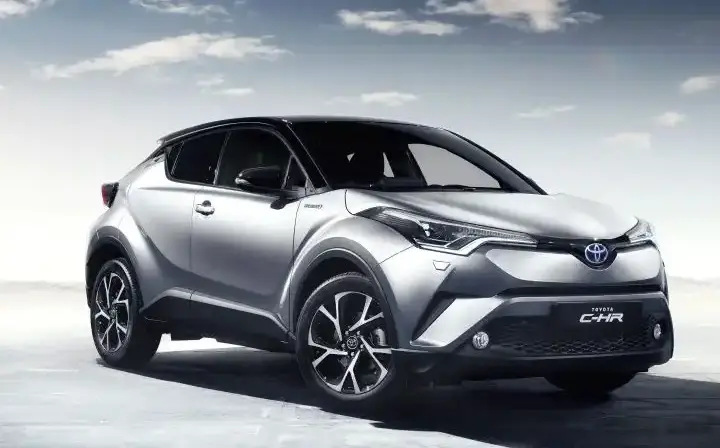
The Toyota C-HR 1.2 (116 hp) represents a key variant within the first generation (C-HR I, produced 2016-2020) of Toyota’s distinctive compact crossover. Introduced as a more accessible entry point into the C-HR lineup, this model combined a downsized turbocharged engine with a focus on fuel efficiency and everyday usability. Positioned below the 1.8 Hybrid model, the 1.2L variant aimed to attract buyers seeking a stylish and modern vehicle without the higher price tag associated with hybrid technology or more powerful engine options. It was primarily marketed in Europe and other regions where smaller displacement engines were favored due to tax incentives and fuel costs.
Technical Specifications
| Brand | Toyota |
| Model | C-HR |
| Generation | C-HR I |
| Type (Engine) | 1.2 (116 Hp) |
| Start of production | 2016 |
| End of production | 2020 |
| Powertrain Architecture | Internal Combustion engine |
| Body type | SUV |
| Seats | 5 |
| Doors | 5 |
| Fuel consumption (urban) | 7.4 l/100 km (31.8 US mpg) |
| Fuel consumption (extra urban) | 5.1 l/100 km (46.1 US mpg) |
| Fuel consumption (combined) | 5.9 l/100 km (39.9 US mpg) |
| CO2 emissions | 135 g/km |
| Fuel Type | Petrol (Gasoline) |
| Acceleration 0 – 100 km/h | 10.9 sec |
| Acceleration 0 – 62 mph | 10.9 sec |
| Acceleration 0 – 60 mph | 10.4 sec |
| Maximum speed | 190 km/h (118.06 mph) |
| Emission standard | Euro 6 |
| Weight-to-power ratio | 11.9 kg/Hp |
| Weight-to-torque ratio | 7.4 kg/Nm |
| Power | 116 Hp @ 5600 rpm |
| Torque | 185 Nm @ 1500-4000 rpm (136.45 lb.-ft.) |
| Engine layout | Front, Transverse |
| Engine Model/Code | 8NR-FTS |
| Engine displacement | 1197 cm3 (73.05 cu. in.) |
| Number of cylinders | 4 |
| Engine configuration | Inline |
| Compression ratio | 10:1 |
| Number of valves per cylinder | 4 |
| Fuel injection system | Direct injection |
| Engine aspiration | Turbocharger, Intercooler |
| Valvetrain | DOHC |
| Engine oil capacity | 4 l (4.23 US qt | 3.52 UK qt) |
| Coolant capacity | 6.6 l (6.97 US qt | 5.81 UK qt) |
| Kerb Weight | 1375-1425 kg (3031.36 – 3141.59 lbs.) |
| Max. weight | 1845 kg (4067.53 lbs.) |
| Max load | 420-470 kg (925.94 – 1036.17 lbs.) |
| Trunk (boot) space – minimum | 377 l (13.31 cu. ft.) |
| Fuel tank capacity | 50 l (13.21 US gal | 11 UK gal) |
| Permitted trailer load with brakes (12%) | 1300 kg (2866.01 lbs.) |
| Permitted trailer load without brakes | 720 kg (1587.33 lbs.) |
| Length | 4360 mm (171.65 in.) |
| Width | 1795 mm (70.67 in.) |
| Height | 1565 mm (61.61 in.) |
| Wheelbase | 2640 mm (103.94 in.) |
| Front track | 1550 mm (61.02 in.) |
| Rear track | 1560 mm (61.42 in.) |
| Ride height (ground clearance) | 160 mm (6.3 in.) |
| Drag coefficient (Cd) | 0.32 |
| Approach angle | 15° |
| Drivetrain Architecture | Front wheel drive |
| Number of gears | 6 |
| Type of gearbox | Manual transmission |
| Front suspension | Independent type McPherson |
| Rear suspension | Double wishbone |
| Front brakes | Ventilated discs |
| Rear brakes | Disc |
| Assisting systems | ABS (Anti-lock braking system) |
| Steering type | Steering rack and pinion |
| Power steering | Electric Steering |
INTRODUCTION
The Toyota C-HR (Compact High Rider) debuted in 2016 as a bold statement in the increasingly crowded compact crossover segment. The 1.2-liter turbocharged gasoline engine variant, producing 116 horsepower, was a significant offering for European markets and other regions prioritizing fuel economy and lower running costs. Built on the Toyota New Global Architecture (TNGA) platform – specifically the GA-C variant – the C-HR aimed to deliver a more engaging driving experience than traditional Toyota offerings, coupled with striking and unconventional styling. This particular engine and transmission combination was designed to be the volume seller, offering a balance between affordability and acceptable performance.
Powertrain & Engine Architecture
The heart of the C-HR 1.2 is the 8NR-FTS engine, a 1.2-liter inline-four cylinder gasoline engine equipped with a turbocharger and direct fuel injection. This engine is part of Toyota’s NR engine family, known for its thermal efficiency and compact design. The turbocharger, coupled with intercooling, helps to boost power output despite the relatively small displacement. The engine utilizes a dual overhead camshaft (DOHC) valvetrain with four valves per cylinder, optimizing airflow for improved performance. Fuel is delivered via a direct injection system, allowing for precise fuel metering and enhanced combustion efficiency. The 1.2L engine was typically paired with a six-speed manual transmission, although a Continuously Variable Transmission (CVT) was also offered in some markets. The CVT aimed to further improve fuel economy, but at the expense of some driver engagement.
Driving Characteristics
The C-HR 1.2, with its 116 horsepower and 185 Nm (136 lb-ft) of torque, offered adequate, but not exhilarating, performance. Acceleration from 0-60 mph took around 10.4 seconds, making it competitive with other small crossovers in its class. The turbocharger provides a noticeable boost in power at lower RPMs, aiding in everyday driving situations like merging onto highways or overtaking slower traffic. However, the engine can feel strained when pushed hard, particularly when fully loaded. The six-speed manual transmission provides a more connected driving experience, while the CVT prioritizes smoothness and fuel efficiency. The C-HR’s suspension, tuned for comfort, provides a reasonably compliant ride, but can feel somewhat firm over rough road surfaces. Steering is precise but lacks significant feedback.
Equipment & Trim Levels
The C-HR 1.2 typically came with a respectable level of standard equipment. Base models included features such as air conditioning, a touchscreen infotainment system with Bluetooth connectivity, power windows and mirrors, and a suite of safety features including ABS, Vehicle Stability Control, and multiple airbags. Higher trim levels added features like automatic climate control, a reversing camera, parking sensors, alloy wheels, and upgraded interior upholstery. Optional extras included a panoramic sunroof, premium audio system, and advanced safety technologies like lane departure alert and pre-collision system. Interior materials were generally of good quality, with a focus on creating a modern and stylish cabin environment.
Chassis & Braking
The C-HR’s chassis utilizes a McPherson strut suspension setup at the front and a double wishbone suspension at the rear. This configuration provides a good balance between ride comfort and handling. Front brakes are ventilated discs, while rear brakes are solid discs, providing adequate stopping power for the vehicle’s weight. Electric power steering provides light and precise steering feel. The C-HR’s relatively low center of gravity contributes to its stable handling characteristics. The vehicle’s weight, ranging from 1375 to 1425 kg (3031 to 3142 lbs), depending on trim level and options, impacts its overall performance and fuel economy.
Market Reception & Comparison
The Toyota C-HR 1.2 was generally well-received by critics for its striking design, comfortable interior, and good fuel economy. However, some reviewers criticized its limited rear visibility and somewhat underpowered engine. Compared to other 1.2-liter turbocharged crossovers, the C-HR offered a more stylish and engaging driving experience, but often at a slightly higher price point. The 1.8 Hybrid variant offered significantly better fuel economy and smoother acceleration, but came with a substantial price premium. The 1.2L model was positioned as a more affordable alternative for buyers who didn’t prioritize ultimate performance or hybrid technology.
Legacy
The 8NR-FTS engine, while not known for being a powerhouse, has proven to be a relatively reliable unit. Common issues are generally minor and related to the turbocharger or fuel system. The C-HR 1.2 remains a popular choice in the used car market, particularly for buyers seeking a stylish and fuel-efficient crossover. Its distinctive design and Toyota’s reputation for reliability continue to make it an attractive option. However, potential buyers should be aware of the engine’s limitations and ensure that the vehicle has been properly maintained. The C-HR’s impact lies in its bold styling and its contribution to Toyota’s efforts to appeal to a younger, more design-conscious audience.