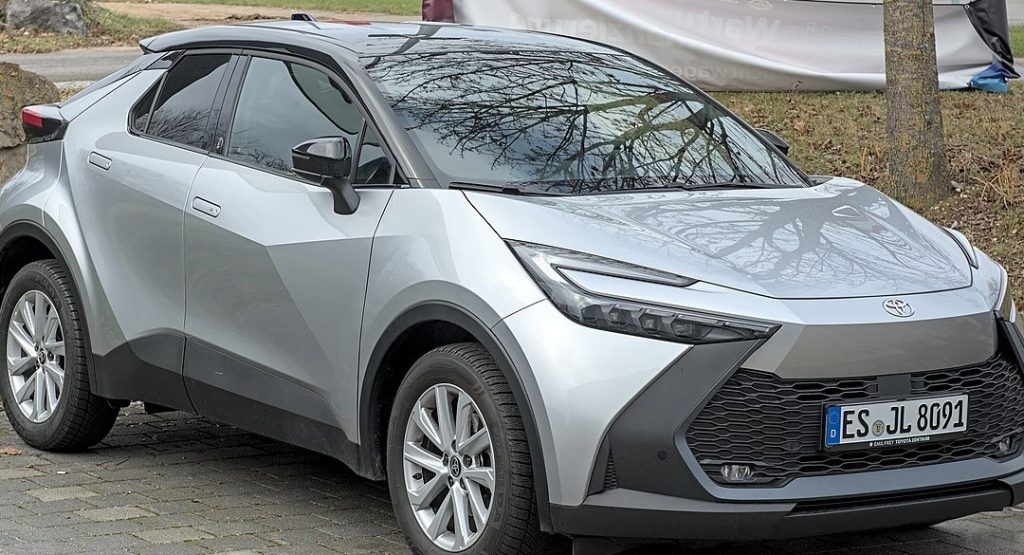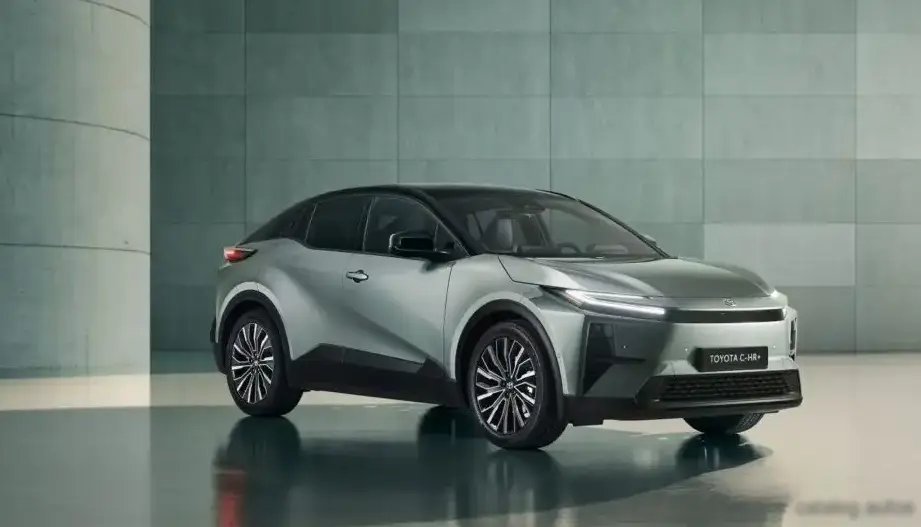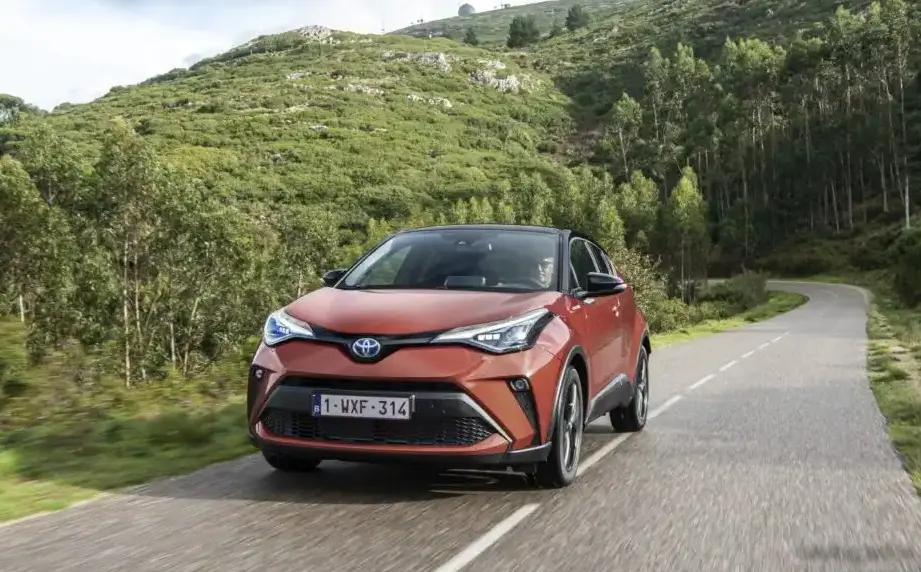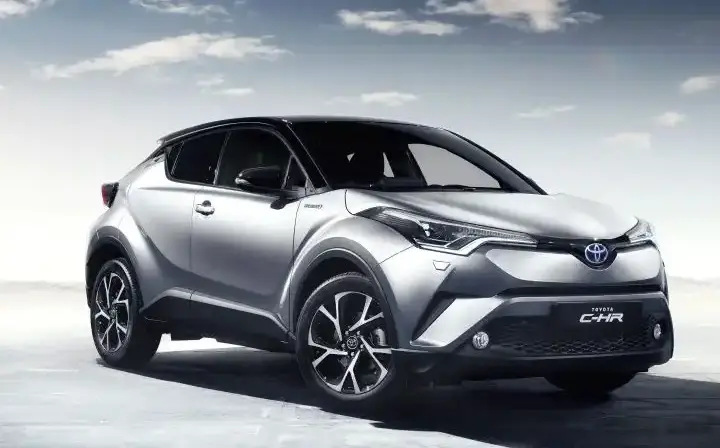
The Toyota C-HR I 1.2 (116 hp) 4WD Multidrive S is a compact crossover SUV produced by Toyota from 2016 to 2020. Positioned as a stylish and technologically advanced entry in the burgeoning subcompact SUV segment, the C-HR (Compact High Rider) aimed to attract younger buyers with its distinctive design and available all-wheel drive. This particular variant, equipped with the 8NR-FTS 1.2-liter turbocharged engine and a continuously variable transmission (CVT), represented a balance between fuel efficiency and all-weather capability within the C-HR lineup. It served as a mid-range offering, slotting between the base 1.2L front-wheel-drive models and the hybrid variants.
Technical Specifications
| Brand | Toyota |
| Model | C-HR |
| Generation | C-HR I |
| Type (Engine) | 1.2 (116 Hp) 4WD Multidrive S |
| Start of production | 2016 |
| End of production | 2020 |
| Powertrain Architecture | Internal Combustion engine |
| Body type | SUV |
| Seats | 5 |
| Doors | 5 |
| Fuel consumption (urban) | 7.6 l/100 km (30.9 US mpg) |
| Fuel consumption (extra urban) | 5.6 l/100 km (42 US mpg) |
| Fuel consumption (combined) | 6.3 l/100 km (37.3 US mpg) |
| CO2 emissions | 143 g/km |
| Fuel Type | Petrol (Gasoline) |
| Acceleration 0 – 100 km/h | 11.4 sec |
| Acceleration 0 – 62 mph | 11.4 sec |
| Acceleration 0 – 60 mph | 10.8 sec |
| Maximum speed | 180 km/h (111.85 mph) |
| Emission standard | Euro 6 |
| Weight-to-power ratio | 12.6 kg/Hp |
| Weight-to-torque ratio | 7.9 kg/Nm |
| Power | 116 Hp @ 5600 rpm |
| Torque | 185 Nm @ 1500-4000 rpm (136.45 lb.-ft. @ 1500-4000 rpm) |
| Engine layout | Front, Transverse |
| Engine Model/Code | 8NR-FTS |
| Engine displacement | 1197 cm3 (73.05 cu. in.) |
| Number of cylinders | 4 |
| Engine configuration | Inline |
| Compression ratio | 10.01:1 |
| Number of valves per cylinder | 4 |
| Fuel injection system | Direct injection |
| Engine aspiration | Turbocharger, Intercooler |
| Valvetrain | DOHC |
| Engine oil capacity | 4 l (4.23 US qt | 3.52 UK qt) |
| Coolant capacity | 7.4 l (7.82 US qt | 6.51 UK qt) |
| Kerb Weight | 1460-1510 kg (3218.75 – 3328.98 lbs.) |
| Max. weight | 1930 kg (4254.92 lbs.) |
| Max load | 420-470 kg (925.94 – 1036.17 lbs.) |
| Trunk (boot) space – minimum | 377 l (13.31 cu. ft.) |
| Fuel tank capacity | 50 l (13.21 US gal | 11 UK gal) |
| Permitted trailer load with brakes (12%) | 1100 kg (2425.08 lbs.) |
| Permitted trailer load without brakes | 720 kg (1587.33 lbs.) |
| Length | 4360 mm (171.65 in.) |
| Width | 1795 mm (70.67 in.) |
| Height | 1565 mm (61.61 in.) |
| Wheelbase | 2640 mm (103.94 in.) |
| Front track | 1550 mm (61.02 in.) |
| Rear track | 1560 mm (61.42 in.) |
| Ride height (ground clearance) | 160 mm (6.3 in.) |
| Drag coefficient (Cd) | 0.33 |
| Minimum turning circle | 10.4 m (34.12 ft.) |
| Approach angle | 15° |
| Drive wheel | All wheel drive (4×4) |
| Number of gears and type of gearbox | automatic transmission CVT |
| Front suspension | Independent type McPherson |
| Rear suspension | Double wishbone |
| Front brakes | Ventilated discs |
| Rear brakes | Disc |
| Assisting systems | ABS (Anti-lock braking system) |
| Steering type | Steering rack and pinion |
| Power steering | Electric Steering |
Powertrain & Engine Architecture
The heart of the C-HR I 1.2 4WD is Toyota’s 8NR-FTS engine, a 1.197-liter inline-four cylinder gasoline engine. This engine utilizes a single-scroll turbocharger with an intercooler to boost power and efficiency. Direct fuel injection (D-4S technology) is employed, optimizing combustion and contributing to improved fuel economy. The engine features a dual overhead camshaft (DOHC) valvetrain with four valves per cylinder. The 8NR-FTS is known for its relatively high compression ratio of 10.01:1, which aids in thermal efficiency. Paired with this engine is a continuously variable transmission (CVT), marketed by Toyota as ‘Multidrive S’. This CVT is designed to simulate stepped gear changes for a more natural driving feel, and it’s tuned for fuel efficiency rather than outright performance. The all-wheel-drive system is a part-time system, engaging the rear wheels when traction is needed, enhancing stability in slippery conditions.
Driving Characteristics
The 116 hp and 185 Nm (136 lb-ft) of torque produced by the 1.2-liter engine, combined with the CVT, result in adequate, but not exhilarating, performance. Acceleration from 0-60 mph takes around 10.8 seconds, and the car has a top speed of 111.85 mph. The CVT prioritizes fuel efficiency, meaning the engine often operates at lower RPMs during cruising. This can sometimes feel disconnected from the driver, with a noticeable delay in response when accelerating. Compared to the higher-output 1.8 Hybrid variant, the 1.2L feels noticeably slower, particularly during overtaking maneuvers. However, the 4WD system provides enhanced grip and stability, especially on wet or snowy roads, making it a more confident option in inclement weather. The CVT’s gear ratios are optimized for fuel economy, resulting in a comfortable, if not sporty, driving experience.
Equipment & Trim Levels
The C-HR I 1.2 4WD Multidrive S typically came standard with features such as Toyota Safety Sense (including pre-collision system, lane departure alert, and automatic high beams), a touchscreen infotainment system with Bluetooth connectivity, air conditioning, and power windows. Interior upholstery was typically cloth, with a focus on durable and modern materials. Optional extras included features like a premium audio system, heated front seats, and a panoramic sunroof. The exterior styling was a key selling point, featuring a bold, coupe-like silhouette and distinctive C-pillar design. Trim levels varied slightly by market, but generally, this variant represented a well-equipped mid-range option.
Chassis & Braking
The C-HR I utilizes a McPherson strut front suspension and a double wishbone rear suspension, providing a comfortable ride quality. The suspension is tuned for everyday driving, prioritizing comfort over sporty handling. Braking duties are handled by ventilated discs at the front and solid discs at the rear. Anti-lock Braking System (ABS) is standard. The 4WD system adds weight to the vehicle, impacting handling slightly, but also enhances stability. Stabilizer bars are present on both axles to reduce body roll during cornering.
Market Reception & Comparison
The Toyota C-HR I 1.2 4WD Multidrive S received mixed reviews. Critics praised its striking design, standard safety features, and fuel efficiency. However, some found the engine underpowered, particularly when paired with the CVT. Compared to other subcompact SUVs like the Honda HR-V or Mazda CX-3, the C-HR offered a more distinctive style but lacked the same level of performance. Fuel economy was competitive, averaging around 37.3 US mpg in combined driving. Reliability was generally good, consistent with Toyota’s reputation, although some owners reported minor issues with the CVT.
Legacy
The Toyota C-HR I 1.2 4WD Multidrive S has proven to be a relatively reliable vehicle in the used car market. The 8NR-FTS engine, while not known for its blistering performance, is generally durable and doesn’t suffer from major mechanical issues. The CVT, however, requires regular maintenance (fluid changes) to ensure longevity. The C-HR’s unique styling continues to appeal to buyers looking for a distinctive and modern-looking SUV. While it may not be the most powerful or engaging vehicle in its class, the C-HR I 1.2 4WD offers a compelling combination of style, safety, and fuel efficiency, making it a popular choice for those seeking a practical and visually appealing compact crossover.