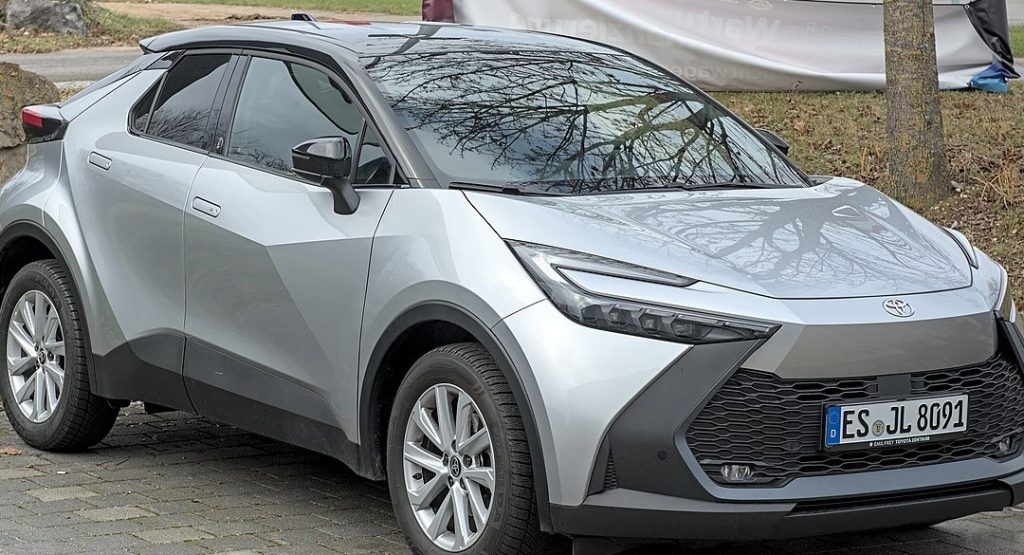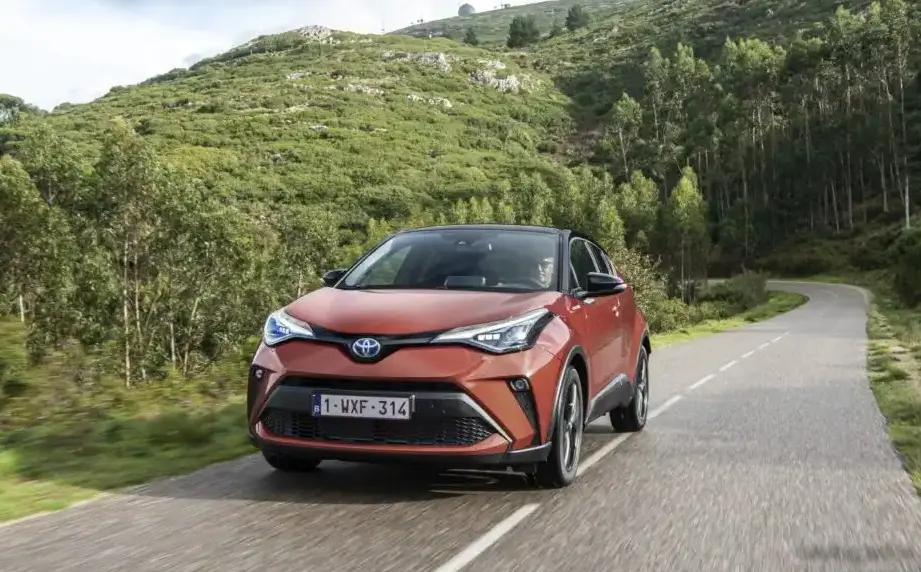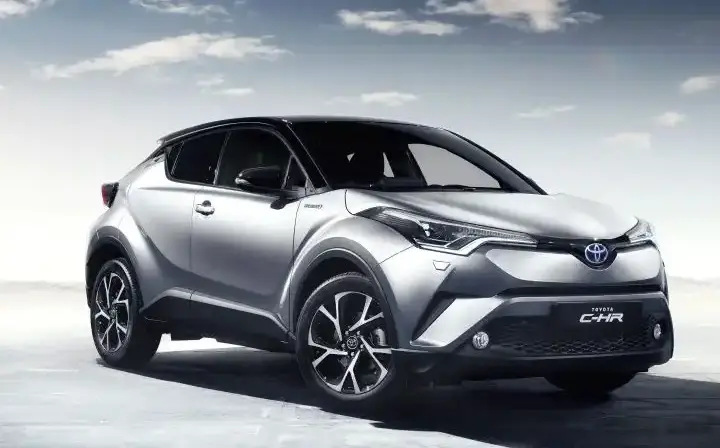
The Toyota C-HR 1.2 (116 hp) Multidrive S, produced between 2016 and 2020, represents a key entry point into the first generation (NX50) of Toyota’s distinctive compact crossover. Introduced as part of the broader C-HR lineup, this variant was primarily aimed at the European and Asian markets, offering a balance of fuel efficiency, affordability, and Toyota’s reputation for reliability. It occupied the lower-mid range of the C-HR offerings, positioned below the more powerful 1.8 Hybrid and higher-trim gasoline models. The C-HR, standing for “Compact High Rider,” was Toyota’s attempt to capture a growing segment of buyers seeking a stylish and practical urban vehicle.
Technical Specifications
| Brand | Toyota |
| Model | C-HR |
| Generation | C-HR I |
| Type (Engine) | 1.2 (116 Hp) Multidrive S |
| Start of production | 2016 |
| End of production | 2020 |
| Powertrain Architecture | Internal Combustion engine |
| Body type | SUV |
| Seats | 5 |
| Doors | 5 |
| Fuel consumption (urban) | 7.3 l/100 km (32.2 US mpg) |
| Fuel consumption (extra urban) | 5.1 l/100 km (46.1 US mpg) |
| Fuel consumption (combined) | 5.9 l/100 km (39.9 US mpg) |
| CO2 emissions | 144 g/km |
| Fuel Type | Petrol (Gasoline) |
| Acceleration 0 – 100 km/h | 11.1 sec |
| Acceleration 0 – 62 mph | 11.1 sec |
| Acceleration 0 – 60 mph | 10.5 sec |
| Maximum speed | 185 km/h (114.95 mph) |
| Emission standard | Euro 6 |
| Weight-to-power ratio | 12 kg/Hp |
| Weight-to-torque ratio | 7.5 kg/Nm |
| Power | 116 Hp @ 5600 rpm |
| Torque | 185 Nm @ 1500-4000 rpm (136.45 lb.-ft.) |
| Engine layout | Front, Transverse |
| Engine Model/Code | 8NR-FTS |
| Engine displacement | 1197 cm3 (73.05 cu. in.) |
| Number of cylinders | 4 |
| Engine configuration | Inline |
| Compression ratio | 10:1 |
| Number of valves per cylinder | 4 |
| Fuel injection system | Direct injection |
| Engine aspiration | Turbocharger, Intercooler |
| Valvetrain | DOHC |
| Engine oil capacity | 4 l (4.23 US qt | 3.52 UK qt) |
| Coolant capacity | 7.4 l (7.82 US qt | 6.51 UK qt) |
| Kerb Weight | 1390-1440 kg (3064.43 – 3174.66 lbs.) |
| Max. weight | 1865 kg (4111.62 lbs.) |
| Max load | 425-475 kg (936.96 – 1047.2 lbs.) |
| Trunk (boot) space – minimum | 377 l (13.31 cu. ft.) |
| Fuel tank capacity | 50 l (13.21 US gal | 11 UK gal) |
| Permitted trailer load with brakes (12%) | 1100 kg (2425.08 lbs.) |
| Permitted trailer load without brakes | 720 kg (1587.33 lbs.) |
| Length | 4360 mm (171.65 in.) |
| Width | 1795 mm (70.67 in.) |
| Height | 1565 mm (61.61 in.) |
| Wheelbase | 2640 mm (103.94 in.) |
| Front track | 1550 mm (61.02 in.) |
| Rear track | 1560 mm (61.42 in.) |
| Ride height (ground clearance) | 160 mm (6.3 in.) |
| Drag coefficient (Cd) | 0.32 |
| Minimum turning circle | 10.4 m (34.12 ft.) |
| Front suspension | Independent type McPherson |
| Rear suspension | Double wishbone |
| Front brakes | Ventilated discs |
| Rear brakes | Disc |
| Gearbox | automatic transmission CVT |
Powertrain & Engine Architecture
The heart of the C-HR 1.2 Multidrive S is Toyota’s 8NR-FTS engine, a 1.2-liter turbocharged inline-four cylinder gasoline engine. This engine is part of Toyota’s ‘New Global Architecture’ (TNGA) engine family, designed for improved efficiency and reduced weight. The 8NR-FTS utilizes direct fuel injection and a twin-scroll turbocharger with an intercooler to deliver 116 horsepower and 185 Nm (136 lb-ft) of torque. The engine features a DOHC (Double Overhead Camshaft) valvetrain with four valves per cylinder. The Multidrive S transmission is a continuously variable transmission (CVT) which prioritizes fuel efficiency over outright performance. It simulates stepped gear changes to provide a more conventional driving feel. This particular engine code was designed to meet stringent Euro 6 emissions standards.
Driving Characteristics
The 1.2-liter engine paired with the CVT delivers adequate, but not exhilarating, performance. Acceleration from 0-60 mph takes around 10.5 seconds, and the top speed is 115 mph. The CVT transmission keeps the engine within its optimal power band, providing smooth and linear acceleration. However, it can sometimes feel sluggish during quick overtaking maneuvers. Compared to the 1.8 Hybrid variant, the 1.2 lacks the instant torque and responsiveness of the electric motor. The CVT’s programming is tuned for efficiency, meaning it prioritizes lower engine speeds, which can result in a slightly droning engine note under hard acceleration. The steering is light and precise, making it easy to maneuver in urban environments. The suspension is tuned for comfort, providing a reasonably smooth ride, although it can feel a bit firm on rougher road surfaces.
Equipment & Trim Levels
The C-HR 1.2 Multidrive S typically came equipped with a respectable level of standard features. These included air conditioning, a touchscreen infotainment system with Bluetooth connectivity, a rearview camera, and alloy wheels. Safety features such as ABS, Vehicle Stability Control (VSC), and multiple airbags were also standard. Higher trim levels offered options like heated front seats, a larger touchscreen display, automatic climate control, and parking sensors. Interior upholstery was typically cloth, with the option of partial leather trim on some models. The dashboard design was modern and driver-focused, with a high center console and a layered effect.
Chassis & Braking
The C-HR utilizes a front-wheel-drive layout. The front suspension consists of independent McPherson struts, while the rear features a double wishbone setup. This configuration provides a good balance of ride comfort and handling. Braking duties are handled by ventilated discs on the front wheels and solid discs on the rear. ABS (Anti-lock Braking System) is standard, providing enhanced braking performance in emergency situations. The C-HR’s chassis is relatively lightweight, contributing to its fuel efficiency and agility.
Market Reception & Comparison
The Toyota C-HR 1.2 Multidrive S was generally well-received by critics for its stylish design, fuel efficiency, and comfortable ride. However, some reviewers criticized its lack of outright performance and the sometimes-unrefined feel of the CVT transmission. Compared to other engines in the C-HR lineup, the 1.2 offered the most affordable entry point, making it attractive to budget-conscious buyers. The 1.8 Hybrid variant provided significantly better fuel economy and performance, but at a higher price point. The 1.2 was often compared to rivals like the Nissan Juke and Renault Captur, offering a similar blend of style, practicality, and affordability.
Legacy
The 8NR-FTS engine, while not known for being a powerhouse, has proven to be relatively reliable in the C-HR. The Multidrive S CVT transmission, while sometimes criticized for its driving experience, is generally durable with proper maintenance. In the used car market, the C-HR 1.2 Multidrive S represents a good value proposition for buyers seeking a stylish and economical crossover. Regular servicing, including CVT fluid changes, is crucial to ensure the longevity of the powertrain. The C-HR’s distinctive design and Toyota’s reputation for reliability continue to make it a popular choice among used car buyers.