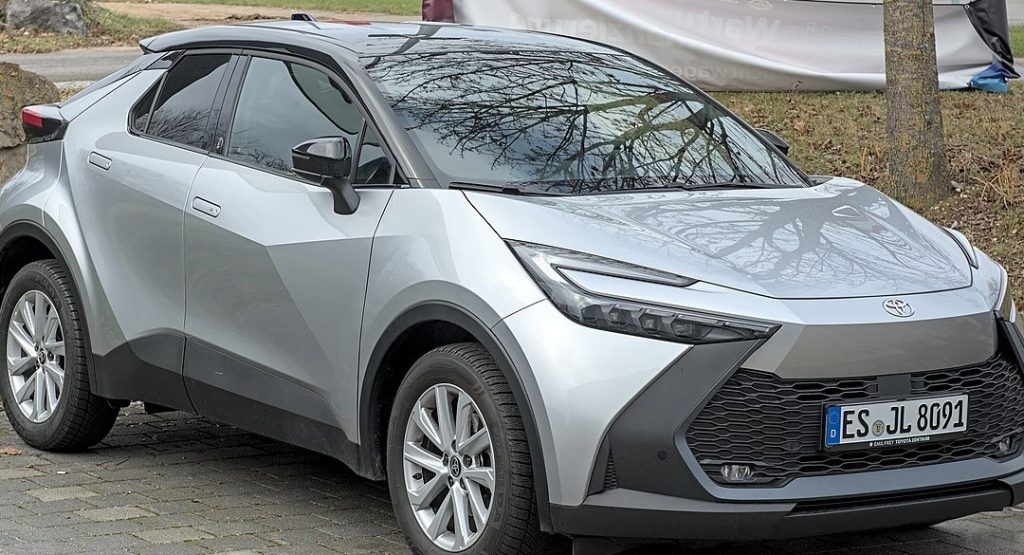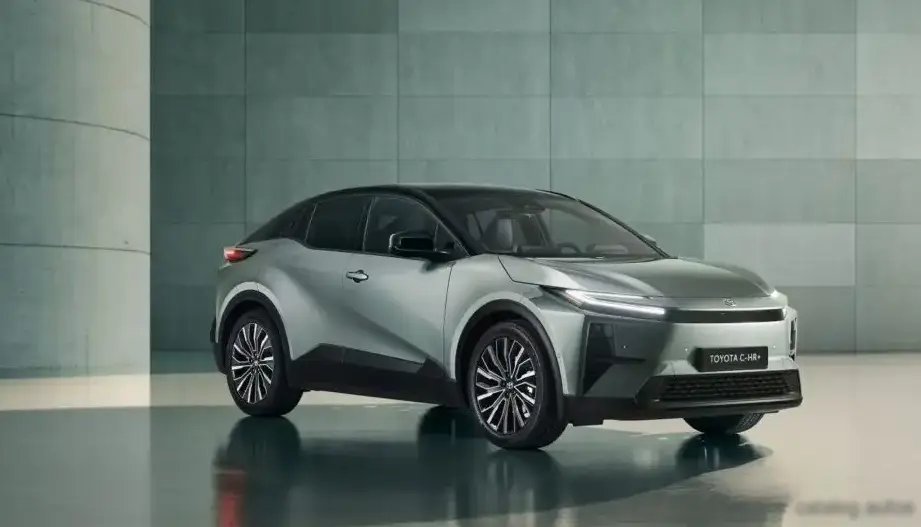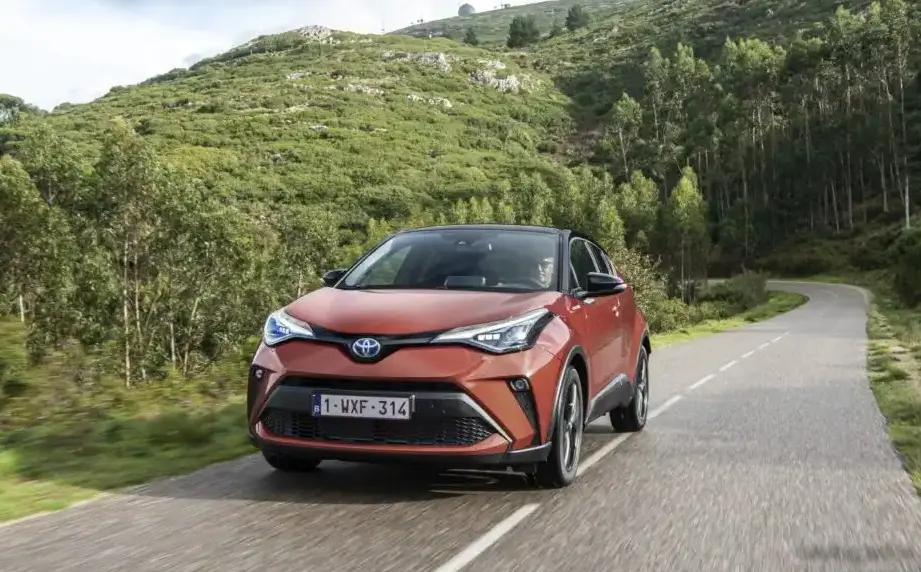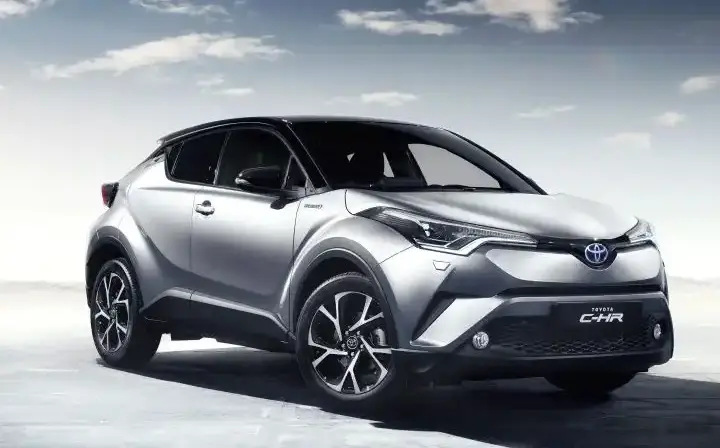
The Toyota C-HR (Compact High Rider) is a subcompact crossover SUV introduced by Toyota in 2016. The first generation, designated as the C-HR I (codenamed NX50), spanned from 2017 to 2020. Within this generation, the 2.0-liter (144 hp) automatic variant represented a key offering in the North American market, positioned as a mainstream, accessible entry point into the C-HR lineup. It aimed to balance fuel efficiency with adequate performance for daily commuting and urban driving. This model was a significant departure for Toyota, embracing a more aggressively styled and youthful aesthetic compared to its more conservative offerings.
Technical Specifications
| Brand | Toyota |
| Model | C-HR |
| Generation | C-HR I |
| Type (Engine) | 2.0 (144 Hp) Automatic |
| Start of production | 2017 |
| End of production | 2020 |
| Powertrain Architecture | Internal Combustion engine |
| Body type | SUV |
| Seats | 5 |
| Doors | 5 |
| Fuel consumption (urban) | 8.7 l/100 km (27 US mpg) |
| Fuel consumption (extra urban) | 7.5 l/100 km (31.4 US mpg) |
| Fuel consumption (combined) | 8.1 l/100 km (29 US mpg) |
| Fuel Type | Petrol (Gasoline) |
| Weight-to-power ratio | 10.4 kg/Hp |
| Weight-to-torque ratio | 8 kg/Nm |
| Power | 144 Hp @ 6100 rpm |
| Torque | 188 Nm @ 3900 rpm (138.66 lb.-ft. @ 3900 rpm) |
| Engine layout | Front, Transverse |
| Engine Model/Code | 3ZR-FAE |
| Engine displacement | 1987 cm3 (121.25 cu. in.) |
| Number of cylinders | 4 |
| Engine configuration | Inline |
| Number of valves per cylinder | 4 |
| Fuel injection system | Direct injection |
| Engine aspiration | Naturally aspirated engine |
| Valvetrain | DOHC |
| Engine oil capacity | 4.2 l (4.44 US qt | 3.7 UK qt) |
| Coolant capacity | 5.7 l (6.02 US qt | 5.02 UK qt) |
| Kerb Weight | 1497 kg (3300.32 lbs) |
| Max. weight | 1964 kg (4329.88 lbs) |
| Max load | 467 kg (1029.56 lbs) |
| Trunk (boot) space – minimum | 538 l (19 cu. ft) |
| Trunk (boot) space – maximum | 1031 l (36.41 cu. ft) |
| Fuel tank capacity | 50 l (13.21 US gal | 11 UK gal) |
| Length | 4348 mm (171.18 in) |
| Width | 1796 mm (70.71 in) |
| Height | 1565 mm (61.61 in) |
| Wheelbase | 2639 mm (103.9 in) |
| Front track | 1539 mm (60.59 in) |
| Rear track | 1539 mm (60.59 in) |
| Ride height (ground clearance) | 150 mm (5.91 in) |
| Approach angle | 15.8° |
| Departure angle | 38° |
| Drivetrain Architecture | Front wheel drive |
| Number of gears and type of gearbox | automatic transmission CVT |
| Front suspension | Independent, type McPherson with coil spring and anti-roll bar |
| Rear suspension | Double wishbone |
| Front brakes | Ventilated discs |
| Rear brakes | Disc |
| Assisting systems | ABS (Anti-lock braking system) |
| Steering type | Steering rack and pinion |
| Power steering | Electric Steering |
| Tires size | 225/50 R18 |
| Wheel rims size | 18 |
Introduction
The 2017-2020 Toyota C-HR 2.0 Automatic was a crucial variant for Toyota, particularly in markets where continuously variable transmissions (CVTs) were widely accepted. Built on the Toyota New Global Architecture (TNGA) platform – specifically the GA-C variant – the C-HR aimed to offer a more engaging driving experience and a bolder design than traditional Toyota offerings. The 2.0-liter engine and CVT pairing was designed to provide a balance between fuel economy and acceptable performance for everyday driving. It sat in the middle of the C-HR range, offering a step up from the base 1.2-liter engine in some markets, but remaining more affordable than potential hybrid options.
Powertrain & Engine Architecture
The heart of this C-HR variant is the 3ZR-FAE 2.0-liter inline-four cylinder engine. This engine utilizes Toyota’s Valvematic technology, a variable valve lift system that optimizes engine efficiency and responsiveness. Direct fuel injection further enhances combustion efficiency. The engine produces 144 horsepower at 6,100 rpm and 188 Nm (138.66 lb-ft) of torque at 3,900 rpm. The engine is transversely mounted, driving the front wheels. Paired with this engine is a CVT (Continuously Variable Transmission). Toyota’s CVTs are known for their smooth operation and focus on maximizing fuel efficiency. While not offering the traditional gear changes of an automatic transmission, the CVT simulates gear shifts to provide a more familiar driving experience. The CVT is programmed to prioritize fuel economy, but also offers a ‘Sport’ mode for more responsive acceleration.
Driving Characteristics
The C-HR 2.0 Automatic delivers a comfortable, if not particularly sporty, driving experience. The CVT contributes to smooth acceleration, but the engine can feel somewhat strained under hard acceleration, especially when fully loaded. The CVT’s programming tends to hold the engine at higher RPMs during acceleration, which can result in a noticeable drone. Compared to the manual transmission versions, the automatic sacrifices some responsiveness. The gear ratios are optimized for fuel efficiency, meaning that quick overtaking maneuvers require a bit more planning. The C-HR’s suspension is tuned for comfort, absorbing bumps and imperfections in the road well. However, this does result in some body roll during cornering.
Equipment & Trim Levels
The C-HR 2.0 Automatic typically came standard with a respectable level of equipment. Standard features often included Toyota Safety Sense C, which encompasses pre-collision system with pedestrian detection, lane departure alert with steering assist, and automatic high beams. Interior features generally included a 7-inch touchscreen infotainment system with Bluetooth connectivity, rearview camera, and automatic climate control. Higher trim levels added features such as blind spot monitoring, rear cross-traffic alert, heated front seats, and a premium audio system. Interior upholstery was typically cloth, with optional leather available on higher trims. Dashboard configuration was generally consistent across trims, featuring a modern and minimalist design.
Chassis & Braking
The C-HR I utilizes a McPherson strut front suspension and a double wishbone rear suspension. This setup provides a good balance between ride comfort and handling. The front suspension incorporates a stabilizer bar to reduce body roll. Braking duties are handled by ventilated discs at the front and solid discs at the rear. ABS (Anti-lock Braking System) is standard, providing enhanced braking performance in emergency situations. The electric power steering provides light and precise steering feel, making it easy to maneuver in urban environments.
Market Reception & Comparison
The C-HR 2.0 Automatic received mixed reviews. Critics praised its bold styling and comfortable ride, but some found the engine and CVT combination to be underwhelming in terms of performance. Fuel economy was generally considered to be good, averaging around 29 US mpg in combined driving. Compared to other trims, the 2.0-liter automatic offered a more refined driving experience than the base 1.2-liter engine, but lacked the punch of potential hybrid models. Reliability was generally good, consistent with Toyota’s reputation. However, some owners reported minor issues with the CVT, such as occasional hesitation or shuddering.
Legacy
The Toyota C-HR 2.0 Automatic has established itself as a reliable and relatively affordable used car option. The 3ZR-FAE engine and CVT transmission, while not known for exceptional performance, have proven to be durable and long-lasting with proper maintenance. The C-HR’s distinctive styling continues to appeal to buyers looking for a crossover that stands out from the crowd. As a used vehicle, it represents a good value proposition for those seeking a fuel-efficient and well-equipped subcompact SUV. The C-HR paved the way for Toyota to expand its crossover lineup and embrace more adventurous design language.