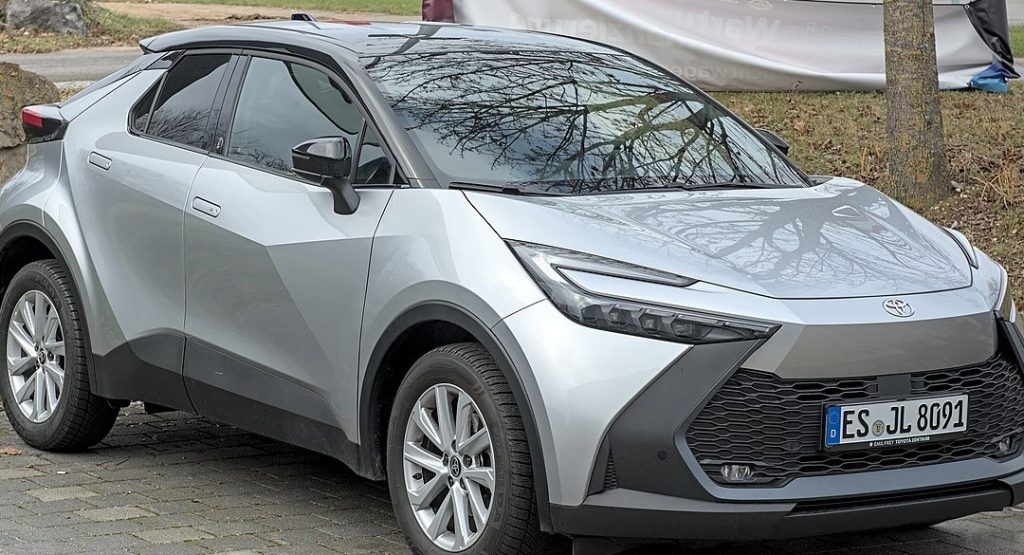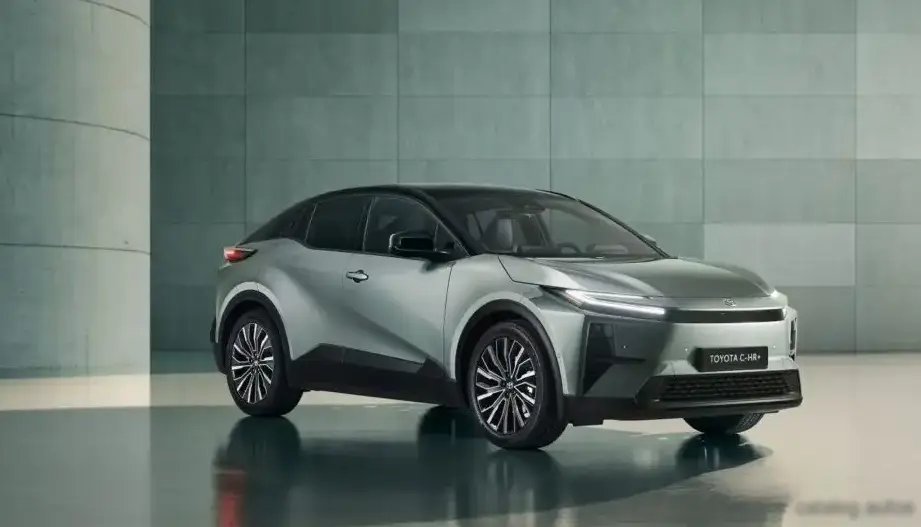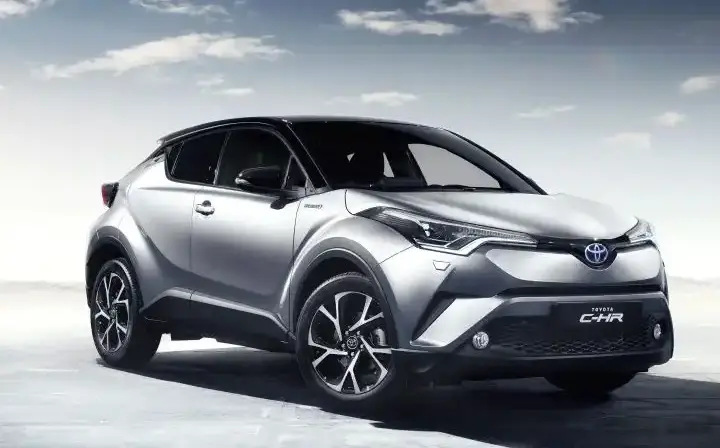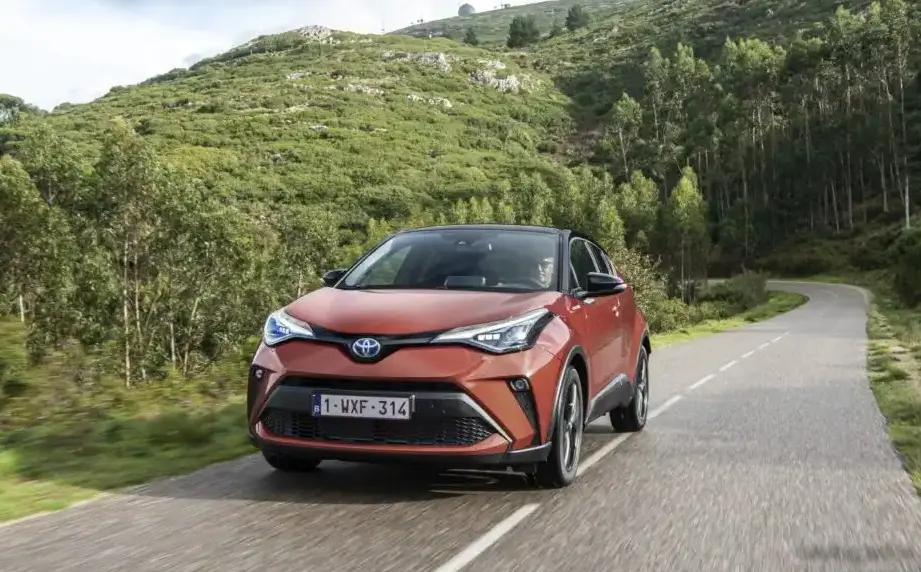
The Toyota C-HR (Compact High Rider) is a subcompact crossover SUV produced by Toyota since 2016. The first generation, designated the C-HR I, underwent a significant facelift in 2020, introducing updated styling, improved technology, and revised powertrain options. This article focuses specifically on the 1.8 Hybrid e-CVT variant produced from 2020 through June 2023, a key model within the C-HR lineup aimed at fuel efficiency and urban practicality. This version was primarily marketed in Europe and other regions outside of North America, where the C-HR was offered with different engine choices.
Technical Specifications
| Brand | Toyota |
| Model | C-HR |
| Generation | C-HR I (facelift 2020) |
| Type (Engine) | 1.8 (122 Hp) Hybrid e-CVT |
| Start of production | 2020 |
| End of production | June, 2023 |
| Powertrain Architecture | FHEV (Full Hybrid Electric Vehicle) |
| Body type | SUV |
| Seats | 5 |
| Doors | 5 |
| Fuel consumption (urban) | 3.2-3.5 l/100 km (73.5 – 67.2 US mpg) |
| Fuel consumption (extra urban) | 4.2-4.3 l/100 km (56 – 54.7 US mpg) |
| Fuel consumption (combined) | 3.8-3.9 l/100 km (61.9 – 60.3 US mpg) |
| CO2 emissions | 86 g/km |
| Fuel Type | Petrol (Gasoline) |
| Acceleration 0 – 100 km/h | 11 sec |
| Acceleration 0 – 62 mph | 11 sec |
| Acceleration 0 – 60 mph | 10.5 sec |
| Maximum speed | 170 km/h (105.63 mph) |
| Emission standard | Euro 6d |
| Weight-to-power ratio | 11.6 kg/Hp |
| Weight-to-torque ratio | 10 kg/Nm |
| Gross battery capacity | 0.7 kWh |
| Battery voltage | 207.2 V |
| Battery technology | Lithium-ion (Li-Ion) |
| Battery location | Under the rear seats |
| Electric motor power | 72 Hp |
| Electric motor Torque | 163 Nm (120.22 lb.-ft.) |
| Electric motor location | Integrated into the transmission |
| Electric motor type | Synchronous |
| System power | 122 Hp @ 5200 rpm |
| Internal combustion engine power | 98 Hp @ 5200 rpm |
| Power per litre | 54.5 Hp/l |
| Torque | 142 Nm @ 3600 rpm (104.73 lb.-ft. @ 3600 rpm) |
| Engine layout | Front, Transverse |
| Engine Model/Code | 2ZR-FXE |
| Engine displacement | 1798 cm3 (109.72 cu. in.) |
| Number of cylinders | 4 |
| Engine configuration | Inline |
| Cylinder Bore | 80.5 mm (3.17 in.) |
| Piston Stroke | 88.3 mm (3.48 in.) |
| Compression ratio | 13:1 |
| Number of valves per cylinder | 4 |
| Fuel injection system | Multi-port manifold injection |
| Engine aspiration | Naturally aspirated engine |
| Valvetrain | DOHC, VVT-i |
| Engine oil capacity | 4.2 l (4.44 US qt | 3.7 UK qt) |
| Coolant | 5.4 l (5.71 US qt | 4.75 UK qt) |
| Kerb Weight | 1420-1460 kg (3130.56 – 3218.75 lbs.) |
| Max. weight | 1860 kg (4100.6 lbs.) |
| Max load | 400-440 kg (881.85 – 970.03 lbs.) |
| Trunk (boot) space – minimum | 377 l (13.31 cu. ft.) |
| Fuel tank capacity | 43 l (11.36 US gal | 9.46 UK gal) |
| Permitted trailer load with brakes (12%) | 725 kg (1598.35 lbs.) |
| Permitted trailer load without brakes | 725 kg (1598.35 lbs.) |
| Length | 4390 mm (172.83 in.) |
| Width | 1795 mm (70.67 in.) |
| Height | 1565 mm (61.61 in.) |
| Wheelbase | 2640 mm (103.94 in.) |
| Front track | 1540-1550 mm (60.63 – 61.02 in.) |
| Rear (Back) track | 1550-1560 mm (61.02 – 61.42 in.) |
| Front overhang | 935 mm (36.81 in.) |
| Rear overhang | 815 mm (32.09 in.) |
| Drag coefficient (Cd) | 0.32 |
| Minimum turning circle (turning diameter) | 11.0 m (36.09 ft.) |
| Drivetrain Architecture | The Internal combustion engine (ICE) and electric motor drive the front wheels of the car with the ability to work in full electric or mixed mode. |
| Drive wheel | Front wheel drive |
| Number of gears and type of gearbox | automatic transmission e-CVT |
| Front suspension | Independent type McPherson |
| Rear suspension | Double wishbone |
| Front brakes | Ventilated discs, 298 mm |
| Rear brakes | Disc, 281 mm |
| Assisting systems | ABS (Anti-lock braking system) |
| Steering type | Steering rack and pinion |
| Power steering | Electric Steering |
| Tires size | 215/60 R17 96H; 225/50 R18 95H |
| Wheel rims size | 17; 18 |
INTRODUCTION
The 2020-2023 Toyota C-HR 1.8 Hybrid e-CVT represents Toyota’s entry point into the C-HR range for many European markets. Positioned as a fuel-efficient and technologically advanced subcompact SUV, it aimed to appeal to urban drivers seeking a stylish and practical vehicle. Built on the Toyota New Global Architecture (TNGA) platform – specifically a modified version of the GA-C platform – the facelifted C-HR brought improvements to ride quality, interior refinement, and safety features. The 1.8 Hybrid variant was designed to maximize fuel economy and minimize emissions, making it a popular choice in regions with stringent environmental regulations.
Powertrain & Engine Architecture
The heart of the C-HR 1.8 Hybrid is Toyota’s 2ZR-FXE 1.8-liter inline-four cylinder gasoline engine. This engine utilizes a cycle Atkinson cycle for improved thermal efficiency. It produces 98 horsepower at 5200 rpm and 142 Nm (104.73 lb-ft) of torque at 3600 rpm. The engine is paired with a permanent magnet synchronous electric motor, generating 72 horsepower and 163 Nm (120.22 lb-ft) of torque. The combined system output is 122 horsepower. The engine employs multi-port fuel injection and a DOHC (Double Overhead Camshaft) valvetrain with VVT-i (Variable Valve Timing-intelligence) for optimized performance and efficiency.
The ‘e-CVT’ transmission isn’t a traditional continuously variable transmission. It’s Toyota’s Hybrid Synergy Drive system, which uses a planetary gearset to seamlessly blend power from the gasoline engine and electric motor. This system allows for electric-only driving at low speeds and assists the engine during acceleration, contributing to the impressive fuel economy. The battery, a lithium-ion unit with a gross capacity of 0.7 kWh, is located under the rear seats, minimizing impact on passenger space.
Driving Characteristics
The C-HR 1.8 Hybrid e-CVT prioritizes fuel efficiency over outright performance. Acceleration from 0-100 km/h (0-62 mph) takes around 11 seconds, which is slower than some of its competitors and other C-HR variants. The e-CVT transmission provides smooth and linear acceleration, but it can sometimes feel less responsive than a traditional automatic or manual gearbox. The electric motor provides instant torque, which helps with low-speed maneuverability and provides a boost during acceleration. The car excels in urban environments, where the electric motor can handle much of the driving, resulting in very low fuel consumption. On the highway, the engine takes over more frequently, but the hybrid system still contributes to reduced fuel consumption compared to a conventional gasoline engine.
Equipment & Trim Levels
The C-HR 1.8 Hybrid typically came with a generous level of standard equipment. This included features like Toyota Safety Sense (a suite of active safety technologies including pre-collision system, lane departure alert, and adaptive cruise control), automatic climate control, a touchscreen infotainment system with smartphone integration (Apple CarPlay and Android Auto), and LED headlights. Interior upholstery was typically cloth, with options for partial leather trim on higher trim levels. Available options included a panoramic sunroof, upgraded audio system, and parking assist features. Trim levels varied by market, but generally offered increasing levels of luxury and convenience features.
Chassis & Braking
The C-HR 1.8 Hybrid utilizes a McPherson strut front suspension and a double wishbone rear suspension. This setup provides a comfortable ride and good handling characteristics. The suspension is tuned for urban driving, prioritizing comfort over sporty handling. Braking duties are handled by ventilated discs at the front and solid discs at the rear. ABS (Anti-lock Braking System) is standard, along with electronic brake-force distribution and brake assist. The steering is electric power-assisted, providing light and precise steering feel.
Market Reception & Comparison
The C-HR 1.8 Hybrid was generally well-received by critics for its fuel efficiency, stylish design, and standard safety features. However, some reviewers noted its relatively slow acceleration and somewhat firm ride. Compared to other C-HR variants, such as those with more powerful gasoline engines, the 1.8 Hybrid offered significantly better fuel economy but less performance. Against competitors like the Nissan Qashqai and Kia Niro Hybrid, the C-HR 1.8 Hybrid stood out with its distinctive styling and Toyota’s reputation for reliability. Fuel economy figures consistently placed it among the leaders in its class.
Legacy
The Toyota C-HR 1.8 Hybrid e-CVT has proven to be a reliable and durable vehicle. Toyota’s hybrid technology is well-established, and the 2ZR-FXE engine has a good track record for longevity. On the used car market, these models are sought after for their fuel efficiency and low running costs. The hybrid system components, including the battery, have demonstrated good durability, although battery health should be checked during pre-purchase inspections. The C-HR 1.8 Hybrid remains a popular choice for buyers looking for a stylish, economical, and reliable subcompact SUV.