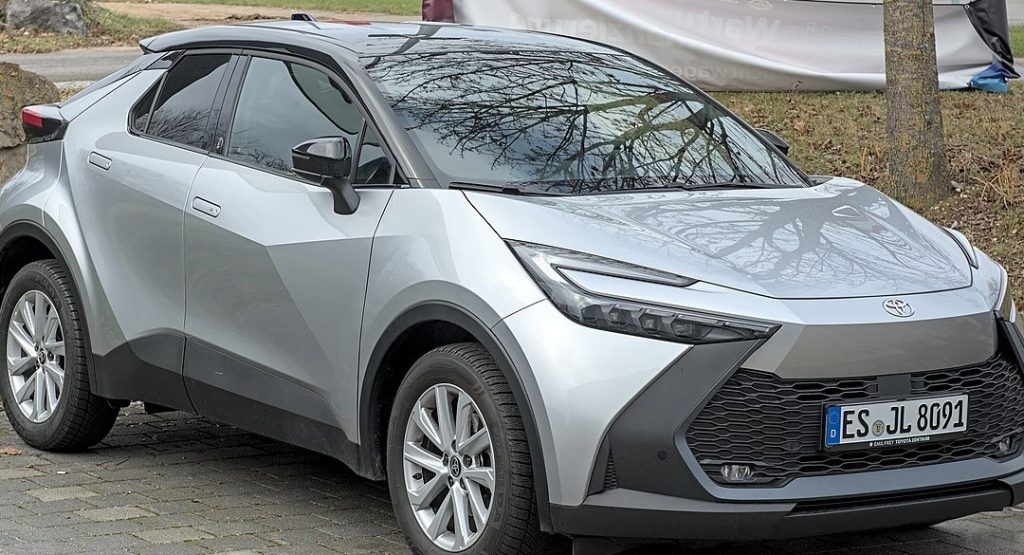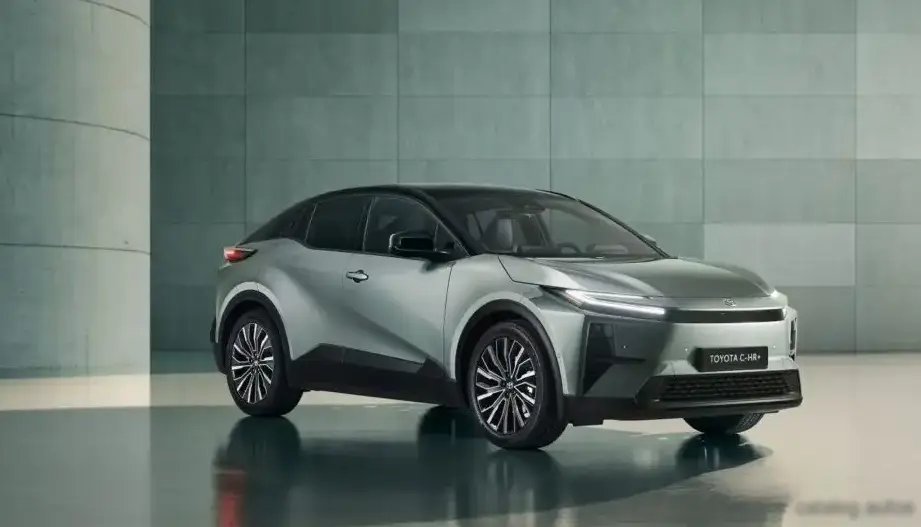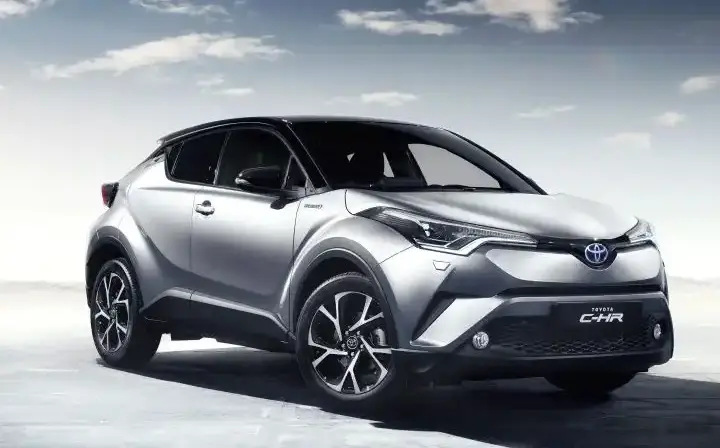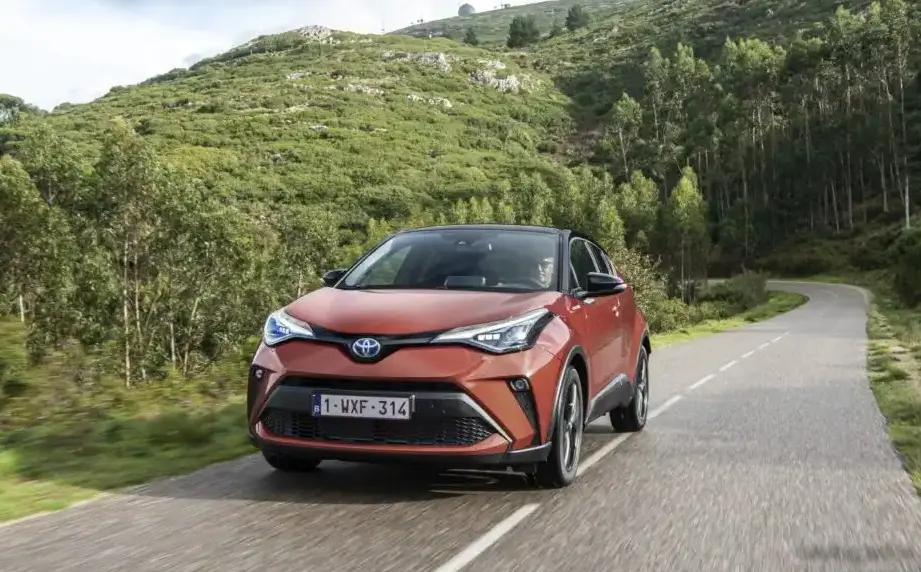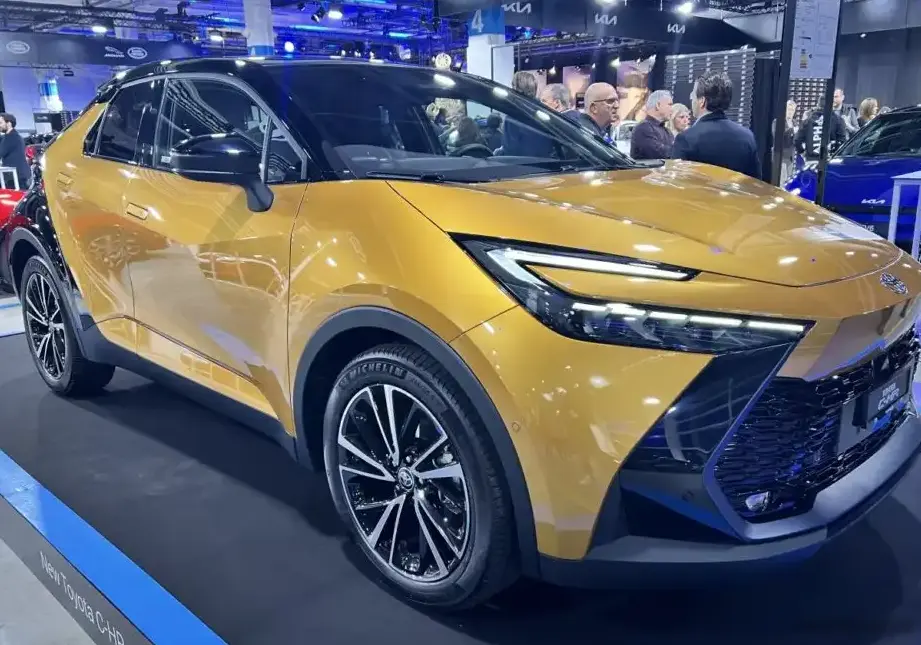
The Toyota C-HR II 1.8 Hybrid, introduced in June 2023, represents the second generation of Toyota’s distinctive compact crossover. Positioned as an entry-level hybrid option within the C-HR II range, this variant combines a 1.8-liter gasoline engine with Toyota’s proven hybrid technology. It’s designed to appeal to buyers seeking fuel efficiency and a stylish, modern vehicle, primarily targeting the European and Asian markets where compact crossovers are highly popular. The C-HR II builds upon the first generation’s bold design language, offering improved technology and refinement. This specific 1.8 Hybrid e-CVT model serves as the gateway to the C-HR lineup, offering a balance of affordability and Toyota’s renowned hybrid reliability.
Technical Specifications
| Brand | Toyota |
| Model | C-HR |
| Generation | C-HR II |
| Type (Engine) | 1.8 (140 Hp) Hybrid e-CVT |
| Start of production | June, 2023 |
| Powertrain Architecture | FHEV (Full Hybrid Electric Vehicle) |
| Body type | SUV |
| Seats | 5 |
| Doors | 5 |
| Combined fuel consumption (WLTP) | 4.6-5 l/100 km (51.1 – 47 US mpg, 61.4 – 56.5 UK mpg, 21.7 – 20 km/l) |
| CO2 emissions (WLTP) | 103-111 g/km |
| Fuel Type | Petrol (Gasoline) |
| Acceleration 0 – 100 km/h | 9.9 sec |
| Acceleration 0 – 62 mph | 9.9 sec |
| Acceleration 0 – 60 mph | 9.4 sec |
| Maximum speed | 170 km/h (105.63 mph) |
| Emission standard | Euro 6 AP |
| Gross battery capacity | 4.08 kWh |
| Battery technology | Lithium-ion (Li-Ion) |
| Electric motor power | 95 Hp |
| Electric motor Torque | 185 Nm (136.45 lb.-ft.) |
| Electric motor location | Integrated into the transmission |
| Electric motor type | Synchronous |
| System power | 140 Hp |
| Power | 98 Hp @ 5200 rpm |
| Torque | 142 Nm @ 3600 rpm (104.73 lb.-ft. @ 3600 rpm) |
| Engine layout | Front, Transverse |
| Engine Model/Code | 2ZR-FXE |
| Engine displacement | 1798 cm3 (109.72 cu. in.) |
| Number of cylinders | 4 |
| Engine configuration | Inline |
| Cylinder Bore | 80.5 mm (3.17 in.) |
| Piston Stroke | 88.3 mm (3.48 in.) |
| Compression ratio | 13:1 |
| Number of valves per cylinder | 4 |
| Fuel injection system | Multi-port manifold injection |
| Engine aspiration | Naturally aspirated engine |
| Valvetrain | DOHC, Dual VVT-i |
| Engine oil capacity | 4.2 l (4.44 US qt | 3.7 UK qt) |
| Coolant | 5.5 l (5.81 US qt | 4.84 UK qt) |
| Fuel tank capacity | 43 l (11.36 US gal | 9.46 UK gal) |
| Length | 4360 mm (171.65 in.) |
| Width | 1830 mm (72.05 in.) |
| Height | 1570 mm (61.81 in.) |
| Wheelbase | 2640 mm (103.94 in.) |
| Front overhang | 915 mm (36.02 in.) |
| Rear overhang | 805 mm (31.69 in.) |
| Drivetrain Architecture | The Internal combustion engine (ICE) and electric motor drive the front wheels of the car with the ability to work in full electric or mixed mode. |
| Drive wheel | Front wheel drive |
| Number of gears and type of gearbox | automatic transmission eCVT |
| Front brakes | Ventilated discs |
| Rear brakes | Disc |
INTRODUCTION
The Toyota C-HR II 1.8 Hybrid e-CVT, launched in 2023, is a significant evolution of Toyota’s popular subcompact crossover. Built on the GA-C platform (shared with the Corolla), the second-generation C-HR boasts a more refined design, improved interior quality, and enhanced technology. This 1.8 Hybrid variant is positioned as the entry point to the C-HR II range, offering a compelling blend of fuel efficiency, practicality, and Toyota’s reputation for reliability. It’s aimed at urban drivers and those prioritizing low running costs, offering a more accessible price point compared to the higher-powered 2.0 Hybrid models.
Powertrain & Engine Architecture
At the heart of the C-HR II 1.8 Hybrid lies Toyota’s 2ZR-FXE 1.8-liter inline-four cylinder gasoline engine. This engine utilizes a multi-port fuel injection system and Toyota’s Dual VVT-i (Variable Valve Timing-intelligent) technology for optimized efficiency and emissions. The engine produces 98 horsepower at 5200 rpm and 142 Nm (104.73 lb.-ft.) of torque at 3600 rpm. Crucially, this engine is paired with Toyota’s fourth-generation hybrid system. This system incorporates a 95 hp electric motor and a lithium-ion battery pack with a gross capacity of 4.08 kWh. The electric motor is integrated with the e-CVT (electronically controlled continuously variable transmission), which seamlessly blends power from the engine and motor. The e-CVT doesn’t have traditional gears; instead, it uses a planetary gearset to continuously adjust the gear ratio, maximizing efficiency and providing smooth acceleration. The system allows for all-electric driving at low speeds and assists the gasoline engine during acceleration and cruising.
Driving Characteristics
The C-HR II 1.8 Hybrid e-CVT delivers a comfortable and refined driving experience, prioritizing fuel economy over outright performance. Acceleration from 0-60 mph takes approximately 9.4 seconds, and 0-100 km/h in 9.9 seconds. While not particularly sporty, the hybrid system provides adequate power for everyday driving situations. The e-CVT contributes to a smooth and linear power delivery, although some drivers may find it lacks the responsiveness of a traditional automatic transmission. The hybrid system’s regenerative braking feature helps recapture energy during deceleration, further enhancing fuel efficiency. Compared to the more powerful 2.0 Hybrid variant, the 1.8 Hybrid feels less eager to accelerate, particularly when fully loaded. However, the difference in fuel economy is noticeable, making the 1.8 a more attractive option for those prioritizing running costs.
Equipment & Trim Levels
The C-HR II 1.8 Hybrid typically comes well-equipped, even in its base trim levels. Standard features generally include Toyota Safety Sense, which encompasses a suite of advanced driver-assistance systems such as pre-collision system, lane departure alert, and adaptive cruise control. Interior features typically include an 8-inch touchscreen infotainment system with Apple CarPlay and Android Auto compatibility, automatic climate control, and fabric upholstery. Higher trim levels offer upgrades such as larger touchscreen displays, heated seats, a panoramic sunroof, and premium audio systems. Optional extras often include metallic paint finishes and parking assist features.
Chassis & Braking
The C-HR II utilizes a MacPherson strut front suspension and a multi-link rear suspension, providing a comfortable ride and decent handling characteristics. The front brakes are ventilated discs, while the rear brakes are solid discs. The electric power steering provides light and precise steering feel. The suspension is tuned for comfort, absorbing bumps and imperfections in the road surface effectively. Stabilizer bars are fitted to both the front and rear axles to reduce body roll during cornering. The chassis is designed to accommodate the hybrid system components without compromising interior space or handling.
Market Reception & Comparison
The Toyota C-HR II 1.8 Hybrid has been generally well-received by automotive critics, praised for its fuel efficiency, stylish design, and comfortable ride. However, some reviewers have noted its relatively modest performance and the somewhat unconventional driving experience of the e-CVT. Compared to other hybrid crossovers in its class, such as the Hyundai Kona Hybrid and Kia Niro Hybrid, the C-HR II 1.8 Hybrid offers a competitive fuel economy and a more distinctive design. Its reliability is also a key selling point, given Toyota’s strong reputation in this area. The 1.8 Hybrid typically offers better fuel economy than the 2.0 Hybrid, but at the expense of some performance.
Legacy
The Toyota C-HR II 1.8 Hybrid represents a significant step forward in Toyota’s hybrid technology. The 2ZR-FXE engine and the fourth-generation hybrid system are known for their reliability and durability. As a result, the C-HR II 1.8 Hybrid is expected to hold its value well in the used car market. The e-CVT transmission, while not universally loved, has proven to be a reliable unit. The C-HR II’s distinctive styling and fuel-efficient powertrain are likely to ensure its continued popularity among buyers seeking a practical and stylish compact crossover.