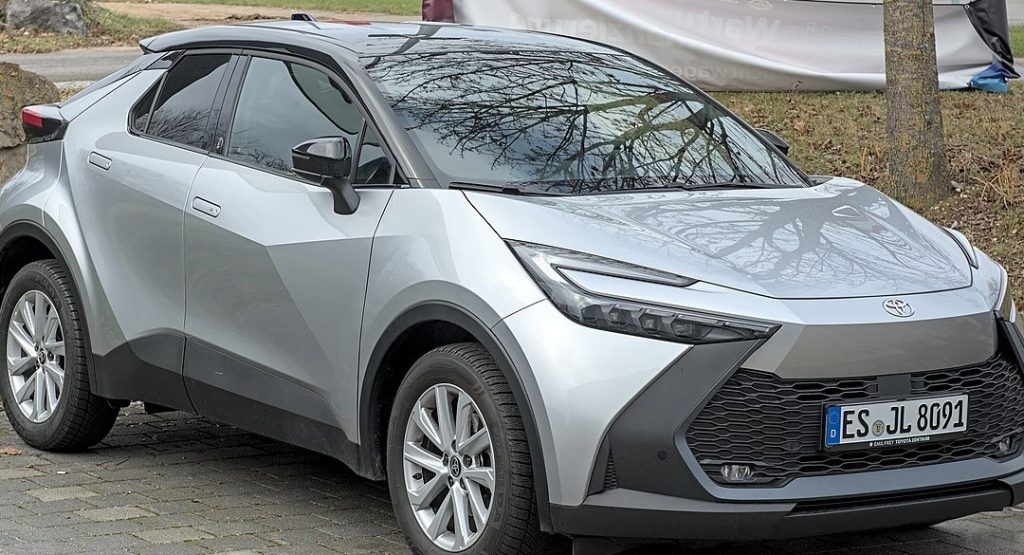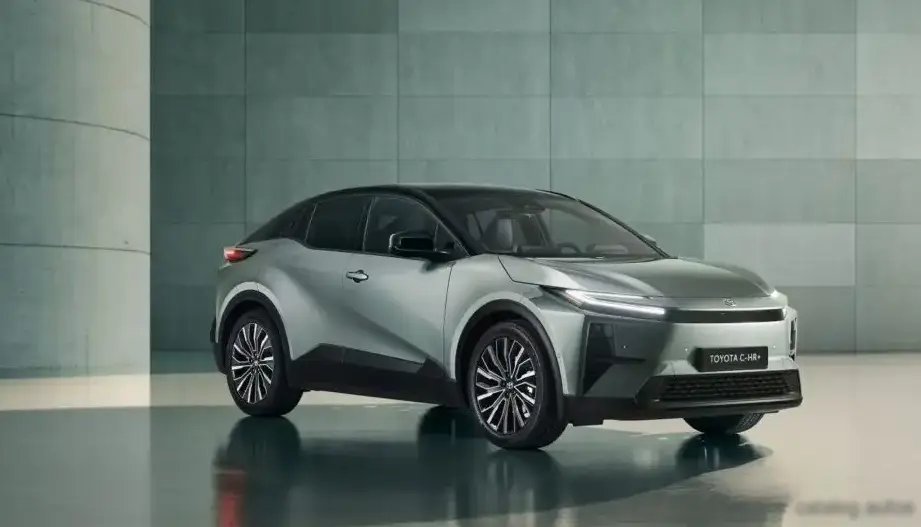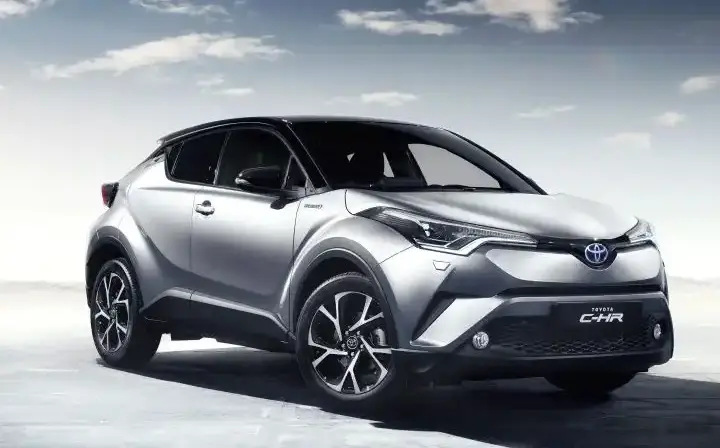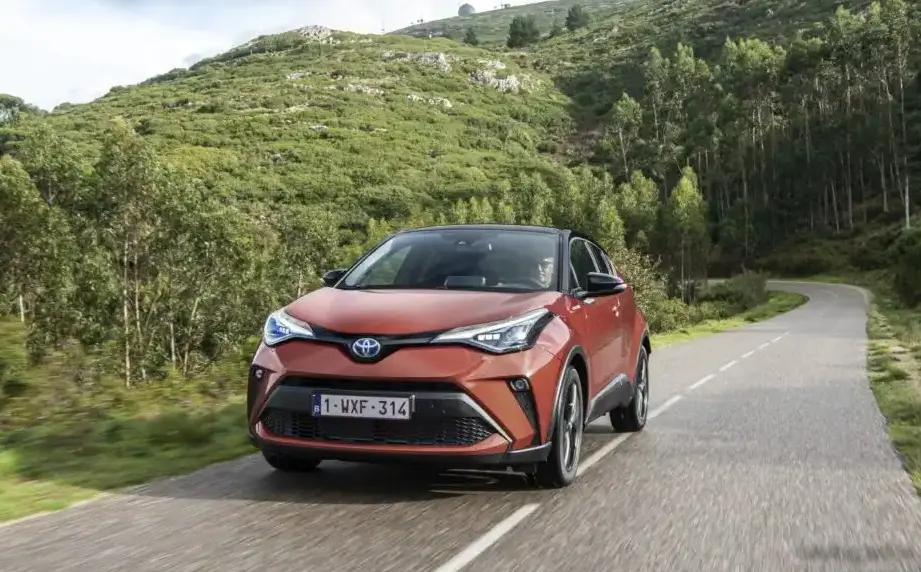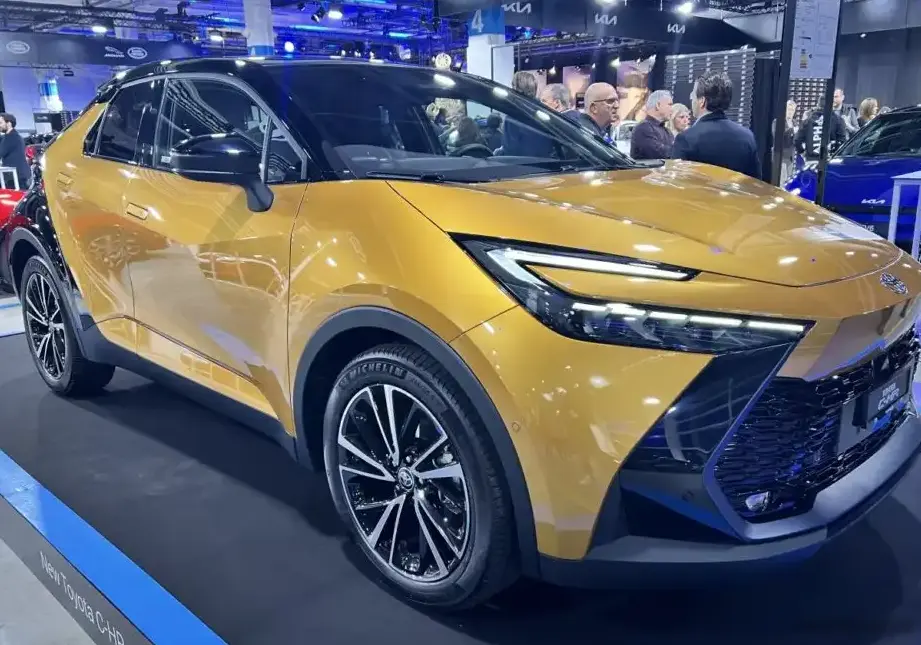
The Toyota C-HR II 2.0 Hybrid AWD e-CVT, launched in June 2023, represents the second generation of Toyota’s distinctive compact crossover. Positioned as a mid-to-upper trim level within the C-HR II range, this variant combines a 2.0-liter gasoline engine with Toyota’s proven hybrid technology and all-wheel drive capability. It builds upon the first generation C-HR’s bold styling and aims to deliver improved performance, fuel efficiency, and a more refined driving experience. The C-HR II is primarily marketed in Europe and Asia, offering a stylish and technologically advanced option in the highly competitive compact SUV segment. This model is built on the GA-C platform, shared with other Toyota and Lexus models, contributing to its improved rigidity and handling characteristics.
Technical Specifications
| Brand | Toyota |
| Model | C-HR |
| Generation | C-HR II |
| Type (Engine) | 2.0 (198 Hp) Hybrid AWD e-CVT |
| Start of production | June, 2023 |
| Powertrain Architecture | FHEV (Full Hybrid Electric Vehicle) |
| Body type | SUV |
| Seats | 5 |
| Doors | 5 |
| Combined fuel consumption (WLTP) | 4.8-5.2 l/100 km (49 – 45.2 US mpg, 58.9 – 54.3 UK mpg, 20.8 – 19.2 km/l) |
| CO2 emissions (WLTP) | 112-117 g/km |
| Fuel Type | Petrol (Gasoline) |
| Acceleration 0 – 100 km/h | 7.9 sec |
| Acceleration 0 – 62 mph | 7.9 sec |
| Acceleration 0 – 60 mph | 7.5 sec |
| Maximum speed | 180 km/h (111.85 mph) |
| Emission standard | Euro 6 AP |
| Gross battery capacity | 4.08 kWh |
| Battery technology | Lithium-ion (Li-Ion) |
| Electric motor power (1) | 113 Hp |
| Electric motor Torque (1) | 206 Nm (151.94 lb.-ft.) |
| Electric motor location (1) | Integrated into the transmission |
| Electric motor type (1) | Synchronous |
| Electric motor power (2) | 41 Hp |
| Electric motor Torque (2) | 84 Nm (61.96 lb.-ft.) |
| Electric motor location (2) | Rear axle, Transverse |
| Electric motor type (2) | Synchronous |
| System power | 198 Hp |
| Power | 152 Hp @ 6000 rpm |
| Torque | 190 Nm @ 4400-5200 rpm (140.14 lb.-ft. @ 4400-5200 rpm) |
| Engine layout | Front, Transverse |
| Engine Model/Code | M20A-FXS |
| Engine displacement | 1987 cm3 (121.25 cu. in.) |
| Number of cylinders | 4 |
| Engine configuration | Inline |
| Cylinder Bore | 80.5 mm (3.17 in.) |
| Piston Stroke | 97.5 mm (3.84 in.) |
| Compression ratio | 14:1 |
| Number of valves per cylinder | 4 |
| Fuel injection system | Direct injection and Multi-port manifold injection |
| Engine aspiration | Naturally aspirated engine |
| Valvetrain | DOHC, VVT-i, VVT-iE |
| Engine oil capacity | 4.2 l (4.44 US qt | 3.7 UK qt) |
| Coolant | 6.1 l (6.45 US qt | 5.37 UK qt) |
| Fuel tank capacity | 43 l (11.36 US gal | 9.46 UK gal) |
| Length | 4360 mm (171.65 in.) |
| Width | 1830 mm (72.05 in.) |
| Height | 1570 mm (61.81 in.) |
| Wheelbase | 2640 mm (103.94 in.) |
| Front overhang | 915 mm (36.02 in.) |
| Rear overhang | 805 mm (31.69 in.) |
| Drivetrain Architecture | All wheel drive (4×4). FHEV. ICE drives front wheels, electric motors drive front and rear wheels. |
| Drive wheel | All wheel drive (4×4) |
| Number of gears and type of gearbox | automatic transmission eCVT |
| Front brakes | Ventilated discs |
| Rear brakes | Disc |
Powertrain & Engine Architecture
At the heart of the C-HR II 2.0 Hybrid AWD lies Toyota’s M20A-FXS 2.0-liter inline-four cylinder gasoline engine. This engine utilizes a direct injection and multi-port fuel injection system, optimizing combustion efficiency and reducing emissions. The engine produces 152 horsepower at 6000 rpm and 190 Nm (140 lb-ft) of torque between 4400 and 5200 rpm. It features a dual VVT-iE (Variable Valve Timing-intelligent Electric motor) system, further enhancing efficiency and responsiveness. The engine is paired with Toyota’s fourth-generation hybrid system, incorporating two electric motors. The first motor, integrated with the e-CVT, provides drive to the front wheels and acts as a generator during regenerative braking. The second, smaller electric motor powers the rear wheels, enabling all-wheel drive capability. The combined system output is 198 horsepower. The e-CVT (electronically controlled continuously variable transmission) is a key component, offering seamless acceleration and optimized fuel economy by continuously adjusting the gear ratio.
Driving Characteristics
The 2.0 Hybrid AWD e-CVT delivers a smooth and refined driving experience. Acceleration from 0-60 mph takes approximately 7.5 seconds, making it competitive within its class. The e-CVT provides linear power delivery, and the all-wheel drive system enhances traction and stability, particularly in adverse weather conditions. Compared to lower-powered C-HR variants, the 2.0 Hybrid offers noticeably more responsive acceleration and a greater sense of confidence when overtaking. While not a sports car, the C-HR II 2.0 Hybrid provides adequate performance for everyday driving and highway cruising. The hybrid system allows for short periods of electric-only driving at low speeds, further improving fuel efficiency. The steering is light and precise, and the suspension provides a comfortable ride without feeling overly soft.
Equipment & Trim Levels
The 2.0 Hybrid AWD e-CVT trim typically includes a comprehensive suite of standard features. These generally include Toyota Safety Sense 3.0, encompassing pre-collision system with pedestrian detection, lane departure alert with steering assist, dynamic radar cruise control, and road sign assist. Interior features often include an 8-inch touchscreen infotainment system with Apple CarPlay and Android Auto compatibility, automatic climate control, and fabric upholstery. Higher sub-trims may offer upgrades such as leather seats, a larger touchscreen display, a premium audio system, and a panoramic sunroof. Optional extras can include blind spot monitoring, rear cross-traffic alert, and a parking assist system.
Chassis & Braking
The C-HR II utilizes a MacPherson strut front suspension and a multi-link rear suspension, providing a good balance between ride comfort and handling. The all-wheel drive system adds to the vehicle’s stability and traction. The braking system consists of ventilated discs at the front and solid discs at the rear. Anti-lock Braking System (ABS) and Electronic Brakeforce Distribution (EBD) are standard features. The steering system is an electric power steering (EPS) rack and pinion, offering light and precise steering feel.
Market Reception & Comparison
The Toyota C-HR II 2.0 Hybrid AWD e-CVT has been generally well-received by automotive critics. Praise has been directed towards its stylish design, fuel efficiency, and comfortable ride. Some criticisms have focused on the limited rear headroom and the relatively small cargo space. Compared to other hybrid SUVs in its class, such as the Hyundai Kona Hybrid and the Kia Niro, the C-HR II offers a more distinctive design and a slightly more engaging driving experience. Fuel economy is competitive, with the C-HR II achieving between 4.8 and 5.2 liters per 100 kilometers (49-45.2 US mpg). Reliability is expected to be excellent, consistent with Toyota’s reputation.
Legacy
The Toyota C-HR II 2.0 Hybrid AWD e-CVT represents a significant step forward in Toyota’s hybrid technology and design. The powertrain, combining a naturally aspirated engine with a sophisticated hybrid system and all-wheel drive, is expected to be durable and reliable. In the used car market, these models are likely to hold their value well due to Toyota’s strong brand reputation and the increasing demand for fuel-efficient vehicles. The C-HR II’s distinctive styling and advanced technology will likely ensure its continued appeal to buyers seeking a stylish and practical compact SUV.