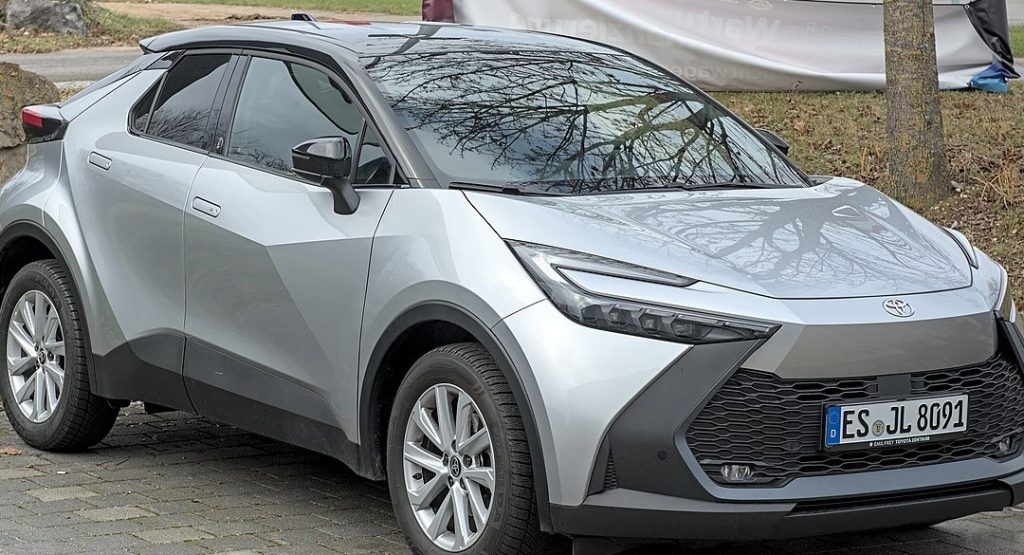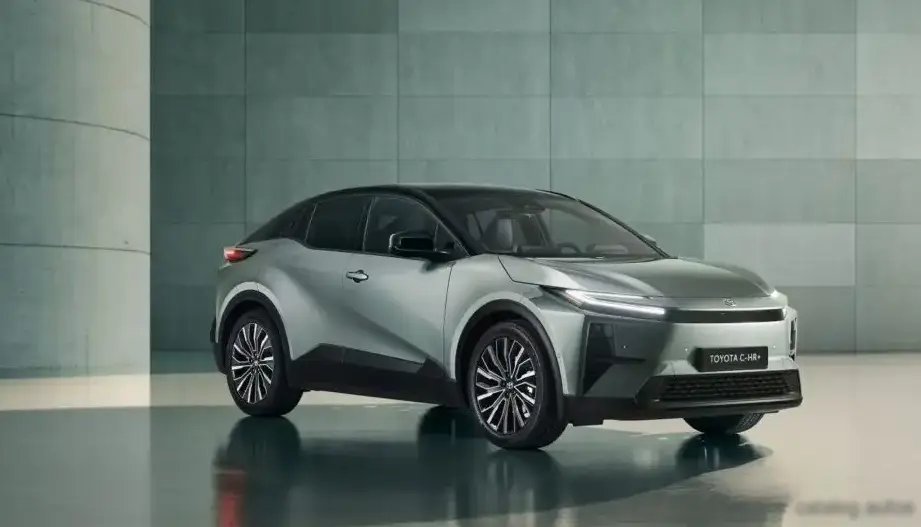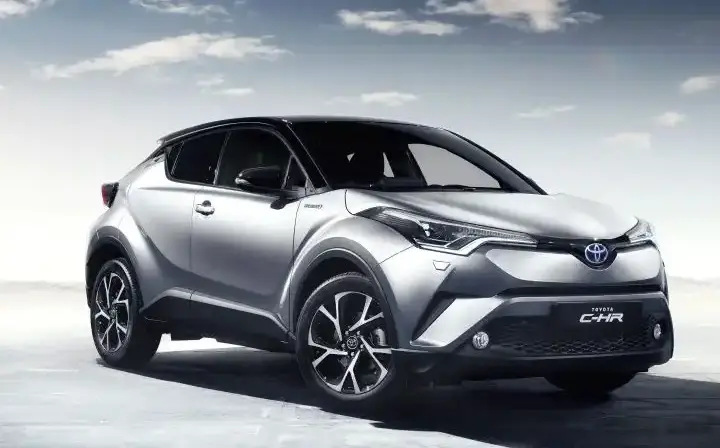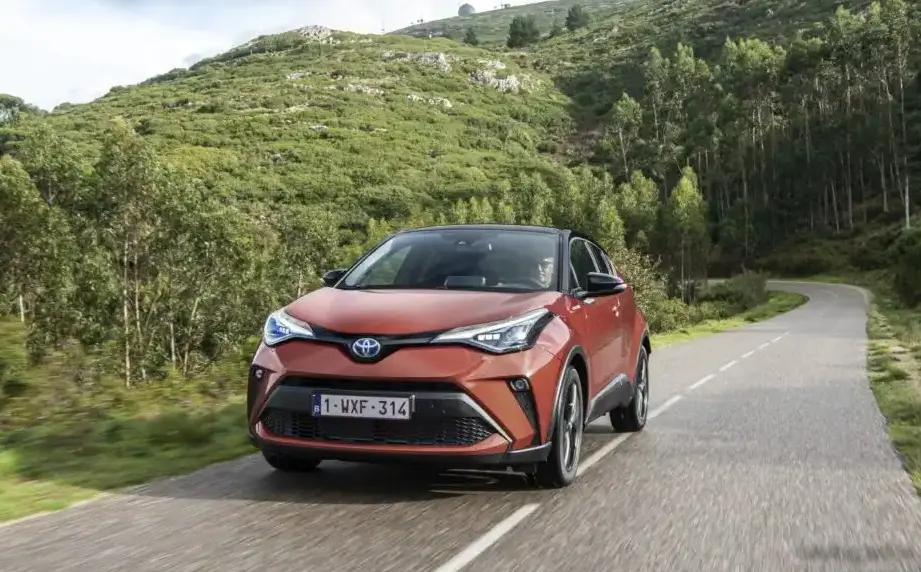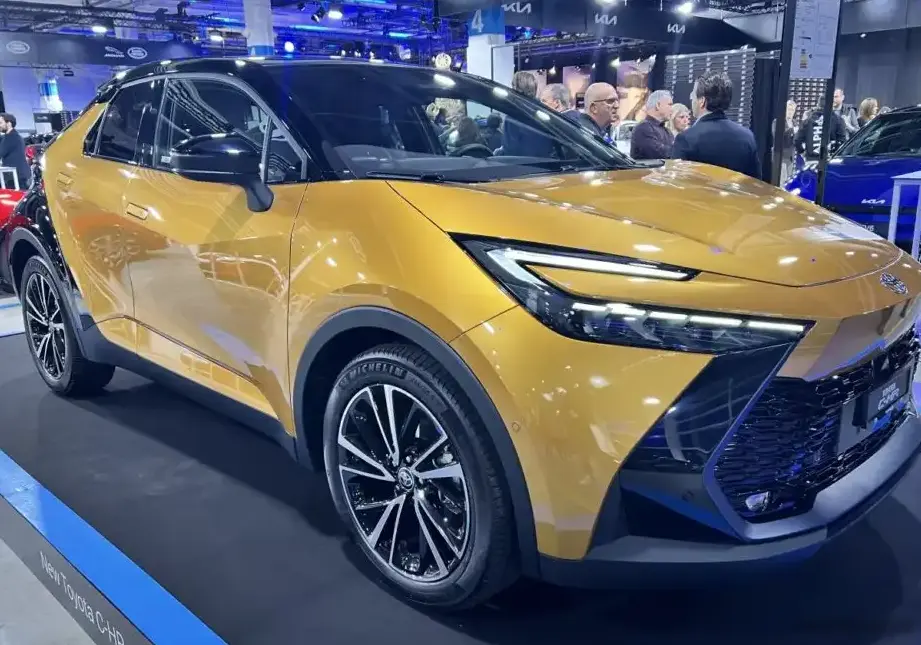
The Toyota C-HR II 2.0 Hybrid, launched in June 2023, represents the second generation of Toyota’s distinctive compact crossover. Positioned as a mid-range offering within the C-HR lineup, this variant combines a 2.0-liter gasoline engine with Toyota’s proven hybrid technology, utilizing an electronically controlled continuously variable transmission (e-CVT). It builds upon the first generation’s bold styling and aims to improve upon fuel efficiency and driving experience. The C-HR II is primarily marketed in Europe and Asia, offering a stylish and technologically advanced option in the increasingly competitive compact SUV segment.
Technical Specifications
| Brand | Toyota |
| Model | C-HR |
| Generation | C-HR II |
| Type (Engine) | 2.0 (198 Hp) Hybrid e-CVT |
| Start of production | June, 2023 |
| Powertrain Architecture | FHEV (Full Hybrid Electric Vehicle) |
| Body type | SUV |
| Seats | 5 |
| Doors | 5 |
| Combined fuel consumption (WLTP) | 4.6-5 l/100 km (51.1 – 47 US mpg, 61.4 – 56.5 UK mpg, 21.7 – 20 km/l) |
| CO2 emissions (WLTP) | 107-111 g/km |
| Fuel Type | Petrol (Gasoline) |
| Acceleration 0 – 100 km/h | 8.1 sec |
| Acceleration 0 – 62 mph | 8.1 sec |
| Acceleration 0 – 60 mph | 7.7 sec |
| Maximum speed | 180 km/h (111.85 mph) |
| Emission standard | Euro 6 AP |
| Gross battery capacity | 4.08 kWh |
| Battery technology | Lithium-ion (Li-Ion) |
| Electric motor power | 113 Hp |
| Electric motor Torque | 206 Nm (151.94 lb.-ft.) |
| Electric motor location | Integrated into the transmission |
| Electric motor type | Synchronous |
| System power | 198 Hp |
| Power | 152 Hp @ 6000 rpm |
| Torque | 190 Nm @ 4400-5200 rpm (140.14 lb.-ft. @ 4400-5200 rpm) |
| Engine layout | Front, Transverse |
| Engine Model/Code | M20A-FXS |
| Engine displacement | 1987 cm3 (121.25 cu. in.) |
| Number of cylinders | 4 |
| Engine configuration | Inline |
| Cylinder Bore | 80.5 mm (3.17 in.) |
| Piston Stroke | 97.5 mm (3.84 in.) |
| Compression ratio | 14:1 |
| Number of valves per cylinder | 4 |
| Fuel injection system | Direct injection and Multi-port manifold injection |
| Engine aspiration | Naturally aspirated engine |
| Valvetrain | DOHC, VVT-i, VVT-iE |
| Engine oil capacity | 4.2 l (4.44 US qt | 3.7 UK qt) |
| Coolant | 6.1 l (6.45 US qt | 5.37 UK qt) |
| Fuel tank capacity | 43 l (11.36 US gal | 9.46 UK gal) |
| Length | 4360 mm (171.65 in.) |
| Width | 1830 mm (72.05 in.) |
| Height | 1570 mm (61.81 in.) |
| Wheelbase | 2640 mm (103.94 in.) |
| Front overhang | 915 mm (36.02 in.) |
| Rear overhang | 805 mm (31.69 in.) |
| Drivetrain Architecture | Front wheel drive. FHEV (Full Hybrid Electric Vehicle). ICE and electric motor drive the front wheels in full electric or mixed mode. |
| Drive wheel | Front wheel drive |
| Number of gears and type of gearbox | automatic transmission eCVT |
| Front brakes | Ventilated discs |
| Rear brakes | Disc |
Powertrain & Engine Architecture
At the heart of the C-HR II 2.0 Hybrid lies the M20A-FXS engine, a 1.987-liter inline-four cylinder gasoline engine. This engine utilizes a direct injection and multi-port fuel injection system, optimizing combustion efficiency and reducing emissions. The engine features a double overhead camshaft (DOHC) valvetrain with Toyota’s Variable Valve Timing-intelligent (VVT-i) and Variable Valve Timing-intelligent with Electric motor (VVT-iE) technologies, further enhancing performance and fuel economy. The engine produces 152 horsepower at 6000 rpm and 190 Nm (140 lb-ft) of torque between 4400 and 5200 rpm.
The hybrid system integrates a permanent magnet synchronous electric motor, delivering an additional 113 horsepower and 206 Nm (152 lb-ft) of torque. The combined system output is 198 horsepower. Power is delivered to the front wheels via Toyota’s e-CVT (electronically controlled continuously variable transmission). This isn’t a traditional CVT with belts and pulleys; instead, it’s a power-split device that seamlessly blends power from the engine and electric motor, providing a smooth and efficient driving experience. The 4.08 kWh lithium-ion battery pack is positioned under the rear seats, contributing to a low center of gravity and balanced handling.
Driving Characteristics
The C-HR II 2.0 Hybrid offers a refined and comfortable driving experience. The e-CVT provides seamless acceleration, and the hybrid system allows for brief periods of all-electric driving at lower speeds. While not a performance-oriented vehicle, the 198 horsepower combined output delivers adequate acceleration, achieving 0-60 mph in approximately 7.7 seconds. Compared to the base 1.8-liter non-hybrid C-HR models, the 2.0 Hybrid offers significantly improved acceleration and responsiveness. The e-CVT, while smooth, lacks the direct feel of a traditional automatic transmission, and some drivers may find it less engaging. The hybrid system prioritizes fuel efficiency, and the throttle response is tuned for economy rather than outright performance.
Equipment & Trim Levels
The 2.0 Hybrid trim typically includes a generous array of standard features. Interior appointments include comfortable fabric or synthetic leather upholstery, a modern dashboard layout with an 8-inch touchscreen infotainment system, Apple CarPlay and Android Auto compatibility, and a suite of advanced driver-assistance systems (ADAS) such as Toyota Safety Sense. Available options include a larger 12.3-inch touchscreen, premium audio system, heated front seats, and a panoramic sunroof. The trim level generally sits in the middle of the C-HR range, offering a balance of features and value.
Chassis & Braking
The C-HR II utilizes a MacPherson strut front suspension and a multi-link rear suspension, providing a comfortable ride and stable handling. The front brakes are ventilated discs, while the rear brakes are solid discs. The steering is an electric power-assisted rack and pinion system, offering light and precise steering feel. The suspension tuning is geared towards comfort, prioritizing ride quality over sporty handling. Stabilizer bars are fitted to both the front and rear axles to reduce body roll during cornering.
Market Reception & Comparison
The Toyota C-HR II 2.0 Hybrid has been generally well-received by automotive critics, praised for its stylish design, fuel efficiency, and comfortable ride. Compared to other hybrid crossovers in its class, such as the Hyundai Kona Hybrid and Nissan Qashqai e-Power, the C-HR offers a distinctive design and a well-integrated hybrid system. Fuel economy is a strong point, with the C-HR achieving between 4.6 and 5.0 liters per 100 kilometers (47-51 US mpg). Reliability is expected to be excellent, consistent with Toyota’s reputation for building durable and dependable vehicles.
Legacy
The Toyota C-HR II 2.0 Hybrid powertrain is expected to be highly reliable, building upon Toyota’s extensive experience with hybrid technology. The e-CVT transmission, in particular, is known for its durability and low maintenance requirements. On the used car market, these models are anticipated to hold their value well due to Toyota’s strong brand reputation and the increasing demand for fuel-efficient vehicles. The C-HR II represents a significant step forward in Toyota’s hybrid technology, offering a compelling combination of style, efficiency, and reliability.