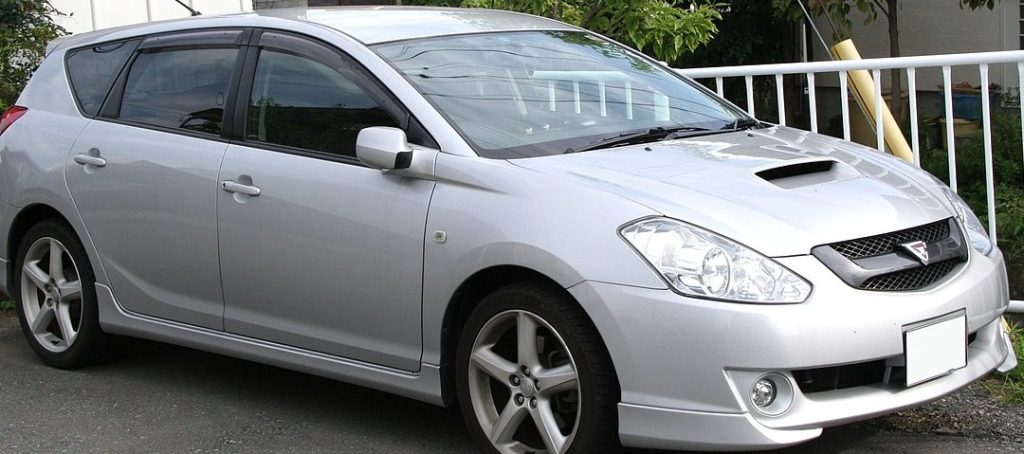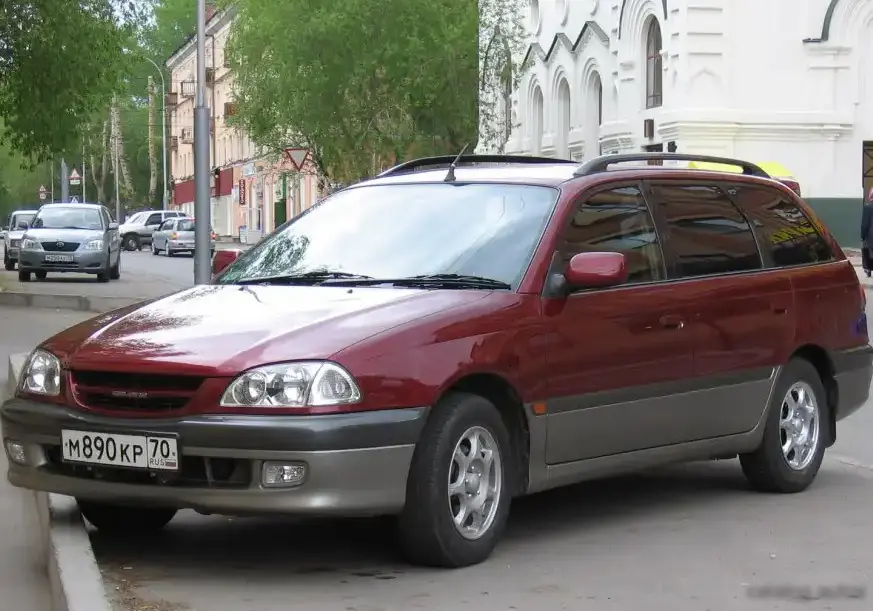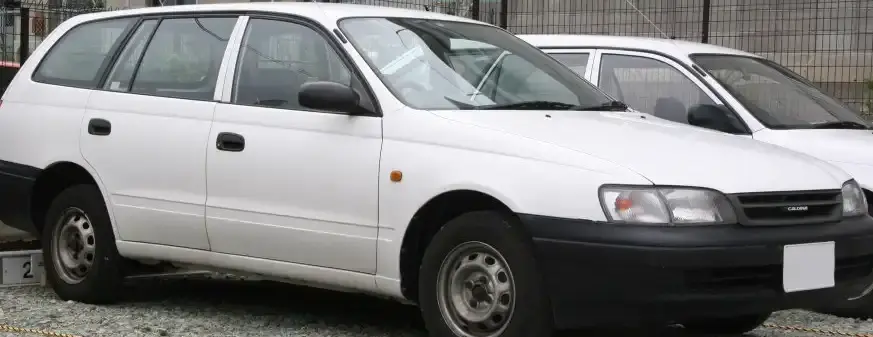
The Toyota Caldina, specifically the T19 generation produced between 1992 and 1997, represented Toyota’s entry into the increasingly popular compact station wagon market, primarily aimed at Japanese domestic buyers. The 1.8i 16V CZ variant, equipped with the 4S-FE engine and a four-speed automatic transmission, occupied a middle ground within the Caldina lineup, offering a balance between affordability, practicality, and reasonable performance. This model was designed to appeal to families and individuals seeking a versatile vehicle for both daily commuting and weekend excursions. It was never officially sold in the United States.
Technical Specifications
| Brand | Toyota |
| Model | Caldina |
| Generation | Caldina (T19) |
| Type | 1.8i 16V CZ (125 Hp) Automatic |
| Start of production | 1992 |
| End of production | 1997 |
| Powertrain Architecture | Internal Combustion engine |
| Body type | Station wagon (estate) |
| Seats | 5 |
| Doors | 5 |
| Fuel consumption (combined) | 5.4 l/100 km (43.6 US mpg, 52.3 UK mpg, 18.5 km/l) |
| Fuel Type | Petrol (Gasoline) |
| Weight-to-power ratio | 9.4 kg/Hp, 105.9 Hp/tonne |
| Weight-to-torque ratio | 7.3 kg/Nm, 137.3 Nm/tonne |
| Power | 125 Hp @ 6000 rpm |
| Power per litre | 68 Hp/l |
| Torque | 162 Nm @ 4600 rpm (119.49 lb.-ft. @ 4600 rpm) |
| Engine layout | Front, Transverse |
| Engine Model/Code | 4S-FE |
| Engine displacement | 1839 cm3 (112.22 cu. in.) |
| Number of cylinders | 4 |
| Engine configuration | Inline |
| Cylinder Bore | 82.5 mm (3.25 in.) |
| Piston Stroke | 86 mm (3.39 in.) |
| Compression ratio | 9.5:1 |
| Number of valves per cylinder | 4 |
| Fuel injection system | Multi-port manifold injection |
| Engine aspiration | Naturally aspirated engine |
| Valvetrain | DOHC |
| Engine oil capacity | 3.9 l (4.12 US qt | 3.43 UK qt) |
| Coolant capacity | 6.6 l (6.97 US qt | 5.81 UK qt) |
| Kerb Weight | 1180 kg (2601.45 lbs.) |
| Max. weight | 1455 kg (3207.73 lbs.) |
| Max load | 275 kg (606.27 lbs.) |
| Fuel tank capacity | 60 l (15.85 US gal | 13.2 UK gal) |
| Length | 4545 mm (178.94 in.) |
| Width | 1695 mm (66.73 in.) |
| Height | 1450 mm (57.09 in.) |
| Wheelbase | 2580 mm (101.57 in.) |
| Front track | 1465 mm (57.68 in.) |
| Rear track | 1450 mm (57.09 in.) |
| Drivetrain Architecture | Front wheel drive |
| Number of gears | 4 |
| Gearbox type | Automatic transmission |
| Front suspension | Spring Strut |
| Rear suspension | Coil spring |
| Front brakes | Ventilated discs |
| Rear brakes | Drum |
| Assisting systems | ABS (Anti-lock braking system) |
| Steering type | Steering rack and pinion |
| Power steering | Hydraulic Steering |
| Tires size | 185/65 R14 S |
| Wheel rims size | 14 |
Introduction
The T19 Caldina, launched in 1992, was built on the Toyota 1HX0/A3 platform, shared with models like the Corolla and Celica. It aimed to provide a more practical and spacious alternative to traditional hatchbacks and sedans. The 1.8i 16V CZ trim, powered by the 4S-FE engine and paired with a four-speed automatic, was positioned as a mainstream offering, appealing to buyers who prioritized ease of use and fuel efficiency over outright performance. It sat below the more powerful 2.0-liter and 2.2-liter diesel variants in the Caldina hierarchy.
Powertrain & Engine Architecture
The heart of the 1.8i CZ Caldina is the 4S-FE engine, a 1.8-liter (1839cc) inline-four cylinder gasoline engine. This engine featured a cast iron block and an aluminum cylinder head, incorporating a double overhead camshaft (DOHC) valvetrain with four valves per cylinder. Fuel delivery was managed by a multi-port fuel injection system, contributing to improved fuel economy and smoother operation. The 4S-FE was known for its reliability and relatively simple design. The four-speed automatic transmission, a common Toyota unit of the era, was chosen for its convenience and ease of driving, particularly in urban environments. While not offering the sporty engagement of a manual gearbox, it provided smooth shifts and a comfortable driving experience.
Driving Characteristics
The 125 horsepower and 162 Nm (119.49 lb-ft) of torque produced by the 1.8-liter engine and automatic transmission combination resulted in adequate, but not exhilarating, performance. Acceleration was respectable for everyday driving, but overtaking maneuvers required careful planning. The automatic transmission’s gear ratios were tuned for fuel efficiency rather than outright speed. Compared to the manual transmission versions of the 1.8L, the automatic offered less driver control and slightly slower acceleration. The higher-output 2.0-liter and diesel variants provided significantly more power and torque, making them more suitable for drivers who frequently carried heavy loads or enjoyed a more spirited driving experience. The Caldina 1.8i Automatic prioritized comfort and ease of use over sporty handling.
Equipment & Trim Levels
The 1.8i CZ trim typically included features such as power windows, power steering, central locking, and an AM/FM radio. Air conditioning was often standard, though it could be optional depending on the specific market and package. Interior upholstery was typically cloth, with a relatively simple dashboard layout. Optional extras included alloy wheels, a sunroof, and upgraded audio systems. The trim level aimed for a balance of functionality and comfort, providing essential features without the added cost of more luxurious appointments found in higher-spec Caldina models.
Chassis & Braking
The Caldina T19 utilized a front-engine, front-wheel-drive layout. Suspension consisted of a MacPherson strut setup at the front and a coil spring arrangement at the rear. The braking system featured ventilated discs on the front wheels and drum brakes on the rear. ABS (Anti-lock Braking System) was often included as standard equipment, enhancing safety by preventing wheel lockup during hard braking. The suspension was tuned for a comfortable ride, prioritizing smoothness over sporty handling. Stabilizer bars were present, but were relatively modest in size, reflecting the car’s focus on everyday usability.
Market Reception & Comparison
The Toyota Caldina 1.8i Automatic was generally well-received in the Japanese market as a practical and reliable family vehicle. Critics praised its spacious interior, fuel efficiency, and comfortable ride. However, some reviewers noted that the engine lacked the power of its larger counterparts. Compared to other station wagons in its class, such as the Nissan Avenir and Honda Accord Wagon, the Caldina offered a competitive combination of features, reliability, and value. Fuel economy was a strong point, consistently achieving around 5.4 l/100km in real-world driving conditions. Reliability was also a key strength, with the 4S-FE engine proving to be durable and long-lasting.
Legacy
The Toyota Caldina T19, and particularly the 1.8i Automatic variant, has developed a reputation for long-term reliability. The 4S-FE engine is known for its robustness and relatively low maintenance requirements. In the used car market, these Caldinas are often sought after for their practicality, affordability, and dependability. While not a performance icon, the 1.8i CZ model remains a viable option for buyers seeking a reliable and spacious station wagon. Parts availability is generally good, and the car’s simple mechanical design makes it relatively easy to maintain and repair. The Caldina’s enduring appeal lies in its ability to provide a comfortable and practical transportation solution for families and individuals alike.