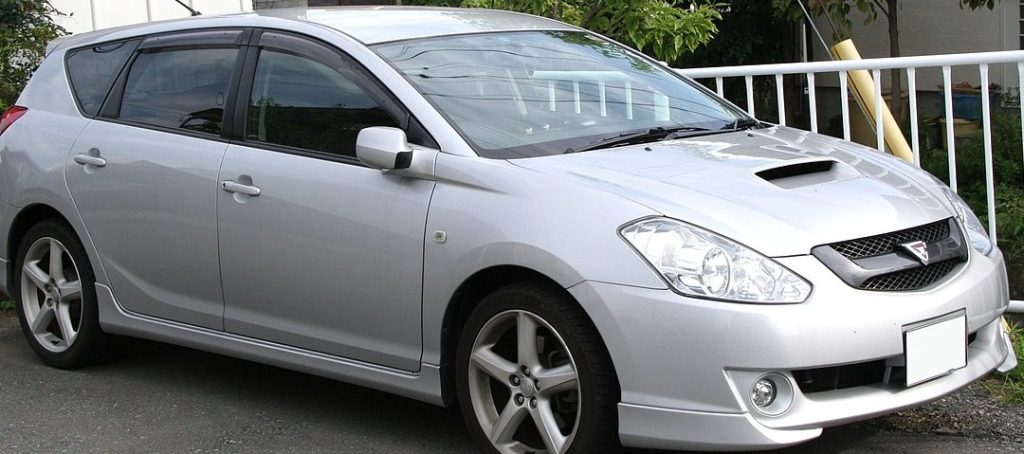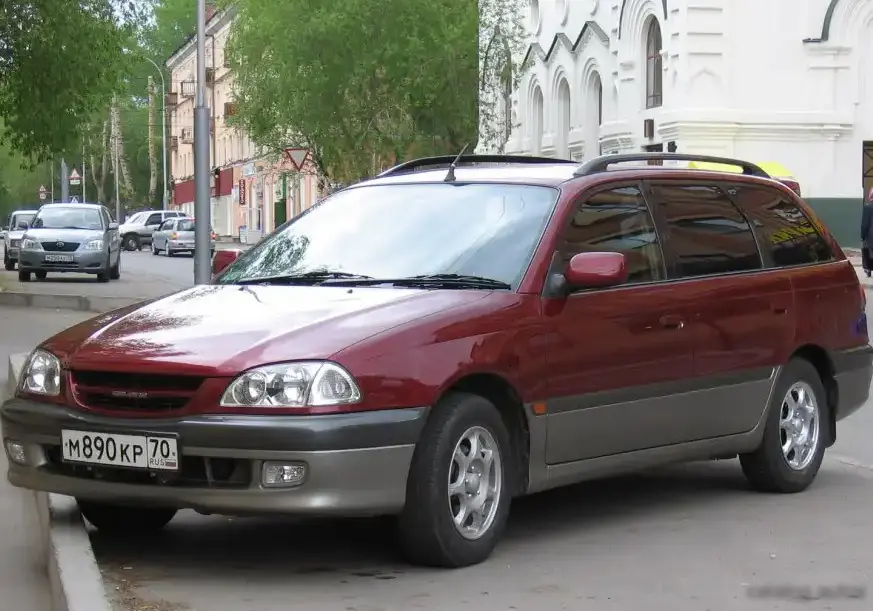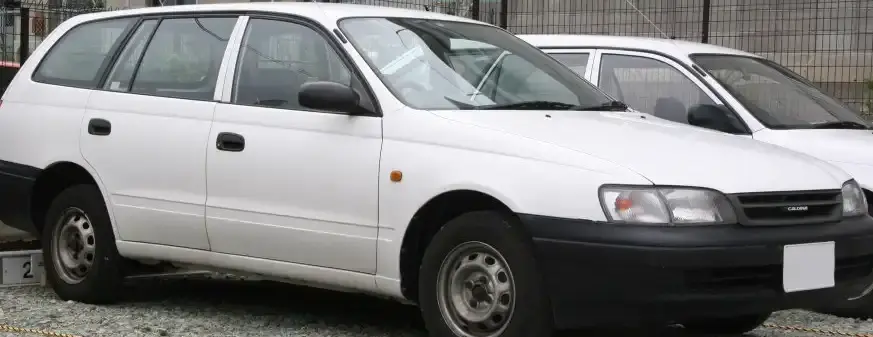
The Toyota Caldina, specifically the T19 generation produced between 1992 and 1997, represented Toyota’s entry into the increasingly popular compact station wagon market, primarily aimed at Japanese domestic buyers. The 2.0 i 16V TZ variant, powered by the 3S-GE engine and paired with a four-speed automatic transmission, occupied a middle ground within the Caldina lineup, offering a balance between performance, fuel efficiency, and affordability. This model sought to appeal to families and individuals needing a practical vehicle with a degree of refinement. It was positioned above the base models with smaller engines and manual transmissions, but below the more powerful and often turbocharged variants.
Technical Specifications
| Brand | Toyota |
| Model | Caldina |
| Generation | Caldina (T19) |
| Type | 2.0 i 16V TZ (133 Hp) |
| Start of production | 1992 |
| End of production | 1997 |
| Powertrain Architecture | Internal Combustion engine |
| Body type | Station wagon (estate) |
| Seats | 5 |
| Doors | 5 |
| Fuel consumption (combined) | 6.5 l/100 km (36.2 US mpg, 43.5 UK mpg, 15.4 km/l) |
| Fuel Type | Petrol (Gasoline) |
| Weight-to-power ratio | 9.3 kg/Hp, 107.3 Hp/tonne |
| Weight-to-torque ratio | 6.8 kg/Nm, 147.6 Nm/tonne |
| Power | 133 Hp @ 5800 rpm |
| Power per litre | 66.6 Hp/l |
| Torque | 183 Nm @ 4400 rpm (134.97 lb.-ft. @ 4400 rpm) |
| Engine layout | Front, Transverse |
| Engine Model/Code | 3S-GE |
| Engine displacement | 1998 cm3 (121.93 cu. in.) |
| Number of cylinders | 4 |
| Engine configuration | Inline |
| Cylinder Bore | 86 mm (3.39 in.) |
| Piston Stroke | 86 mm (3.39 in.) |
| Compression ratio | 9.5:1 |
| Number of valves per cylinder | 4 |
| Fuel injection system | Multi-port manifold injection |
| Engine aspiration | Naturally aspirated engine |
| Valvetrain | DOHC |
| Engine oil capacity | 4.5 l (4.76 US qt | 3.96 UK qt) |
| Coolant capacity | 6.6 l (6.97 US qt | 5.81 UK qt) |
| Kerb Weight | 1240 kg (2733.73 lbs.) |
| Max. weight | 1515 kg (3340 lbs.) |
| Max load | 275 kg (606.27 lbs.) |
| Fuel tank capacity | 60 l (15.85 US gal | 13.2 UK gal) |
| Length | 4545 mm (178.94 in.) |
| Width | 1695 mm (66.73 in.) |
| Height | 1450 mm (57.09 in.) |
| Wheelbase | 2580 mm (101.57 in.) |
| Front track | 1465 mm (57.68 in.) |
| Rear track | 1450 mm (57.09 in.) |
| Drivetrain Architecture | Front wheel drive |
| Number of gears | 4 |
| Gearbox type | Automatic transmission |
| Front suspension | Spring Strut |
| Rear suspension | Coil spring |
| Front brakes | Ventilated discs |
| Rear brakes | Disc |
| Assisting systems | ABS (Anti-lock braking system) |
| Steering type | Steering rack and pinion |
| Power steering | Hydraulic Steering |
| Tires size | 185/65 R14 S |
Powertrain & Engine Architecture
The heart of the Caldina 2.0 i TZ is the 3S-GE engine, a 2.0-liter (1998 cc) inline-four cylinder gasoline engine. This engine is a naturally aspirated design featuring a double overhead camshaft (DOHC) valvetrain and multi-port fuel injection. The 3S-GE was a well-regarded engine known for its smooth power delivery and relative reliability. The 9.5:1 compression ratio contributed to its respectable output for a naturally aspirated engine of its time. The four-speed automatic transmission was a conventional torque converter type, prioritizing smooth shifts over outright performance. While not as sporty as a manual transmission, it provided ease of use, particularly in urban driving conditions.
Driving Characteristics
The 133 horsepower and 183 Nm (135 lb-ft) of torque produced by the 3S-GE/automatic transmission combination resulted in adequate, but not exhilarating, performance. Acceleration was reasonable for everyday driving, but it lacked the punch of the turbocharged Caldina variants. The automatic transmission’s gear ratios were tuned for fuel efficiency and comfort, meaning that downshifts could be somewhat slow to respond. Compared to the five-speed manual versions of the 2.0 i, the automatic offered less driver engagement and slightly slower acceleration times. However, the automatic provided a more relaxed driving experience, especially in congested traffic.
Equipment & Trim Levels
The “TZ” trim level of the Caldina 2.0 i typically included features such as power windows, power door locks, and a basic audio system. Interior upholstery was usually cloth, with a relatively simple dashboard layout. Optional extras could include air conditioning, upgraded audio systems, and alloy wheels. The Caldina aimed for a functional and comfortable interior rather than a luxurious one. The focus was on providing a practical space for families and individuals.
Chassis & Braking
The Caldina T19 utilized a front-engine, front-wheel-drive layout. Suspension consisted of a MacPherson strut setup at the front and a coil spring arrangement at the rear. This configuration provided a comfortable ride quality, although it wasn’t particularly sporty. The braking system featured ventilated discs on the front wheels and solid discs on the rear, supplemented by an Anti-lock Braking System (ABS) as standard equipment. This provided adequate stopping power for the vehicle’s weight and performance.
Market Reception & Comparison
The Caldina 2.0 i TZ was generally well-received in the Japanese market as a practical and reliable station wagon. Critics noted its comfortable ride, spacious interior, and fuel efficiency. However, some reviewers found the performance to be somewhat underwhelming compared to the turbocharged models. In terms of fuel economy, the 2.0 i automatic offered a good balance between performance and efficiency, typically achieving around 6.5 liters per 100 kilometers (36.2 US mpg). Compared to the 1.8-liter models, the 2.0 i provided more power and torque, while the turbocharged variants offered significantly higher performance but at the cost of increased fuel consumption and potentially higher maintenance costs.
Legacy
The Toyota Caldina T19, and specifically the 2.0 i 16V TZ variant, has developed a modest following among enthusiasts. The 3S-GE engine is known for its durability and relatively simple maintenance requirements. While not a high-performance icon, the Caldina offered a reliable and practical transportation solution for many Japanese families. Today, well-maintained examples are becoming increasingly rare, and the 2.0 i automatic is often sought after by those looking for a comfortable and dependable classic station wagon. Its relative simplicity and robust construction contribute to its continued appeal in the used car market.