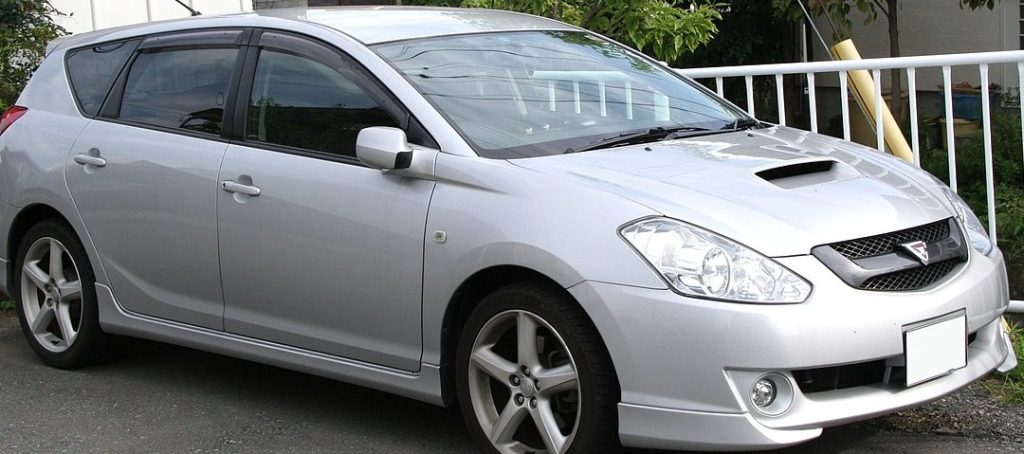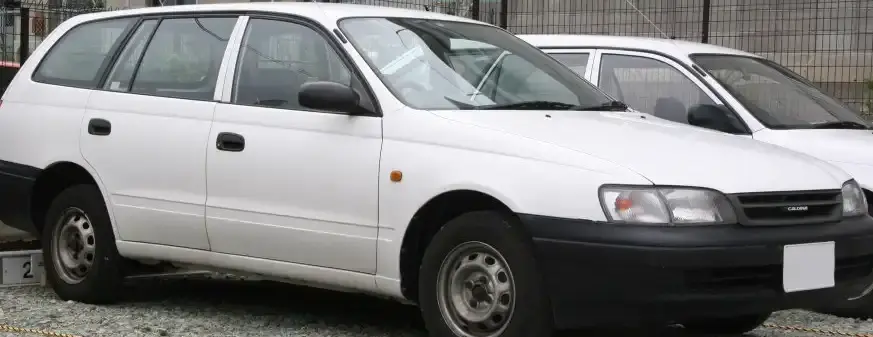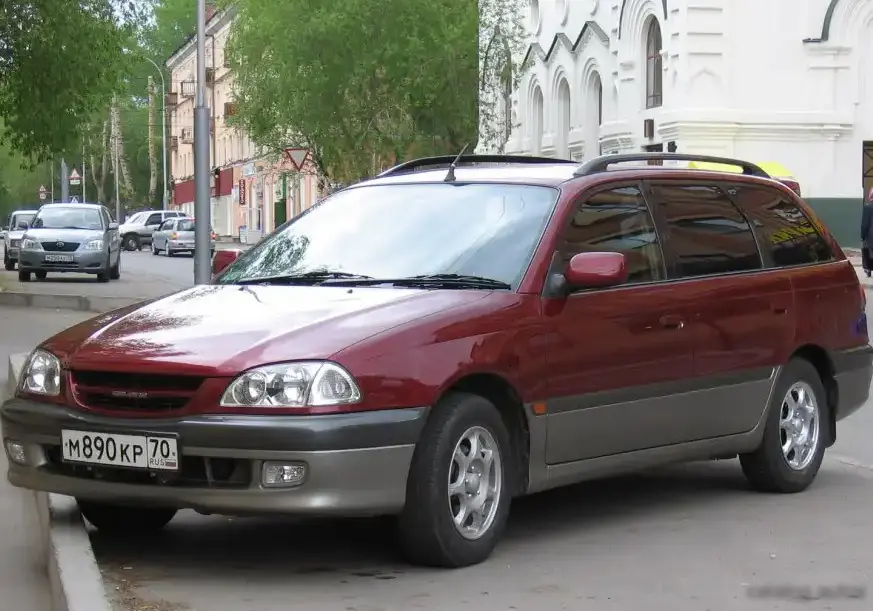
The Toyota Caldina (T21) 2.0 i 16V GT-T, produced between 1997 and 2002, represents a unique offering within Toyota’s lineup. Positioned as a sporty, all-wheel-drive station wagon, the Caldina aimed to blend practicality with performance, primarily targeting the Japanese domestic market (JDM). This variant, equipped with the 3S-GTE engine and a four-speed automatic transmission, occupied a mid-to-high range position within the Caldina series, offering a balance between usability and spirited driving. It was a direct response to the growing demand for versatile vehicles capable of handling diverse road conditions, particularly in regions with inclement weather.
Technical Specifications
| Brand | Toyota |
| Model | Caldina |
| Generation | Caldina (T21) |
| Type | 2.0 i 16V GT-T (260 Hp) 4WD Automatic |
| Start of production | 1997 |
| End of production | 2002 |
| Powertrain Architecture | Internal Combustion engine |
| Body type | Station wagon (estate) |
| Seats | 5 |
| Doors | 5 |
| Fuel Type | Petrol (Gasoline) |
| Weight-to-power ratio | 5.7 kg/Hp, 176.9 Hp/tonne |
| Weight-to-torque ratio | 4.5 kg/Nm, 220.4 Nm/tonne |
| Power | 260 Hp @ 6000 rpm |
| Power per litre | 130.1 Hp/l |
| Torque | 324 Nm @ 4400 rpm (238.97 lb.-ft. @ 4400 rpm) |
| Engine layout | Front, Transverse |
| Engine Model/Code | 3S-GTE |
| Engine displacement | 1998 cm3 (121.93 cu. in.) |
| Number of cylinders | 4 |
| Engine configuration | Inline |
| Cylinder Bore | 86 mm (3.39 in.) |
| Piston Stroke | 86 mm (3.39 in.) |
| Compression ratio | 9:1 |
| Number of valves per cylinder | 4 |
| Fuel injection system | Multi-port manifold injection |
| Engine aspiration | Turbocharger |
| Valvetrain | DOHC |
| Engine oil capacity | 4.5 l (4.76 US qt | 3.96 UK qt) |
| Coolant | 8.3 l (8.77 US qt | 7.3 UK qt) |
| Kerb Weight | 1470 kg (3240.8 lbs.) |
| Max. weight | 1745 kg (3847.07 lbs.) |
| Max load | 275 kg (606.27 lbs.) |
| Fuel tank capacity | 60 l (15.85 US gal | 13.2 UK gal) |
| Length | 4590 mm (180.71 in.) |
| Width | 1720 mm (67.72 in.) |
| Height | 1495 mm (58.86 in.) |
| Wheelbase | 2580 mm (101.57 in.) |
| Front track | 1480 mm (58.27 in.) |
| Rear track | 1450 mm (57.09 in.) |
| Drive wheel | All wheel drive (4×4) |
| Number of gears | 4 |
| Gearbox type | automatic transmission |
| Front suspension | Wishbone |
| Rear suspension | Coil spring |
| Front brakes | Ventilated discs |
| Rear brakes | Disc |
| Assisting systems | ABS (Anti-lock braking system) |
| Steering type | Steering rack and pinion |
| Power steering | Hydraulic Steering |
| Tires size | 205/60 R15 |
Powertrain & Engine Architecture
The heart of the Caldina GT-T is the 3S-GTE, a 2.0-liter, turbocharged, inline-four cylinder engine. This engine is a descendant of Toyota’s renowned ‘S’ series, known for its robust construction and tuning potential. The 3S-GTE utilizes a multi-point fuel injection system and a double overhead camshaft (DOHC) valvetrain, contributing to its high specific output. The turbocharger, typically a CT26 unit, provides significant boost, enabling the engine to produce 260 horsepower and 324 Nm (238.97 lb-ft) of torque. The four-speed automatic transmission, while offering convenience, was a point of contention among enthusiasts, as it didn’t always allow the engine to operate at its optimal power band. The transmission was designed for smooth shifts and everyday usability rather than aggressive performance.
Driving Characteristics
The 2.0 i 16V GT-T Automatic delivers a respectable driving experience, though it differs noticeably from its manual transmission counterparts. The automatic gearbox, while providing ease of use, introduces some inherent power loss and slower shift times. Acceleration is brisk, but the engine can feel slightly restrained compared to the manual version. The all-wheel-drive system provides excellent traction, particularly on loose surfaces, making it a capable vehicle in various weather conditions. The gear ratios are tuned for a balance of fuel efficiency and acceleration, prioritizing comfortable cruising over outright performance. Compared to the naturally aspirated Caldina variants, the GT-T offers a substantial performance upgrade, but it lacks the direct engagement favored by driving purists.
Equipment & Trim Levels
The GT-T trim level generally included features such as power windows, power locks, air conditioning, and a decent audio system. Interior upholstery typically consisted of cloth or a combination of cloth and leather. Optional extras included a sunroof, upgraded audio systems, and alloy wheels. The dashboard layout was functional and straightforward, typical of Japanese cars of the era. The GT-T often featured unique badging and exterior styling cues, such as a rear spoiler and distinctive alloy wheel designs, to differentiate it from lower trim levels.
Chassis & Braking
The Caldina T21 utilizes a front wishbone and rear coil spring suspension setup. This configuration provides a comfortable ride while maintaining reasonable handling characteristics. The all-wheel-drive system adds to the vehicle’s stability, particularly in cornering. Braking duties are handled by ventilated discs on the front wheels and solid discs on the rear. An Anti-lock Braking System (ABS) was standard equipment, enhancing safety and control during emergency braking situations. The suspension was tuned to balance comfort and handling, leaning towards a more compliant ride quality than a purely sporty setup.
Market Reception & Comparison
The Caldina GT-T was generally well-received in Japan as a practical and capable all-weather performance wagon. Critics praised its engine performance and all-wheel-drive system, but some noted that the automatic transmission held the engine back from reaching its full potential. Compared to other JDM wagons of the time, such as the Subaru Legacy GT and the Mitsubishi Galant VR-4, the Caldina offered a unique blend of practicality, performance, and Toyota’s reputation for reliability. Fuel economy was reasonable for a turbocharged vehicle, but not exceptional. Reliability was generally good, typical of Toyota products, although the turbocharger and automatic transmission required regular maintenance.
Legacy
The Toyota Caldina GT-T, particularly the T21 generation, has gained a cult following among JDM enthusiasts. The 3S-GTE engine is known for its durability and potential for modification, making it a popular choice for engine swaps and performance upgrades. While the automatic transmission isn’t as highly regarded as the manual version, it remains a viable option for those seeking a comfortable and reliable all-wheel-drive wagon. Today, well-maintained Caldina GT-Ts are becoming increasingly rare and sought after, commanding a premium in the used car market. The vehicle represents a unique chapter in Toyota’s history, showcasing the company’s willingness to experiment with different vehicle configurations and performance technologies.