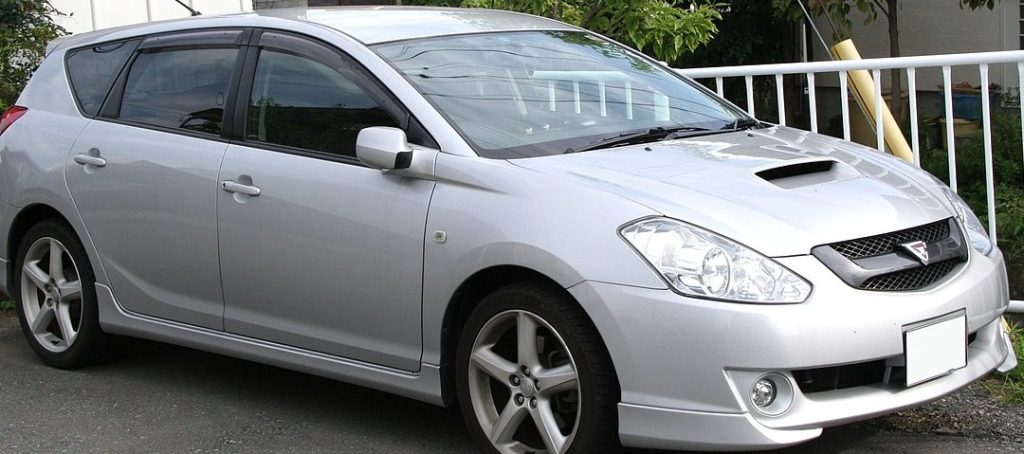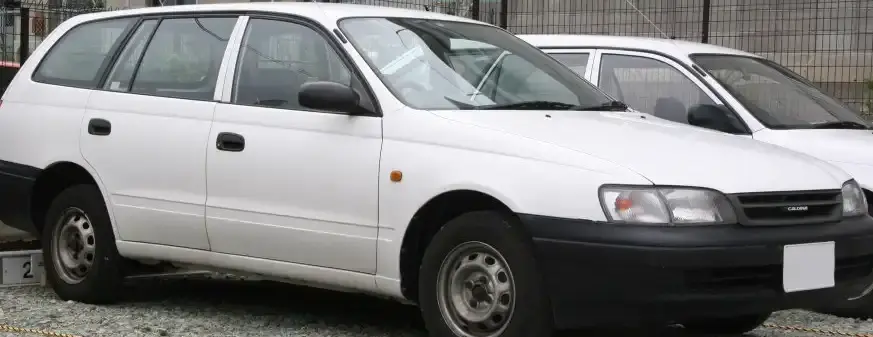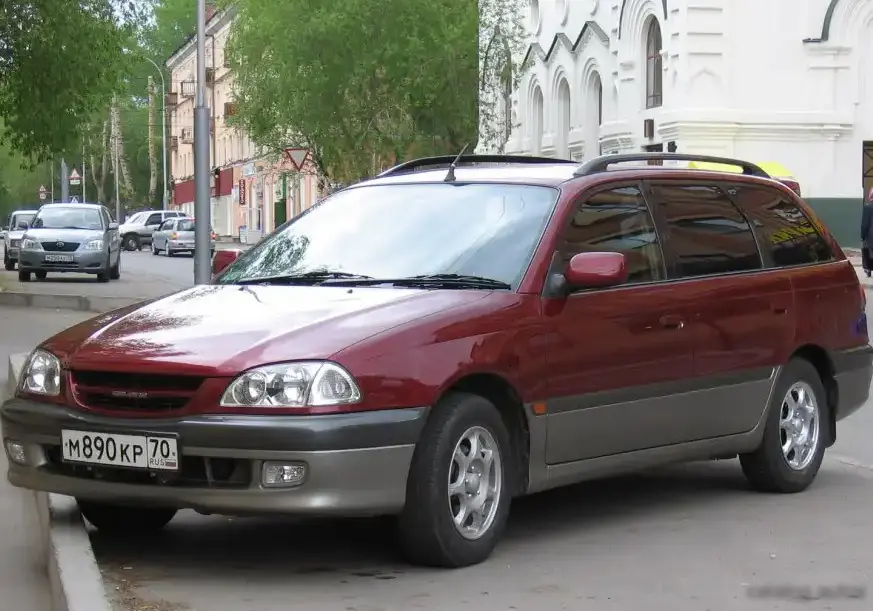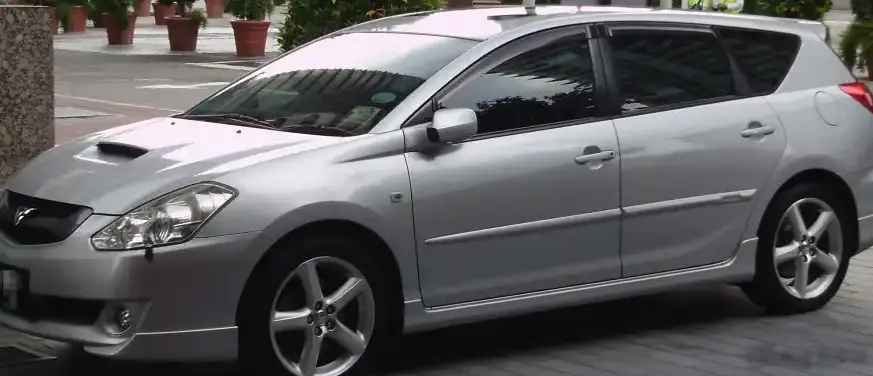
The Toyota Caldina (T24) 1.8i, produced between 2002 and 2007, represents a practical and often overlooked entry point into the Caldina lineage. Positioned as a mid-range offering within the T24 generation, this variant catered to buyers seeking the spaciousness of a station wagon with a balance of affordability and reasonable performance. The Caldina, primarily marketed in Japan, was designed to appeal to families and individuals needing a versatile vehicle for both daily commuting and recreational activities. It occupied a niche between smaller hatchbacks and larger, more expensive estates, offering a compelling package for the Japanese domestic market.
Technical Specifications
| Brand | Toyota |
| Model | Caldina |
| Generation | Caldina (T24) |
| Type (Engine) | 1.8i (132 Hp) |
| Start of production | 2002 |
| End of production | 2007 |
| Powertrain Architecture | Internal Combustion engine |
| Body type | Station wagon (estate) |
| Seats | 5 |
| Doors | 5 |
| Fuel Type | Petrol (Gasoline) |
| Weight-to-power ratio | 9.4 kg/Hp, 106.5 Hp/tonne |
| Weight-to-torque ratio | 7.3 kg/Nm, 137.9 Nm/tonne |
| Power | 132 Hp @ 6000 rpm |
| Power per litre | 73.6 Hp/l |
| Torque | 171 Nm @ 4200 rpm (126.12 lb.-ft. @ 4200 rpm) |
| Engine layout | Front, Transverse |
| Engine Model/Code | 1ZZ-FE |
| Engine displacement | 1794 cm3 (109.48 cu. in.) |
| Number of cylinders | 4 |
| Engine configuration | Inline |
| Cylinder Bore | 79 mm (3.11 in.) |
| Piston Stroke | 91.5 mm (3.6 in.) |
| Compression ratio | 10:1 |
| Number of valves per cylinder | 4 |
| Fuel injection system | Multi-port manifold injection |
| Engine aspiration | Naturally aspirated engine |
| Valvetrain | DOHC |
| Engine oil capacity | 3.7 l (3.91 US qt | 3.26 UK qt) |
| Coolant | 6.9 l (7.29 US qt | 6.07 UK qt) |
| Kerb Weight | 1240 kg (2733.73 lbs) |
| Fuel tank capacity | 60 l (15.85 US gal | 13.2 UK gal) |
| Length | 4510 mm (177.56 in) |
| Width | 1740 mm (68.5 in) |
| Height | 1445 mm (56.89 in) |
| Wheelbase | 2700 mm (106.3 in) |
| Front track | 1505 mm (59.25 in) |
| Rear (Back) track | 1500 mm (59.06 in) |
| Minimum turning circle | 10.8 m (35.43 ft) |
| Drivetrain Architecture | The Internal combustion engine (ICE) drives the front wheels of the vehicle. |
| Drive wheel | Front wheel drive |
| Number of gears | 4 |
| Type of gearbox | automatic transmission |
| Front brakes | Ventilated discs |
| Rear brakes | Disc |
| Assisting systems | ABS (Anti-lock braking system) |
| Tires size | 195/65 R15 |
Powertrain & Engine Architecture
The heart of the Caldina 1.8i is the 1ZZ-FE engine, a 1.8-liter (1794 cc) inline-four cylinder gasoline engine. This engine is a member of Toyota’s ZZ engine family, known for its relatively lightweight construction and use of aluminum alloy cylinder heads and blocks. The 1ZZ-FE utilizes a multi-port fuel injection system, delivering fuel directly into the intake ports, and a double overhead camshaft (DOHC) valvetrain for optimized airflow and efficient combustion. The engine produces 132 horsepower at 6000 rpm and 171 Nm (126.12 lb-ft) of torque at 4200 rpm. This engine is paired with a four-speed automatic transmission, designed for smooth and convenient operation. The transmission’s gear ratios are tuned for everyday drivability rather than outright performance, prioritizing fuel efficiency and comfortable cruising.
Driving Characteristics
The 1.8i automatic Caldina delivers a comfortable, if not particularly exhilarating, driving experience. Acceleration is adequate for typical urban and highway driving, but it won’t offer the briskness of the higher-powered 2.0-liter or turbocharged variants. The four-speed automatic transmission, while smooth, can feel somewhat dated compared to more modern transmissions with more gears. Gear changes are generally unobtrusive, but downshifts can sometimes be hesitant. The front-wheel-drive configuration provides predictable handling, but it lacks the all-weather capability of the available all-wheel-drive models. The suspension is tuned for comfort, absorbing bumps and imperfections in the road reasonably well. Compared to the manual transmission versions of the 1.8i, the automatic sacrifices some responsiveness and fuel economy, but gains in ease of use.
Equipment & Trim Levels
The Caldina 1.8i typically came equipped with a reasonable level of standard features. Interior appointments generally included cloth upholstery, power windows, power door locks, and a basic audio system. Air conditioning was standard. Higher trim levels, often denoted by suffixes like “L” or “G”, added features such as alloy wheels, upgraded audio systems, and optional extras like a sunroof or navigation system. The dashboard layout is functional and straightforward, prioritizing usability over aesthetic flair. The interior space is generous, particularly in the rear cargo area, making it well-suited for families or those needing to transport larger items.
Chassis & Braking
The Caldina 1.8i utilizes a MacPherson strut front suspension and a torsion beam rear suspension. This setup provides a good balance of ride comfort and handling. The front brakes are ventilated discs, offering adequate stopping power, while the rear brakes are solid discs. Anti-lock Braking System (ABS) was standard, enhancing safety by preventing wheel lockup during hard braking. The 195/65 R15 tires provide a comfortable ride and reasonable grip in most conditions. The chassis is relatively lightweight, contributing to the vehicle’s overall fuel efficiency.
Market Reception & Comparison
The Caldina 1.8i was generally well-received in the Japanese market as a practical and affordable station wagon. Critics praised its spacious interior, comfortable ride, and reasonable fuel economy. However, some reviewers noted that the engine lacked the power and refinement of its larger counterparts. Compared to the 2.0-liter versions, the 1.8i offered a lower purchase price but sacrificed performance. The 1.9 TDI diesel variants, while less common, provided superior fuel economy and torque, but at a higher initial cost. The 1.8i appealed to buyers who prioritized practicality and affordability over outright performance.
Legacy
The Toyota Caldina 1.8i, while not the most powerful or technologically advanced variant, has proven to be a reliable and durable vehicle. The 1ZZ-FE engine, when properly maintained, is known for its longevity. Today, these vehicles can be found in the used car market at relatively affordable prices. They represent a good value for buyers seeking a spacious, practical, and reliable station wagon. Common maintenance issues include routine servicing of the engine and transmission, as well as checking for corrosion, particularly in areas prone to rust. The Caldina 1.8i remains a testament to Toyota’s reputation for building dependable and long-lasting vehicles.