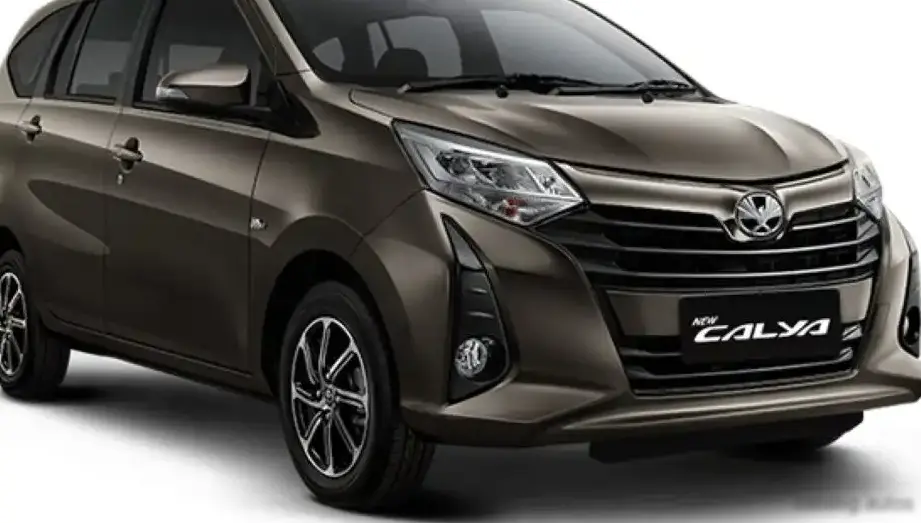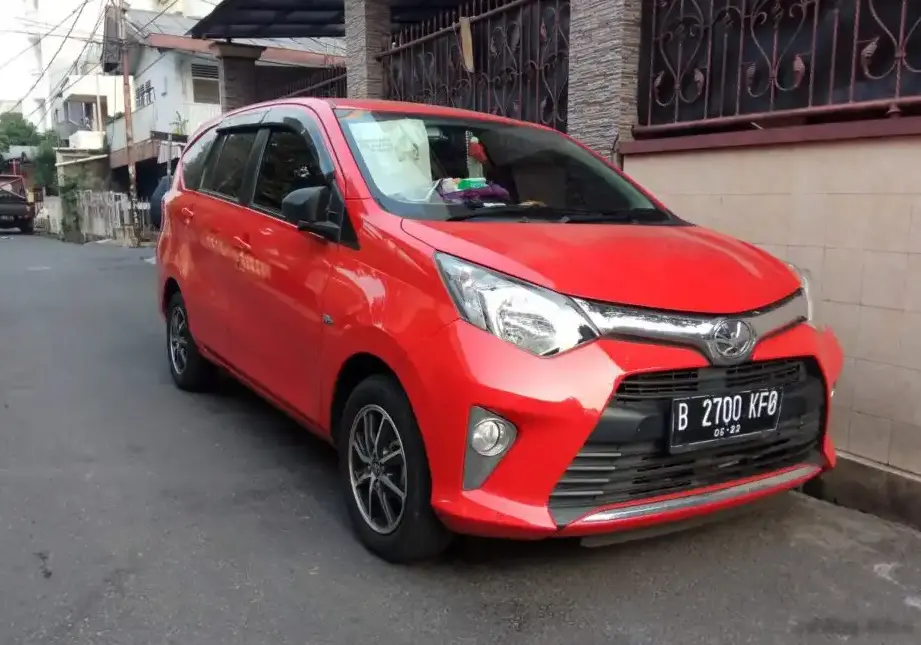
The Toyota Calya 1.2i, producing 88 horsepower, was a compact Multi-Purpose Vehicle (MPV) manufactured by Toyota from August 2016 to 2019. Designed primarily for the Indonesian market and other emerging Southeast Asian nations, the Calya aimed to provide affordable, seven-passenger transportation. It was developed as part of a joint project with Daihats, resulting in a nearly identical twin model, the Daihatsu Sigra. The Calya occupied a crucial position in Toyota’s lineup, offering a budget-friendly alternative to larger, more expensive MPVs like the Avanza and Veloz. This specific 1.2i variant served as the entry point into the Calya range, prioritizing fuel efficiency and affordability over outright performance.
Technical Specifications
| Brand | Toyota |
| Model | Calya |
| Generation | Calya |
| Type (Engine) | 1.2i (88 Hp) |
| Start of production | August, 2016 |
| End of production | 2019 |
| Powertrain Architecture | Internal Combustion engine |
| Body type | MPV |
| Seats | 7 |
| Doors | 5 |
| Fuel Type | Petrol (Gasoline) |
| Power | 88 Hp @ 6000 rpm |
| Power per litre | 73.3 Hp/l |
| Torque | 108 Nm @ 4200 rpm |
| Torque (lb-ft) | 79.66 lb.-ft. @ 4200 rpm |
| Engine layout | Front, Transverse |
| Engine Model/Code | 3NR-VE |
| Engine displacement | 1200 cm3 |
| Engine displacement (cu. in.) | 73.23 cu. in. |
| Number of cylinders | 4 |
| Engine configuration | Inline |
| Number of valves per cylinder | 4 |
| Fuel injection system | Multi-port manifold injection |
| Engine aspiration | Naturally aspirated engine |
| Valvetrain | DOHC, D-VVT-i |
| Engine oil capacity | 3.5 l |
| Engine oil capacity (US qt) | 3.7 US qt |
| Engine oil capacity (UK qt) | 3.08 UK qt |
| Coolant capacity | 3.8 l |
| Coolant capacity (US qt) | 4.02 US qt |
| Coolant capacity (UK qt) | 3.34 UK qt |
| Fuel tank capacity | 36 l |
| Fuel tank capacity (US gal) | 9.51 US gal |
| Fuel tank capacity (UK gal) | 7.92 UK gal |
| Length | 4070 mm |
| Length (in.) | 160.24 in. |
| Width | 1655 mm |
| Width (in.) | 65.16 in. |
| Height | 1600 mm |
| Height (in.) | 62.99 in. |
| Wheelbase | 2525 mm |
| Wheelbase (in.) | 99.41 in. |
| Ride height (ground clearance) | 180 mm |
| Ride height (in.) | 7.09 in. |
| Drivetrain Architecture | The Internal combustion engine (ICE) drives the front wheels of the vehicle. |
| Drive wheel | Front wheel drive |
| Number of gears | 5 |
| Type of gearbox | Manual transmission |
| Assisting systems | ABS (Anti-lock braking system) |
| Steering type | Steering rack and pinion |
| Power steering | Electric Steering |
| Tires size | 175/65 R14 |
| Wheel rims size | 14 |
Powertrain & Engine Architecture
The Calya 1.2i was powered by the 3NR-VE engine, a 1.2-liter inline-four cylinder gasoline engine. This engine is part of Toyota’s NR engine family, known for its balance of fuel efficiency and reliability. The 3NR-VE utilizes a dual overhead camshaft (DOHC) configuration with Toyota’s Variable Valve Timing-intelligent (VVT-i) system, optimizing valve timing for improved performance and fuel economy across a wider range of engine speeds. Fuel delivery is managed by a multi-port fuel injection system. The engine produces 88 horsepower at 6000 rpm and 108 Nm (79.66 lb-ft) of torque at 4200 rpm. The engine’s relatively modest output was paired with a five-speed manual transmission, the only transmission option available for this variant. This combination was chosen to maximize fuel efficiency and keep the vehicle’s price point competitive.
Driving Characteristics
The Calya 1.2i, with its 88 horsepower and five-speed manual transmission, offered adequate, but not particularly spirited, performance. Acceleration was best described as leisurely, and overtaking required careful planning. The five-speed manual transmission was well-matched to the engine’s characteristics, providing reasonable control and allowing the driver to keep the engine in its optimal power band. Compared to the slightly more powerful 1.5-liter variants, the 1.2i felt noticeably slower, especially when fully loaded with passengers and cargo. However, the lighter engine weight contributed to slightly improved handling and fuel economy. The gear ratios were tuned for economy, meaning higher gears were engaged at lower speeds, further prioritizing fuel savings over rapid acceleration.
Equipment & Trim Levels
The Calya 1.2i typically served as the base trim level. Standard equipment generally included air conditioning, power steering, central locking, and basic audio system with radio and auxiliary input. Safety features included dual front airbags and an Anti-lock Braking System (ABS). Interior upholstery was typically a simple cloth material. Optional extras, depending on the market and dealer, could include power windows, upgraded audio systems, and rear parking sensors. The interior design was functional and utilitarian, prioritizing space and practicality over luxury. The dashboard layout was straightforward, with easy-to-use controls.
Chassis & Braking
The Calya 1.2i utilized a body-on-frame construction, a relatively uncommon design choice for modern MPVs. This construction method contributed to the vehicle’s robustness and affordability. The suspension consisted of MacPherson struts at the front and a torsion beam axle at the rear. Braking was handled by disc brakes at the front and drum brakes at the rear. The relatively simple suspension setup and drum brakes at the rear were cost-saving measures, reflecting the vehicle’s budget-oriented positioning. The steering system employed a rack and pinion setup with electric power steering, providing reasonable maneuverability.
Market Reception & Comparison
The Toyota Calya 1.2i was generally well-received in its target markets, particularly Indonesia, for its affordability and practicality. Critics praised its spacious interior and seven-passenger capacity, making it a popular choice for families. However, the 1.2-liter engine was often criticized for its lack of power, especially when the vehicle was fully loaded. Compared to the 1.5-liter Calya variants, the 1.2i offered significantly lower performance but boasted slightly better fuel economy. The Daihatsu Sigra, being virtually identical, offered a direct competitor, often at a slightly lower price point. The Calya’s reputation for reliability, a hallmark of the Toyota brand, also contributed to its popularity.
Legacy
The Toyota Calya 1.2i, while not a performance icon, established itself as a reliable and affordable MPV in Southeast Asian markets. The 3NR-VE engine has proven to be a durable and relatively maintenance-free unit. On the used car market, the Calya 1.2i remains a popular choice for budget-conscious buyers seeking a spacious and practical vehicle. Its simple mechanical design and readily available parts contribute to its relatively low cost of ownership. While newer MPVs offer more advanced features and improved performance, the Calya 1.2i continues to represent a viable option for those prioritizing affordability and practicality.