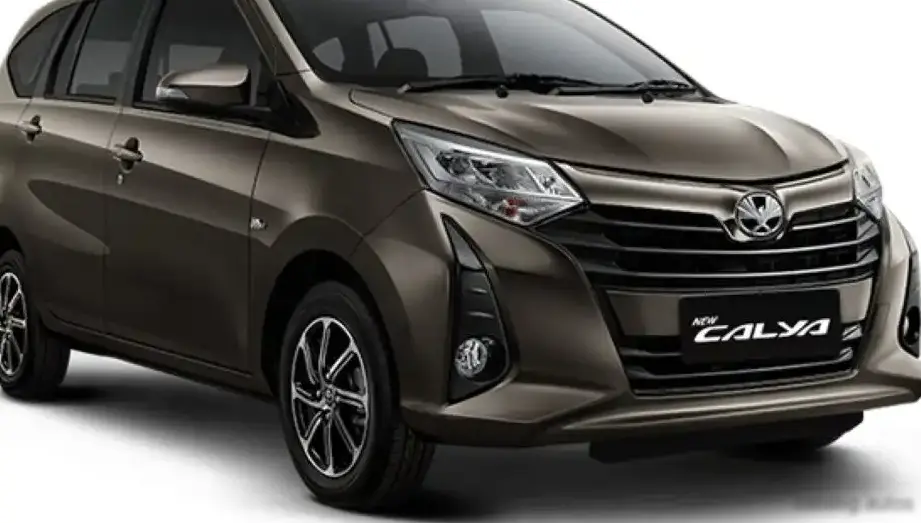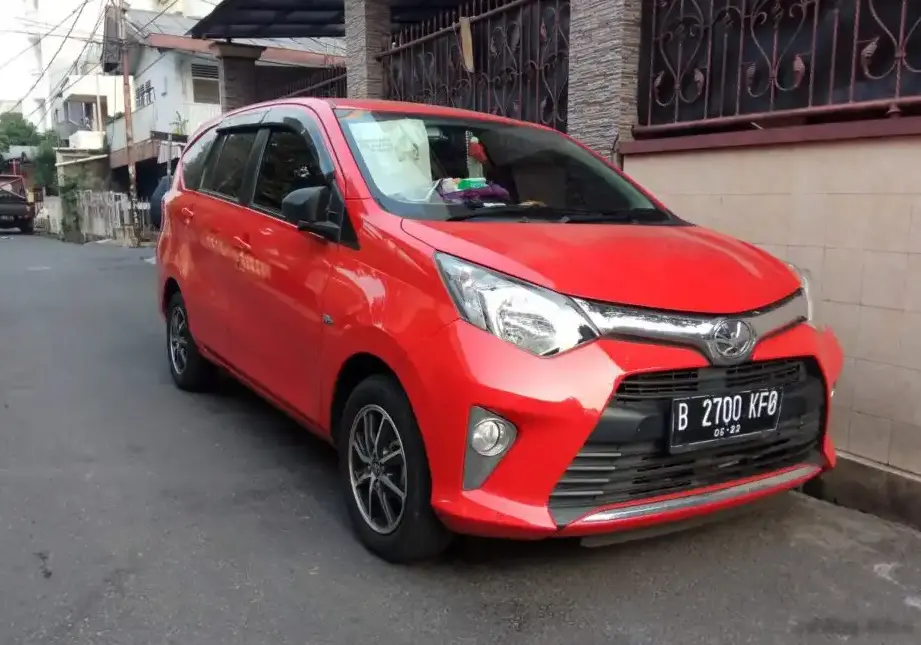
The Toyota Calya 1.2i (88 hp) Automatic is a compact multi-purpose vehicle (MPV) produced by Toyota from 2016 to 2019. Designed primarily for the Indonesian market and other emerging economies in Southeast Asia, the Calya aimed to provide affordable and practical transportation for families. It was developed as part of a joint project with Daihats, resulting in a nearly identical twin model, the Daihatsu Sigra. The Calya occupied a crucial position in Toyota’s lineup as an entry-level MPV, offering seven-seat capacity at a competitive price point. It falls within the first generation of the Calya model, designated internally as the G300 series.
Technical Specifications
| Brand | Toyota |
| Model | Calya |
| Generation | Calya |
| Type (Engine) | 1.2i (88 Hp) Automatic |
| Start of production | August, 2016 |
| End of production | 2019 |
| Powertrain Architecture | Internal Combustion engine |
| Body type | MPV |
| Seats | 7 |
| Doors | 5 |
| Fuel Type | Petrol (Gasoline) |
| Power | 88 Hp @ 6000 rpm |
| Power per litre | 73.3 Hp/l |
| Torque | 108 Nm @ 4200 rpm |
| Torque (lb-ft) | 79.66 lb.-ft. @ 4200 rpm |
| Engine layout | Front, Transverse |
| Engine Model/Code | 3NR-VE |
| Engine displacement | 1200 cm3 |
| Engine displacement (cu. in.) | 73.23 cu. in. |
| Number of cylinders | 4 |
| Engine configuration | Inline |
| Number of valves per cylinder | 4 |
| Fuel injection system | Multi-port manifold injection |
| Engine aspiration | Naturally aspirated engine |
| Valvetrain | DOHC, D-VVT-i |
| Engine oil capacity | 3.5 l |
| Engine oil capacity (US qt) | 3.7 US qt |
| Engine oil capacity (UK qt) | 3.08 UK qt |
| Coolant capacity | 4 l |
| Coolant capacity (US qt) | 4.23 US qt |
| Coolant capacity (UK qt) | 3.52 UK qt |
| Fuel tank capacity | 36 l |
| Fuel tank capacity (US gal) | 9.51 US gal |
| Fuel tank capacity (UK gal) | 7.92 UK gal |
| Length | 4070 mm |
| Length (in.) | 160.24 in. |
| Width | 1655 mm |
| Width (in.) | 65.16 in. |
| Height | 1600 mm |
| Height (in.) | 62.99 in. |
| Wheelbase | 2525 mm |
| Wheelbase (in.) | 99.41 in. |
| Ride height (ground clearance) | 180 mm |
| Ride height (in.) | 7.09 in. |
| Drivetrain Architecture | The Internal combustion engine (ICE) drives the front wheels of the vehicle. |
| Drive wheel | Front wheel drive |
| Number of gears | 4 |
| Type of gearbox | automatic transmission |
| Assisting systems | ABS (Anti-lock braking system) |
| Steering type | Steering rack and pinion |
| Power steering | Electric Steering |
| Tires size | 175/65 R14 |
| Wheel rims size | 14 |
Powertrain & Engine Architecture
The Toyota Calya 1.2i Automatic is powered by the 3NR-VE engine, a 1.2-liter inline-four cylinder gasoline engine. This engine is part of Toyota’s NR engine family, known for its balance of fuel efficiency and reliability. The 3NR-VE utilizes a dual overhead camshaft (DOHC) configuration with Toyota’s Variable Valve Timing-intelligent (VVT-i) system, optimizing valve timing for improved performance and fuel economy across a wider range of engine speeds. Fuel delivery is managed by a multi-port fuel injection system. The engine produces 88 horsepower at 6000 rpm and 108 Nm (79.66 lb-ft) of torque at 4200 rpm. The engine is paired with a four-speed automatic transmission, chosen for its simplicity and cost-effectiveness. This transmission is a conventional hydraulic automatic, lacking the more advanced features found in newer transmissions like continuously variable transmissions (CVTs).
Driving Characteristics
The 1.2-liter engine and four-speed automatic combination in the Calya prioritizes fuel efficiency over outright performance. Acceleration is modest, particularly when fully loaded with passengers and cargo. The four-speed automatic transmission has relatively wide gear ratios, which can result in the engine feeling strained during highway overtaking maneuvers. The gear ratios are optimized for city driving and low-speed cruising. Compared to potential higher-spec variants (which were not widely available in many markets), the 1.2i Automatic offers a more relaxed driving experience, focusing on comfort and ease of use rather than sporty handling. The steering is light and easy to maneuver, making it well-suited for urban environments.
Equipment & Trim Levels
The Calya 1.2i Automatic typically came with a fairly basic level of equipment, reflecting its position as an entry-level MPV. Standard features generally included air conditioning, power windows, central locking, and an audio system with AM/FM radio and auxiliary input. Safety features included dual front airbags and an Anti-lock Braking System (ABS). Higher trim levels, when available, might add features like alloy wheels, a more sophisticated audio system, and rear parking sensors. Interior upholstery was typically cloth, with a simple and durable design. The dashboard layout was functional and straightforward, prioritizing practicality over aesthetics.
Chassis & Braking
The Calya utilizes a front-wheel-drive layout with a MacPherson strut suspension in the front and a torsion beam suspension in the rear. This suspension setup is typical for vehicles in this class, offering a reasonable balance of ride comfort and handling. The braking system consists of disc brakes on the front wheels and drum brakes on the rear wheels. The use of rear drum brakes helps to keep costs down. Electric power steering is standard, providing light and easy steering feel. The vehicle’s relatively light weight helps to compensate for the less powerful engine and basic braking system.
Market Reception & Comparison
The Toyota Calya 1.2i Automatic was generally well-received in its target markets, particularly in Indonesia and other Southeast Asian countries. Critics praised its affordability, spacious interior, and seven-seat capacity. However, the engine’s lack of power and the four-speed automatic transmission were often cited as drawbacks. Compared to other MPVs in the same segment, such as the Daihatsu Sigra (its twin), the Calya offered a similar level of practicality and value. Fuel economy was a strong point, with the 1.2-liter engine delivering reasonable mileage in city and highway driving. Reliability was also a key selling point, as Toyota is known for its durable and dependable vehicles.
Legacy
The Toyota Calya 1.2i Automatic has established itself as a popular and reliable choice in the used car market. Its simple mechanical design and relatively low maintenance costs make it an attractive option for budget-conscious buyers. While not known for its performance, the Calya’s practicality and spaciousness continue to appeal to families. The 3NR-VE engine has proven to be a durable and long-lasting unit, with many examples still in service today. The Calya’s success demonstrates Toyota’s ability to create affordable and functional vehicles that meet the needs of emerging markets.