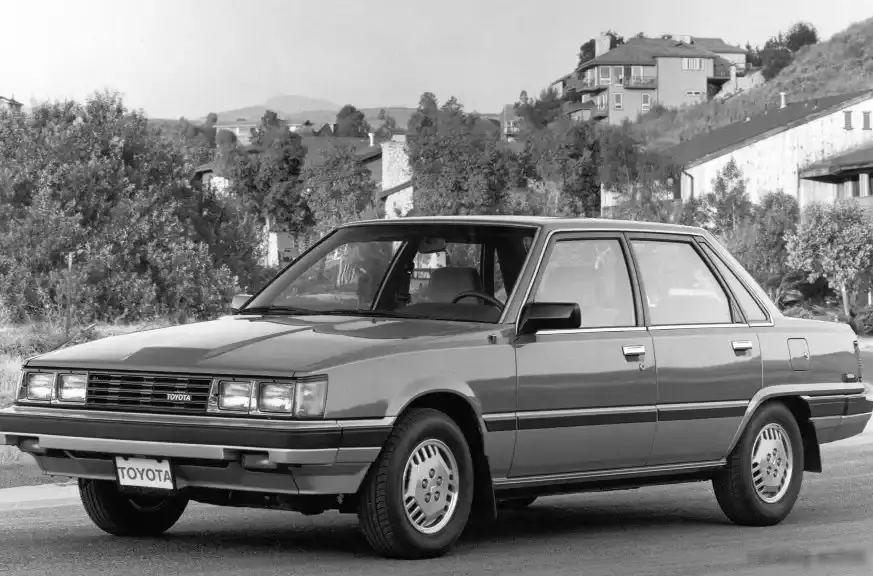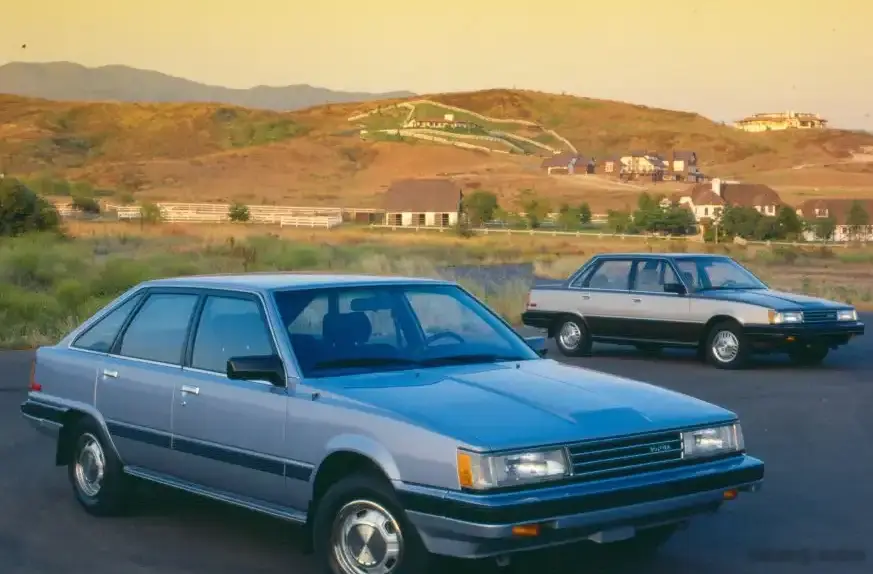
The Toyota Camry I Hatchback, specifically the 1.8-liter (90 hp) variant, was produced between 1982 and 1986. This model represented Toyota’s initial foray into the compact, front-wheel-drive market, aiming to provide a practical and fuel-efficient vehicle for families. Positioned as the entry-level trim within the V10 Camry range, it offered a more affordable alternative to the larger-engined models, prioritizing economy over outright performance. The V10 generation was significant as it moved the Camry away from its rear-wheel-drive roots and embraced a more modern, internationally-competitive platform.
Technical Specifications
| Brand | Toyota |
| Model | Camry |
| Generation | Camry I Hatchback (V10) |
| Type (Engine) | 1.8 (90 Hp) |
| Start of production | 1982 |
| End of production | 1986 |
| Powertrain Architecture | Internal Combustion engine |
| Body type | Hatchback |
| Seats | 5 |
| Doors | 5 |
| Fuel Type | Petrol (Gasoline) |
| Acceleration 0 – 100 km/h | 12 sec |
| Acceleration 0 – 62 mph | 12 sec |
| Acceleration 0 – 60 mph | 11.4 sec |
| Maximum speed | 175 km/h (108.74 mph) |
| Weight-to-power ratio | 12.2 kg/Hp, 82.2 Hp/tonne |
| Weight-to-torque ratio | 7.7 kg/Nm, 129.7 Nm/tonne |
| Power | 90 Hp @ 5400 rpm |
| Power per litre | 45.1 Hp/l |
| Torque | 142 Nm @ 3400 rpm (104.73 lb.-ft. @ 3400 rpm) |
| Engine layout | Front, Transverse |
| Engine Model/Code | 1S-iLU |
| Engine displacement | 1995 cm3 (121.74 cu. in.) |
| Number of cylinders | 4 |
| Engine configuration | Inline |
| Cylinder Bore | 84 mm (3.31 in.) |
| Piston Stroke | 90 mm (3.54 in.) |
| Compression ratio | 9:1 |
| Number of valves per cylinder | 2 |
| Fuel injection system | Carburettor |
| Engine aspiration | Naturally aspirated engine |
| Kerb Weight | 1095 kg (2414.06 lbs.) |
| Trunk (boot) space – minimum | 380 l (13.42 cu. ft.) |
| Trunk (boot) space – maximum | 1201 l (42.41 cu. ft.) |
| Fuel tank capacity | 55 l (14.53 US gal | 12.1 UK gal) |
| Length | 4415 mm (173.82 in.) |
| Width | 1690 mm (66.54 in.) |
| Height | 1370 mm (53.94 in.) |
| Wheelbase | 2600 mm (102.36 in.) |
| Front track | 1465 mm (57.68 in.) |
| Rear (Back) track | 1420 mm (55.91 in.) |
| Drag coefficient (Cd) | 0.36 |
| Minimum turning circle | 11.6 m (38.06 ft.) |
| Drivetrain Architecture | The Internal combustion engine (ICE) drives the front wheels of the vehicle. |
| Drive wheel | Front wheel drive |
| Number of gears and type of gearbox | 5 gears, manual transmission |
| Front suspension | Independent, type McPherson with coil spring and anti-roll bar |
| Rear suspension | Independent coil spring |
| Front brakes | Ventilated discs |
| Rear brakes | Drum |
| Tires size | 185/70 R13 |
| Wheel rims size | 13 |
Powertrain & Engine Architecture
The heart of this Camry variant was the 1S-iLU engine, a 1.8-liter inline-four cylinder gasoline engine. This engine utilized a single overhead camshaft (SOHC) valvetrain with two valves per cylinder. Fuel delivery was managed by a carburetor, a common feature for vehicles of this era, rather than fuel injection. The 1S-iLU produced 90 horsepower at 5400 rpm and 142 Nm (104.73 lb-ft) of torque at 3400 rpm. The engine’s relatively modest output was geared towards fuel efficiency and smooth operation rather than high performance. The engine was transversely mounted, a key element of the front-wheel-drive layout. The transmission was a five-speed manual, offering a reasonable balance between fuel economy and driver control. An automatic transmission was also available, though it typically resulted in a slight decrease in fuel economy and acceleration.
Driving Characteristics
The 1.8-liter Camry Hatchback with the five-speed manual transmission offered adequate, though not exhilarating, performance. Acceleration to 60 mph took approximately 11.4 seconds, and top speed was around 108.74 mph. The engine felt relatively responsive at lower RPMs, making it suitable for city driving. However, passing maneuvers on the highway required careful planning and downshifting. Compared to the more powerful 2.0-liter and 2.2-liter versions of the Camry, this variant felt noticeably slower. The automatic transmission further diminished acceleration, making it even more geared towards relaxed cruising. The front-wheel-drive configuration provided predictable handling, but lacked the dynamic capabilities of rear-wheel-drive vehicles.
Equipment & Trim Levels
The 1.8-liter Camry Hatchback typically came with a fairly basic level of equipment. Standard features included cloth upholstery, a simple dashboard layout with analog gauges, and manual windows and door locks. Air conditioning was often an optional extra, as were features like a radio/cassette player and upgraded interior trim. The interior was designed with practicality in mind, offering ample space for passengers and cargo. The hatchback body style provided excellent versatility, allowing for easy loading and unloading of larger items. Higher trim levels offered features like power windows, central locking, and a more sophisticated audio system, but the 1.8-liter model remained the most affordable entry point into the Camry range.
Chassis & Braking
The Camry I Hatchback utilized an independent McPherson strut suspension in the front, providing a comfortable ride and reasonable handling. The rear suspension employed an independent coil spring setup. Front brakes were ventilated discs, offering good stopping power, while the rear brakes were drums, a cost-saving measure common in vehicles of this class. The steering was rack-and-pinion, providing precise and responsive control. The 185/70 R13 tires offered a good balance between grip and ride comfort. The chassis was designed to be lightweight, contributing to the car’s fuel efficiency and handling characteristics.
Market Reception & Comparison
The 1.8-liter Camry Hatchback was generally well-received by critics as a practical and reliable family car. It was praised for its fuel efficiency, spacious interior, and comfortable ride. However, its modest performance was often criticized, particularly when compared to more powerful competitors. Compared to other trims in the Camry lineup, the 1.8-liter model offered the best value for money, making it an attractive option for budget-conscious buyers. The 2.0-liter and 2.2-liter versions provided more power and performance, but at a higher price point. The 1.8L model competed with other compact hatchbacks of the era, such as the Honda Civic and Nissan Sentra.
Legacy
The 1S-iLU engine, while not known for its high performance, proved to be remarkably durable and reliable. Many examples of the 1.8-liter Camry Hatchback are still on the road today, a testament to Toyota’s engineering quality. The powertrain is relatively simple to maintain, and parts are generally readily available. In the used car market, these Camrys are often sought after by those looking for an affordable and dependable vehicle. The V10 Camry Hatchback, and particularly the 1.8-liter variant, played a crucial role in establishing Toyota as a major player in the global automotive market, paving the way for the Camry’s continued success as one of the world’s best-selling cars.