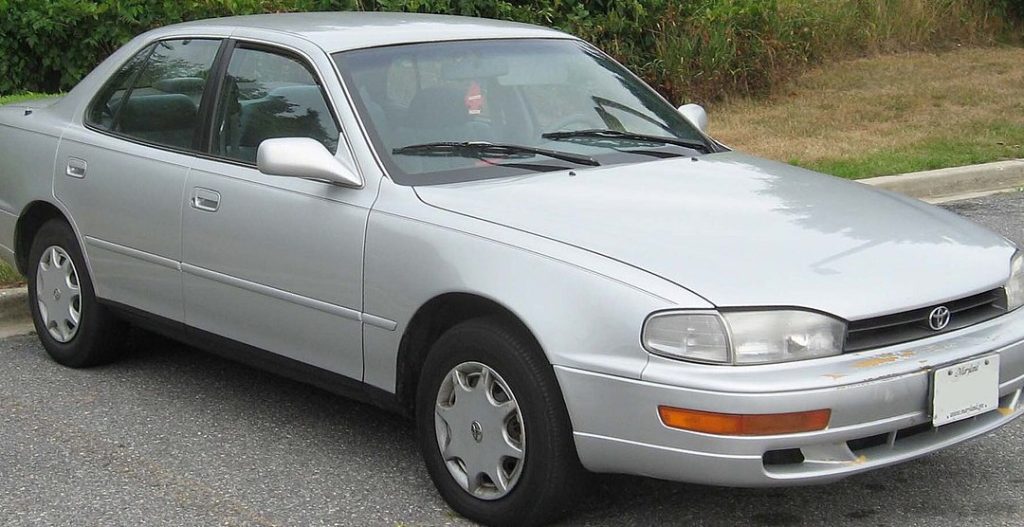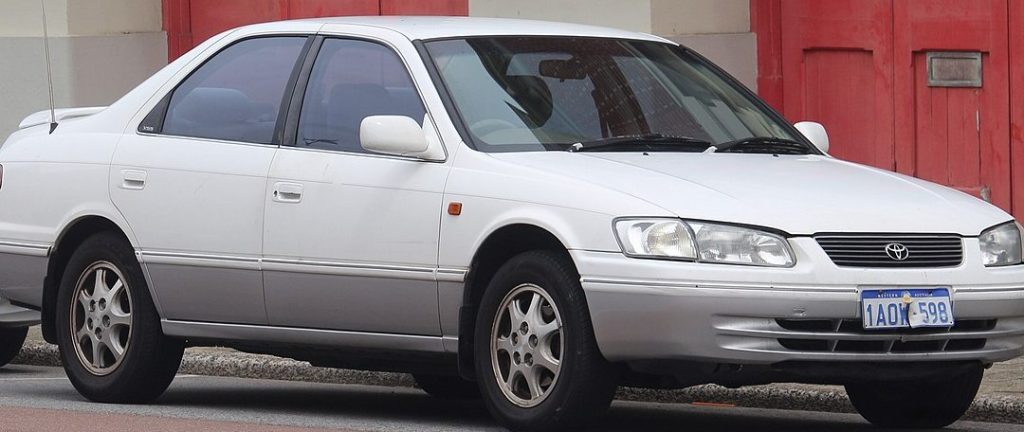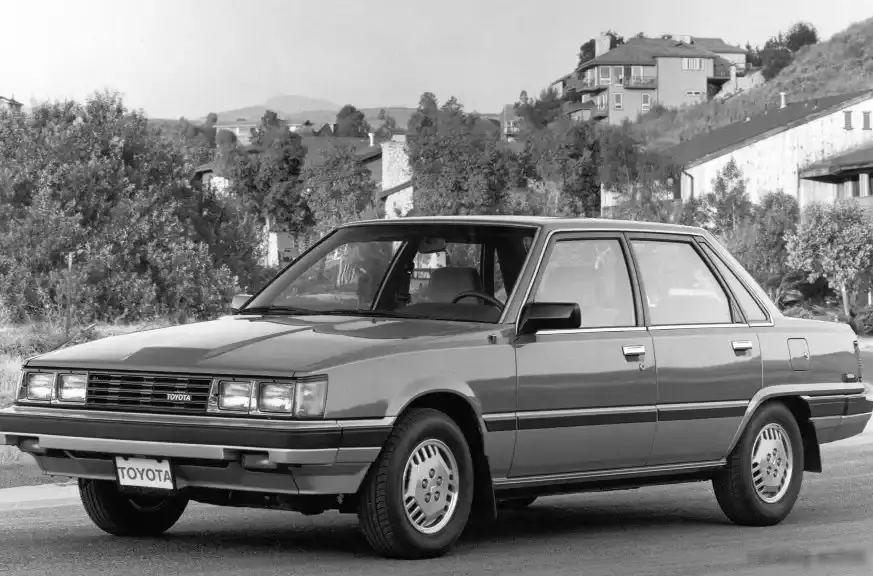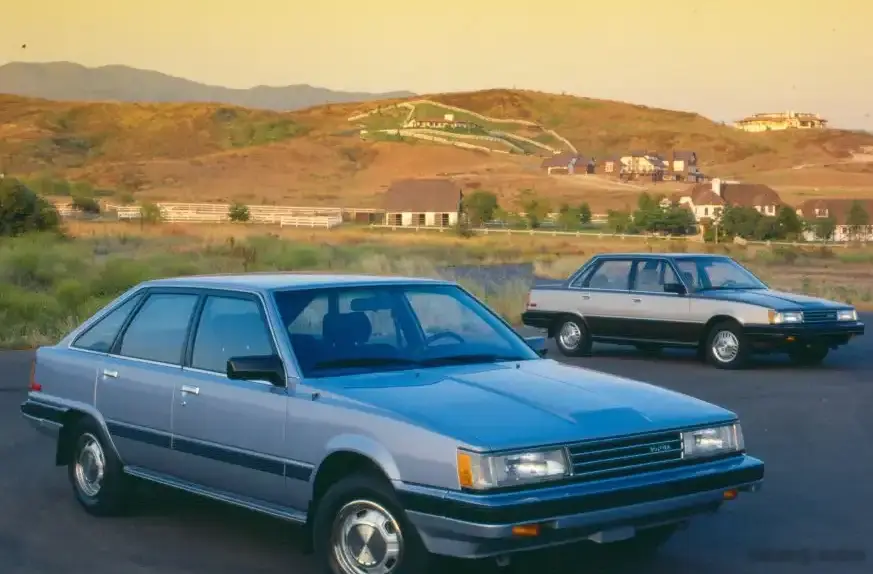
The Toyota Camry I Hatchback (V10) 1.8 Turbo-D, produced between 1982 and 1986, represents a unique and relatively uncommon variant within the first generation Camry lineup. Introduced as a practical and fuel-efficient option, particularly in European and Asian markets, this model combined a small-displacement turbocharged diesel engine with a five-speed manual transmission in a five-door hatchback body style. It served as an entry-level offering, appealing to buyers prioritizing economy and versatility over outright performance. The V10 chassis code designates this as the first generation Camry, a model that marked Toyota’s increasing ambition in the global mid-size car segment.
Technical Specifications
| Brand | Toyota |
| Model | Camry |
| Generation | Camry I Hatchback (V10) |
| Type (Engine) | 1.8 Turbo-D (73 Hp) |
| Start of production | 1982 |
| End of production | 1986 |
| Powertrain Architecture | Internal Combustion engine |
| Body type | Hatchback |
| Seats | 5 |
| Doors | 5 |
| Fuel Type | Diesel |
| Power | 73 Hp @ 4500 rpm |
| Power per litre | 39.7 Hp/l |
| Torque | 145 Nm @ 2600 rpm (106.95 lb.-ft. @ 2600 rpm) |
| Engine layout | Front, Transverse |
| Engine Model/Code | 1C-TLC |
| Engine displacement | 1839 cm3 (112.22 cu. in.) |
| Number of cylinders | 4 |
| Engine configuration | Inline |
| Cylinder Bore | 83 mm (3.27 in.) |
| Piston Stroke | 85 mm (3.35 in.) |
| Compression ratio | 22.5:1 |
| Number of valves per cylinder | 2 |
| Engine aspiration | Turbocharger |
| Trunk (boot) space – minimum | 380 l (13.42 cu. ft.) |
| Trunk (boot) space – maximum | 1420 l (50.15 cu. ft.) |
| Fuel tank capacity | 55 l (14.53 US gal | 12.1 UK gal) |
| Length | 4415 mm (173.82 in.) |
| Width | 1690 mm (66.54 in.) |
| Height | 1370 mm (53.94 in.) |
| Wheelbase | 2600 mm (102.36 in.) |
| Front track | 1465 mm (57.68 in.) |
| Rear (Back) track | 1420 mm (55.91 in.) |
| Minimum turning circle | 11.6 m (38.06 ft.) |
| Drivetrain Architecture | The Internal combustion engine (ICE) drives the front wheels of the vehicle. |
| Drive wheel | Front wheel drive |
| Number of gears and type of gearbox | 5 gears, manual transmission |
| Front suspension | Independent, type McPherson with coil spring and anti-roll bar |
| Rear suspension | Independent coil spring |
| Front brakes | Ventilated discs |
| Rear brakes | Drum |
| Tires size | 185/70 R13 |
| Wheel rims size | 13 |
Powertrain & Engine Architecture
The heart of the Camry 1.8 Turbo-D is the 1C-TLC engine, a 1.8-liter inline-four cylinder diesel. This engine was a relatively early example of Toyota’s foray into turbocharging diesel engines for passenger cars. The turbocharger, a key feature, was implemented to boost power and torque from the small displacement engine. The 1C-TLC utilized indirect injection, a common technology for diesel engines of the era, and featured a two-valve per cylinder configuration. The engine’s relatively high compression ratio of 22.5:1 was typical for indirect injection diesels, contributing to efficient combustion. The five-speed manual transmission was the sole gearbox option, geared to maximize fuel economy and provide reasonable acceleration. The transmission’s ratios were spaced to keep the engine within its optimal torque band during everyday driving.
Driving Characteristics
The 1.8 Turbo-D Camry offered modest performance. With 73 horsepower and 145 Nm (106.95 lb-ft) of torque, acceleration was adequate for typical commuting and highway cruising, but it was noticeably slower than gasoline-powered Camry variants. The turbocharger did provide a boost in power at higher RPMs, but the engine lacked the responsiveness of more modern turbocharged engines. The manual transmission allowed drivers to maintain control over the engine’s RPMs, maximizing efficiency and providing a more engaging driving experience than an automatic would have. Compared to the larger, more powerful gasoline engines available in the Camry range, the 1.8 Turbo-D prioritized fuel economy and practicality over outright speed.
Equipment & Trim Levels
The 1.8 Turbo-D Camry typically represented the base trim level. Standard features generally included cloth upholstery, a basic instrument cluster, and manual windows and door locks. Air conditioning and a radio were often optional extras. The interior design was functional and durable, reflecting the car’s focus on practicality. The hatchback body style provided a generous amount of cargo space, further enhancing the car’s versatility. Trim levels were relatively limited for this variant, with most options being standalone additions rather than part of comprehensive packages.
Chassis & Braking
The Camry I Hatchback utilized a front-engine, front-wheel-drive layout. The front suspension featured an independent McPherson strut design with coil springs and an anti-roll bar, providing a comfortable ride and reasonable handling. The rear suspension employed an independent coil spring setup. Braking was accomplished via ventilated discs at the front and drum brakes at the rear. This configuration was typical for cars in this class during the early 1980s. The 185/70 R13 tires provided adequate grip for everyday driving conditions.
Market Reception & Comparison
The 1.8 Turbo-D Camry was generally well-received in markets where diesel fuel was affordable and fuel economy was a primary concern. Critics praised its practicality, spacious interior, and relatively low running costs. However, the engine’s modest power output and somewhat noisy operation were often noted. Compared to the gasoline-powered Camry models, the diesel variant offered significantly better fuel economy but lacked the same level of refinement and performance. Against competitors like the Ford Escort Diesel or Volkswagen Golf Diesel, the Camry offered a more spacious interior and a reputation for Toyota reliability.
Legacy
The 1.8 Turbo-D Camry, while not a high-performance model, played a role in establishing Toyota’s presence in the European and Asian mid-size car markets. The 1C-TLC engine, while relatively simple by modern standards, proved to be reasonably durable and reliable. Today, these cars are relatively rare and sought after by enthusiasts interested in classic Japanese automobiles. The combination of a turbocharged diesel engine and a hatchback body style was somewhat unusual for the time, making this variant a unique and interesting piece of automotive history. Finding well-maintained examples can be challenging, but the 1.8 Turbo-D Camry remains a testament to Toyota’s commitment to building practical and fuel-efficient vehicles.