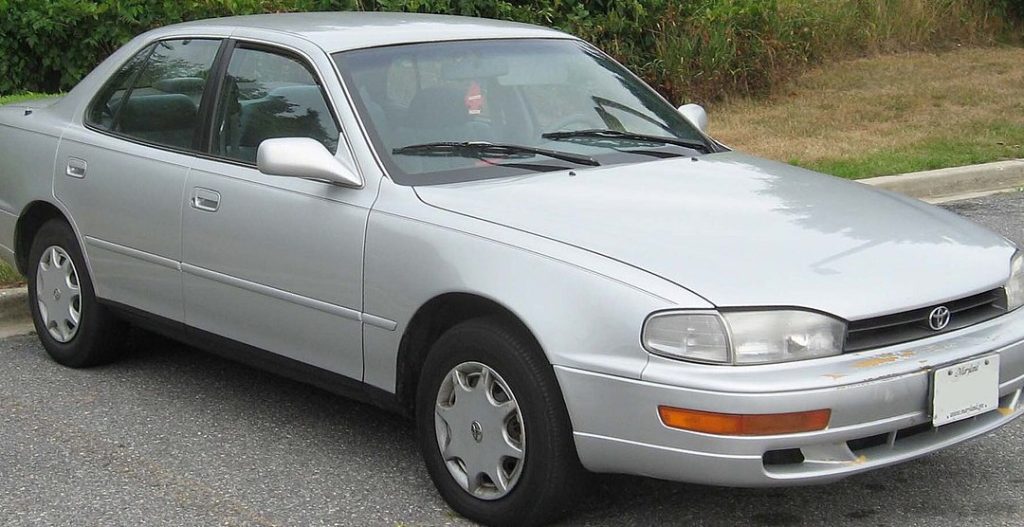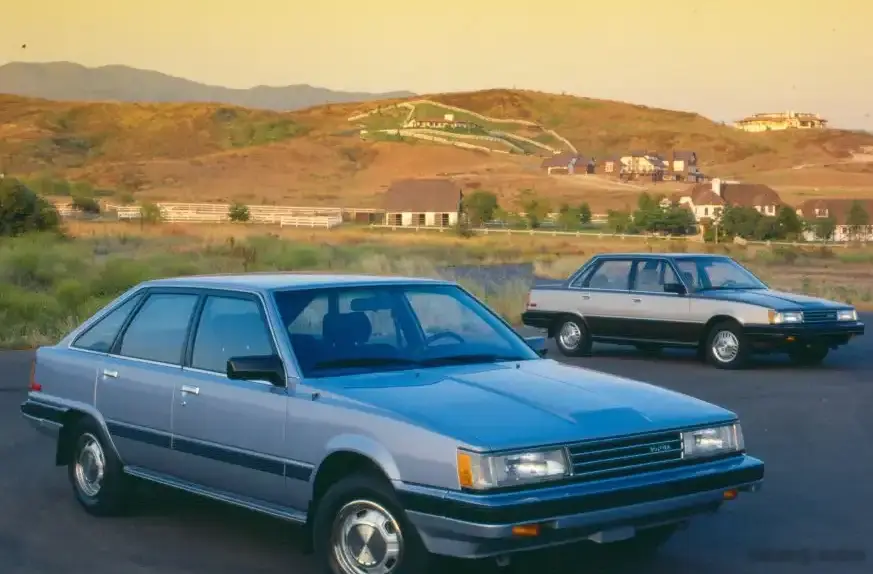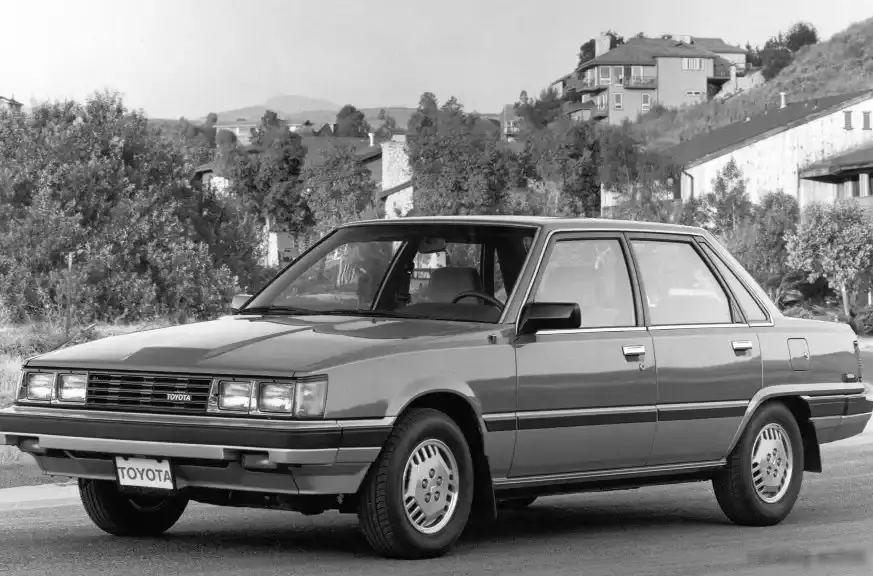
The Toyota Camry I (V10), produced between 1982 and 1986, represented a significant step forward for Toyota in the mid-size sedan segment. Replacing the Corona, the Camry aimed to offer a more modern and comfortable driving experience. The 1.8-liter (90 hp) variant, powered by the 1S-iLU engine, served as the entry point to the Camry lineup in many markets, particularly as a more affordable and fuel-conscious option. This generation Camry (XV10 chassis code) was a crucial model for Toyota, establishing the Camry’s reputation for reliability and practicality that would define it for decades to come. It was a direct competitor to the Honda Accord and Nissan Bluebird.
Technical Specifications
| Brand | Toyota |
| Model | Camry |
| Generation | Camry I (V10) |
| Type (Engine) | 1.8 (90 Hp) |
| Start of production | 1982 |
| End of production | 1986 |
| Powertrain Architecture | Internal Combustion engine |
| Body type | Sedan |
| Seats | 5 |
| Doors | 4 |
| Fuel Type | Petrol (Gasoline) |
| Acceleration 0 – 100 km/h | 12 sec |
| Acceleration 0 – 62 mph | 12 sec |
| Acceleration 0 – 60 mph | 11.4 sec |
| Maximum speed | 175 km/h (108.74 mph) |
| Weight-to-power ratio | 11.6 kg/Hp, 86.1 Hp/tonne |
| Weight-to-torque ratio | 7.4 kg/Nm, 135.9 Nm/tonne |
| Power | 90 Hp @ 5400 rpm |
| Power per litre | 49.1 Hp/l |
| Torque | 142 Nm @ 3400 rpm (104.73 lb.-ft. @ 3400 rpm) |
| Engine layout | Front, Transverse |
| Engine Model/Code | 1S-iLU |
| Engine displacement | 1832 cm3 (111.8 cu. in.) |
| Number of cylinders | 4 |
| Engine configuration | Inline |
| Cylinder Bore | 80.5 mm (3.17 in.) |
| Piston Stroke | 90 mm (3.54 in.) |
| Compression ratio | 9:1 |
| Number of valves per cylinder | 2 |
| Fuel injection system | Carburettor |
| Engine aspiration | Naturally aspirated engine |
| Kerb Weight | 1045 kg (2303.83 lbs.) |
| Max. weight | 1575 kg (3472.28 lbs.) |
| Max load | 530 kg (1168.45 lbs.) |
| Fuel tank capacity | 55 l (14.53 US gal | 12.1 UK gal) |
| Max. roof load | 100 kg (220.46 lbs.) |
| Permitted trailer load with brakes (12%) | 1400 kg (3086.47 lbs.) |
| Permitted trailer load without brakes | 530 kg (1168.45 lbs.) |
| Length | 4435 mm (174.61 in.) |
| Width | 1690 mm (66.54 in.) |
| Height | 1395 mm (54.92 in.) |
| Wheelbase | 2600 mm (102.36 in.) |
| Minimum turning circle | 10.6 m (34.78 ft.) |
| Drivetrain Architecture | The Internal combustion engine (ICE) drives the front wheels of the vehicle. |
| Drive wheel | Front wheel drive |
| Number of gears and type of gearbox | 5 gears, manual transmission |
| Front suspension | Independent, type McPherson with coil spring and anti-roll bar |
| Rear suspension | Independent coil spring |
| Front brakes | Ventilated discs |
| Rear brakes | Drum |
Powertrain & Engine Architecture
The heart of the Camry 1.8 was the 1S-iLU engine, an inline-four cylinder, naturally aspirated gasoline engine displacing 1.8 liters (1832 cc). This engine utilized a single overhead camshaft (SOHC) design with two valves per cylinder. Fuel delivery was managed by a carburetor, a common feature for vehicles of this era, rather than fuel injection. The 1S-iLU produced 90 horsepower at 5400 rpm and 142 Nm (104.73 lb-ft) of torque at 3400 rpm. The engine’s design prioritized fuel efficiency and smooth operation over outright performance. The transmission was a 5-speed manual, offering a relatively engaging driving experience for the time. An automatic transmission was also available, though it typically resulted in a slight decrease in fuel economy and acceleration.
Driving Characteristics
The 1.8-liter Camry, particularly with the manual transmission, offered a reasonably engaging driving experience for a family sedan of the 1980s. Acceleration to 60 mph took around 11.4 seconds, which was adequate but not particularly brisk. The carburetor-fed engine delivered smooth, predictable power, but lacked the responsiveness of later fuel-injected engines. The 5-speed manual transmission allowed drivers to keep the engine in its optimal power band, improving acceleration and providing more control. Compared to the more powerful Camry variants (which were not widely available in the US market), the 1.8 felt noticeably slower, especially when fully loaded with passengers and cargo. The suspension provided a comfortable ride, absorbing bumps and imperfections in the road well, but handling was not particularly sporty.
Equipment & Trim Levels
The 1.8-liter Camry typically represented the base trim level. Standard features included cloth upholstery, a basic AM/FM radio, and manual windows and locks. Air conditioning was often an optional extra. Interior appointments were functional and durable, prioritizing practicality over luxury. Higher trim levels, available with larger engines, offered features such as power windows, power locks, upgraded audio systems, and more comfortable seating. The dashboard layout was straightforward and easy to use, with clearly marked gauges and controls.
Chassis & Braking
The Camry I (V10) utilized a front-engine, front-wheel-drive layout. The front suspension employed an independent McPherson strut design with coil springs and an anti-roll bar, providing a comfortable ride and reasonable handling. The rear suspension featured an independent coil spring setup. Braking duties were handled by ventilated discs at the front and drum brakes at the rear. This configuration was typical for vehicles in this class during the 1980s. The braking system provided adequate stopping power for everyday driving, but lacked the sophistication of more modern systems.
Market Reception & Comparison
The 1.8-liter Camry was generally well-received by critics as a practical and reliable family sedan. It was praised for its comfortable ride, spacious interior, and fuel efficiency. However, some reviewers noted its lack of outright performance compared to competitors like the Honda Accord. The 1.8L Camry was positioned as the economy-minded choice in the lineup, appealing to buyers who prioritized affordability and fuel economy over performance. Compared to the larger-engined Camry variants, the 1.8 offered significantly better fuel economy, but at the expense of acceleration and overall driving enjoyment. Its reliability proved to be a major selling point, contributing to the Camry’s growing reputation as a dependable vehicle.
Legacy
The 1S-iLU engine, while not known for its high performance, proved to be remarkably durable and reliable. Many examples of the 1.8-liter Camry are still on the road today, a testament to Toyota’s engineering and build quality. In the used car market, these Camrys are often sought after by enthusiasts and collectors looking for a classic Japanese sedan. The 1.8L variant, while not the most desirable trim, remains a viable option for those seeking an affordable and dependable classic car. The first-generation Camry laid the foundation for the model’s future success, establishing it as a benchmark for reliability and practicality in the mid-size sedan segment. The engine’s simplicity also makes it relatively easy and inexpensive to maintain, contributing to its longevity.