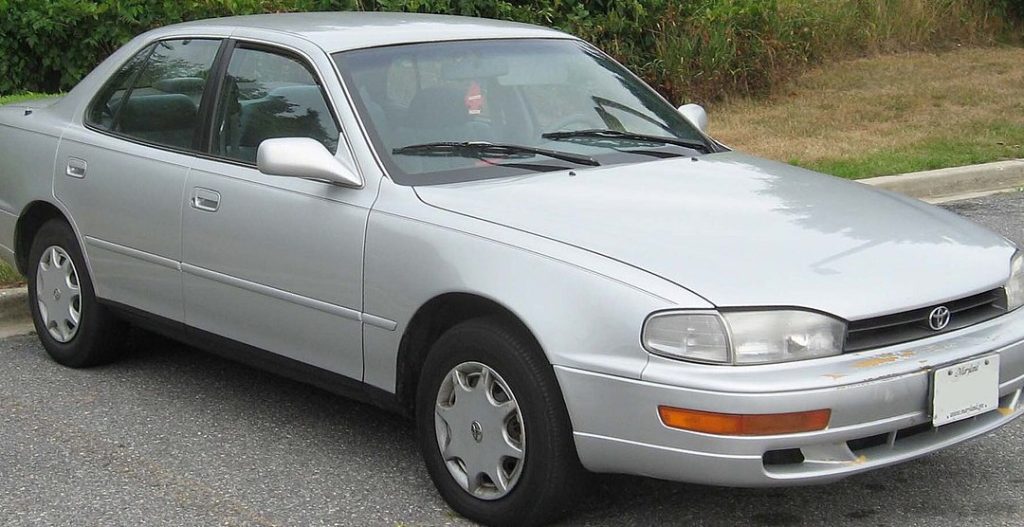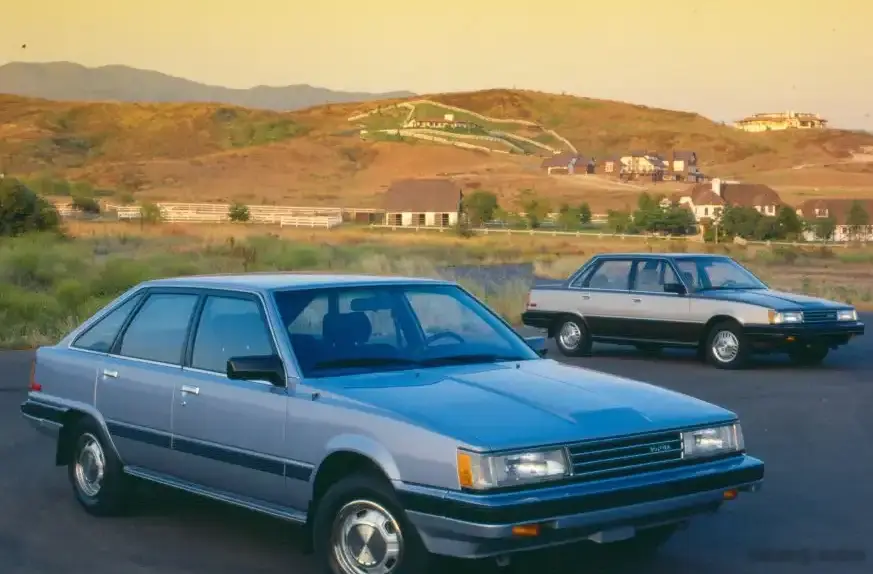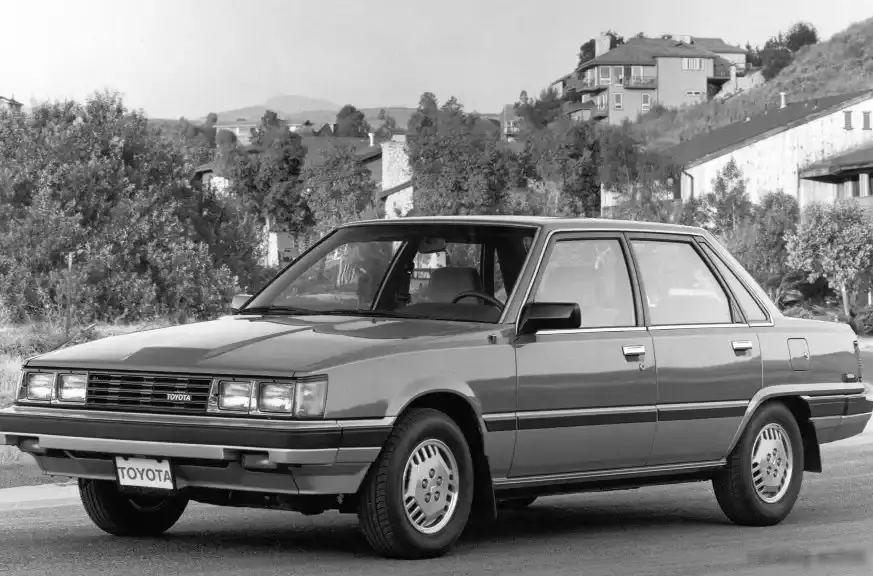
The Toyota Camry I (V10) 2.0, produced between 1984 and 1986, represented a significant step forward for Toyota in the mid-size sedan segment. This initial generation Camry, designated the V10 chassis code, was intended to replace the Corolla and Cressida, offering a more spacious and comfortable alternative. The 2.0-liter variant, producing 107 horsepower, occupied a middle ground in the Camry lineup, positioned above the base 1.6-liter engine but below the more powerful 2.2-liter options available in some markets. It was primarily aimed at buyers seeking a balance of fuel efficiency and adequate performance for everyday driving. The V10 Camry was a crucial model for Toyota, establishing the Camry nameplate as a reliable and practical family car, and laying the foundation for its future success in the North American market.
Technical Specifications
| Brand | Toyota |
| Model | Camry |
| Generation | Camry I (V10) |
| Type (Engine) | 2.0 (107 Hp) |
| Start of production | 1984 |
| End of production | 1986 |
| Powertrain Architecture | Internal Combustion engine |
| Body type | Sedan |
| Seats | 5 |
| Doors | 4 |
| Fuel Type | Petrol (Gasoline) |
| Acceleration 0 – 100 km/h | 11.5 sec |
| Acceleration 0 – 62 mph | 11.5 sec |
| Acceleration 0 – 60 mph | 10.9 sec |
| Maximum speed | 185 km/h (114.95 mph) |
| Weight-to-power ratio | 9.9 kg/Hp, 101.4 Hp/tonne |
| Weight-to-torque ratio | 6.4 kg/Nm, 157.3 Nm/tonne |
| Power | 107 Hp @ 5200 rpm |
| Power per litre | 53.6 Hp/l |
| Torque | 166 Nm @ 4000 rpm (122.44 lb.-ft. @ 4000 rpm) |
| Engine layout | Front, Transverse |
| Engine Model/Code | 1C-TLC |
| Engine displacement | 1995 cm3 (121.74 cu. in.) |
| Number of cylinders | 4 |
| Engine configuration | Inline |
| Cylinder Bore | 84 mm (3.31 in.) |
| Piston Stroke | 90 mm (3.54 in.) |
| Compression ratio | 9:1 |
| Number of valves per cylinder | 2 |
| Fuel injection system | Carburettor |
| Engine aspiration | Naturally aspirated engine |
| Kerb Weight | 1055 kg (2325.88 lbs.) |
| Max. weight | 1575 kg (3472.28 lbs.) |
| Max load | 520 kg (1146.4 lbs.) |
| Fuel tank capacity | 55 l (14.53 US gal | 12.1 UK gal) |
| Max. roof load | 100 kg (220.46 lbs.) |
| Permitted trailer load with brakes (12%) | 1500 kg (3306.93 lbs.) |
| Permitted trailer load without brakes | 400 kg (881.85 lbs.) |
| Length | 4435 mm (174.61 in.) |
| Width | 1690 mm (66.54 in.) |
| Height | 1395 mm (54.92 in.) |
| Wheelbase | 2600 mm (102.36 in.) |
| Minimum turning circle | 10.6 m (34.78 ft.) |
| Drivetrain Architecture | The Internal combustion engine (ICE) drives the front wheels of the vehicle. |
| Drive wheel | Front wheel drive |
| Number of gears and type of gearbox | 5 gears, manual transmission |
| Front suspension | Independent, type McPherson with coil spring and anti-roll bar |
| Rear suspension | Independent coil spring |
| Front brakes | Ventilated discs |
| Rear brakes | Drum |
| Tires size | 185/70 R13 |
| Wheel rims size | 13 |
Powertrain & Engine Architecture
The heart of the Camry I (V10) 2.0 was the 1C-TLC engine, a 1.995-liter (121.74 cubic inches) inline-four cylinder gasoline engine. This engine utilized a single overhead camshaft (SOHC) valvetrain with two valves per cylinder. Fuel delivery was managed by a carburetor, a common practice for the time, though increasingly being replaced by fuel injection in other markets. The 1C-TLC produced 107 horsepower at 5200 rpm and 166 Nm (122.44 lb-ft) of torque at 4000 rpm. The engine was transversely mounted in the front of the vehicle, driving the front wheels. The standard transmission for this variant was a five-speed manual gearbox, offering a relatively direct driving experience. While an automatic transmission was available, it was often paired with a slightly different engine tuning or in higher trim levels.
Driving Characteristics
The 2.0-liter Camry with the five-speed manual transmission offered a reasonably engaging driving experience for its time. Acceleration to 60 mph took approximately 10.9 seconds, and it had a top speed of around 115 mph. Compared to the base 1.6-liter engine, the 2.0-liter provided noticeably more power, making highway merging and overtaking maneuvers less strenuous. However, it wasn’t a particularly sporty car; the focus was on comfort and reliability. The five-speed manual allowed drivers to keep the engine in its optimal power band, but the carburetor-based fuel system could sometimes result in a slight lag in throttle response. The automatic transmission, when equipped, further dulled the performance, prioritizing smooth shifts over outright acceleration.
Equipment & Trim Levels
The Camry I (V10) 2.0 typically came with a fairly basic level of standard equipment. Interior features included cloth upholstery, a simple dashboard layout with analog gauges, and a basic AM/FM radio. Power steering was often included, but air conditioning and power windows were usually optional extras. Trim levels varied depending on the market, but generally, the 2.0-liter model was positioned as a mid-range offering. Optional extras could include upgraded sound systems, alloy wheels, and a sunroof. The interior design prioritized functionality and durability over luxury.
Chassis & Braking
The Camry I (V10) utilized an independent McPherson strut suspension in the front, providing a comfortable ride and decent handling. The rear suspension employed an independent coil spring setup. Braking duties were handled by ventilated discs in the front and drum brakes in the rear. This configuration was typical for front-wheel-drive cars of this era and weight class. Steering was rack-and-pinion, providing reasonably precise control. The chassis was designed to prioritize ride comfort and stability over sporty handling characteristics.
Market Reception & Comparison
The Camry I (V10) 2.0 was generally well-received by automotive critics as a practical and reliable family sedan. It was praised for its spacious interior, comfortable ride, and fuel efficiency. However, some critics noted that the performance was adequate but not particularly exciting, especially when compared to some of its European competitors. Compared to the 1.6-liter Camry, the 2.0-liter offered a significant improvement in performance, making it a more appealing option for drivers who frequently drove on highways or carried passengers. The 2.2-liter versions, available in some markets, provided even more power but came at a higher price point.
Legacy
The Toyota Camry I (V10) 2.0, and the V10 generation as a whole, established the Camry as a major player in the mid-size sedan segment. The 1C-TLC engine, while not particularly groundbreaking, proved to be a durable and reliable powerplant. Today, these early Camrys are becoming increasingly collectible, particularly well-maintained examples. The 2.0-liter variant, with its balance of performance and fuel efficiency, remains a popular choice among enthusiasts. While parts availability can be a challenge, the Camry’s reputation for reliability means that many of these cars are still on the road today, a testament to Toyota’s engineering prowess.