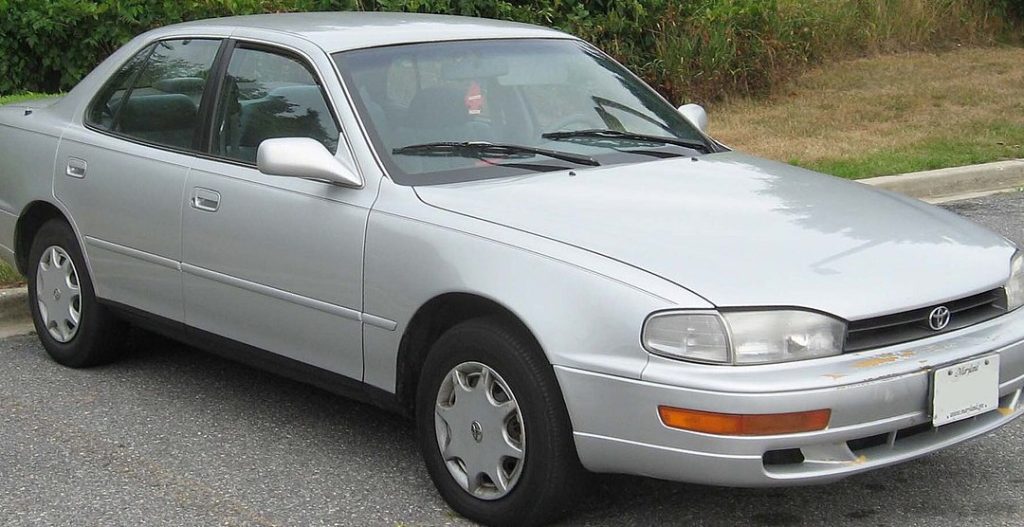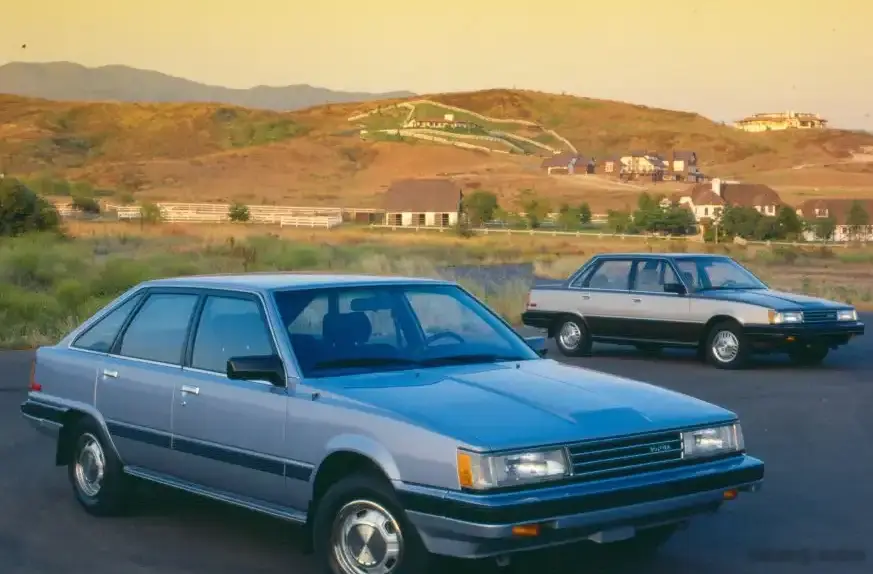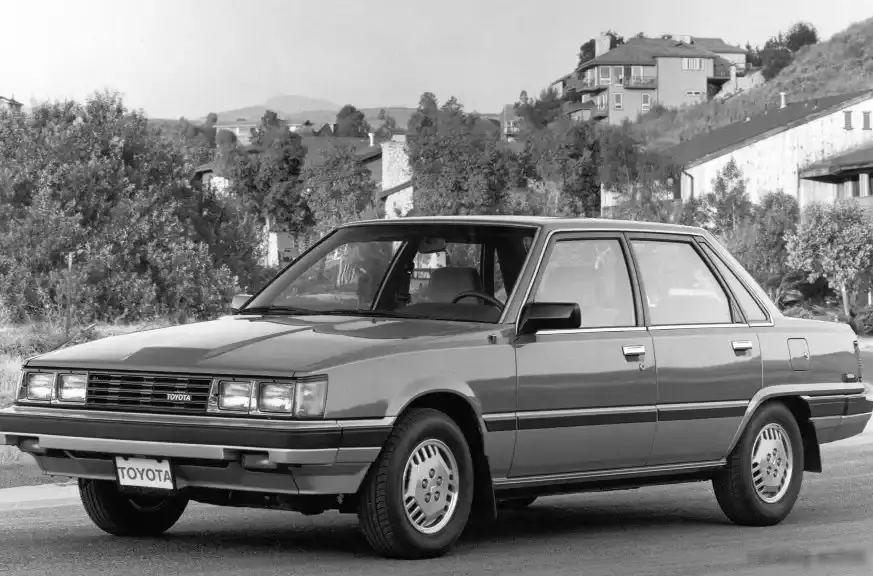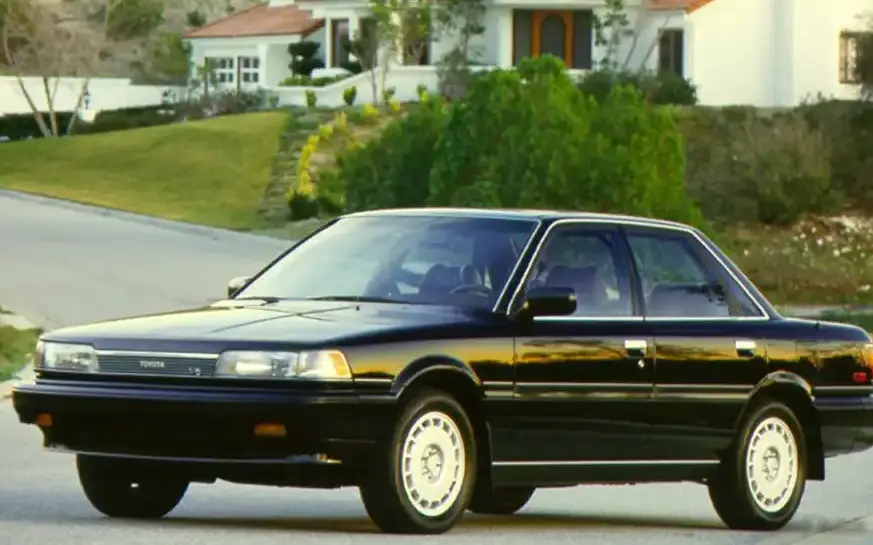
The Toyota Camry II (V20) 2.0 GLi 16V, produced between 1986 and 1991, represented a significant step forward for Toyota’s mid-size offering. Positioned as a slightly more upscale trim within the V20 generation, the 2.0 GLi 16V aimed to provide a balance of performance and refinement for buyers seeking a comfortable and reliable family sedan. This variant was primarily sold in markets outside of North America, where the Camry was initially offered with smaller displacement engines. The V20 series, built on the T-platform, was a crucial model for Toyota, establishing the Camry’s reputation for quality and dependability in a competitive segment.
Technical Specifications
| Brand | Toyota |
| Model | Camry |
| Generation | Camry II (V20) |
| Type | 2.0 GLi 16V (121 Hp) CAT |
| Start of production | 1986 |
| End of production | 1991 |
| Powertrain Architecture | Internal Combustion engine |
| Body type | Sedan |
| Seats | 5 |
| Doors | 4 |
| Fuel Type | Petrol (Gasoline) |
| Acceleration 0 – 100 km/h | 9.4 sec |
| Acceleration 0 – 62 mph | 9.4 sec |
| Acceleration 0 – 60 mph | 8.9 sec |
| Maximum speed | 190 km/h (118.06 mph) |
| Weight-to-power ratio | 10 kg/Hp, 100.4 Hp/tonne |
| Weight-to-torque ratio | 6.8 kg/Nm, 146.1 Nm/tonne |
| Power | 121 Hp @ 5600 rpm |
| Power per litre | 60.6 Hp/l |
| Torque | 176 Nm @ 4400 rpm (129.81 lb.-ft. @ 4400 rpm) |
| Engine layout | Front, Transverse |
| Engine Model/Code | 3S-FE |
| Engine displacement | 1998 cm3 (121.93 cu. in.) |
| Number of cylinders | 4 |
| Engine configuration | Inline |
| Cylinder Bore | 86 mm (3.39 in.) |
| Piston Stroke | 86 mm (3.39 in.) |
| Compression ratio | 9.3:1 |
| Number of valves per cylinder | 4 |
| Fuel injection system | Multi-port manifold injection |
| Engine aspiration | Naturally aspirated engine |
| Engine oil capacity | 4.2 l (4.44 US qt | 3.7 UK qt) |
| Coolant capacity | 6.5 l (6.87 US qt | 5.72 UK qt) |
| Kerb Weight | 1205 kg (2656.57 lbs.) |
| Max. weight | 1720 kg (3791.95 lbs.) |
| Max load | 515 kg (1135.38 lbs.) |
| Trunk (boot) space – maximum | 505 l (17.83 cu. ft.) |
| Fuel tank capacity | 60 l (15.85 US gal | 13.2 UK gal) |
| Max. roof load | 100 kg (220.46 lbs.) |
| Permitted trailer load with brakes (12%) | 1500 kg (3306.93 lbs.) |
| Permitted trailer load without brakes | 500 kg (1102.31 lbs.) |
| Length | 4520 mm (177.95 in.) |
| Width | 1710 mm (67.32 in.) |
| Height | 1400 mm (55.12 in.) |
| Wheelbase | 2600 mm (102.36 in.) |
| Front track | 1475 mm (58.07 in.) |
| Rear (Back) track | 1445 mm (56.89 in.) |
| Drag coefficient (Cd) | 0.35 |
| Minimum turning circle (turning diameter) | 10.6 m (34.78 ft.) |
| Drivetrain Architecture | The Internal combustion engine (ICE) drives the front wheels of the vehicle. |
| Drive wheel | Front wheel drive |
| Number of gears and type of gearbox | 5 gears, manual transmission |
| Front suspension | Independent, type McPherson with coil spring and anti-roll bar |
| Rear suspension | Torsion |
| Front brakes | Ventilated discs |
| Rear brakes | Drum |
| Tires size | 185/70 R14 |
| Wheel rims size | 14 |
Powertrain & Engine Architecture
The heart of the 2.0 GLi 16V was the 3S-FE engine, a 1.998-liter inline-four cylinder powerplant. This engine featured multi-port fuel injection, a crucial upgrade over earlier carburetor-equipped models, contributing to improved fuel efficiency and smoother power delivery. The “16V” designation indicated a dual overhead camshaft (DOHC) valvetrain, enhancing volumetric efficiency and allowing for higher engine speeds. The 3S-FE was known for its robust construction and relatively simple design, making it a reliable unit. The engine produced 121 horsepower at 5600 rpm and 176 Nm (129.81 lb-ft) of torque at 4400 rpm. This power was delivered to the front wheels through a 5-speed manual transmission, which was standard for this trim level. The engine’s transverse mounting further optimized space utilization within the engine bay.
Driving Characteristics
The 2.0 GLi 16V offered a noticeable step up in performance compared to the base model Camry variants equipped with smaller engines. While not a sports sedan, the 121 hp engine provided adequate power for everyday driving and highway cruising. Acceleration to 60 mph took approximately 8.9 seconds, and the car could reach a top speed of 190 km/h (118 mph). The 5-speed manual transmission allowed drivers to effectively utilize the engine’s powerband, providing good control and responsiveness. Compared to later, more powerful Camry models, the 2.0 GLi 16V felt less stressed at higher speeds, and the manual gearbox offered a more engaging driving experience than the automatic transmissions available on other trims. The gear ratios were well-matched for both city and highway driving, providing a balance between acceleration and fuel economy.
Equipment & Trim Levels
The 2.0 GLi 16V trim level represented a mid-range offering within the V20 Camry lineup. Standard features typically included power steering, cloth upholstery, a basic audio system, and manual windows and locks. The interior was functional and well-built, reflecting Toyota’s commitment to quality. Optional extras could include air conditioning, upgraded audio systems, and alloy wheels. The GLi designation generally indicated a higher level of equipment compared to the base model, but it wasn’t as luxurious as the top-of-the-line trims. The dashboard layout was straightforward and easy to use, with clearly marked controls.
Chassis & Braking
The V20 Camry utilized a front-engine, front-wheel-drive layout. The front suspension featured an independent McPherson strut design with coil springs and an anti-roll bar, providing a comfortable ride and decent handling. The rear suspension employed a torsion beam setup, which was a cost-effective solution that offered adequate stability. Braking duties were handled by ventilated discs at the front and drum brakes at the rear. This configuration was typical for vehicles in this class during the late 1980s. The 185/70 R14 tires provided adequate grip for most driving conditions. The chassis was designed to prioritize comfort and refinement over sporty handling, resulting in a smooth and predictable driving experience.
Market Reception & Comparison
The Toyota Camry II (V20) 2.0 GLi 16V was generally well-received by automotive critics. It was praised for its reliability, comfortable ride, and fuel efficiency. Compared to other mid-size sedans of the era, the Camry offered a compelling combination of features and value. The 2.0 GLi 16V provided a noticeable performance advantage over the base model Camry variants, while remaining more affordable than the larger-engined options. Fuel economy was respectable for its class, and the manual transmission contributed to lower running costs. However, some critics noted that the Camry’s styling was somewhat conservative compared to its competitors.
Legacy
The 3S-FE engine, found in the 2.0 GLi 16V, proved to be exceptionally durable and reliable. Many examples of this engine are still running today, often with minimal maintenance. The V20 Camry, as a whole, cemented Toyota’s reputation for building long-lasting and dependable vehicles. In the used car market, these Camrys are often sought after for their affordability and reliability. While not a collector’s item, a well-maintained 2.0 GLi 16V represents a solid and practical choice for buyers seeking a classic Japanese sedan. The simplicity of the engine and the availability of spare parts contribute to its continued viability as a daily driver.