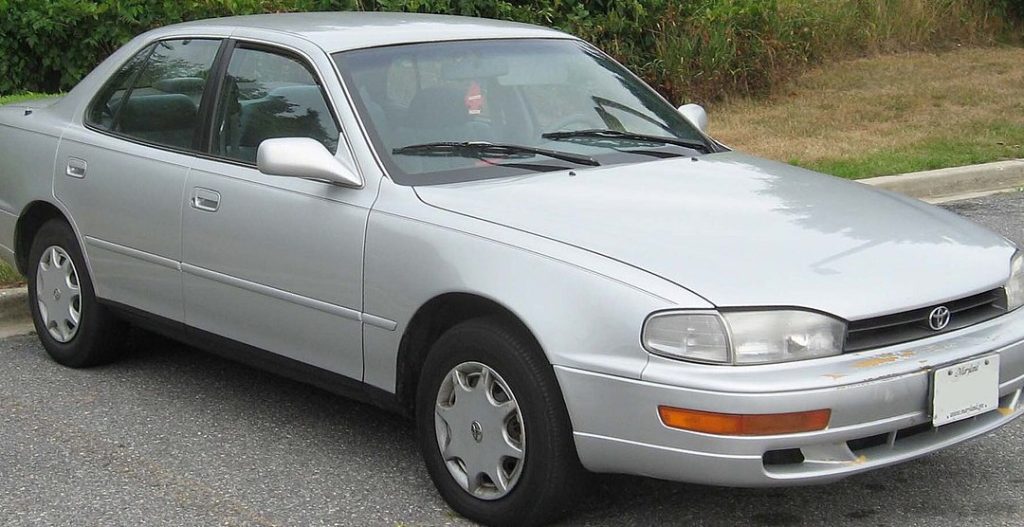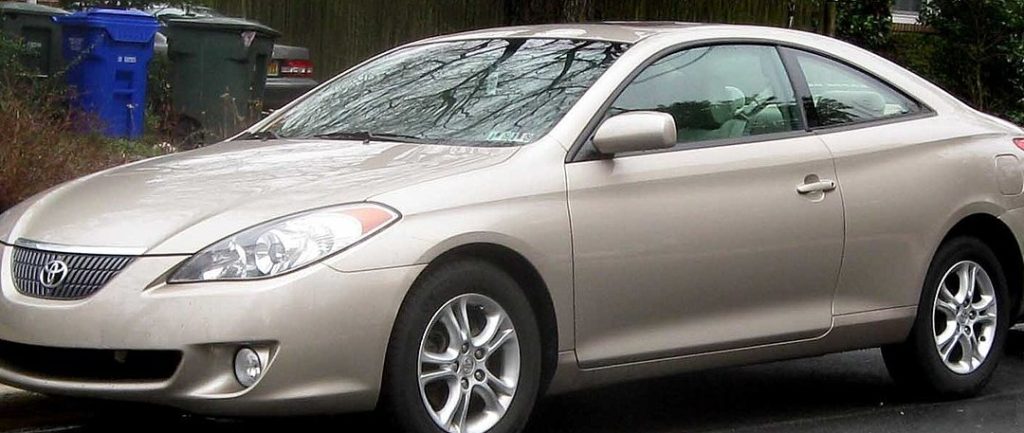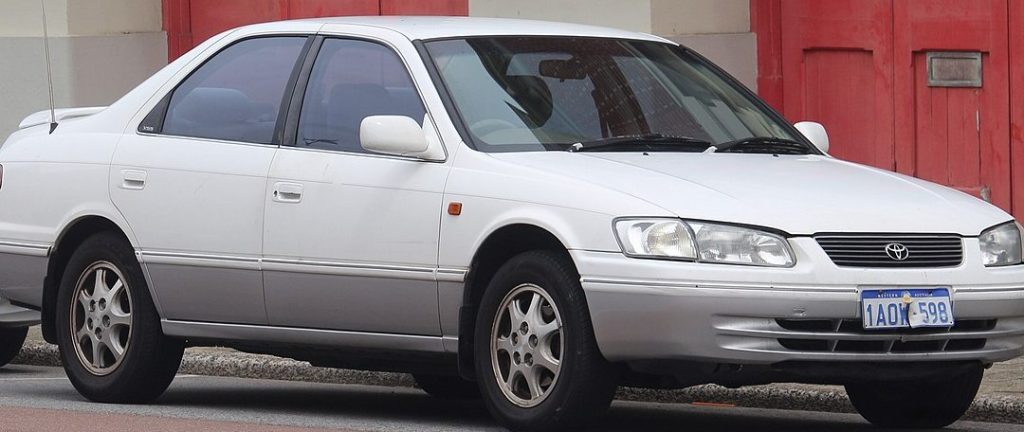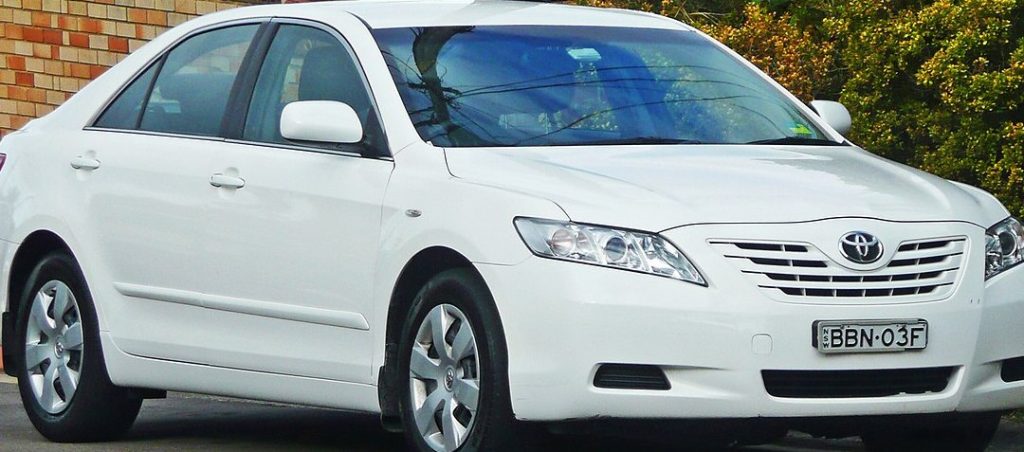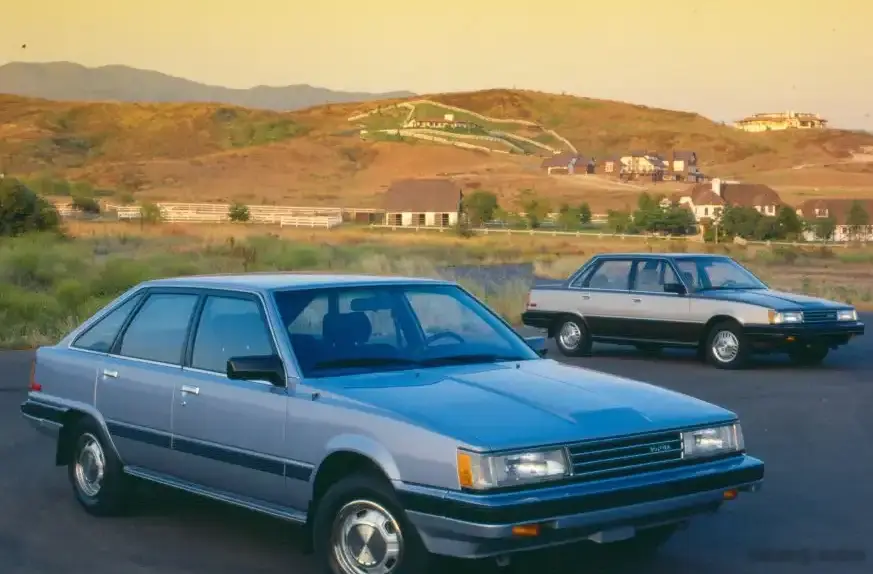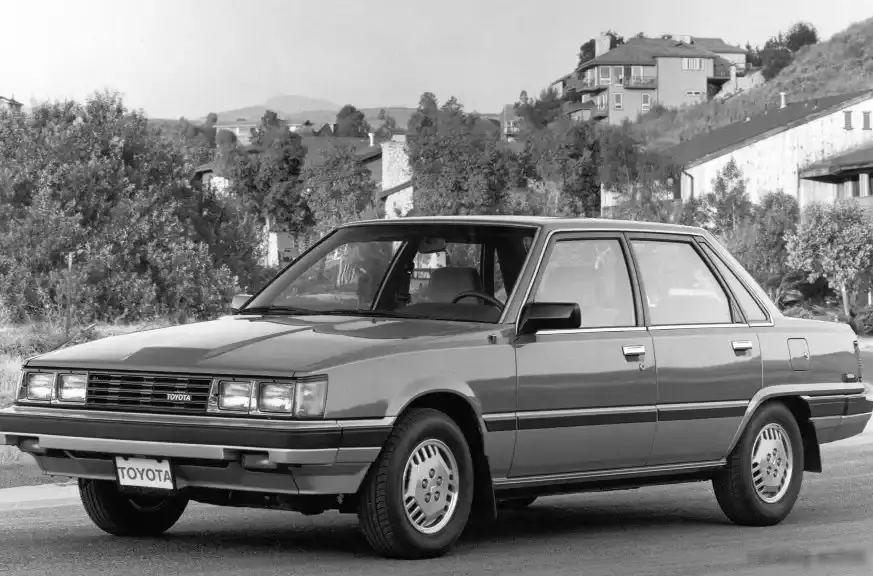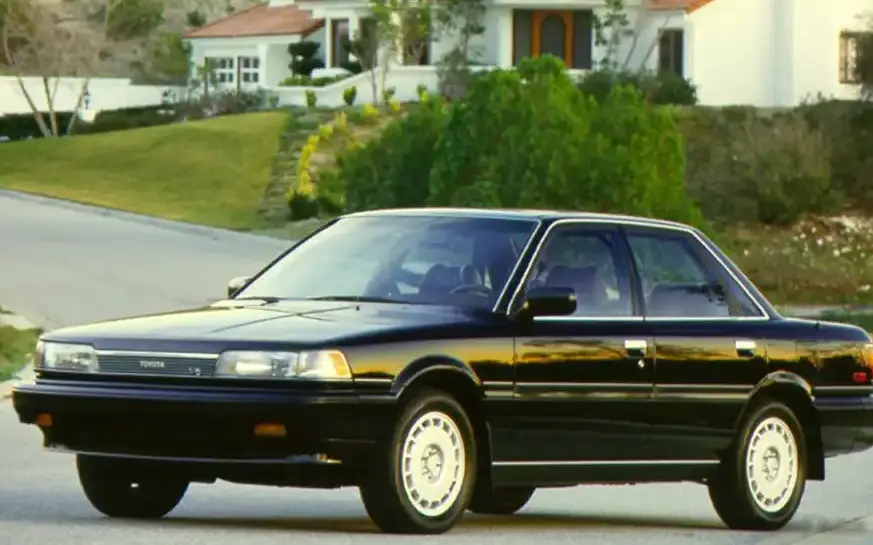
The Toyota Camry II (V20) 2.0 Turbo-D, produced between 1986 and 1989, represented a notable, though somewhat unusual, offering within the second generation Camry lineup. Positioned as a fuel-efficient alternative in markets where diesel fuel was prevalent, this variant combined a turbocharged 2.0-liter diesel engine with a five-speed manual transmission. The V20 Camry, launched in 1986, aimed to build upon the success of the first generation, offering increased refinement, space, and a more modern design. The 2.0 Turbo-D was primarily targeted towards buyers seeking economy and durability, particularly in European and Asian markets where diesel engines enjoyed significant popularity due to taxation and fuel costs.
Technical Specifications
| Brand | Toyota |
| Model | Camry |
| Generation | Camry II (V20) |
| Type (Engine) | 2.0 Turbo-D (84 Hp) |
| Start of production | 1986 |
| End of production | 1989 |
| Powertrain Architecture | Internal Combustion engine |
| Body type | Sedan |
| Seats | 5 |
| Doors | 4 |
| Fuel Type | Diesel |
| Acceleration 0 – 100 km/h | 14.4 sec |
| Acceleration 0 – 62 mph | 14.4 sec |
| Acceleration 0 – 60 mph | 13.7 sec |
| Maximum speed | 170 km/h (105.63 mph) |
| Weight-to-power ratio | 14.6 kg/Hp, 68.3 Hp/tonne |
| Weight-to-torque ratio | 7.5 kg/Nm, 133.3 Nm/tonne |
| Power | 84 Hp @ 4500 rpm |
| Power per litre | 42.6 Hp/l |
| Torque | 164 Nm @ 2400 rpm (120.96 lb.-ft. @ 2400 rpm) |
| Engine layout | Front, Transverse |
| Engine Model/Code | 2C-TL |
| Engine displacement | 1973 cm3 (120.4 cu. in.) |
| Number of cylinders | 4 |
| Engine configuration | Inline |
| Cylinder Bore | 84 mm (3.31 in.) |
| Piston Stroke | 89 mm (3.5 in.) |
| Compression ratio | 23:1 |
| Number of valves per cylinder | 2 |
| Fuel injection system | Precombustion chamber injection |
| Engine aspiration | Turbocharger |
| Engine oil capacity | 5.8 l (6.13 US qt | 5.1 UK qt) |
| Coolant | 8.5 l (8.98 US qt | 7.48 UK qt) |
| Kerb Weight | 1230 kg (2711.69 lbs.) |
| Max. weight | 1760 kg (3880.14 lbs.) |
| Max load | 530 kg (1168.45 lbs.) |
| Trunk (boot) space – maximum | 505 l (17.83 cu. ft.) |
| Fuel tank capacity | 60 l (15.85 US gal | 13.2 UK gal) |
| Max. roof load | 100 kg (220.46 lbs.) |
| Length | 4520 mm (177.95 in.) |
| Width | 1710 mm (67.32 in.) |
| Height | 1400 mm (55.12 in.) |
| Wheelbase | 2600 mm (102.36 in.) |
| Front track | 1475 mm (58.07 in.) |
| Rear (Back) track | 1445 mm (56.89 in.) |
| Drag coefficient (Cd) | 0.35 |
| Minimum turning circle | 10.6 m (34.78 ft.) |
| Drivetrain Architecture | The Internal combustion engine (ICE) drives the front wheels of the vehicle. |
| Drive wheel | Front wheel drive |
| Number of gears and type of gearbox | 5 gears, manual transmission |
| Front suspension | Independent, type McPherson with coil spring and anti-roll bar |
| Rear suspension | Torsion |
| Front brakes | Ventilated discs |
| Rear brakes | Drum |
| Assisting systems | ABS (Anti-lock braking system) |
| Tires size | 185/70 R14 |
| Wheel rims size | 14 |
Powertrain & Engine Architecture
The heart of the Camry II 2.0 Turbo-D was the 2C-TL engine, a 1.973-liter inline-four cylinder diesel. This engine utilized precombustion chamber injection, a system common in European diesel engines of the era, which improved combustion efficiency and reduced noise compared to direct injection systems. The addition of a turbocharger significantly boosted power output for a diesel engine of this displacement, bringing it to 84 horsepower at 4500 rpm and 164 Nm (120.96 lb-ft) of torque at 2400 rpm. The turbocharger helped to overcome the inherent limitations of naturally aspirated diesel engines, providing improved acceleration and highway cruising ability. The engine was transversely mounted, a configuration becoming increasingly common in front-wheel-drive vehicles for packaging efficiency. The five-speed manual transmission was the only gearbox option available with this engine, prioritizing fuel economy and driver control.
Driving Characteristics
The 2.0 Turbo-D Camry offered a distinctly different driving experience compared to the gasoline-powered versions. While not a performance-oriented vehicle, the turbocharger provided a noticeable boost in low-end torque, making it relatively easy to drive in urban conditions. Acceleration was modest, taking around 14.4 seconds to reach 62 mph, but the engine was more focused on providing usable power for everyday driving and long-distance cruising. The five-speed manual transmission allowed drivers to keep the engine in its optimal power band, maximizing efficiency and responsiveness. Compared to the higher-output gasoline engines available in the Camry lineup, the diesel offered significantly better fuel economy, but at the expense of outright performance. The manual transmission also provided a more engaging driving experience than the available automatic transmissions on other Camry models.
Equipment & Trim Levels
The 2.0 Turbo-D Camry typically featured a relatively basic level of equipment, reflecting its positioning as a value-oriented model. Standard features generally included cloth upholstery, a basic stereo system, and manual windows and door locks. Air conditioning was often an optional extra. Interior trim was functional and durable, prioritizing practicality over luxury. The dashboard layout was typical of Japanese cars of the era, with a clear and straightforward design. Optional extras could include power windows, upgraded stereo systems, and alloy wheels, but these were not commonly specified on this trim level.
Chassis & Braking
The Camry II utilized a front-wheel-drive chassis with an independent McPherson strut suspension in the front and a torsion beam suspension in the rear. This setup provided a reasonable balance of ride comfort and handling. The front brakes were ventilated discs, offering good stopping power, while the rear brakes were drums, a cost-saving measure common on this class of vehicle. An anti-lock braking system (ABS) was available as an option, enhancing safety. The suspension was tuned for comfort, prioritizing a smooth ride over sporty handling. Stabilizer bars were fitted to the front suspension to reduce body roll during cornering.
Market Reception & Comparison
The 2.0 Turbo-D Camry received mixed reviews. Critics praised its fuel economy and durability, but noted its relatively slow acceleration and somewhat noisy engine. Compared to the gasoline-powered Camry models, the diesel offered significantly better fuel efficiency, making it an attractive option for drivers covering long distances. However, the gasoline engines provided superior performance and refinement. The diesel variant was particularly popular in European markets, where diesel fuel was cheaper and more readily available than gasoline. In the United States, where gasoline prices were lower and diesel engines were less common, the 2.0 Turbo-D was not offered.
Legacy
The 2C-TL engine, while not known for being particularly high-performance, proved to be a durable and reliable unit. Camry II 2.0 Turbo-D models are now relatively rare, and well-maintained examples are sought after by enthusiasts. The powertrain is generally considered to be robust, with good long-term reliability if properly maintained. However, finding parts for these older diesel engines can be challenging. Today, these Camrys represent a unique chapter in the model’s history, showcasing Toyota’s willingness to adapt to different market demands and offer fuel-efficient alternatives to traditional gasoline-powered vehicles.