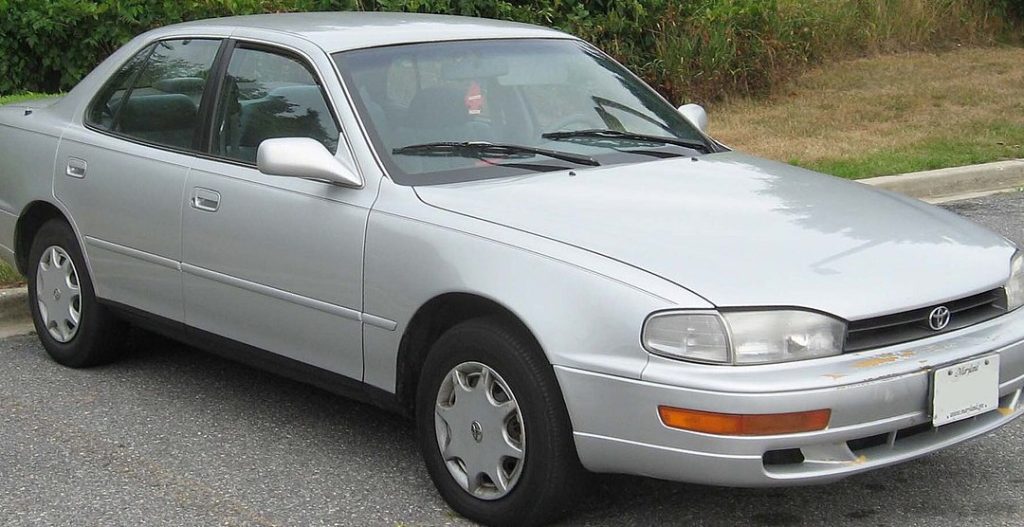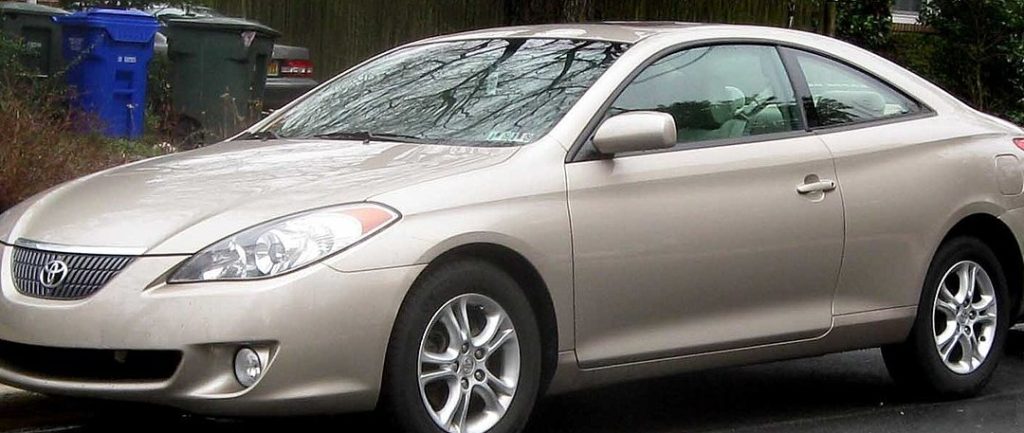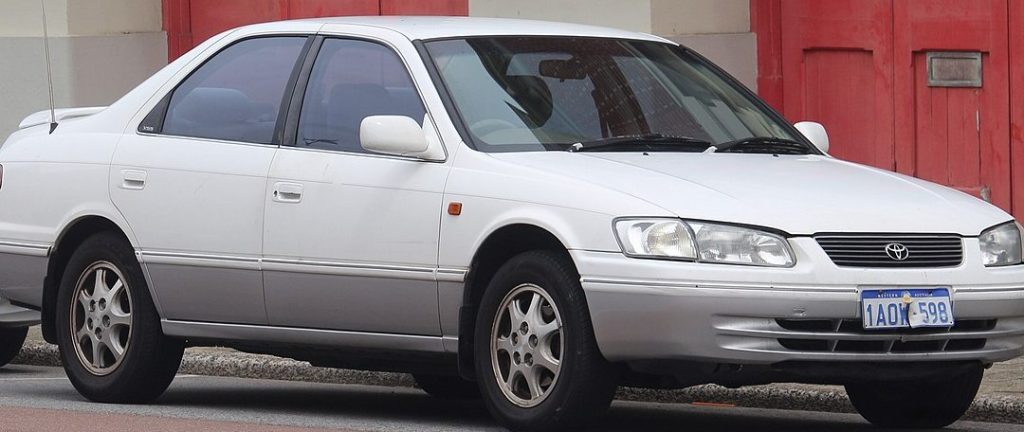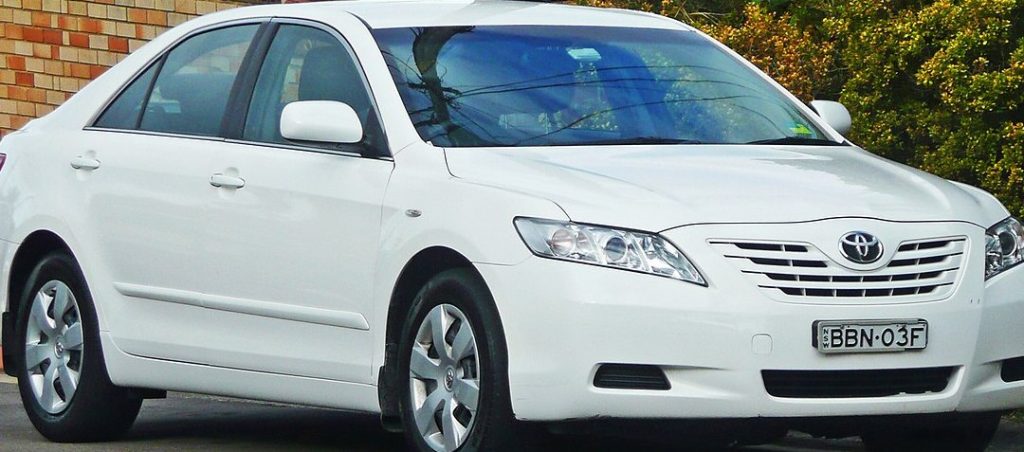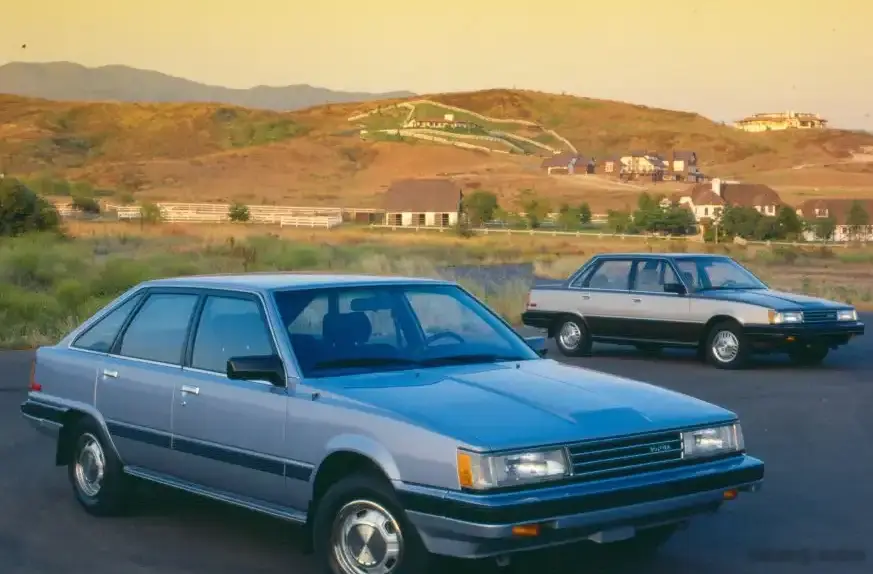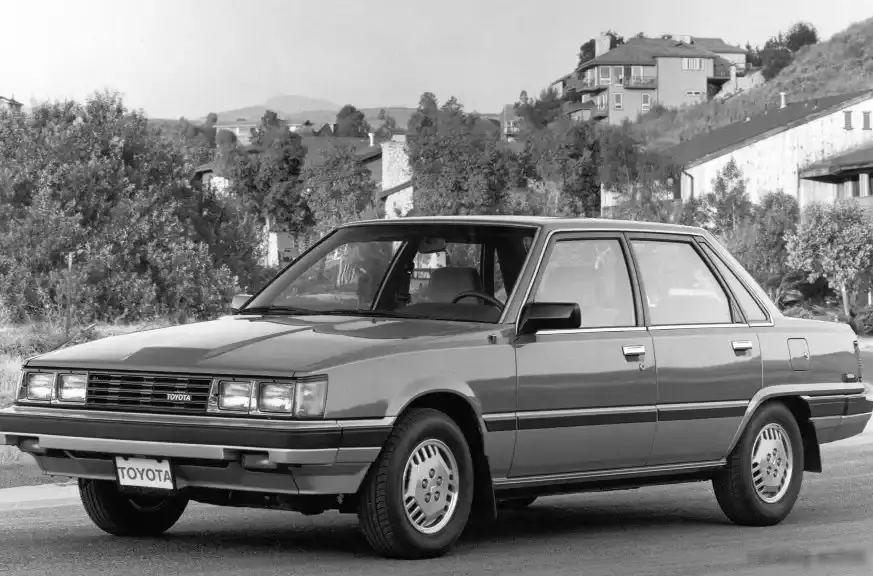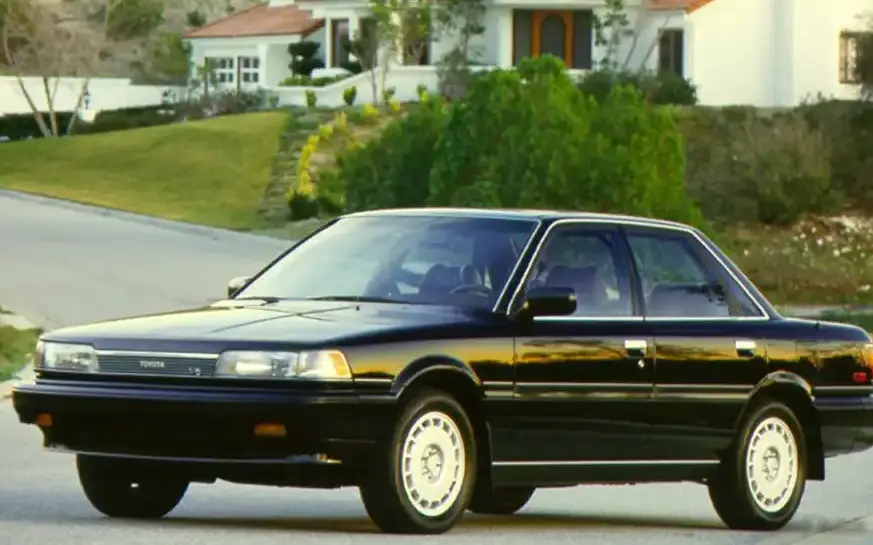
The Toyota Camry II (V20) 2.5 V6 GXi, produced between 1988 and 1991, represented a significant step forward for Toyota’s popular mid-size sedan. Positioned as a more upscale offering within the V20 generation – which spanned from 1986 to 1991 – the 2.5 V6 GXi aimed to attract buyers seeking a blend of comfort, performance, and refinement. This variant distinguished itself from the base four-cylinder models with its larger displacement engine and generally more comprehensive feature set. The V20 Camry was a crucial model for Toyota, solidifying its reputation for reliability and building market share in a highly competitive segment, particularly in North America and Australia.
Technical Specifications
| Brand | Toyota |
| Model | Camry |
| Generation | Camry II (V20) |
| Type (Engine) | 2.5 V6 GXi (160 Hp) |
| Start of production | 1988 |
| End of production | 1991 |
| Powertrain Architecture | Internal Combustion engine |
| Body type | Sedan |
| Seats | 5 |
| Doors | 4 |
| Fuel Type | Petrol (Gasoline) |
| Acceleration 0 – 100 km/h | 9 sec |
| Acceleration 0 – 62 mph | 9 sec |
| Acceleration 0 – 60 mph | 8.6 sec |
| Maximum speed | 210 km/h (130.49 mph) |
| Weight-to-power ratio | 7.7 kg/Hp, 130.6 Hp/tonne |
| Weight-to-torque ratio | 5.9 kg/Nm, 168.2 Nm/tonne |
| Power | 160 Hp @ 5800 rpm |
| Power per litre | 63.8 Hp/l |
| Torque | 206 Nm @ 4600 rpm (151.94 lb.-ft. @ 4600 rpm) |
| Engine layout | Front, Transverse |
| Engine Model/Code | 2VZ-FE |
| Engine displacement | 2507 cm3 (152.99 cu. in.) |
| Number of cylinders | 6 |
| Engine configuration | V-engine |
| Cylinder Bore | 87.5 mm (3.44 in.) |
| Piston Stroke | 69.5 mm (2.74 in.) |
| Compression ratio | 9:1 |
| Number of valves per cylinder | 4 |
| Fuel injection system | Multi-port manifold injection |
| Engine aspiration | Naturally aspirated engine |
| Engine oil capacity | 3.9 l (4.12 US qt | 3.43 UK qt) |
| Coolant | 9.5 l (10.04 US qt | 8.36 UK qt) |
| Kerb Weight | 1225 kg (2700.66 lbs) |
| Max. weight | 1795 kg (3957.3 lbs) |
| Max load | 570 kg (1256.63 lbs) |
| Trunk (boot) space – maximum | 505 l (17.83 cu. ft.) |
| Fuel tank capacity | 60 l (15.85 US gal | 13.2 UK gal) |
| Max. roof load | 100 kg (220.46 lbs) |
| Permitted trailer load with brakes (12%) | 1500 kg (3306.93 lbs) |
| Permitted trailer load without brakes | 500 kg (1102.31 lbs) |
| Length | 4520 mm (177.95 in.) |
| Width | 1710 mm (67.32 in.) |
| Height | 1400 mm (55.12 in.) |
| Wheelbase | 2600 mm (102.36 in.) |
| Minimum turning circle | 10.6 m (34.78 ft.) |
| Drivetrain Architecture | The Internal combustion engine (ICE) drives the front wheels of the vehicle. |
| Drive wheel | Front wheel drive |
| Number of gears and type of gearbox | 5 gears, manual transmission |
| Front suspension | Independent, type McPherson with coil spring and anti-roll bar |
| Rear suspension | Torsion |
| Front brakes | Ventilated discs |
| Rear brakes | Disc |
| Assisting systems | ABS (Anti-lock braking system) |
| Tires size | 195/60 R15 |
| Wheel rims size | 15 |
Powertrain & Engine Architecture
The heart of the Camry II 2.5 V6 GXi was the 2VZ-FE engine, a 2.5-liter (2507 cc) naturally aspirated V6. This engine was a significant upgrade over the standard 2.0-liter four-cylinder options available in other Camry trims. The 2VZ-FE featured a 9:1 compression ratio, multi-port fuel injection, and four valves per cylinder, contributing to its respectable 160 horsepower at 5800 rpm and 206 Nm (151.94 lb-ft) of torque at 4600 rpm. The engine’s transverse mounting and front-wheel-drive configuration were typical for the era and helped maximize interior space. The five-speed manual transmission was the standard offering, providing drivers with a more engaging driving experience. The engine was known for its relatively smooth operation and decent power delivery, although it wasn’t considered a particularly high-performance engine by contemporary standards.
Driving Characteristics
The 2.5 V6 GXi offered a noticeable improvement in acceleration and overall responsiveness compared to the four-cylinder Camry models. The 0-60 mph time of around 8.6 seconds was competitive for its class in the late 1980s and early 1990s. The five-speed manual transmission allowed drivers to effectively utilize the engine’s powerband, providing good control during both everyday driving and more spirited maneuvers. Gear ratios were well-spaced, contributing to a comfortable cruising experience on the highway. While not a sports sedan, the V6 Camry offered a more refined and enjoyable driving experience than its base counterparts. The front-wheel-drive layout provided predictable handling, although it lacked the all-weather capability of an all-wheel-drive system.
Equipment & Trim Levels
The GXi trim level represented a well-equipped version of the Camry II. Standard features typically included power windows, power locks, air conditioning, and a decent audio system. Interior upholstery was generally cloth, although leather options were sometimes available. The dashboard layout was functional and straightforward, with easy-to-read gauges. Optional extras could include a sunroof, upgraded audio systems, and alloy wheels. The GXi trim aimed to provide a comfortable and convenient driving experience, appealing to buyers who prioritized features and refinement.
Chassis & Braking
The Camry II utilized a McPherson strut front suspension with coil springs and an anti-roll bar, providing a comfortable ride and predictable handling. The rear suspension employed a torsion beam setup, which was a cost-effective and space-efficient solution. Braking duties were handled by ventilated discs at the front and solid discs at the rear. An Anti-lock Braking System (ABS) was included as standard equipment, enhancing safety and control during emergency braking situations. The suspension tuning was geared towards comfort rather than outright sportiness, resulting in a smooth and compliant ride quality.
Market Reception & Comparison
The Camry II 2.5 V6 GXi was generally well-received by automotive critics. It was praised for its smooth engine, comfortable ride, and comprehensive feature set. However, some reviewers noted that the V6 engine wasn’t particularly fuel-efficient compared to the four-cylinder models. Compared to the base Camry models, the 2.5 V6 GXi offered a significant performance upgrade, but it also came at a higher price point. It competed with other mid-size sedans such as the Honda Accord and Nissan Maxima, offering a compelling alternative with its reputation for reliability and value.
Legacy
The 2VZ-FE engine, while not without its quirks, proved to be a relatively durable and reliable powerplant. With proper maintenance, these engines can last for many years and high mileage. Today, the Camry II 2.5 V6 GXi is considered a classic car, and well-maintained examples are sought after by enthusiasts. The combination of a smooth V6 engine, comfortable ride, and Toyota’s renowned reliability has ensured its enduring appeal in the used car market. Parts availability is generally good, making it a relatively easy car to maintain and repair. The V20 Camry, and particularly the 2.5 V6 GXi variant, represents a significant chapter in Toyota’s history, demonstrating the company’s commitment to building high-quality, dependable vehicles.