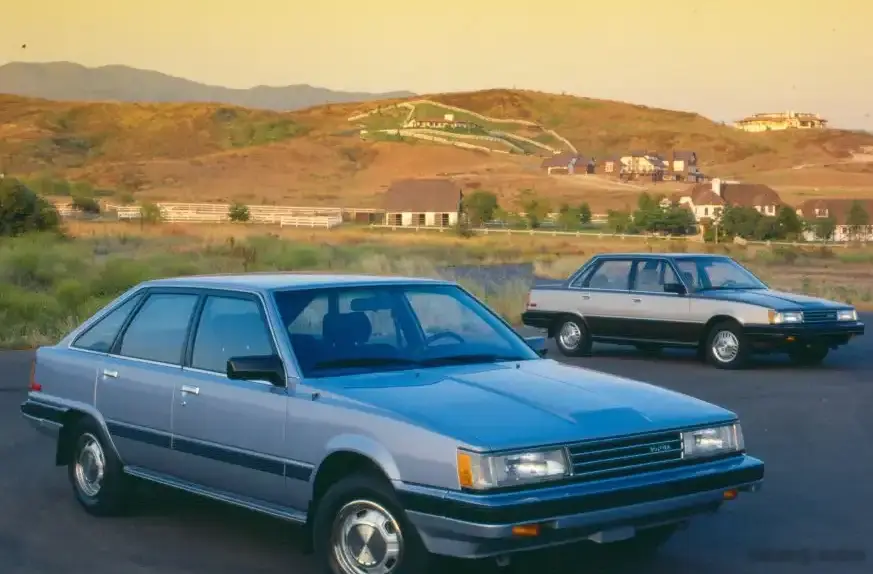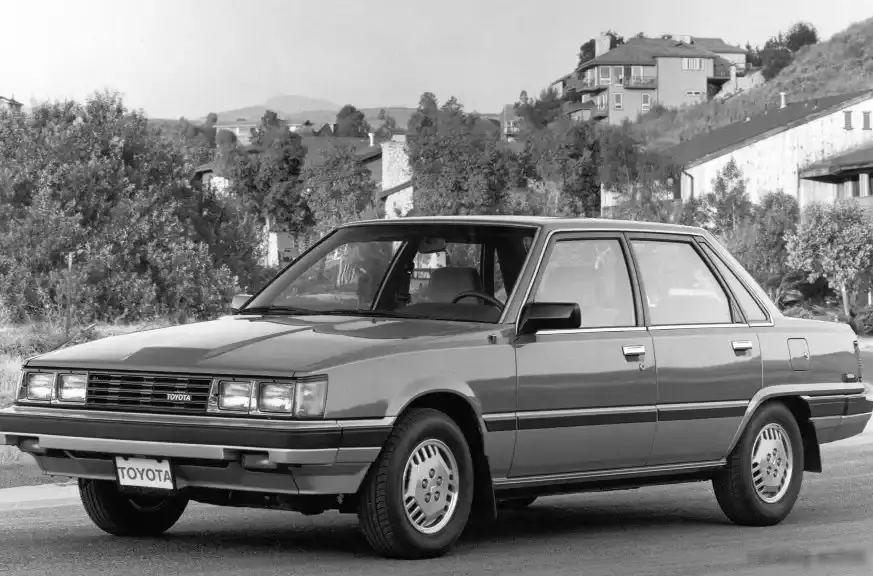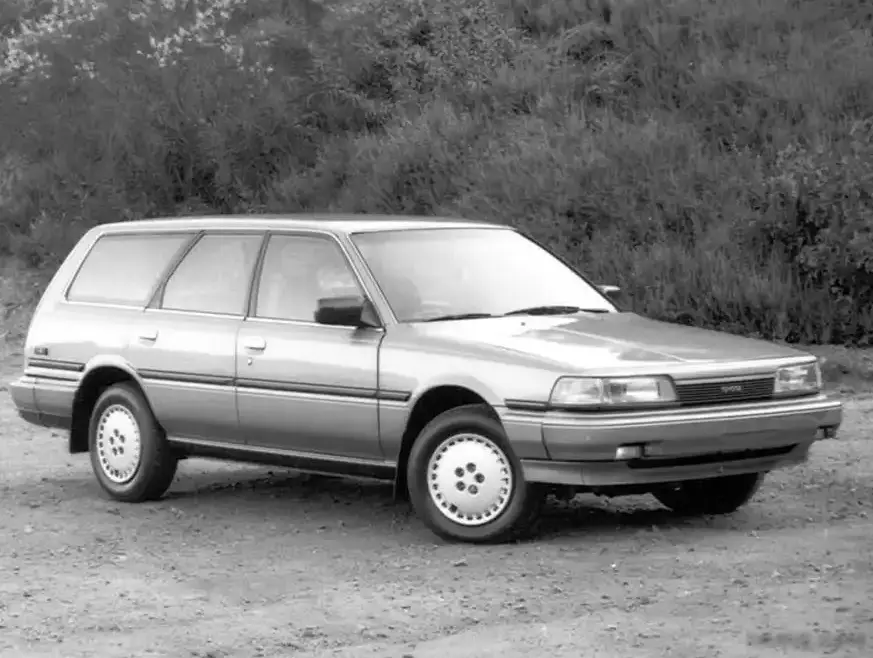
The Toyota Camry II Wagon (V20) 2.0 Turbo-D, produced between 1987 and 1989, represented a unique offering within the broader second-generation Camry lineup (XV10/V20). Positioned as a practical and fuel-efficient option, this variant combined the versatility of a station wagon body style with a turbocharged diesel engine. While the Camry was gaining traction in the US market as a reliable sedan, the wagon configuration, and particularly the diesel engine, were primarily aimed at European and Asian markets where fuel economy and load-carrying capacity were highly valued. This model occupied a niche position, offering a compromise between performance and economy, and was not widely exported to North America.
Technical Specifications
| Brand | Toyota |
| Model | Camry |
| Generation | Camry II Wagon (V20) |
| Type (Engine) | 2.0 Turbo-D (84 Hp) |
| Start of production | 1987 |
| End of production | 1989 |
| Powertrain Architecture | Internal Combustion engine |
| Body type | Station wagon (estate) |
| Seats | 5 |
| Doors | 5 |
| Fuel Type | Diesel |
| Acceleration 0 – 100 km/h | 14.9 sec |
| Acceleration 0 – 62 mph | 14.9 sec |
| Acceleration 0 – 60 mph | 14.2 sec |
| Maximum speed | 160 km/h (99.42 mph) |
| Weight-to-power ratio | 13.8 kg/Hp, 72.7 Hp/tonne |
| Weight-to-torque ratio | 7 kg/Nm, 142 Nm/tonne |
| Power | 84 Hp @ 4500 rpm |
| Power per litre | 42.6 Hp/l |
| Torque | 164 Nm @ 2400 rpm (120.96 lb.-ft. @ 2400 rpm) |
| Engine layout | Front, Transverse |
| Engine Model/Code | 2C-TL |
| Engine displacement | 1974 cm3 (120.46 cu. in.) |
| Number of cylinders | 4 |
| Engine configuration | Inline |
| Cylinder Bore | 86 mm (3.39 in.) |
| Piston Stroke | 85 mm (3.35 in.) |
| Compression ratio | 23:1 |
| Number of valves per cylinder | 2 |
| Fuel injection system | Precombustion chamber injection |
| Engine aspiration | Turbocharger |
| Engine oil capacity | 5.8 l (6.13 US qt | 5.1 UK qt) |
| Coolant | 8.5 l (8.98 US qt | 7.48 UK qt) |
| Kerb Weight | 1155 kg (2546.34 lbs.) |
| Max. weight | 1760 kg (3880.14 lbs.) |
| Max load | 605 kg (1333.8 lbs.) |
| Trunk (boot) space – minimum | 633 l (22.35 cu. ft.) |
| Trunk (boot) space – maximum | 1300 l (45.91 cu. ft.) |
| Fuel tank capacity | 60 l (15.85 US gal | 13.2 UK gal) |
| Max. roof load | 100 kg (220.46 lbs.) |
| Permitted trailer load with brakes (12%) | 1400 kg (3086.47 lbs.) |
| Permitted trailer load without brakes | 500 kg (1102.31 lbs.) |
| Length | 4610 mm (181.5 in.) |
| Width | 1710 mm (67.32 in.) |
| Height | 1440 mm (56.69 in.) |
| Wheelbase | 2600 mm (102.36 in.) |
| Minimum turning circle | 10.6 m (34.78 ft.) |
| Drivetrain Architecture | The Internal combustion engine (ICE) drives the front wheels of the vehicle. |
| Drive wheel | Front wheel drive |
| Number of gears and type of gearbox | 5 gears, manual transmission |
| Front suspension | Independent, type McPherson with coil spring and anti-roll bar |
| Rear suspension | Torsion |
| Front brakes | Ventilated discs |
| Rear brakes | Drum |
| Assisting systems | ABS (Anti-lock braking system) |
| Tires size | 185/70 R14 |
| Wheel rims size | 14 |
Powertrain & Engine Architecture
The heart of this Camry variant was the 2C-TL diesel engine, a 2.0-liter inline-four cylinder unit. This engine utilized precombustion chamber injection, a system common in diesel engines of the era, where fuel is injected into a small chamber within the cylinder head before entering the main combustion chamber. This design aids in more complete combustion, particularly at lower engine speeds. The addition of a turbocharger significantly boosted power output for a diesel engine of this displacement, bringing it to 84 horsepower. The 2C-TL engine was known for its relative simplicity and durability, although it wasn’t particularly refined by modern standards. It was paired with a five-speed manual transmission, offering a reasonable balance between fuel efficiency and drivability. The engine’s layout was front-mounted and transverse, a common configuration for front-wheel-drive vehicles.
Driving Characteristics
The 2.0 Turbo-D Camry Wagon wasn’t designed for outright speed. Acceleration from 0-60 mph took around 14.2 seconds, and top speed was limited to 99.42 mph. However, the turbocharger provided a noticeable boost in torque, making it reasonably capable for highway cruising and carrying loads. The five-speed manual transmission allowed drivers to keep the engine in its optimal power band. Compared to the gasoline-powered Camry variants, the diesel offered significantly better fuel economy, but at the expense of refinement and responsiveness. The manual gearbox also provided a more engaging driving experience than the automatic transmissions available on other Camry models.
Equipment & Trim Levels
The 2.0 Turbo-D Camry Wagon typically featured a fairly basic level of equipment, reflecting its positioning as a practical, value-oriented vehicle. Standard features generally included cloth upholstery, a basic stereo system, and manual windows and door locks. Air conditioning and power steering were often optional extras. Interior trim was functional and durable, prioritizing practicality over luxury. The dashboard layout was typical of Japanese cars of the late 1980s, with a clear and straightforward design. Trim levels varied depending on the specific market, but generally focused on adding convenience features rather than significant performance upgrades.
Chassis & Braking
The Camry Wagon utilized a McPherson strut front suspension with coil springs and an anti-roll bar, providing a comfortable ride and reasonable handling. The rear suspension employed a torsion beam setup, which was cost-effective and space-efficient. Braking consisted of ventilated discs at the front and drum brakes at the rear. ABS (Anti-lock Braking System) was often included as standard equipment, enhancing safety. The chassis was designed to handle the additional weight of the wagon body and the diesel engine, and the suspension was tuned to provide a stable and controlled ride even when fully loaded.
Market Reception & Comparison
The 2.0 Turbo-D Camry Wagon received mixed reviews. Critics praised its fuel economy and practicality, but noted its lack of refinement and relatively slow performance. Compared to the gasoline-powered Camry models, the diesel was seen as a more utilitarian option, appealing to buyers who prioritized economy and load-carrying capacity over driving excitement. Against competitors like the Ford Sierra Wagon or the Volkswagen Passat Variant, the Camry offered a reputation for reliability and build quality, but often lacked the driving dynamics or prestige of its European rivals. The diesel engine, while fuel-efficient, was also considered noisier and less smooth than the gasoline alternatives.
Legacy
The 2.0 Turbo-D Camry Wagon, while not a high-volume seller, represents an interesting chapter in the Camry’s history. The 2C-TL engine proved to be a durable and reliable unit, and examples are still found on the road today, albeit increasingly rare. In the used car market, these wagons are often sought after by enthusiasts who appreciate their simplicity and practicality. The combination of a turbocharged diesel engine and a spacious wagon body makes it a unique and appealing vehicle for those looking for a classic Japanese car with a distinct character. The model’s enduring appeal lies in its honest and straightforward design, and its ability to provide reliable transportation for many years.