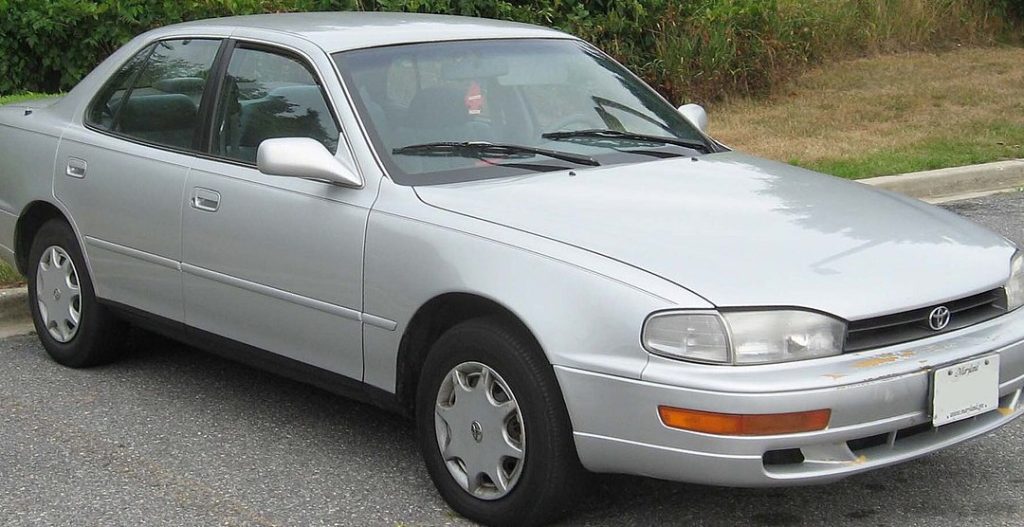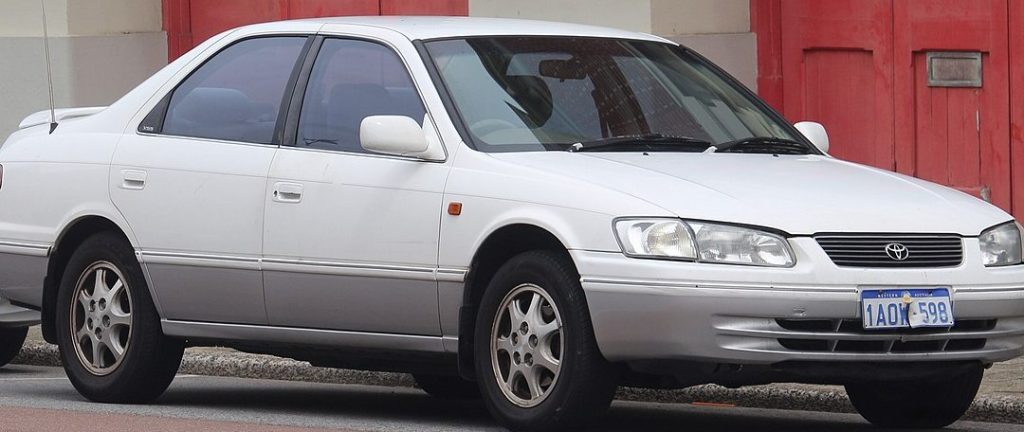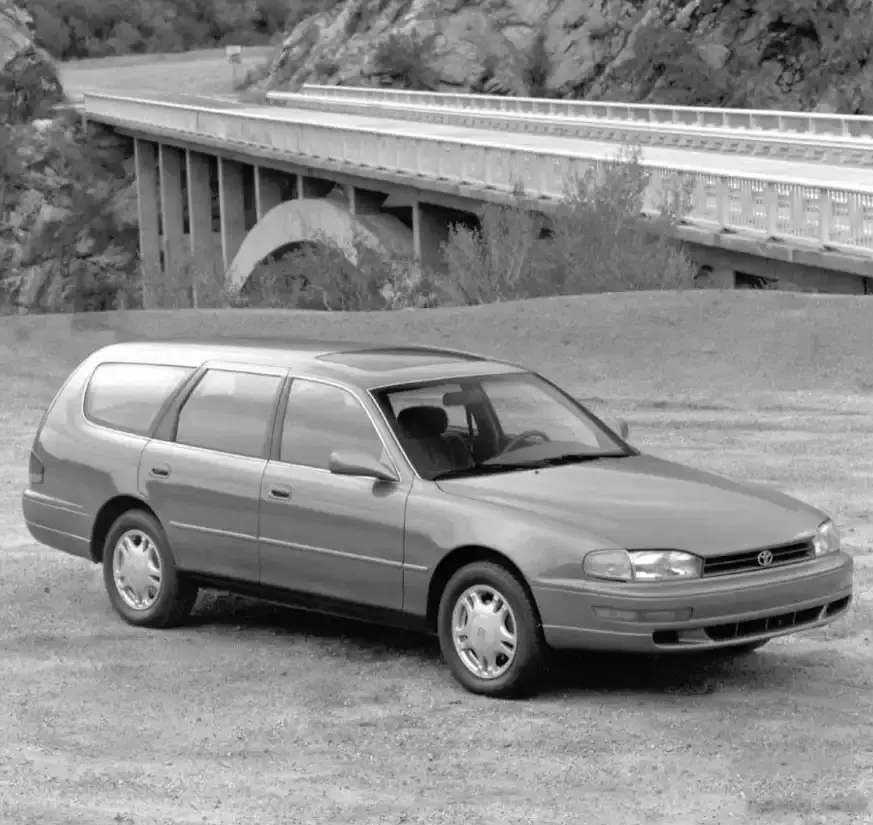
The Toyota Camry III Wagon, specifically the 3.0 V6 24V variant with an automatic transmission, was produced between 1992 and 1996 as part of the XV10 generation Camry. This model represented Toyota’s entry into the increasingly popular station wagon segment, offering a practical and relatively luxurious alternative to sedans. In the North American market, where wagons were still reasonably popular, it provided a compelling option for families needing space and versatility. The XV10 Camry, in general, was a significant step forward for Toyota in terms of refinement, build quality, and overall driving experience, and the wagon variant extended those qualities to a more cargo-focused package.
Technical Specifications
| Brand | Toyota |
| Model | Camry |
| Generation | Camry III Wagon (XV10) |
| Type (Engine) | 3.0 V6 24V (188 Hp) Automatic |
| Start of production | 1992 |
| End of production | 1996 |
| Powertrain Architecture | Internal Combustion engine |
| Body type | Station wagon (estate) |
| Seats | 5 |
| Doors | 5 |
| Fuel consumption (combined) | 10.3 l/100 km |
| Fuel consumption (US mpg) | 22.8 US mpg |
| Fuel consumption (UK mpg) | 27.4 UK mpg |
| Fuel consumption (km/l) | 9.7 km/l |
| Fuel Type | Petrol (Gasoline) |
| Acceleration 0 – 100 km/h | 9.4 sec |
| Acceleration 0 – 62 mph | 9.4 sec |
| Acceleration 0 – 60 mph | 8.9 sec |
| Maximum speed | 210 km/h (130.49 mph) |
| Weight-to-power ratio | 8.9 kg/Hp |
| Weight-to-torque ratio | 6.6 kg/Nm |
| Power | 188 Hp @ 5400 rpm |
| Power per litre | 63.5 Hp/l |
| Torque | 255 Nm @ 4400 rpm (188.08 lb.-ft. @ 4400 rpm) |
| Engine layout | Front, Transverse |
| Engine Model/Code | 3VZ-FE |
| Engine displacement | 2959 cm3 (180.57 cu. in.) |
| Number of cylinders | 6 |
| Engine configuration | V-engine |
| Cylinder Bore | 87.5 mm (3.44 in.) |
| Piston Stroke | 82 mm (3.23 in.) |
| Compression ratio | 9.6:1 |
| Number of valves per cylinder | 4 |
| Fuel injection system | Multi-port manifold injection |
| Engine aspiration | Naturally aspirated engine |
| Engine oil capacity | 4.4 l (4.65 US qt | 3.87 UK qt) |
| Coolant capacity | 8.4 l (8.88 US qt | 7.39 UK qt) |
| Kerb Weight | 1680 kg (3703.77 lbs.) |
| Max. weight | 2150 kg (4739.94 lbs.) |
| Max load | 470 kg (1036.17 lbs.) |
| Trunk (boot) space – minimum | 533 l (18.82 cu. ft.) |
| Trunk (boot) space – maximum | 843 l (29.77 cu. ft.) |
| Fuel tank capacity | 70 l (18.49 US gal | 15.4 UK gal) |
| Max. roof load | 100 kg (220.46 lbs.) |
| Permitted trailer load with brakes (12%) | 1500 kg (3306.93 lbs.) |
| Permitted trailer load without brakes | 500 kg (1102.31 lbs.) |
| Length | 4795 mm (188.78 in.) |
| Width | 1770 mm (69.69 in.) |
| Height | 1495 mm (58.86 in.) |
| Wheelbase | 2620 mm (103.15 in.) |
| Front track | 1545 mm (60.83 in.) |
| Rear track | 1490 mm (58.66 in.) |
| Drivetrain Architecture | Front wheel drive |
| Number of gears | 4 |
| Gearbox type | Automatic transmission |
| Front suspension | Independent, type McPherson with coil spring and anti-roll bar |
| Rear suspension | Independent multi-link suspension |
| Front brakes | Ventilated discs |
| Rear brakes | Ventilated discs |
| Assisting systems | ABS (Anti-lock braking system) |
| Steering type | Steering rack and pinion |
| Power steering | Hydraulic Steering |
| Tires size | 205/65 R15 |
| Wheel rims size | 15 |
INTRODUCTION
The 1992-1996 Toyota Camry Wagon, equipped with the 3.0-liter V6 engine and automatic transmission, occupied a unique position within the XV10 Camry lineup. While the four-cylinder models served as the entry point, and the V6 offered a more premium experience, the wagon body style itself catered to a specific demographic – those prioritizing cargo space and practicality without sacrificing comfort. This variant was positioned as a mid-to-upper trim level, offering a blend of performance and convenience features. The XV10 platform represented a significant leap forward for Toyota, moving towards a more sophisticated and refined vehicle compared to its predecessors.
Powertrain & Engine Architecture
The heart of this Camry Wagon is the 3VZ-FE 3.0-liter V6 engine. This engine is a naturally aspirated, 24-valve (four valves per cylinder) powerplant featuring a 9.6:1 compression ratio. It utilizes a multi-port fuel injection system, delivering fuel directly to each intake port for improved efficiency and power delivery. The 3VZ-FE was known for its smooth operation and relatively robust construction. The automatic transmission paired with this engine is a four-speed unit, designed to provide comfortable and convenient shifting. While not a performance-oriented transmission, it was well-suited to the engine’s torque curve and the wagon’s intended use as a family vehicle. The transmission’s gear ratios were optimized for fuel economy and smooth cruising, rather than aggressive acceleration.
Driving Characteristics
The 3.0 V6 automatic Camry Wagon offered a noticeable step up in performance compared to the base four-cylinder models. Acceleration to 60 mph took approximately 8.9 seconds, making it reasonably quick for its time and class. The automatic transmission, while smooth, did result in some power loss compared to the available five-speed manual. The gear ratios were spaced to prioritize comfortable highway cruising, but could feel slightly sluggish during quick overtaking maneuvers. The wagon’s added weight, compared to the sedan, was noticeable, particularly during spirited driving. However, the V6 engine provided ample torque to compensate, making it a capable and comfortable long-distance cruiser.
Equipment & Trim Levels
The 3.0 V6 automatic Camry Wagon typically came standard with features such as air conditioning, power windows and locks, cruise control, and an upgraded sound system. Higher trim levels offered options like leather upholstery, a sunroof, and upgraded wheels. Interior upholstery was generally cloth, with leather available as an upgrade. The dashboard layout was functional and straightforward, prioritizing ease of use. Optional extras included a CD player, upgraded speakers, and a rear cargo organizer.
Chassis & Braking
The Camry Wagon utilized an independent suspension system, with McPherson struts at the front and a multi-link setup at the rear. This provided a comfortable ride quality, absorbing bumps and irregularities in the road effectively. The wagon featured ventilated disc brakes on all four wheels, providing adequate stopping power. An Anti-lock Braking System (ABS) was standard, enhancing safety and control during emergency braking situations. The steering was rack-and-pinion with hydraulic power assist, offering precise and responsive handling.
Market Reception & Comparison
Critics generally praised the Camry Wagon for its spacious interior, comfortable ride, and reliable powertrain. The 3.0 V6 engine was considered a strong performer, providing ample power for most driving situations. However, some reviewers noted that the automatic transmission could feel somewhat dated compared to newer designs. Compared to the four-cylinder Camry Wagon, the V6 offered a significant performance advantage, but at a higher price point. Compared to other wagons in its class, such as the Honda Accord Wagon, the Camry Wagon offered a compelling combination of value, reliability, and practicality.
Legacy
The 3VZ-FE engine, when properly maintained, proved to be a remarkably durable and reliable powerplant. Camry Wagons from this era are still found on the road today, a testament to Toyota’s engineering and build quality. The automatic transmission, while not known for being particularly sporty, also proved to be relatively reliable. In the used car market, these wagons are often sought after by those looking for a practical, affordable, and dependable vehicle. While not a collector’s item, the XV10 Camry Wagon, particularly the 3.0 V6 automatic variant, holds a respected place in automotive history as a well-rounded and dependable family vehicle.