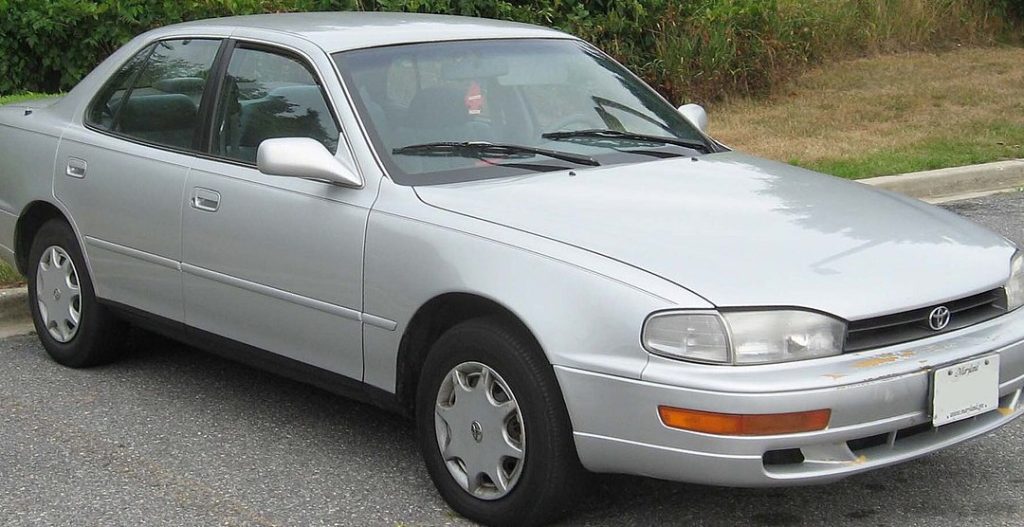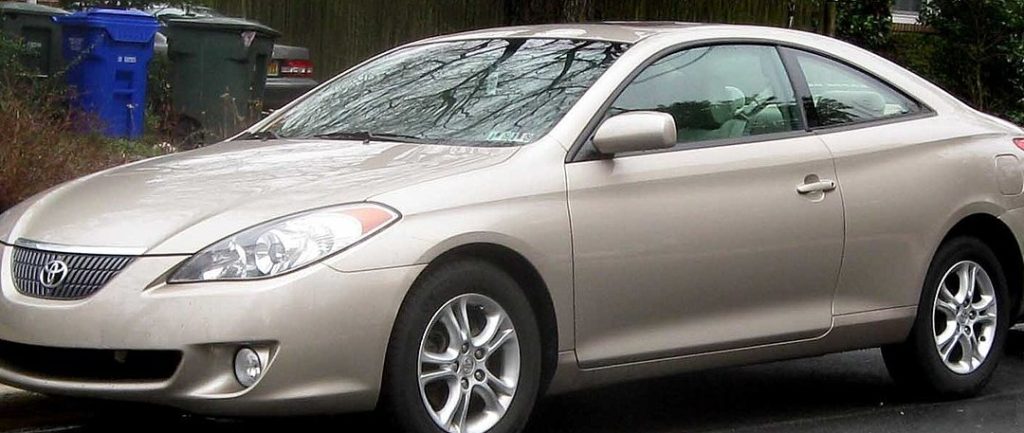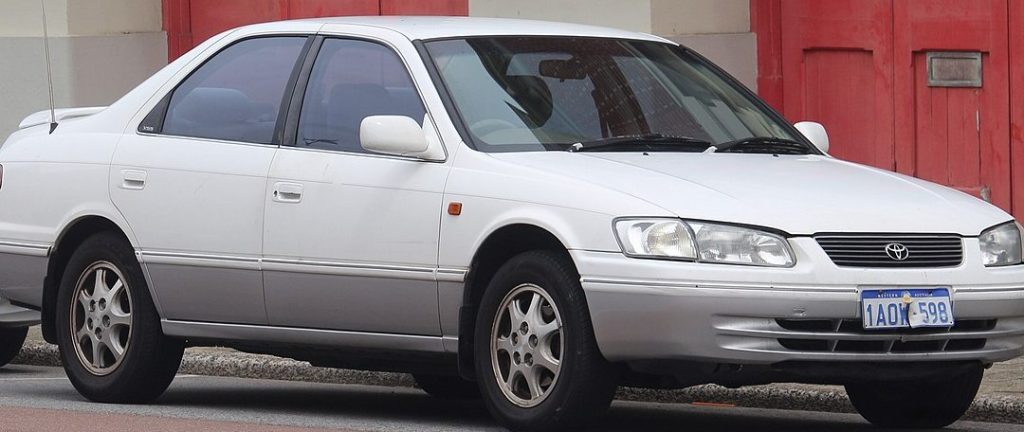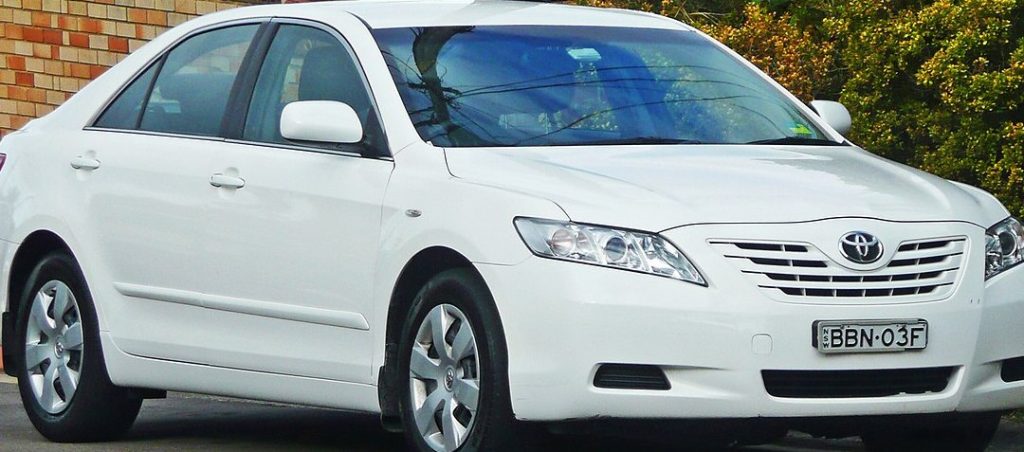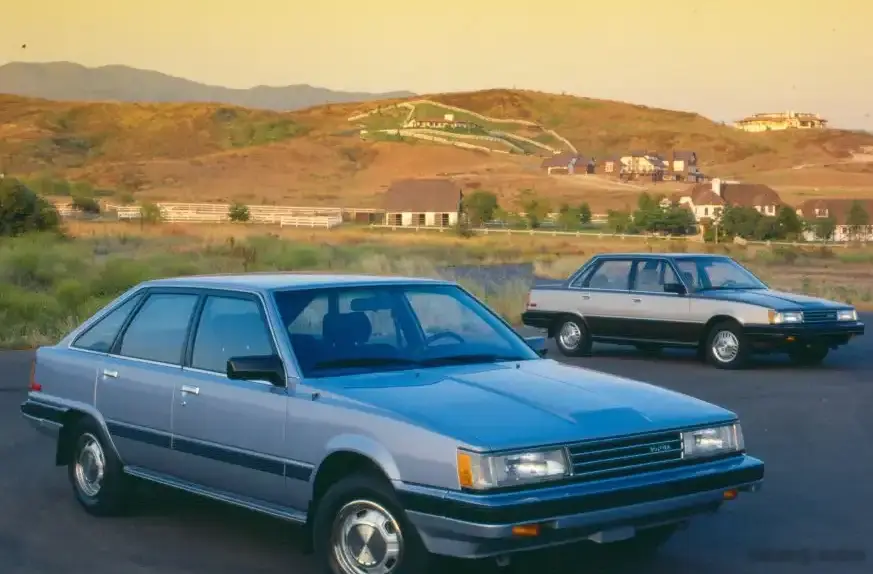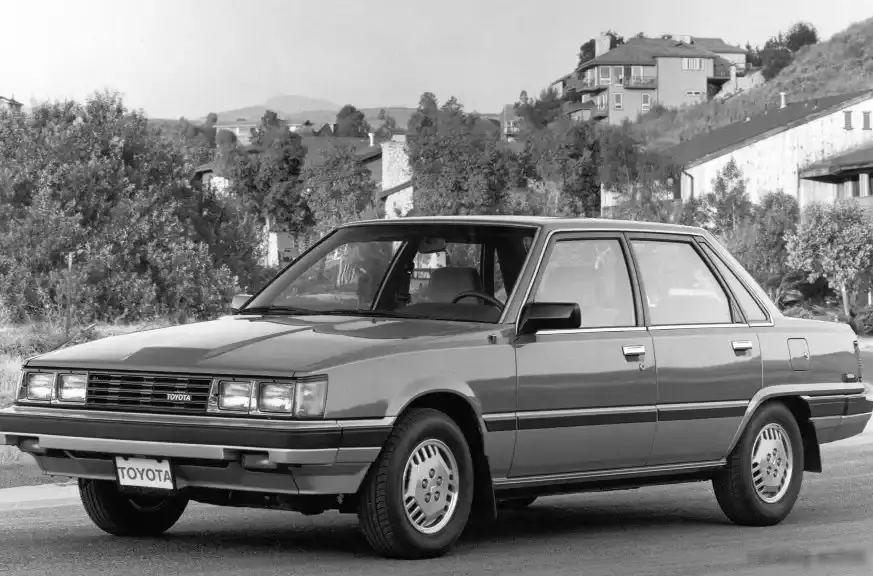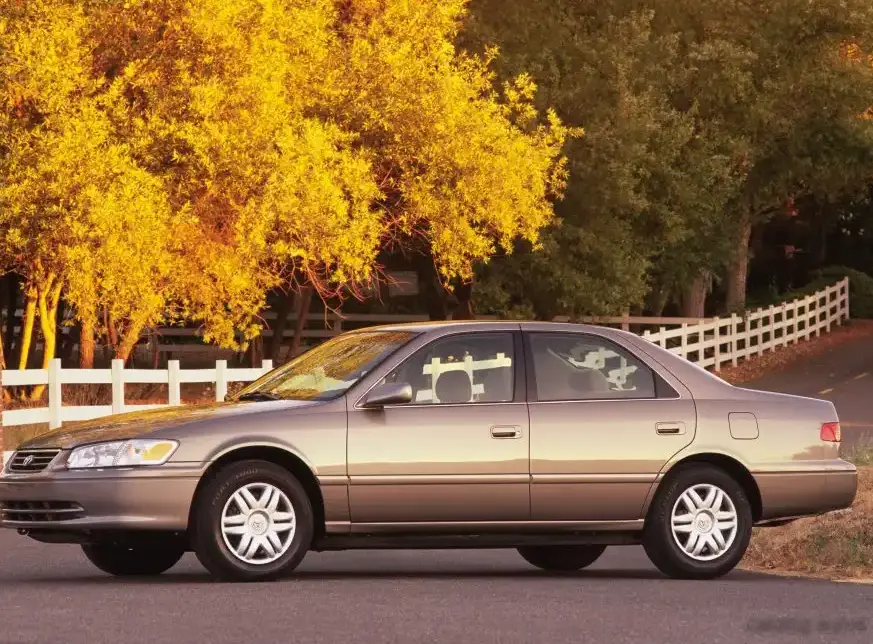
The Toyota Camry IV, specifically the facelifted version produced from 2000 to 2001, represented a significant evolution for Toyota’s mid-size sedan. Within the XV20 generation, the 3.0 V6 24V (194 Hp) Automatic variant occupied the premium position in the lineup, offering a blend of performance and comfort aimed at buyers seeking a more refined driving experience. This model year saw styling updates and continued improvements to the already well-regarded Camry platform, solidifying its reputation for reliability and practicality in the North American market, where sedans were dominant.
Technical Specifications
| Brand | Toyota |
| Model | Camry |
| Generation | Camry IV (XV20, facelift 2000) |
| Type (Engine) | 3.0 V6 24V (194 Hp) Automatic |
| Start of production | 2000 year |
| End of production | 2001 year |
| Powertrain Architecture | Internal Combustion engine |
| Body type | Sedan |
| Seats | 5 |
| Doors | 4 |
| Fuel consumption (urban) | 11.2 l/100 km (21 US mpg) |
| Fuel consumption (extra urban) | 8.4 l/100 km (28 US mpg) |
| Fuel Type | Petrol (Gasoline) |
| Weight-to-power ratio | 7.6 kg/Hp |
| Weight-to-torque ratio | 5.2 kg/Nm |
| Power | 194 Hp @ 5200 rpm |
| Power per litre | 64.8 Hp/l |
| Torque | 283 Nm @ 4400 rpm (208.73 lb.-ft. @ 4400 rpm) |
| Engine layout | Front, Transverse |
| Engine Model/Code | 1MZ-FE |
| Engine displacement | 2995 cm3 (182.77 cu. in.) |
| Number of cylinders | 6 |
| Engine configuration | V-engine |
| Cylinder Bore | 87.5 mm (3.44 in.) |
| Piston Stroke | 83 mm (3.27 in.) |
| Number of valves per cylinder | 4 |
| Fuel injection system | Multi-port manifold injection |
| Engine aspiration | Naturally aspirated engine |
| Valvetrain | DOHC |
| Engine oil capacity | 4.7 l (4.97 US qt | 4.14 UK qt) |
| Coolant capacity | 8.8 l (9.3 US qt | 7.74 UK qt) |
| Kerb Weight | 1475 kg (3251.82 lbs.) |
| Trunk (boot) space | 399 l (14.09 cu. ft.) |
| Fuel tank capacity | 70 l (18.49 US gal | 15.4 UK gal) |
| Length | 4788 mm (188.5 in.) |
| Width | 1780 mm (70.08 in.) |
| Height | 1407 mm (55.39 in.) |
| Wheelbase | 2672 mm (105.2 in.) |
| Front track | 1552 mm (61.1 in.) |
| Rear track | 1521 mm (59.88 in.) |
| Ride height (ground clearance) | 130 mm (5.12 in.) |
| Drag coefficient (Cd) | 0.30 |
| Minimum turning circle | 10.7 m (35.1 ft.) |
| Drivetrain Architecture | Front wheel drive |
| Number of gears | 4 |
| Gearbox type | Automatic transmission ECT-i |
| Front suspension | Independent, McPherson with coil spring and anti-roll bar |
| Rear suspension | Independent multi-link with stabilizer |
| Front brakes | Ventilated discs |
| Rear brakes | Disc |
| Assisting systems | ABS (Anti-lock braking system) |
| Steering type | Steering rack and pinion |
| Power steering | Hydraulic |
| Tires size | 205/60 R16 |
| Wheel rims size | 16 |
INTRODUCTION
The 2000-2001 Toyota Camry XV20 facelift represented a mid-cycle refresh of the fourth-generation Camry. Building upon the success of the XV20 platform introduced in 1996, the facelift brought subtle styling changes, improved interior materials, and refinements to the powertrain. The 3.0 V6 Automatic model was positioned as the top-tier offering, providing a significant step up in performance compared to the base 2.2-liter four-cylinder engine. It was primarily sold in North America, where larger displacement engines were favored, and competed with rivals like the Honda Accord V6 and Nissan Maxima.
Powertrain & Engine Architecture
The heart of this Camry variant was the 1MZ-FE 3.0-liter V6 engine. This engine, a mainstay of Toyota’s lineup for many years, featured a 60-degree V-angle and a cast-iron block with an aluminum cylinder head. It employed multi-port fuel injection and a double overhead camshaft (DOHC) valvetrain with four valves per cylinder. The 1MZ-FE was known for its smooth operation and relatively high output for its displacement. Paired with this engine was a four-speed automatic transmission, designated ECT-i (Electronically Controlled Transmission – intelligent). This transmission offered smooth shifts and adaptive learning capabilities to optimize performance based on driving conditions. The ECT-i transmission also included an “Economy” mode for improved fuel efficiency.
Driving Characteristics
The 3.0 V6 Automatic Camry offered a noticeable performance advantage over the four-cylinder models. With 194 horsepower and 208.73 lb-ft of torque, it provided brisk acceleration and confident passing power. While not a sports sedan, the V6 delivered a refined and comfortable driving experience. The automatic transmission, while smooth, wasn’t particularly sporty, prioritizing comfort over aggressive shifting. The gear ratios were tuned for relaxed cruising and adequate acceleration in everyday driving situations. Compared to a manual transmission equipped Camry, the automatic sacrificed some responsiveness, but offered greater convenience for most drivers.
Equipment & Trim Levels
The 3.0 V6 Automatic Camry typically came well-equipped, reflecting its position as the premium trim level. Standard features often included air conditioning, power windows and locks, cruise control, a CD player, and alloy wheels. Higher-end options could add features like a sunroof, leather upholstery, upgraded audio systems, and automatic climate control. Interior trim generally featured woodgrain accents and comfortable cloth or leather seating. The facelifted models often included improved interior plastics and a more modern dashboard design compared to earlier XV20s.
Chassis & Braking
The Camry XV20 utilized an independent suspension system at all four wheels. The front suspension employed a McPherson strut design with coil springs and an anti-roll bar, while the rear featured an independent multi-link setup with a stabilizer bar. This suspension configuration provided a comfortable ride and predictable handling. Braking duties were handled by ventilated disc brakes at the front and solid disc brakes at the rear. An Anti-lock Braking System (ABS) was standard, enhancing safety and control during hard braking maneuvers. The steering system was a rack-and-pinion setup with hydraulic power assistance, offering a responsive and precise feel.
Market Reception & Comparison
The 2000-2001 Toyota Camry 3.0 V6 Automatic was generally well-received by automotive critics. It was praised for its smooth engine, comfortable ride, and reputation for reliability. However, some reviewers noted that the handling wasn’t as engaging as some of its competitors, such as the Honda Accord. Fuel economy was considered average for a V6-powered sedan of its size. Compared to the four-cylinder Camry, the V6 offered a significant performance boost but came at a higher price and with slightly lower fuel efficiency. The V6 also required slightly more frequent maintenance due to its more complex engine design.
Legacy
The 1MZ-FE engine, found in this Camry variant, is renowned for its durability and longevity. Many examples have surpassed 200,000 miles with proper maintenance. The XV20 Camry, in general, has earned a reputation as a reliable and affordable used car. The 3.0 V6 Automatic model remains a desirable option for buyers seeking a comfortable and dependable mid-size sedan with a bit more power. While not a collector’s item, well-maintained examples hold their value reasonably well, and parts availability remains excellent. The Camry’s continued success in the used car market is a testament to Toyota’s engineering and commitment to quality.