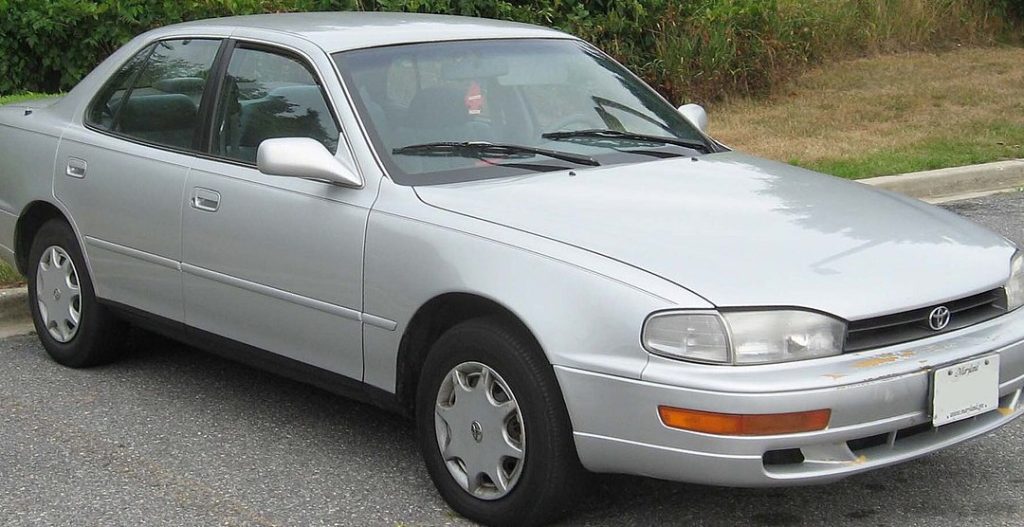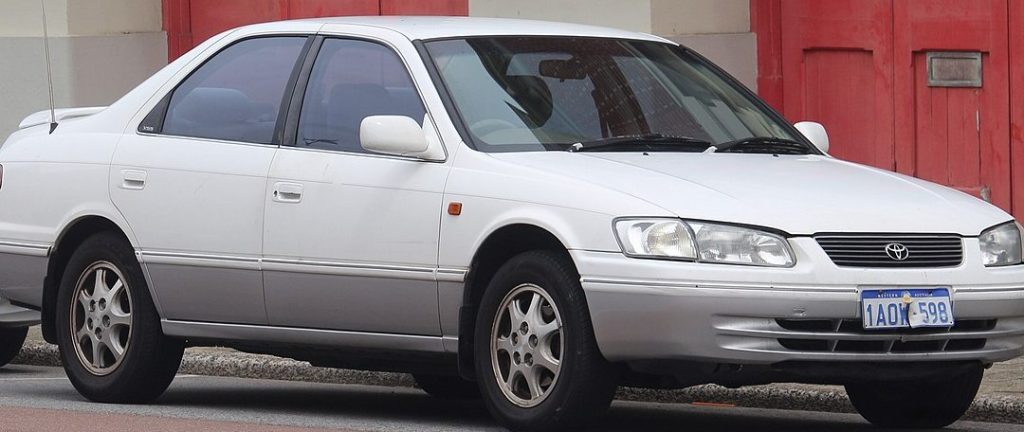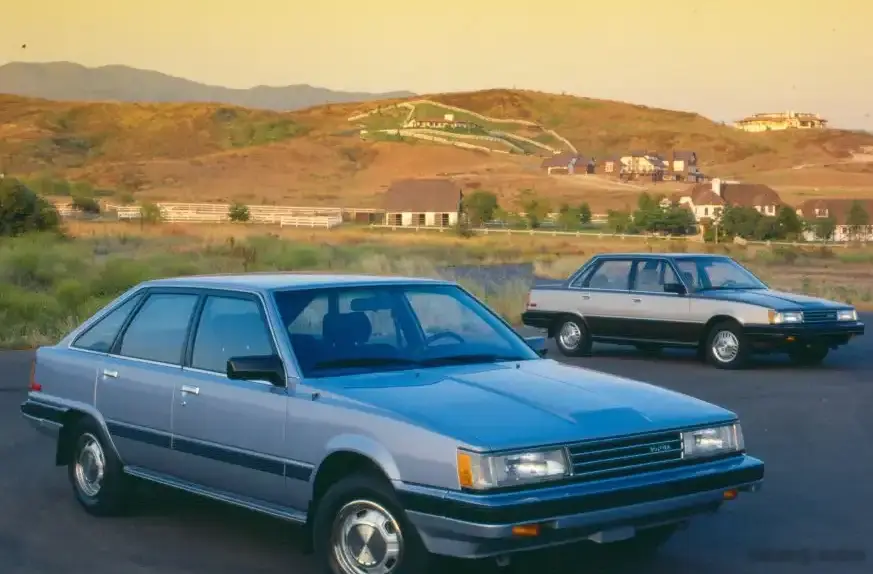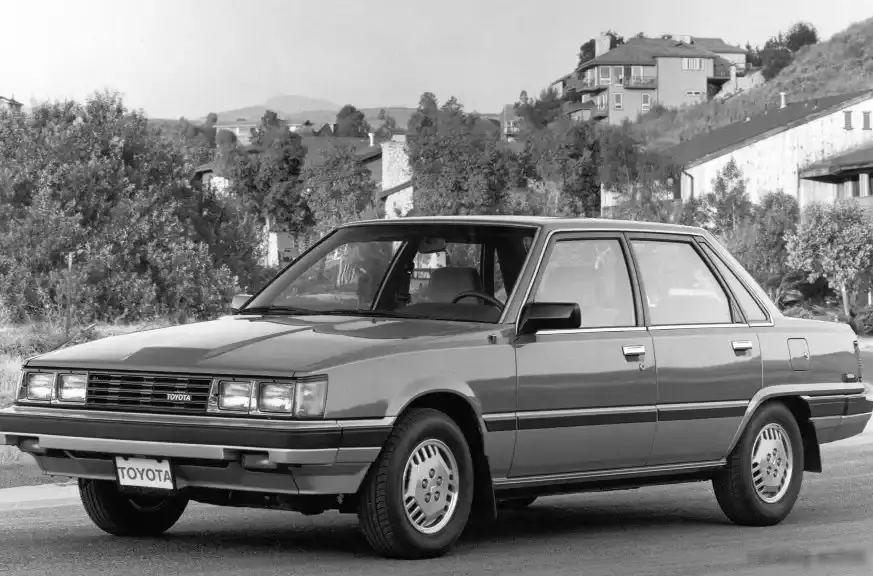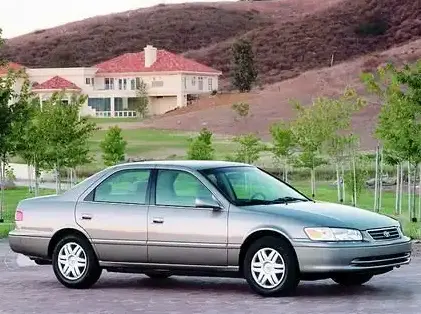
The Toyota Camry IV (XV20) Sport 2.2, produced between 1996 and 1999, represented a significant step forward for Toyota’s mid-size sedan. Positioned as a slightly more performance-oriented trim within the XV20 generation, it offered a balance between comfort, practicality, and a modest increase in driving engagement compared to the base models. The XV20 Camry was designed to appeal to a broad American audience, emphasizing reliability, spaciousness, and a comfortable ride – qualities that cemented the Camry’s reputation as a leading family sedan in the United States. This particular 2.2-liter, 128 horsepower automatic variant aimed to provide a more spirited driving experience without sacrificing the Camry’s core values.
Technical Specifications
| Brand | Toyota |
| Model | Camry |
| Generation | Camry IV (XV20) |
| Type (Engine) | Sport 2.2 (128 Hp) Automatic |
| Start of production | 1996 |
| End of production | 1999 |
| Powertrain Architecture | Internal Combustion engine |
| Body type | Sedan |
| Seats | 5 |
| Doors | 4 |
| Fuel Type | Petrol (Gasoline) |
| Acceleration 0 – 100 km/h | 11.7 sec |
| Acceleration 0 – 62 mph | 11.7 sec |
| Acceleration 0 – 60 mph | 11.1 sec |
| Maximum speed | 195 km/h (121.17 mph) |
| Weight-to-power ratio | 11 kg/Hp, 91.1 Hp/tonne |
| Weight-to-torque ratio | 7.2 kg/Nm, 138.1 Nm/tonne |
| Power | 128 Hp @ 5200 rpm |
| Power per litre | 59.1 Hp/l |
| Torque | 194 Nm @ 4400 rpm (143.09 lb.-ft. @ 4400 rpm) |
| Engine layout | Front, Transverse |
| Engine Model/Code | 5S-FE |
| Engine displacement | 2164 cm3 (132.06 cu. in.) |
| Number of cylinders | 4 |
| Engine configuration | Inline |
| Cylinder Bore | 87 mm (3.43 in.) |
| Piston Stroke | 91 mm (3.58 in.) |
| Compression ratio | 9.8:1 |
| Number of valves per cylinder | 4 |
| Fuel injection system | Multi-port manifold injection |
| Engine aspiration | Naturally aspirated engine |
| Valvetrain | DOHC |
| Engine oil capacity | 3.6 l (3.8 US qt | 3.17 UK qt) |
| Coolant | 6.2 l (6.55 US qt | 5.46 UK qt) |
| Kerb Weight | 1405 kg (3097.49 lbs.) |
| Max. weight | 1860 kg (4100.6 lbs.) |
| Max load | 455 kg (1003.1 lbs.) |
| Trunk (boot) space – minimum | 518 l (18.29 cu. ft.) |
| Fuel tank capacity | 70 l (18.49 US gal | 15.4 UK gal) |
| Permitted trailer load with brakes (12%) | 1500 kg (3306.93 lbs.) |
| Permitted towbar download | 75 kg (165.35 lbs.) |
| Length | 4765 mm (187.6 in.) |
| Width | 1785 mm (70.28 in.) |
| Height | 1410 mm (55.51 in.) |
| Wheelbase | 2670 mm (105.12 in.) |
| Front track | 1545 mm (60.83 in.) |
| Rear (Back) track | 1520 mm (59.84 in.) |
| Front overhang | 960 mm (37.8 in.) |
| Rear overhang | 1135 mm (44.69 in.) |
| Drag coefficient (Cd) | 0.31 |
| Minimum turning circle (turning diameter) | 11.8 m (38.71 ft.) |
| Drivetrain Architecture | The Internal combustion engine (ICE) drives the front wheels of the vehicle. |
| Drive wheel | Front wheel drive |
| Number of gears and type of gearbox | 4 gears, automatic transmission |
| Front suspension | Independent type McPherson |
| Rear suspension | McPherson |
| Front brakes | Ventilated discs |
| Rear brakes | Disc |
| Assisting systems | ABS (Anti-lock braking system) |
| Steering type | Steering rack and pinion |
| Power steering | Hydraulic Steering |
| Tires size | 205/65 R15 |
| Wheel rims size | 15 |
Powertrain & Engine Architecture
The heart of the XV20 Camry Sport 2.2 was the 5S-FE engine, a 2.2-liter inline-four cylinder powerplant. This engine was a mainstay of Toyota’s lineup during the 1990s, known for its durability and relatively smooth operation. The 5S-FE featured a cast iron block and an aluminum cylinder head, incorporating a double overhead camshaft (DOHC) valvetrain with four valves per cylinder. Fuel delivery was handled by a multi-port fuel injection system, contributing to improved fuel efficiency and throttle response. The engine produced 128 horsepower at 5200 rpm and 194 Nm (143 lb-ft) of torque at 4400 rpm. Paired with this engine was a four-speed automatic transmission, designed for smooth and convenient shifting. This transmission, while not offering the most aggressive gear ratios, was well-suited to the Camry’s intended purpose as a comfortable and reliable family car.
Driving Characteristics
The 1.8L automatic Camry offered a comfortable, if not particularly sporty, driving experience. Acceleration from 0-60 mph took around 11.1 seconds, which was adequate for everyday driving but noticeably slower than the manual transmission or V6-powered versions of the XV20. The automatic transmission prioritized smooth shifts over outright performance, resulting in a relaxed driving style. The gear ratios were tuned for fuel economy and ease of use, rather than maximizing acceleration. The suspension, while competent, was geared towards comfort, absorbing bumps and providing a stable ride. Steering was light and precise, making the Camry easy to maneuver in city traffic. Compared to the five-speed manual transmission, the automatic version sacrificed some responsiveness and driver engagement, but it gained in convenience and ease of operation.
Equipment & Trim Levels
The Camry Sport 2.2 Automatic typically included features such as air conditioning, power windows and locks, and an AM/FM stereo. Higher trim levels offered options like a CD player, cruise control, and upgraded upholstery. The interior generally featured cloth seats, with optional leather available. The dashboard layout was functional and straightforward, prioritizing ease of use over stylistic flair. The Sport trim often included minor cosmetic enhancements, such as unique wheel covers or a different grille design, to differentiate it from the base models.
Chassis & Braking
The XV20 Camry utilized a front-wheel-drive layout with an independent McPherson strut suspension in the front and a McPherson strut suspension in the rear. The braking system consisted of ventilated discs in the front and solid discs in the rear. Anti-lock brakes (ABS) were standard, enhancing safety and control during emergency braking situations. The chassis was designed to provide a comfortable ride and good handling characteristics, balancing stability with maneuverability. The suspension tuning was relatively soft, prioritizing ride comfort over sporty handling.
Market Reception & Comparison
The Camry Sport 2.2 Automatic was generally well-received by critics and consumers alike. It was praised for its reliability, spacious interior, and comfortable ride. However, some reviewers noted that the engine lacked the power and responsiveness of the V6 options. Compared to the base 2.2-liter manual transmission model, the automatic version offered increased convenience but slightly reduced fuel economy and acceleration. Against competitors like the Honda Accord and Nissan Maxima, the Camry offered a compelling combination of value, reliability, and practicality.
Legacy
The 5S-FE engine and the four-speed automatic transmission used in the XV20 Camry Sport 2.2 are known for their durability and longevity. Many examples of this powertrain combination are still on the road today, a testament to Toyota’s engineering prowess. While not a particularly sought-after variant among enthusiasts, the Camry Sport 2.2 Automatic remains a popular choice for those seeking a reliable and affordable used car. Its reputation for dependability and low maintenance costs continues to make it a practical and sensible option for budget-conscious buyers.