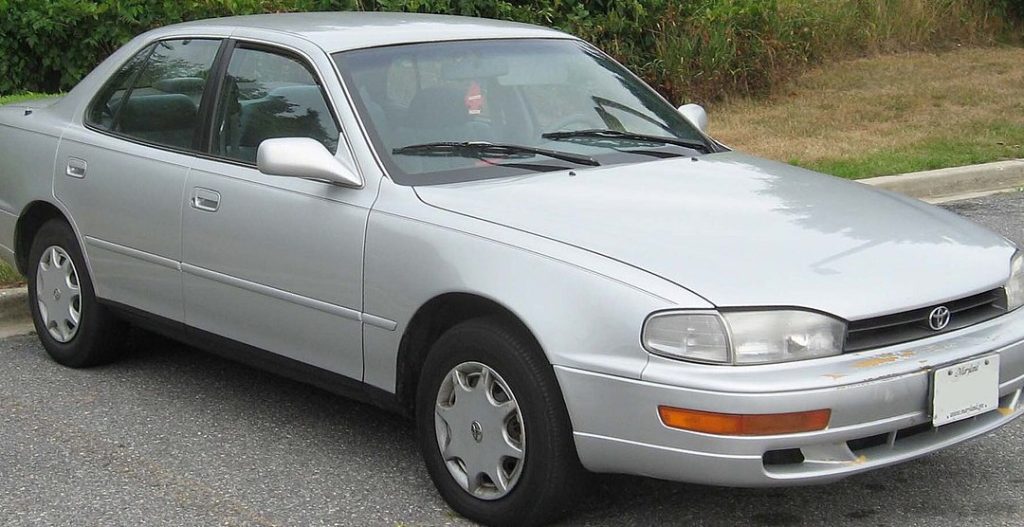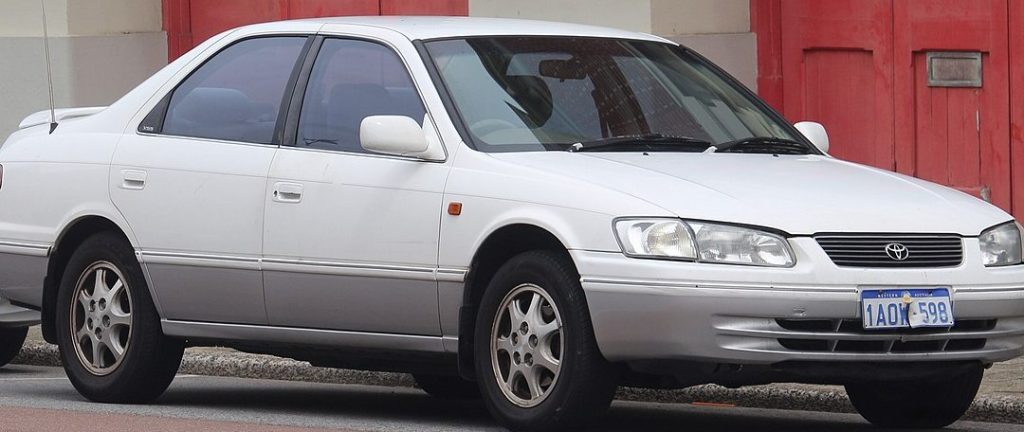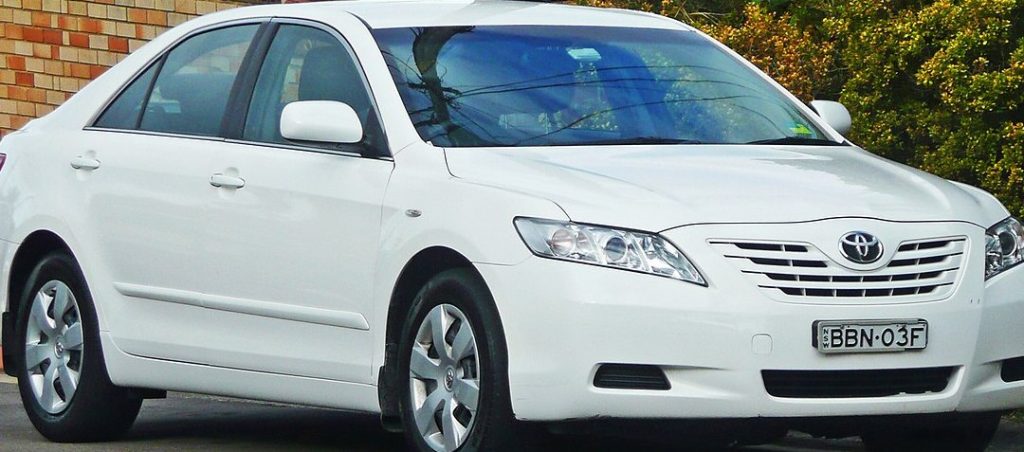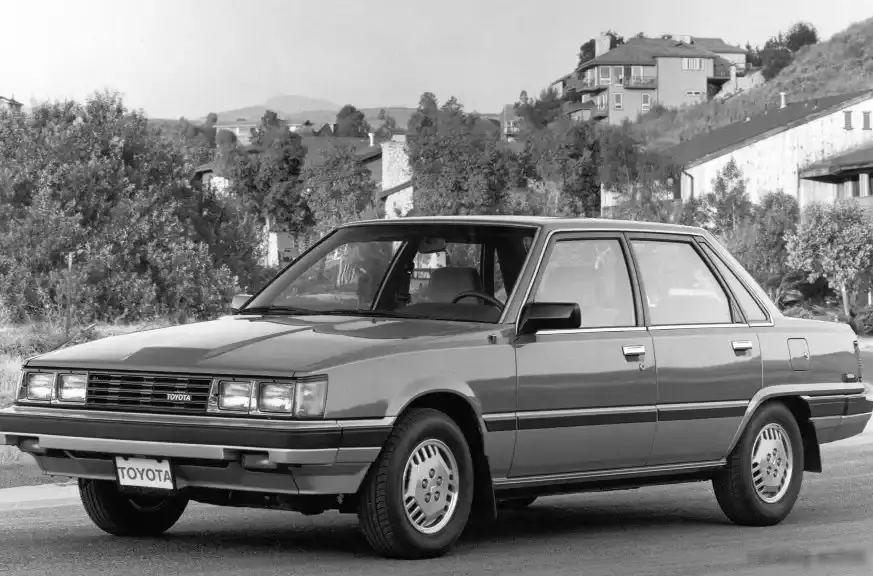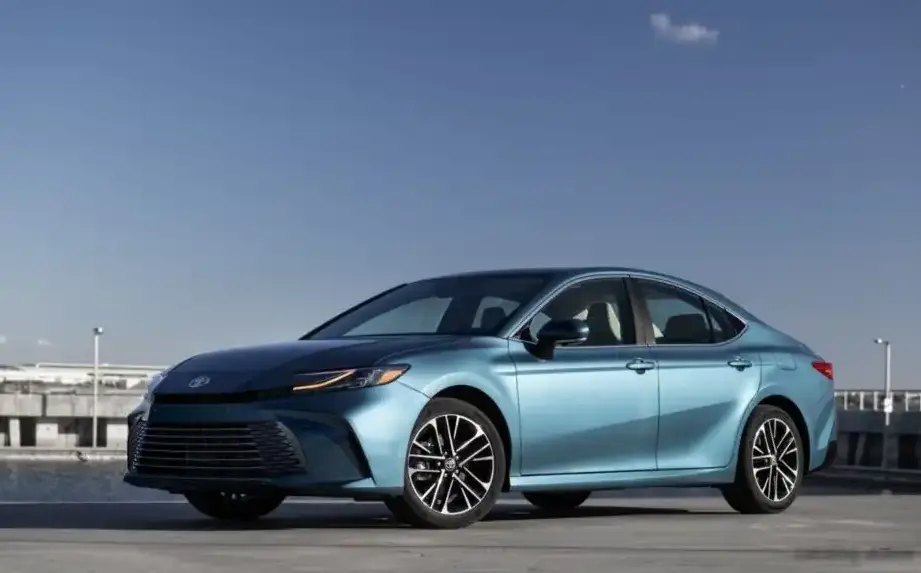
The Toyota Camry IX (XV80) 2.0 Hybrid, introduced in October 2023, represents the latest iteration of Toyota’s globally renowned mid-size sedan. This variant, positioned as a fuel-efficient and technologically advanced option within the XV80 generation, utilizes Toyota’s Hybrid Synergy Drive system. It caters to buyers seeking a balance between performance, economy, and modern features. The XV80 Camry was designed with a focus on a more sophisticated and engaging driving experience compared to its predecessors, while maintaining the Camry’s reputation for reliability and practicality. This specific 2.0-liter hybrid model is primarily targeted towards markets where fuel efficiency and emissions regulations are stringent, offering a compelling alternative to traditional gasoline-powered vehicles.
Technical Specifications
| Brand | Toyota |
| Model | Camry |
| Generation | Camry IX (XV80) |
| Type (Engine) | 2.0 (197 Hp) Hybrid e-CVT |
| Start of production | October, 2023 |
| Powertrain Architecture | FHEV (Full Hybrid Electric Vehicle) |
| Body type | Sedan |
| Seats | 5 |
| Doors | 4 |
| Fuel consumption (combined) | 4.2-4.5 l/100 km (56 – 52.3 US mpg) |
| Fuel Type | Petrol (Gasoline) |
| Maximum speed | 180 km/h (111.85 mph) |
| Emission standard | China VI |
| Weight-to-power ratio | 8 kg/Hp, 124.3 Hp/tonne |
| Weight-to-torque ratio | 8.4 kg/Nm, 118.6 Nm/tonne |
| Battery technology | Lithium-ion (Li-Ion) |
| Electric motor power | 113 Hp |
| Electric motor Torque | 206 Nm (151.94 lb.-ft.) |
| Electric motor location | Integrated into the transmission |
| Electric motor type | Synchronous |
| System power | 197 Hp |
| Internal combustion engine power | 152 Hp @ 6000 rpm |
| Power per litre | 76.5 Hp/l |
| Torque | 188 Nm @ 4400-5200 rpm (138.66 lb.-ft. @ 4400-5200 rpm) |
| Engine layout | Front, Transverse |
| Engine Model/Code | M20F-FXS |
| Engine displacement | 1987 cm3 (121.25 cu. in.) |
| Number of cylinders | 4 |
| Engine configuration | Inline |
| Cylinder Bore | 80.5 mm (3.17 in.) |
| Piston Stroke | 97.6 mm (3.84 in.) |
| Compression ratio | 14:1 |
| Number of valves per cylinder | 4 |
| Fuel injection system | Direct injection and Multi-port manifold injection |
| Engine aspiration | Naturally aspirated engine |
| Valvetrain | DOHC |
| Engine oil capacity | 3.9 l (4.12 US qt | 3.43 UK qt) |
| Coolant | 5.8 l (6.13 US qt | 5.1 UK qt) |
| Kerb Weight | 1585-1595 kg (3494.33 – 3516.37 lbs.) |
| Max. weight | 2070 kg (4563.57 lbs.) |
| Max load | 475-485 kg (1047.2 – 1069.24 lbs.) |
| Fuel tank capacity | 49 l (12.94 US gal | 10.78 UK gal) |
| Length | 4915 mm (193.5 in.) |
| Width | 1840 mm (72.44 in.) |
| Height | 1450 mm (57.09 in.) |
| Wheelbase | 2825 mm (111.22 in.) |
| Front track | 1580-1590 mm (62.2 – 62.6 in.) |
| Rear track | 1590-1600 mm (62.6 – 62.99 in.) |
| Minimum turning circle | 11.4 m (37.4 ft.) |
| Front suspension | Independent, type McPherson with coil spring and anti-roll bar |
| Rear suspension | Independent multi-link spring suspension with stabilizer |
| Front brakes | Ventilated discs |
| Rear brakes | Disc |
| Steering type | Steering rack and pinion |
| Power steering | Electric Steering |
| Tires size | 215/55 R17; 235/45 R18; 235/40 R19 |
| Wheel rims size | 17; 18; 19 |
Powertrain & Engine Architecture
The Camry IX 2.0 Hybrid utilizes Toyota’s M20F-FXS 2.0-liter inline-four cylinder engine, a member of the Dynamic Force Engine family. This engine is characterized by its high thermal efficiency, achieved through features like direct injection and a high compression ratio of 14:1. The engine employs a DOHC (Dual Overhead Camshaft) valvetrain and multi-port fuel injection in addition to direct injection, optimizing combustion for both power and fuel economy. The hybrid system combines this engine with a single electric motor integrated into the electronically controlled continuously variable transmission (e-CVT). This e-CVT isn’t a traditional CVT with belts and pulleys; instead, it uses a planetary gearset to seamlessly blend power from the engine and electric motor. The lithium-ion battery pack provides supplemental power and allows for short periods of all-electric driving.
Driving Characteristics
The 197 horsepower combined output of the 2.0-liter hybrid powertrain delivers adequate performance for everyday driving. While not as brisk as higher-powered Camry variants, the hybrid system provides responsive acceleration, particularly at lower speeds where the electric motor contributes significantly. The e-CVT prioritizes fuel efficiency, resulting in smooth, stepless acceleration. Compared to a traditional automatic transmission, the e-CVT can feel less engaging to some drivers, but it contributes to the Camry Hybrid’s impressive fuel economy. The electric motor’s instant torque helps to fill in any gaps in the engine’s power delivery. The overall driving experience is comfortable and refined, typical of the Camry lineage.
Equipment & Trim Levels
The Camry IX 2.0 Hybrid typically comes well-equipped with standard features such as Toyota Safety Sense (a suite of advanced driver-assistance systems), automatic climate control, a touchscreen infotainment system with smartphone integration (Apple CarPlay and Android Auto), and power-adjustable seats. Higher trim levels offer upgrades like leather upholstery, a premium audio system, a panoramic sunroof, and additional safety features. Interior materials and finishes are generally of good quality, reflecting the Camry’s position as a mainstream, yet sophisticated, sedan. Optional extras often include blind-spot monitoring, rear cross-traffic alert, and a head-up display.
Chassis & Braking
The Camry IX utilizes a front-wheel-drive layout. The front suspension consists of an independent McPherson strut setup with coil springs and an anti-roll bar, while the rear suspension employs an independent multi-link system with a stabilizer bar. This suspension configuration provides a comfortable ride and predictable handling. Braking duties are handled by ventilated discs at the front and solid discs at the rear. The braking system is augmented by ABS (Anti-lock Braking System) and electronic brake-force distribution. Steering is provided by an electric power steering system, offering light and precise control.
Market Reception & Comparison
The Camry IX 2.0 Hybrid has been well-received in markets prioritizing fuel efficiency and environmental consciousness. Critics have praised its fuel economy, comfortable ride, and comprehensive safety features. Compared to the non-hybrid Camry models, the hybrid variant offers significantly better fuel economy, albeit at a slightly higher initial cost. Against competitors like the Honda Accord Hybrid and Hyundai Sonata Hybrid, the Camry Hybrid holds its own with competitive fuel economy, reliability, and resale value. Some reviewers have noted that the e-CVT can feel less responsive than traditional automatic transmissions found in some competing models.
Legacy
Toyota’s hybrid technology has a proven track record of reliability, and the M20F-FXS engine paired with the e-CVT is expected to be a durable and long-lasting powertrain. Early reports suggest that the XV80 Camry Hybrid is maintaining Toyota’s reputation for dependability. In the used car market, the Camry Hybrid is likely to hold its value well due to its fuel efficiency and Toyota’s strong brand reputation. As emissions regulations become increasingly stringent, the demand for hybrid vehicles like the Camry IX 2.0 Hybrid is expected to remain strong, solidifying its place as a popular and practical choice for consumers.