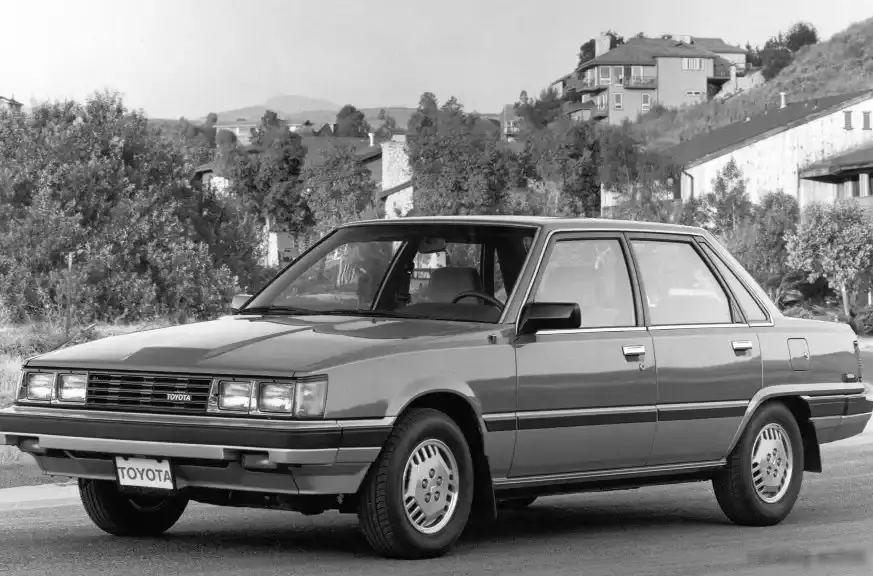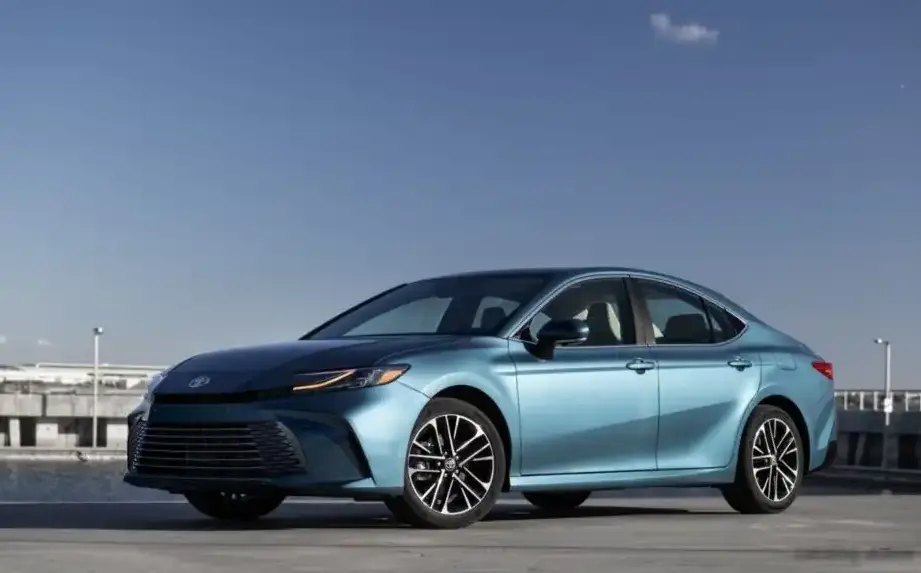
The Toyota Camry IX (XV80) 2.5 Hybrid, introduced in October 2023, represents the latest iteration of Toyota’s globally renowned mid-size sedan. This variant, positioned as a technologically advanced and fuel-efficient option within the XV80 generation, utilizes Toyota’s Hybrid Synergy Drive system. It’s primarily targeted towards buyers seeking a balance of comfort, reliability, and reduced emissions. The Camry has long been a staple in the American automotive landscape, known for its dependability and practicality, and the XV80 continues this tradition with a focus on modern features and improved efficiency. This specific 2.5-liter hybrid configuration is a key offering in markets where fuel economy and environmental regulations are increasingly important.
Technical Specifications
| Brand | Toyota |
| Model | Camry |
| Generation | Camry IX (XV80) |
| Type (Engine) | 2.5 (230 Hp) Hybrid e-CVT |
| Start of production | October, 2023 |
| Powertrain Architecture | FHEV (Full Hybrid Electric Vehicle) |
| Body type | Sedan |
| Seats | 5 |
| Doors | 4 |
| Fuel consumption (economy) – combined (WLTC) | 4.55 l/100 km (51.7 US mpg, 62.1 UK mpg, 22 km/l) |
| Fuel Type | Petrol (Gasoline) |
| Maximum speed | 180 km/h (111.85 mph) |
| Emission standard | China VI |
| Weight-to-power ratio | 7 kg/Hp, 142.4 Hp/tonne |
| Weight-to-torque ratio | 7.3 kg/Nm, 136.8 Nm/tonne |
| Battery technology | Lithium-ion (Li-Ion) |
| Electric motor power | 136 Hp |
| Electric motor Torque | 208 Nm (153.41 lb.-ft.) |
| Electric motor location | Integrated into the transmission |
| Electric motor type | Synchronous |
| System power | 230 Hp |
| Power | 185 Hp @ 6000 rpm (74.4 Hp/l) |
| Torque | 221 Nm @ 3400-5200 rpm (163 lb.-ft. @ 3400-5200 rpm) |
| Engine layout | Front, Transverse |
| Engine Model/Code | A25D-FXS |
| Engine displacement | 2487 cm3 (151.77 cu. in.) |
| Number of cylinders | 4 |
| Engine configuration | Inline |
| Cylinder Bore | 87.5 mm (3.44 in.) |
| Piston Stroke | 103.4 mm (4.07 in.) |
| Compression ratio | 14:1 |
| Number of valves per cylinder | 4 |
| Fuel injection system | Direct injection and Multi-port manifold injection |
| Engine aspiration | Naturally aspirated engine |
| Valvetrain | DOHC |
| Engine oil capacity | 4.3 l (4.54 US qt | 3.78 UK qt) |
| Coolant | 6.1 l (6.45 US qt | 5.37 UK qt) |
| Kerb Weight | 1615-1660 kg (3560.47 – 3659.67 lbs.) |
| Max. weight | 2100 kg (4629.71 lbs.) |
| Max load | 440-485 kg (970.03 – 1069.24 lbs.) |
| Fuel tank capacity | 49 l (12.94 US gal | 10.78 UK gal) |
| Length | 4915 mm (193.5 in.) |
| Width | 1840 mm (72.44 in.) |
| Height | 1450 mm (57.09 in.) |
| Wheelbase | 2825 mm (111.22 in.) |
| Front track | 1580 mm (62.2 in.) |
| Rear (Back) track | 1590 mm (62.6 in.) |
| Minimum turning circle (turning diameter) | 11.4 m (37.4 ft.) |
| Approach angle | 13° |
| Departure angle | 16° |
| Drivetrain Architecture | The Internal combustion engine (ICE) and electric motor drive the front wheels of the car with the ability to work in full electric or mixed mode. |
| Drive wheel | Front wheel drive |
| Number of gears and type of gearbox | automatic transmission e-CVT |
| Front suspension | Independent, type McPherson with coil spring and anti-roll bar |
| Rear suspension | Independent multi-link spring suspension with stabilizer |
| Front brakes | Ventilated discs |
| Rear brakes | Disc |
| Assisting systems | ABS (Anti-lock braking system) |
| Steering type | Steering rack and pinion |
| Power steering | Electric Steering |
| Tires size | 235/45 R18; 235/40 R19 |
| Wheel rims size | 18; 19 |
Powertrain & Engine Architecture
The heart of the Camry IX 2.5 Hybrid is Toyota’s A25D-FXS 2.5-liter inline-four cylinder engine. This engine utilizes a combination of direct injection and multi-port fuel injection to optimize combustion efficiency and reduce emissions. The engine boasts a high compression ratio of 14:1, contributing to its thermal efficiency. The engine is paired with Toyota’s e-CVT (electronically controlled continuously variable transmission), which is integral to the Hybrid Synergy Drive system. Unlike traditional CVTs, Toyota’s e-CVT doesn’t rely on belts or chains; instead, it uses a planetary gearset to seamlessly blend power from the gasoline engine and the electric motor. The electric motor itself is a synchronous type, delivering 136 horsepower and 208 Nm of torque. The system’s combined output is 230 horsepower. This powertrain configuration is designed for smooth, efficient operation, prioritizing fuel economy over outright acceleration.
Driving Characteristics
The Camry IX 2.5 Hybrid offers a comfortable and refined driving experience. The e-CVT provides seamless acceleration, although it lacks the immediate responsiveness of a traditional automatic transmission. The hybrid system prioritizes electric drive at lower speeds, resulting in near-silent operation in city driving. The combined output of the engine and electric motor provides adequate power for everyday driving situations, but it doesn’t offer the sporty performance of some competitors. The e-CVT is programmed to prioritize fuel efficiency, which means it will hold lower gears for longer to maximize the use of the electric motor. Compared to a Camry with the standard gasoline engine, the hybrid version offers improved fuel economy and a quieter cabin. It differs significantly from higher-performance Camry trims, which prioritize acceleration and handling.
Equipment & Trim Levels
The Camry IX 2.5 Hybrid typically comes well-equipped with standard features such as Toyota Safety Sense (a suite of advanced driver-assistance systems), automatic climate control, a touchscreen infotainment system with Apple CarPlay and Android Auto compatibility, and comfortable cloth upholstery. Higher trim levels offer upgrades like leather upholstery, a larger touchscreen display, a premium sound system, and features like a panoramic sunroof and heated/ventilated seats. Optional extras often include blind-spot monitoring, rear cross-traffic alert, and adaptive cruise control.
Chassis & Braking
The Camry IX utilizes an independent McPherson strut suspension in the front and an independent multi-link suspension in the rear, providing a comfortable ride and predictable handling. Stabilizer bars are included on both axles to reduce body roll during cornering. The braking system consists of ventilated discs at the front and solid discs at the rear, providing adequate stopping power. ABS (Anti-lock Braking System) is standard, enhancing safety in emergency braking situations. The suspension tuning is geared towards comfort rather than sporty handling, making it well-suited for everyday driving.
Market Reception & Comparison
The Camry Hybrid has consistently received positive reviews for its fuel efficiency, reliability, and comfortable ride. Critics have praised Toyota’s Hybrid Synergy Drive system for its smooth operation and seamless integration. Compared to other trims in the Camry lineup, the hybrid version typically commands a higher price but offers significantly better fuel economy. It competes with other hybrid sedans such as the Honda Accord Hybrid and Hyundai Sonata Hybrid. The Camry Hybrid generally excels in terms of long-term reliability and resale value.
Legacy
Toyota’s hybrid technology has a proven track record of reliability, and the A25D-FXS engine paired with the e-CVT is expected to be a durable and long-lasting powertrain. The Camry Hybrid has become a popular choice in the used car market due to its fuel efficiency and reputation for dependability. As environmental concerns continue to grow, the demand for hybrid vehicles like the Camry IX 2.5 Hybrid is likely to remain strong, solidifying its position as a key player in the mid-size sedan segment.