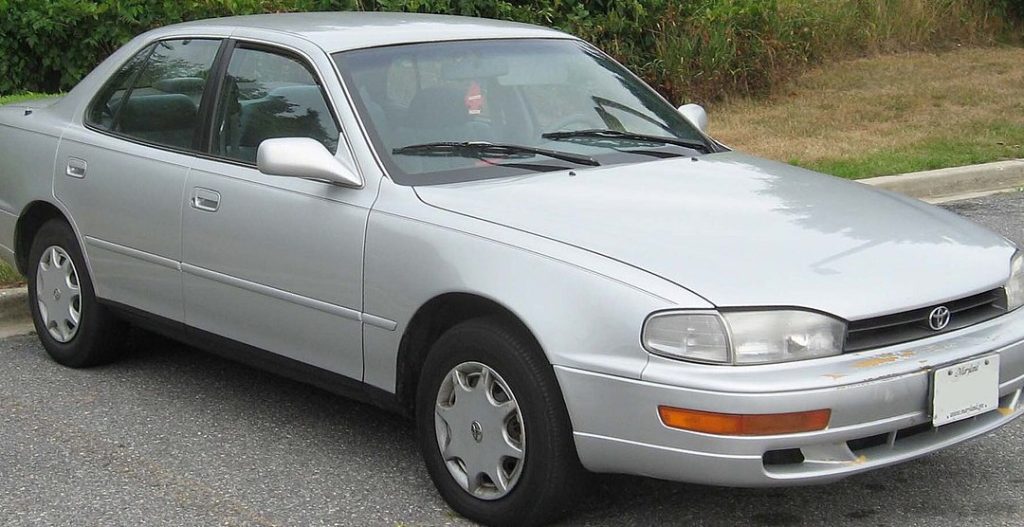
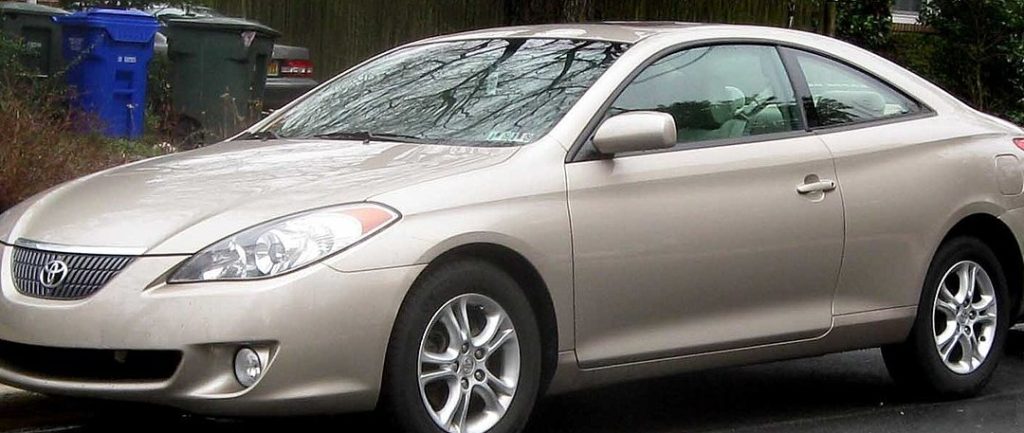
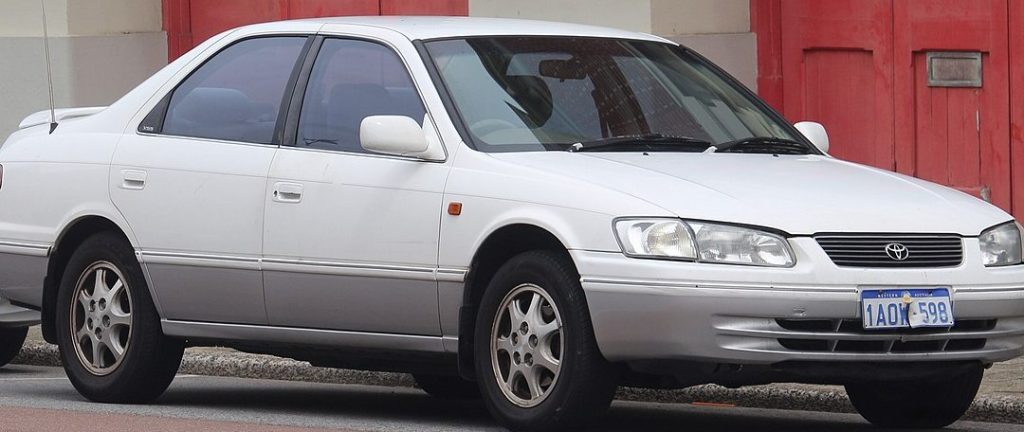
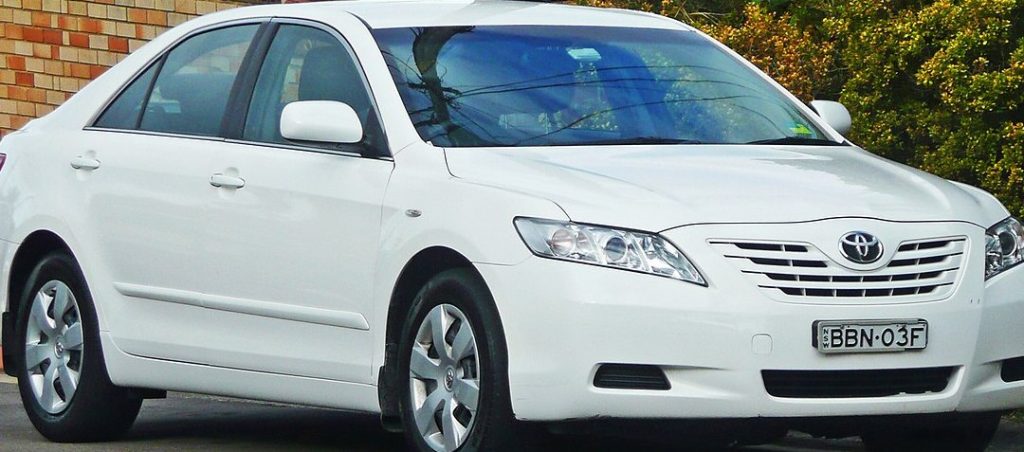
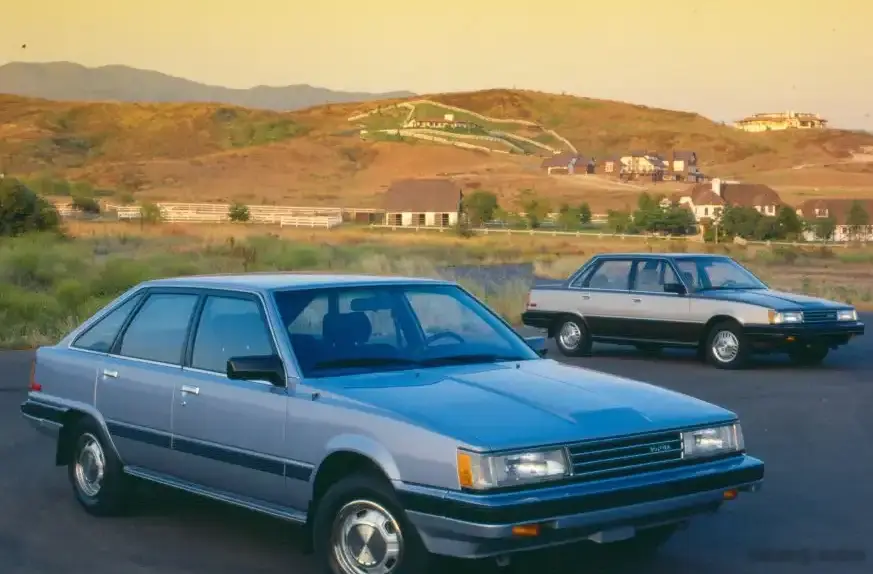
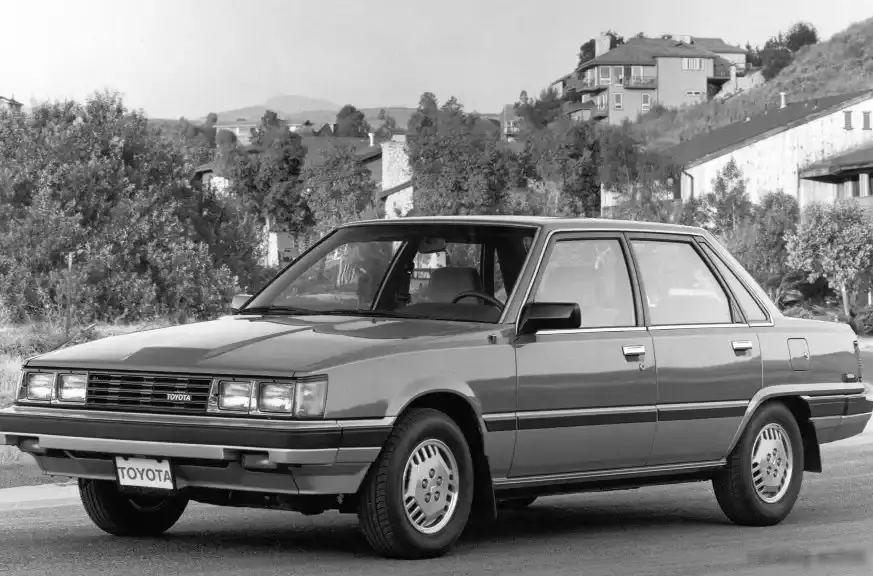
The Toyota Camry Solara, launched in 1998 as part of the fifth-generation Camry (XV20 platform), represented Toyota’s foray into the coupe market. Specifically, the 2.2i 16V variant, producing 135 horsepower, was offered from 1998 to 2001. This model aimed to provide a more stylish and sporty alternative to the traditional Camry sedan, while still retaining the brand’s reputation for reliability and comfort. Positioned as an entry-level Solara, it served as the gateway to the coupe range, offering a balance between affordability and features. It was primarily marketed in North America and select international markets.
Technical Specifications
| Brand | Toyota |
| Model | Camry |
| Generation | Camry Solara I (Mark V) |
| Type (Engine) | 2.2i 16V (135 Hp) |
| Start of production | 1998 |
| End of production | 2001 |
| Powertrain Architecture | Internal Combustion engine |
| Body type | Coupe |
| Seats | 5 |
| Doors | 2 |
| Fuel consumption (urban) | 10.2 l/100 km (23.1 US mpg) |
| Fuel consumption (extra urban) | 7.4 l/100 km (31.8 US mpg) |
| Fuel Type | Petrol (Gasoline) |
| Weight-to-power ratio | 10.5 kg/Hp |
| Weight-to-torque ratio | 7.1 kg/Nm |
| Power | 135 Hp @ 5200 rpm |
| Power per litre | 62.4 Hp/l |
| Torque | 199 Nm @ 4400 rpm (146.77 lb.-ft. @ 4400 rpm) |
| Engine layout | Front, Transverse |
| Engine Model/Code | 5S-FE |
| Engine displacement | 2164 cm3 (132.06 cu. in.) |
| Number of cylinders | 4 |
| Engine configuration | Inline |
| Cylinder Bore | 87 mm (3.43 in.) |
| Piston Stroke | 91 mm (3.58 in.) |
| Compression ratio | 9.8:1 |
| Number of valves per cylinder | 4 |
| Fuel injection system | Multi-port manifold injection |
| Engine aspiration | Naturally aspirated engine |
| Valvetrain | DOHC |
| Engine oil capacity | 3.6 l (3.8 US qt | 3.17 UK qt) |
| Coolant capacity | 6.9 l (7.29 US qt | 6.07 UK qt) |
| Kerb Weight | 1415 kg (3119.54 lbs.) |
| Trunk (boot) space | 399 l (14.09 cu. ft.) |
| Fuel tank capacity | 70 l (18.49 US gal | 15.4 UK gal) |
| Length | 4826 mm (190 in.) |
| Width | 1806 mm (71.1 in.) |
| Height | 1400 mm (55.12 in.) |
| Wheelbase | 2670 mm (105.12 in.) |
| Front track | 1544 mm (60.79 in.) |
| Rear track | 1519 mm (59.8 in.) |
| Ride height (ground clearance) | 135 mm (5.31 in.) |
| Drag coefficient (Cd) | 0.31 |
| Minimum turning circle | 11.6 m (38.06 ft.) |
| Drivetrain Architecture | Front wheel drive |
| Number of gears | 5 |
| Gearbox type | Manual transmission |
| Front suspension | Independent, McPherson with coil spring and anti-roll bar |
| Rear suspension | Independent multi-link with stabilizer |
| Front brakes | Ventilated discs |
| Rear brakes | Drum |
| Assisting systems | ABS (Anti-lock braking system) |
| Steering type | Steering rack and pinion |
| Power steering | Hydraulic |
| Tires size | 205/65 R15 |
| Wheel rims size | 15 |
Powertrain & Engine Architecture
The heart of the 2.2i Solara was the 5S-FE engine, a 2.2-liter inline-four cylinder powerplant. This engine was a mainstay in Toyota’s lineup during the late 1990s and early 2000s, known for its durability and relatively simple design. The 5S-FE utilized a multi-port fuel injection system, delivering fuel directly to each intake port for improved combustion efficiency. It featured a double overhead camshaft (DOHC) valvetrain, operating 16 valves (four per cylinder) to optimize airflow and enhance performance. The engine’s 9.8:1 compression ratio was a compromise between performance and the ability to run on readily available fuel grades. The five-speed manual transmission was the standard offering for this trim, providing drivers with direct control over the engine’s power. The transmission’s gear ratios were tuned for a balance of acceleration and fuel economy, prioritizing everyday drivability over outright performance.
Driving Characteristics
The 135 horsepower and 199 Nm (146.77 lb-ft) of torque delivered by the 2.2i engine provided adequate, but not exhilarating, performance. Acceleration from 0 to 60 mph was estimated to be around 8.5-9.5 seconds. Compared to the higher-output 2.2-liter engine available with a VVT-i system, or the more powerful V6 options, the 2.2i felt noticeably less responsive. However, the manual transmission allowed drivers to extract the most from the engine’s powerband. The gear ratios were spaced to provide reasonable acceleration in each gear, but required frequent shifting to maintain momentum, especially when overtaking. The Solara’s front-wheel-drive configuration contributed to predictable handling, but lacked the dynamic capabilities of rear-wheel-drive coupes. The suspension, tuned for comfort, provided a smooth ride over most road surfaces, but exhibited some body roll during aggressive cornering.
Equipment & Trim Levels
The base 2.2i Solara typically came equipped with features such as air conditioning, power windows and locks, a basic audio system, and cloth upholstery. Optional extras included a sunroof, upgraded audio systems, alloy wheels, and a power driver’s seat. Interior trim was generally functional and straightforward, with a focus on durability rather than luxury. The dashboard layout was similar to that of the Camry sedan, but with a more coupe-specific center console design. Safety features included dual front airbags and ABS (Anti-lock Braking System) as standard equipment.
Chassis & Braking
The Solara’s chassis was based on the Camry platform, providing a solid and stable foundation. The front suspension utilized an independent McPherson strut design with coil springs and an anti-roll bar, while the rear suspension employed an independent multi-link setup with a stabilizer bar. This configuration aimed to balance ride comfort with handling stability. Braking duties were handled by ventilated discs at the front and drum brakes at the rear. While adequate for everyday driving, the rear drum brakes were a cost-saving measure and didn’t offer the same stopping power as disc brakes. The ABS system helped to prevent wheel lockup during hard braking, enhancing safety.
Market Reception & Comparison
The 2.2i Solara was generally well-received as an affordable and stylish coupe. Critics praised its reliability and comfortable ride, but noted its lack of outright performance compared to some competitors. Fuel economy was considered to be good for its class, averaging around 23 mpg in the city and 32 mpg on the highway. Compared to the higher-trim Solara models with the V6 engine, the 2.2i offered a more economical option, but at the expense of performance. The 2.2i also provided a more accessible entry point into the Solara range than the more expensive V6-powered models.
Legacy
The 5S-FE engine, in general, has proven to be remarkably durable and reliable over the long term. The 2.2i Solara, while not a performance icon, has maintained a reputation for dependability. In the used car market, these models are often sought after by buyers looking for an affordable and reliable coupe. Maintenance costs are generally low, and parts availability remains good. However, potential buyers should be aware of the age-related issues common to vehicles of this era, such as rust and wear on suspension components. The Solara 2.2i represents a solid, if unspectacular, entry into the world of Japanese coupes, offering a blend of practicality, reliability, and style.