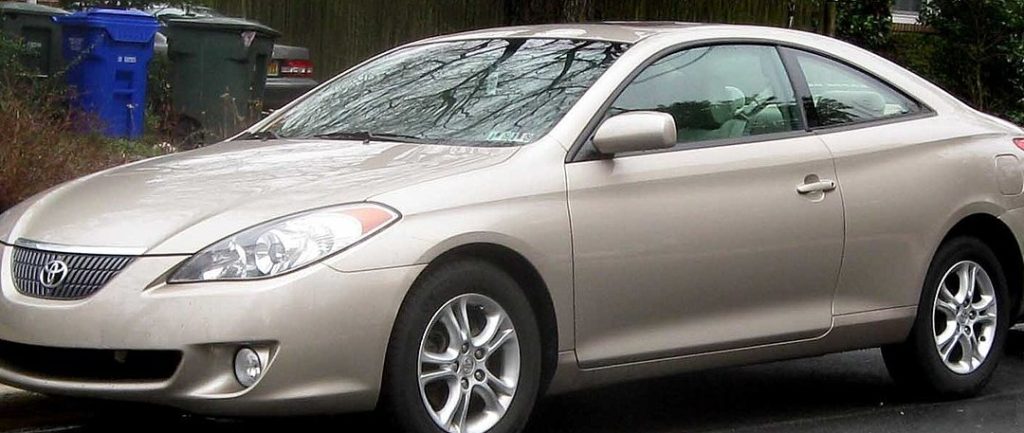
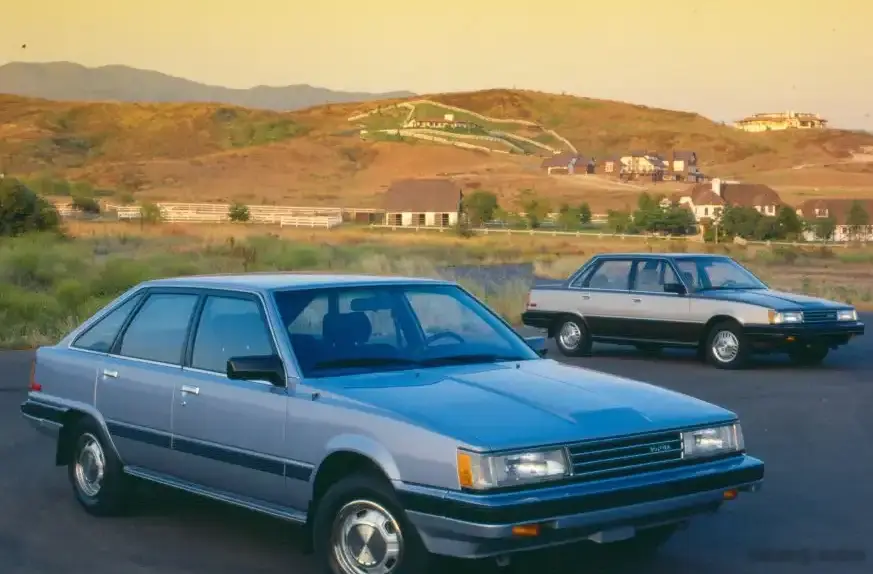
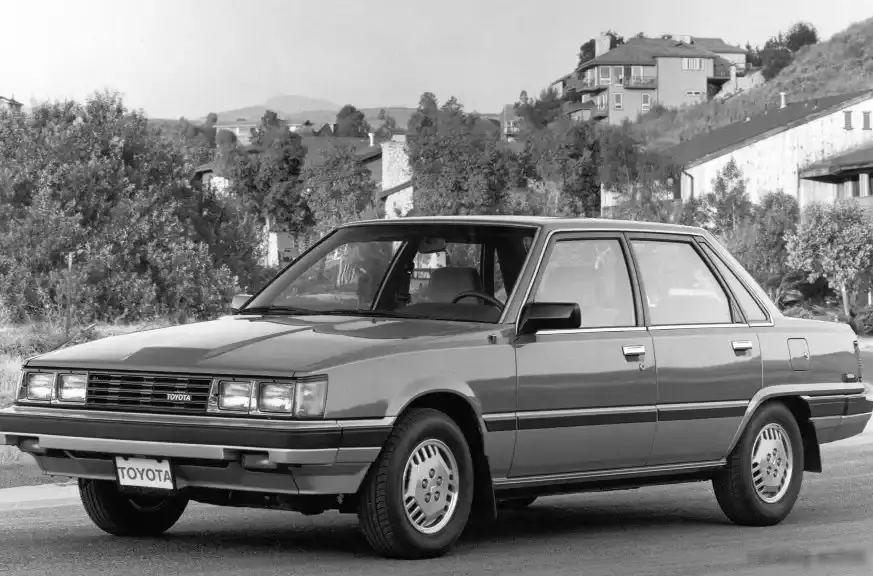
The Toyota Camry Solara, specifically the first generation (XV20 platform, marketed as the Mark V after a 2001 facelift) 2.4-liter 16V variant with an automatic transmission, represented a key offering in Toyota’s attempt to capture a broader segment of the coupe market. Produced from 2001 to 2003, this model aimed to blend the renowned Camry reliability with a more stylish and sporty aesthetic. Positioned as a mid-range trim within the Solara lineup, it offered a balance between affordability and features, appealing to buyers seeking a comfortable and dependable personal coupe. This variant was primarily sold in the North American market, where the two-door coupe segment remained relatively strong.
Technical Specifications
| Brand | Toyota |
| Model | Camry |
| Generation | Camry Solara I (Mark V, facelift 2001) |
| Type (Engine) | 2.4 16V (157 Hp) Automatic |
| Start of production | 2001 |
| End of production | 2003 |
| Powertrain Architecture | Internal Combustion engine |
| Body type | Coupe |
| Seats | 5 |
| Doors | 2 |
| Fuel consumption (urban) | 9.8 l/100 km (24 US mpg) |
| Fuel consumption (extra urban) | 7.3 l/100 km (32.2 US mpg) |
| Fuel Type | Petrol (Gasoline) |
| Weight-to-power ratio | 9 kg/Hp |
| Weight-to-torque ratio | 6.5 kg/Nm |
| Power | 157 Hp @ 5600 rpm |
| Power per litre | 66.5 Hp/l |
| Torque | 220 Nm @ 4000 rpm (162.26 lb.-ft. @ 4000 rpm) |
| Engine layout | Front, Transverse |
| Engine Model/Code | 2AZ-FE |
| Engine displacement | 2362 cm3 (144.14 cu. in.) |
| Number of cylinders | 4 |
| Engine configuration | Inline |
| Cylinder Bore | 88.5 mm (3.48 in.) |
| Piston Stroke | 96 mm (3.78 in.) |
| Compression ratio | 9.6:1 |
| Number of valves per cylinder | 4 |
| Fuel injection system | Multi-port manifold injection |
| Engine aspiration | Naturally aspirated engine |
| Valvetrain | DOHC |
| Engine oil capacity | 3.8 l (4.02 US qt | 3.34 UK qt) |
| Coolant capacity | 6.2 l (6.55 US qt | 5.46 UK qt) |
| Kerb Weight | 1420 kg (3130.56 lbs.) |
| Trunk (boot) space | 391 l (13.81 cu. ft.) |
| Fuel tank capacity | 70 l (18.49 US gal | 15.4 UK gal) |
| Length | 4864 mm (191.5 in.) |
| Width | 1806 mm (71.1 in.) |
| Height | 1400 mm (55.12 in.) |
| Wheelbase | 2670 mm (105.12 in.) |
| Front track | 1544 mm (60.79 in.) |
| Rear track | 1519 mm (59.8 in.) |
| Ride height (ground clearance) | 135 mm (5.31 in.) |
| Drag coefficient (Cd) | 0.31 |
| Minimum turning circle | 11.6 m (38.06 ft.) |
| Drivetrain Architecture | Front wheel drive |
| Number of gears | 4 |
| Gearbox type | Automatic transmission ECT-i |
| Front suspension | Independent, McPherson with coil spring and anti-roll bar |
| Rear suspension | Independent multi-link with stabilizer |
| Front brakes | Ventilated discs |
| Rear brakes | Drum |
| Assisting systems | ABS (Anti-lock braking system) |
| Steering type | Steering rack and pinion |
| Power steering | Hydraulic |
| Tires size | 205/65 R15 |
| Wheel rims size | 15 |
Powertrain & Engine Architecture
The heart of the 2001-2003 Camry Solara 2.4 was the 2AZ-FE engine, a 2.4-liter inline-four cylinder powerplant. This engine was a member of Toyota’s ‘AZ’ family, known for its durability and relatively smooth operation. The 2AZ-FE featured a double overhead camshaft (DOHC) valvetrain with four valves per cylinder, contributing to its respectable power output for its displacement. Fuel delivery was handled by a multi-port fuel injection system, optimizing combustion efficiency. The engine produced 157 horsepower at 5600 rpm and 220 Nm (162 lb-ft) of torque at 4000 rpm. Paired with this engine was a four-speed automatic transmission, designated ECT-i (Electronically Controlled Transmission – intelligent). This transmission was designed for smooth shifts and optimized fuel economy, but it wasn’t known for particularly sporty performance. The engine’s transverse mounting and front-wheel-drive configuration were standard for this class of vehicle.
Driving Characteristics
The 2.4-liter automatic Solara offered a comfortable and predictable driving experience. Acceleration was adequate for everyday driving, but not particularly brisk. The four-speed automatic transmission, while smooth, lacked the responsiveness of a manual gearbox or a more modern automatic with additional gears. The gear ratios were tuned for fuel efficiency rather than outright performance. Compared to the available V6 engine option in the Solara, this 2.4L variant felt noticeably less powerful, especially during highway merging or overtaking maneuvers. However, the 2.4L offered a more fuel-efficient and affordable alternative, appealing to buyers prioritizing practicality over performance. The suspension provided a comfortable ride, absorbing most road imperfections without excessive body roll.
Equipment & Trim Levels
The 2.4-liter Solara typically came standard with features such as air conditioning, power windows and locks, a CD player, and cloth upholstery. Optional extras included a sunroof, upgraded audio systems, leather upholstery, and alloy wheels. The interior design was functional and well-built, reflecting Toyota’s reputation for quality. The dashboard layout was straightforward and easy to use. Trim levels varied slightly depending on the region, but generally, the 2.4L model was positioned as the entry-level or mid-range offering, with the V6 models representing the more premium trims.
Chassis & Braking
The Solara’s chassis featured an independent McPherson strut suspension in the front and an independent multi-link suspension in the rear. This setup provided a good balance of ride comfort and handling. Front brakes were ventilated discs, offering adequate stopping power, while the rear brakes were drums, a cost-saving measure common in this segment. Anti-lock brakes (ABS) were standard, enhancing safety. The steering was rack-and-pinion with hydraulic power assist, providing a reasonably responsive feel. The relatively modest weight of the vehicle (around 3130 lbs) helped to mitigate the effects of the less powerful engine.
Market Reception & Comparison
The Camry Solara 2.4L Automatic received generally positive reviews for its reliability, comfort, and fuel economy. Critics noted that it wasn’t a particularly sporty vehicle, but it offered a compelling package for buyers seeking a stylish and dependable coupe. Compared to other coupes in its class, such as the Honda Accord Coupe and the Ford Mustang, the Solara stood out for its refinement and Toyota’s renowned build quality. The V6 Solara offered significantly more performance, but at a higher price point. The 2.4L model provided a more accessible entry point into the Solara lineup, appealing to a wider range of buyers. Fuel economy was a strong point, with EPA estimates around 24 mpg city and 32 mpg highway.
Legacy
The 2AZ-FE engine, in general, has proven to be a remarkably durable and reliable powerplant. The Camry Solara 2.4L Automatic, while not a collector’s item, remains a relatively common sight on used car lots. These vehicles are often praised for their longevity and low maintenance costs. Common issues are typically related to age and mileage, such as worn suspension components and minor oil leaks. However, major engine or transmission failures are relatively rare. Today, the Solara 2.4L represents a solid and affordable option for buyers seeking a dependable and comfortable coupe, particularly those prioritizing reliability over performance.