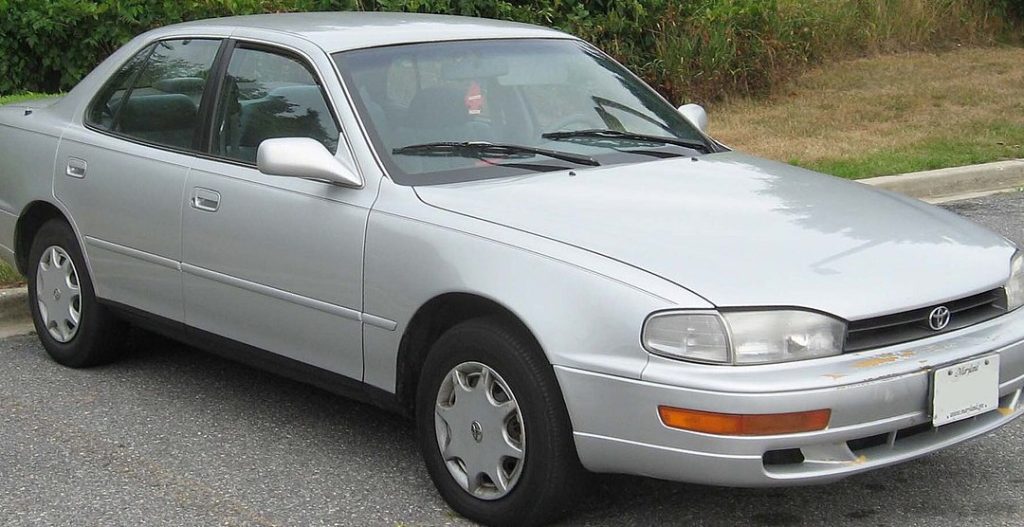
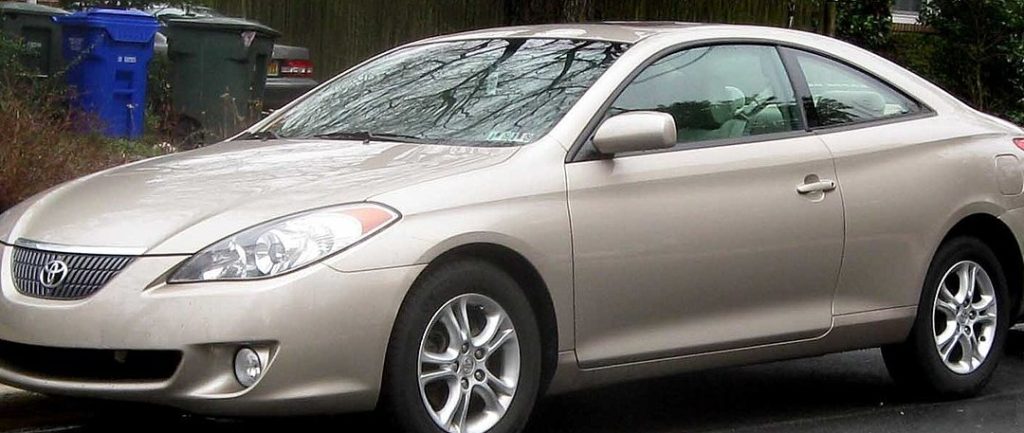
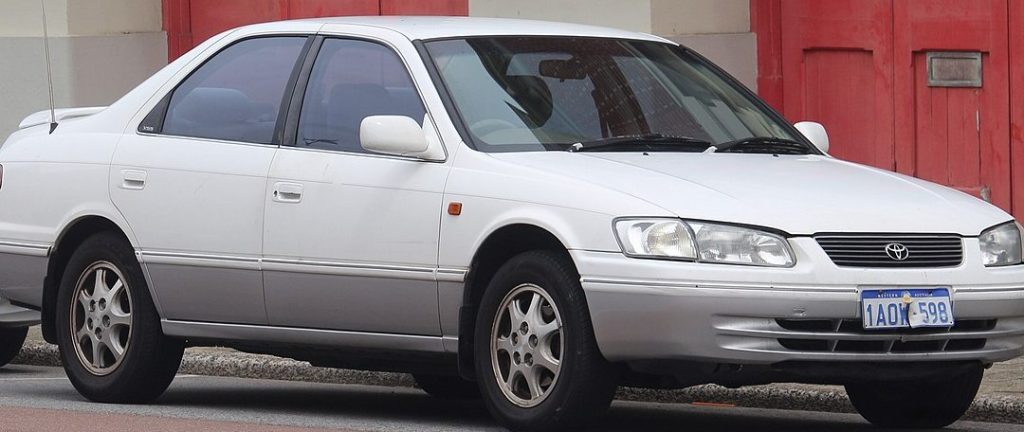
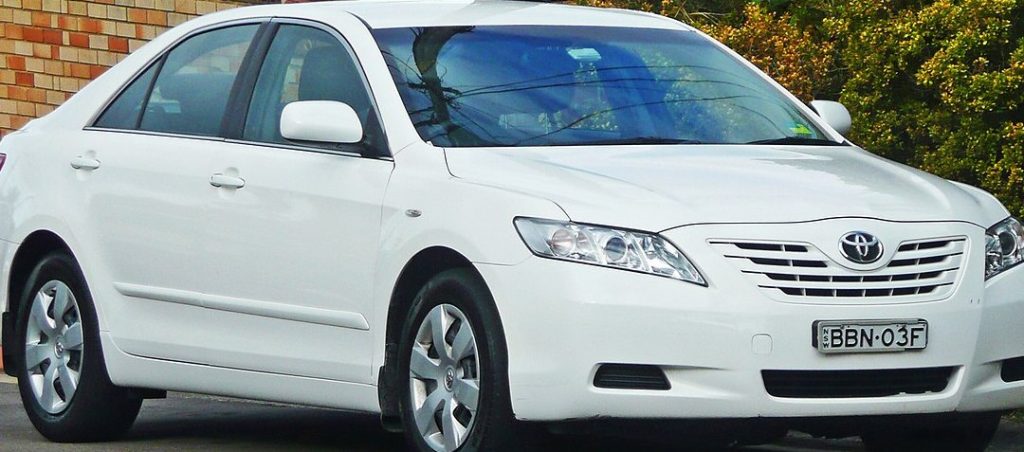
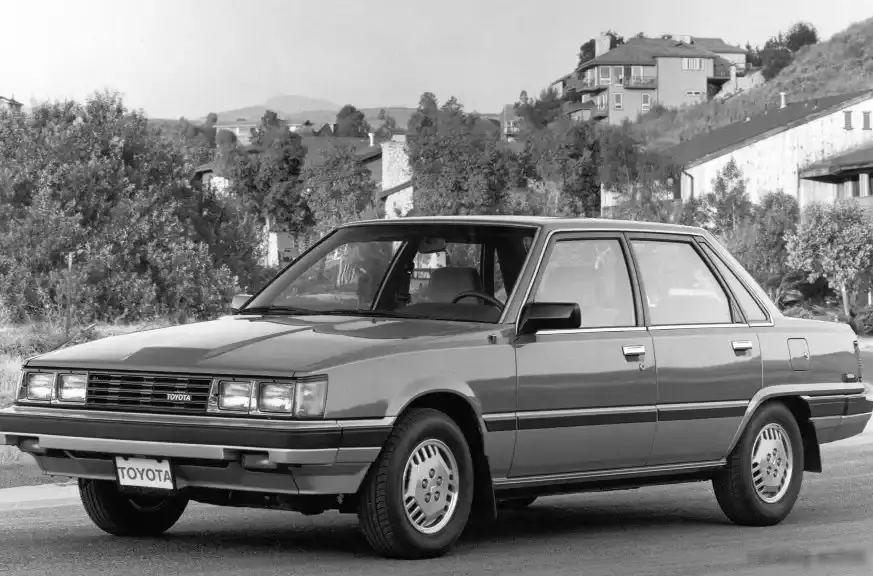
The Toyota Camry V (XV30) 2.4 16V Automatic, produced between 2001 and 2004, represented a significant evolution in Toyota’s mid-size sedan offering. Part of the fifth generation Camry (XV30), this variant occupied a middle ground in the lineup, offering a balance between affordability and features. It was primarily aimed at the North American market, where the Camry had established itself as a dominant force in the family sedan segment. The XV30 generation marked a shift towards a more refined and spacious interior, improved ride quality, and enhanced safety features compared to its predecessor. This specific 2.4-liter, 152 horsepower configuration with an automatic transmission was a popular choice for buyers prioritizing comfort and ease of use over outright performance.
Technical Specifications
| Brand | Toyota |
| Model | Camry |
| Generation | Camry V (XV30) |
| Type (Engine) | 2.4 16V (152 Hp) Automatic |
| Start of production | 2001 |
| End of production | 2004 |
| Powertrain Architecture | Internal Combustion engine |
| Body type | Sedan |
| Seats | 5 |
| Doors | 4 |
| Fuel consumption (urban) | 13.2 l/100 km (17.8 US mpg, 21.4 UK mpg, 7.6 km/l) |
| Fuel consumption (extra urban) | 7.6 l/100 km (30.9 US mpg, 37.2 UK mpg, 13.2 km/l) |
| Fuel consumption (combined) | 9.7 l/100 km (24.2 US mpg, 29.1 UK mpg, 10.3 km/l) |
| CO2 emissions | 233 g/km |
| Fuel Type | Petrol (Gasoline) |
| Acceleration 0 – 100 km/h | 10.5 sec |
| Acceleration 0 – 62 mph | 10.5 sec |
| Acceleration 0 – 60 mph | 10 sec |
| Maximum speed | 200 km/h (124.27 mph) |
| Emission standard | Euro 3 |
| Weight-to-power ratio | 9.3 kg/Hp, 107.4 Hp/tonne |
| Weight-to-torque ratio | 6.5 kg/Nm, 154.1 Nm/tonne |
| Power | 152 Hp @ 5600 rpm |
| Power per litre | 64.4 Hp/l |
| Torque | 218 Nm @ 3800 rpm (160.79 lb.-ft. @ 3800 rpm) |
| Engine layout | Front, Transverse |
| Engine Model/Code | 2AZ-FE |
| Engine displacement | 2362 cm3 (144.14 cu. in.) |
| Number of cylinders | 4 |
| Engine configuration | Inline |
| Cylinder Bore | 88.5 mm (3.48 in.) |
| Piston Stroke | 96 mm (3.78 in.) |
| Compression ratio | 9.6:1 |
| Number of valves per cylinder | 4 |
| Fuel injection system | Multi-port manifold injection |
| Engine aspiration | Naturally aspirated engine |
| Valvetrain | DOHC |
| Engine oil capacity | 3.8 l (4.02 US qt | 3.34 UK qt) |
| Coolant | 6.2 l (6.55 US qt | 5.46 UK qt) |
| Kerb Weight | 1415 kg (3119.54 lbs.) |
| Max. weight | 1935 kg (4265.94 lbs.) |
| Max load | 520 kg (1146.4 lbs.) |
| Trunk (boot) space – minimum | 587 l (20.73 cu. ft.) |
| Fuel tank capacity | 70 l (18.49 US gal | 15.4 UK gal) |
| Max. roof load | 100 kg (220.46 lbs.) |
| Permitted trailer load with brakes (12%) | 1600 kg (3527.4 lbs.) |
| Permitted trailer load without brakes | 500 kg (1102.31 lbs.) |
| Length | 4815 mm (189.57 in.) |
| Width | 1795 mm (70.67 in.) |
| Height | 1500 mm (59.06 in.) |
| Wheelbase | 2720 mm (107.09 in.) |
| Front track | 1550 mm (61.02 in.) |
| Rear (Back) track | 1535 mm (60.43 in.) |
| Minimum turning circle | 10.6 m (34.78 ft.) |
| Drivetrain Architecture | The Internal combustion engine (ICE) drives the front wheels of the vehicle. |
| Drive wheel | Front wheel drive |
| Number of gears and type of gearbox | 4 gears, automatic transmission |
| Front suspension | Independent, type McPherson with coil spring and anti-roll bar |
| Rear suspension | Independent multi-link spring suspension with stabilizer |
| Front brakes | Ventilated discs |
| Rear brakes | Disc |
| Assisting systems | ABS (Anti-lock braking system) |
| Steering type | Steering rack and pinion |
| Power steering | Hydraulic Steering |
| Tires size | 215/60 R16 |
| Wheel rims size | 6.5J x 16 |
Powertrain & Engine Architecture
The heart of this Camry variant is the 2AZ-FE engine, a 2.4-liter inline-four cylinder powerplant. This engine utilizes a double overhead camshaft (DOHC) valvetrain with four valves per cylinder, contributing to its relatively efficient operation. Fuel delivery is managed by a multi-port fuel injection system, providing precise fuel metering for optimal combustion. The 2AZ-FE is known for its durability and relatively simple design, making it a reliable choice for everyday driving. The automatic transmission paired with this engine is a conventional four-speed unit. While not offering the responsiveness of a manual transmission, it prioritized smooth shifting and ease of use, aligning with the target demographic for this trim level. The transmission’s gear ratios were tuned for comfortable cruising and adequate acceleration, rather than sporty performance.
Driving Characteristics
The Camry 2.4 Automatic delivered a comfortable and predictable driving experience. Acceleration from 0-60 mph took around 10 seconds, which was adequate for typical commuting and highway merging, but noticeably slower than the V6-powered models. The automatic transmission, while smooth, could sometimes feel hesitant during quick overtaking maneuvers. The focus was clearly on providing a relaxed and refined ride, with the suspension effectively absorbing bumps and imperfections in the road. Steering was light and precise, making it easy to maneuver in urban environments. Compared to the manual transmission versions of the 2.4L, the automatic offered less driver engagement but greater convenience. The higher-output V6 models provided significantly more power and a sportier driving experience, but at a higher price point.
Equipment & Trim Levels
The 2.4-liter Automatic Camry typically came standard with features such as air conditioning, power windows and locks, a CD player, and cloth upholstery. Higher trim levels, often denoted by designations like “LE” or “XLE”, added features like alloy wheels, a sunroof, upgraded audio systems, and leather upholstery. Optional extras included a navigation system, heated seats, and side airbags. The interior design was functional and spacious, prioritizing comfort and practicality over luxury. The dashboard layout was straightforward and easy to use, with clearly labeled controls.
Chassis & Braking
The XV30 Camry utilized an independent McPherson strut suspension in the front and an independent multi-link suspension in the rear. This setup provided a good balance between ride comfort and handling. The front brakes were ventilated discs, offering good stopping power, while the rear brakes were solid discs. Anti-lock Braking System (ABS) was standard, enhancing safety during emergency braking situations. The chassis was designed to provide a stable and predictable driving experience, with a focus on minimizing body roll and maximizing passenger comfort.
Market Reception & Comparison
The Camry 2.4 Automatic was well-received by consumers and critics alike. It was praised for its reliability, comfortable ride, and spacious interior. Fuel economy was considered average for its class, with combined figures around 24 mpg. Compared to the V6 models, the 2.4L offered a more affordable entry point into the Camry lineup, but at the expense of performance. The 2.4L also proved to be more fuel-efficient than the V6, making it a popular choice for budget-conscious buyers. Compared to competitors like the Honda Accord and Nissan Altima, the Camry 2.4 Automatic offered a compelling combination of value, reliability, and comfort.
Legacy
The 2AZ-FE engine, in general, has proven to be a remarkably durable and reliable powerplant. Camry models equipped with this engine have a reputation for longevity, and many examples are still on the road today with high mileage. The automatic transmission, while not known for being particularly exciting, is also generally reliable. In the used car market, the Camry 2.4 Automatic remains a popular choice due to its affordability, fuel efficiency, and proven track record. Maintenance costs are typically reasonable, and parts are readily available. While not a performance icon, this variant represents a solid and dependable choice for those seeking a practical and reliable family sedan.