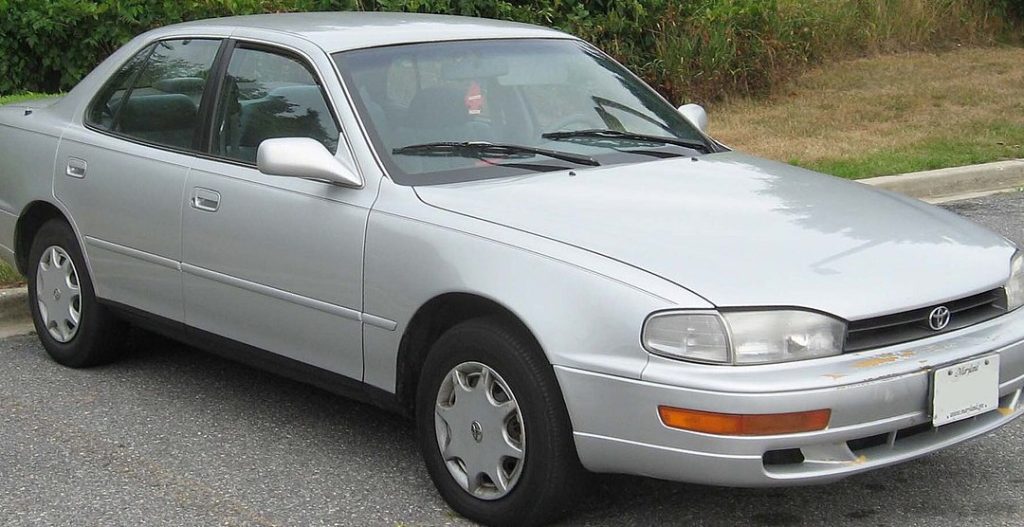
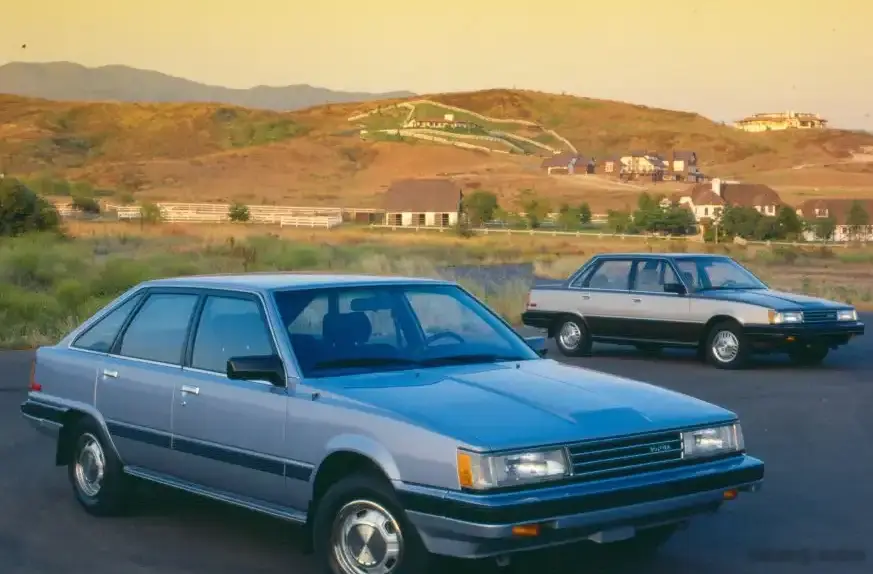
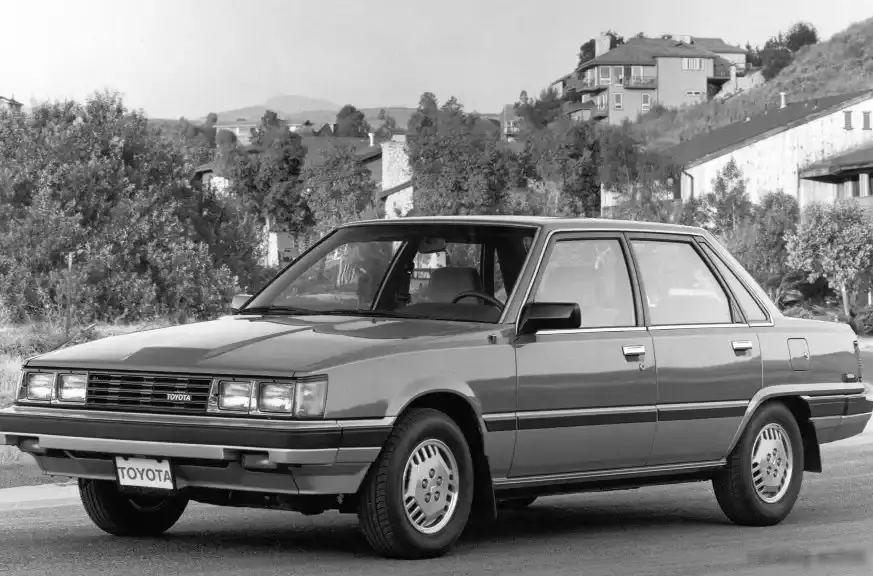
The Toyota Camry V (XV30) 3.0 V6 Automatic, produced between 2001 and 2004, represented a significant step up in performance and refinement for Toyota’s popular mid-size sedan. Part of the fifth generation Camry (XV30 series), this variant occupied the premium position in the lineup, offering a more powerful engine and smoother automatic transmission compared to the base 2.4-liter four-cylinder models. It was primarily marketed towards American consumers seeking a comfortable, reliable, and relatively sporty family sedan. The XV30 generation Camry marked a shift towards a more modern design and increased interior space, solidifying its position as a leading contender in the fiercely competitive US market.
Technical Specifications
| Brand | Toyota |
| Model | Camry |
| Generation | Camry V (XV30) |
| Type (Engine) | 3.0 V6 (186 Hp) Automatic |
| Start of production | 2001 |
| End of production | 2004 |
| Powertrain Architecture | Internal Combustion engine |
| Body type | Sedan |
| Seats | 5 |
| Doors | 4 |
| Fuel consumption (urban) | 15.7 l/100 km (15 US mpg, 18 UK mpg, 6.4 km/l) |
| Fuel consumption (extra urban) | 8.3 l/100 km (28.3 US mpg, 34 UK mpg, 12 km/l) |
| Fuel consumption (combined) | 11 l/100 km (21.4 US mpg, 25.7 UK mpg, 9.1 km/l) |
| CO2 emissions | 263 g/km |
| Fuel Type | Petrol (Gasoline) |
| Acceleration 0 – 100 km/h | 9.1 sec |
| Acceleration 0 – 62 mph | 9.1 sec |
| Acceleration 0 – 60 mph | 8.6 sec |
| Maximum speed | 225 km/h (139.81 mph) |
| Emission standard | Euro 3 |
| Weight-to-power ratio | 8.1 kg/Hp, 124 Hp/tonne |
| Weight-to-torque ratio | 5.5 kg/Nm, 182 Nm/tonne |
| Power | 186 Hp @ 5300 rpm |
| Power per litre | 62.1 Hp/l |
| Torque | 273 Nm @ 4300 rpm (201.35 lb.-ft. @ 4300 rpm) |
| Engine layout | Front, Transverse |
| Engine Model/Code | 1MZ-FE |
| Engine displacement | 2995 cm3 (182.77 cu. in.) |
| Number of cylinders | 6 |
| Engine configuration | V-engine |
| Cylinder Bore | 87.5 mm (3.44 in.) |
| Piston Stroke | 83 mm (3.27 in.) |
| Compression ratio | 10.5:1 |
| Number of valves per cylinder | 4 |
| Fuel injection system | Multi-port manifold injection |
| Engine aspiration | Naturally aspirated engine |
| Valvetrain | DOHC |
| Engine oil capacity | 4.7 l (4.97 US qt | 4.14 UK qt) |
| Coolant | 9.2 l (9.72 US qt | 8.09 UK qt) |
| Kerb Weight | 1500 kg (3306.93 lbs.) |
| Max. weight | 2015 kg (4442.31 lbs.) |
| Max load | 515 kg (1135.38 lbs.) |
| Trunk (boot) space – minimum | 587 l (20.73 cu. ft.) |
| Fuel tank capacity | 70 l (18.49 US gal | 15.4 UK gal) |
| Max. roof load | 100 kg (220.46 lbs.) |
| Permitted trailer load with brakes (12%) | 1600 kg (3527.4 lbs.) |
| Permitted trailer load without brakes | 500 kg (1102.31 lbs.) |
| Length | 4815 mm (189.57 in.) |
| Width | 1795 mm (70.67 in.) |
| Height | 1500 mm (59.06 in.) |
| Wheelbase | 2720 mm (107.09 in.) |
| Front track | 1550 mm (61.02 in.) |
| Rear (Back) track | 1535 mm (60.43 in.) |
| Minimum turning circle | 10.6 m (34.78 ft.) |
| Drivetrain Architecture | The Internal combustion engine (ICE) drives the front wheels of the vehicle. |
| Drive wheel | Front wheel drive |
| Number of gears and type of gearbox | 4 gears, automatic transmission |
| Front suspension | Independent, type McPherson with coil spring and anti-roll bar |
| Rear suspension | Independent multi-link spring suspension with stabilizer |
| Front brakes | Ventilated discs |
| Rear brakes | Disc |
| Assisting systems | ABS (Anti-lock braking system) |
| Steering type | Steering rack and pinion |
| Power steering | Hydraulic Steering |
| Tires size | 215/60 R16 |
| Wheel rims size | 6.5J x 16 |
Powertrain & Engine Architecture
The heart of the Camry V6 was the 1MZ-FE engine, a 3.0-liter, naturally aspirated V6. This engine featured a 60-degree V-angle, contributing to its smooth operation. It employed multi-port fuel injection and a double overhead camshaft (DOHC) valvetrain with four valves per cylinder. The 1MZ-FE was known for its reliability and relatively simple design. The automatic transmission paired with this engine was a four-speed unit, designed for smooth and comfortable shifts rather than outright performance. This transmission was electronically controlled, adapting to driving conditions for optimal efficiency. The engine’s architecture prioritized refinement and durability over cutting-edge performance metrics.
Driving Characteristics
The 3.0 V6 Automatic Camry offered a noticeable improvement in acceleration and overall driving experience compared to the four-cylinder models. While not a sports sedan, the 186 horsepower and 273 lb-ft of torque provided ample power for highway merging and passing maneuvers. The four-speed automatic transmission, while not as responsive as a manual or more modern automatic, delivered smooth gear changes. The gear ratios were tuned for comfortable cruising, with a focus on minimizing engine noise and maximizing fuel efficiency at highway speeds. Compared to the manual transmission versions, the automatic offered less driver engagement but greater convenience. The V6 also felt more composed and stable during cornering due to its slightly heavier engine and improved weight distribution.
Equipment & Trim Levels
The 3.0 V6 Automatic Camry typically came well-equipped, positioning it as the premium trim level. Standard features often included air conditioning, power windows and locks, cruise control, a CD player, and alloy wheels. Higher-end options included a sunroof, leather upholstery, upgraded audio systems, and automatic climate control. Interior upholstery was typically cloth, with leather available as an upgrade. The dashboard featured a straightforward layout with easy-to-read gauges. The overall interior design prioritized comfort and practicality over sporty aesthetics.
Chassis & Braking
The Camry V6 utilized an independent suspension system, with McPherson struts at the front and a multi-link setup at the rear. This suspension configuration provided a comfortable ride quality while maintaining reasonable handling characteristics. The front brakes were ventilated discs, offering good stopping power, while the rear brakes were solid discs. Anti-lock Braking System (ABS) was standard, enhancing safety and control during emergency braking situations. Stabilizer bars were fitted to both the front and rear suspension to reduce body roll during cornering.
Market Reception & Comparison
The Camry V6 Automatic was generally well-received by automotive critics and consumers alike. It was praised for its smooth ride, comfortable interior, and reliable powertrain. However, some critics noted that the four-speed automatic transmission felt dated compared to newer transmissions with more gears. Fuel economy was considered average for its class. Compared to the base 2.4-liter Camry, the V6 offered a significant performance upgrade but came at a higher price point. It competed with other mid-size sedans such as the Honda Accord V6 and the Nissan Maxima, offering a similar blend of comfort, reliability, and performance.
Legacy
The 1MZ-FE engine and the four-speed automatic transmission proved to be remarkably durable and reliable. Many Camry V6 models from this era continue to be on the road today, a testament to Toyota’s engineering prowess. While not particularly sought after by enthusiasts, these Camrys hold a reputation for being dependable and affordable transportation. In the used car market, they represent a good value for buyers seeking a comfortable and reliable mid-size sedan. The XV30 Camry V6 Automatic remains a popular choice for those prioritizing practicality and longevity over sporty driving dynamics.