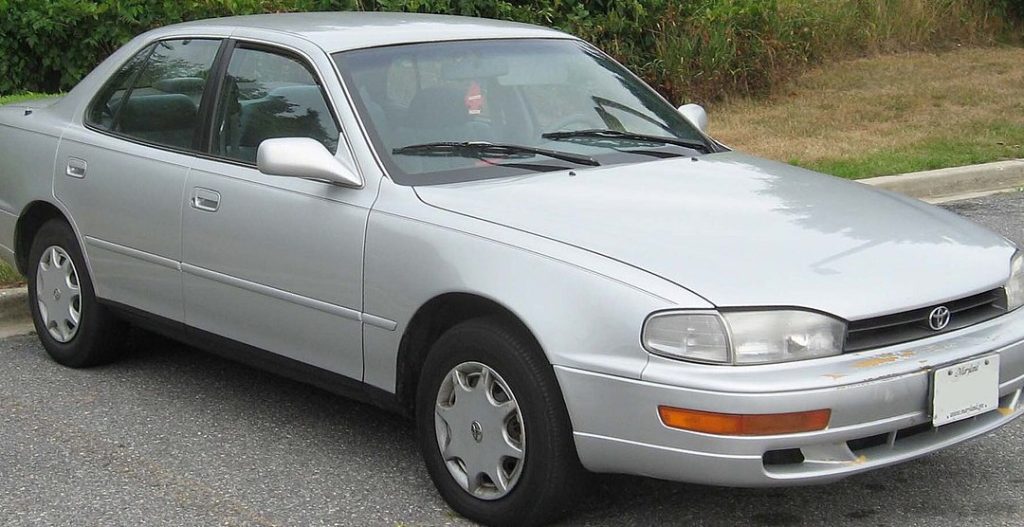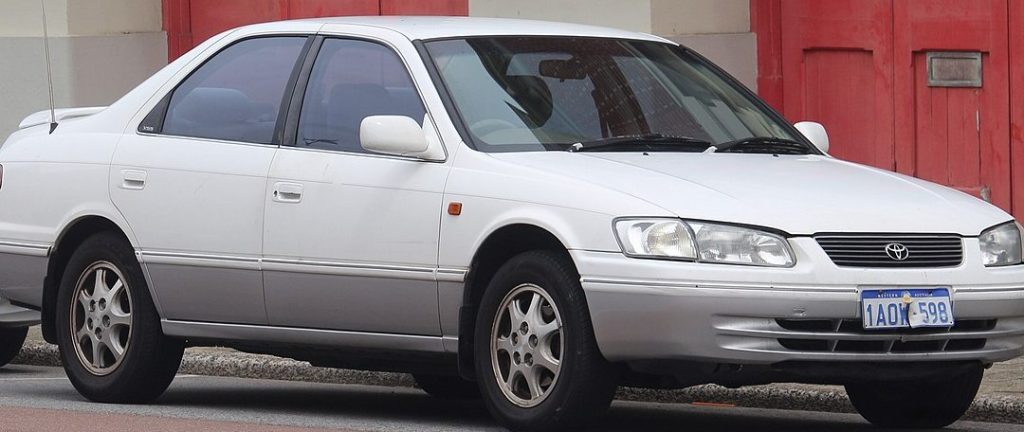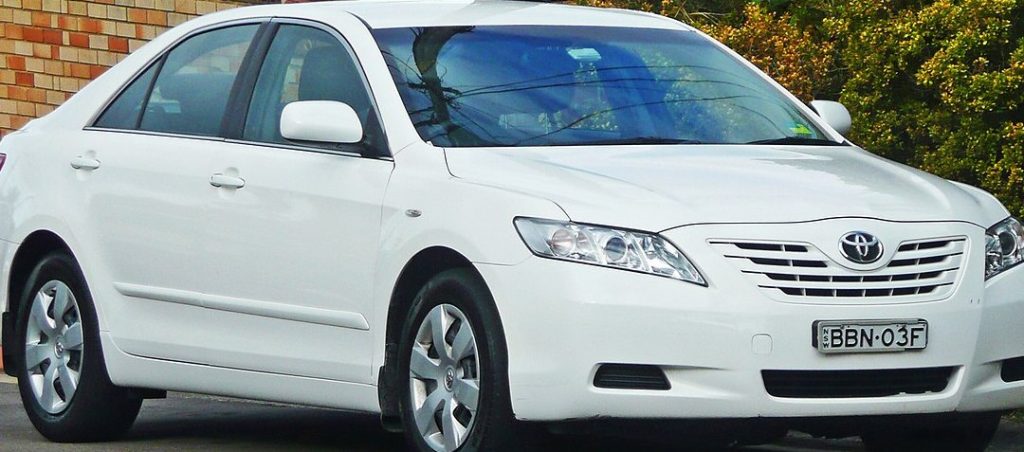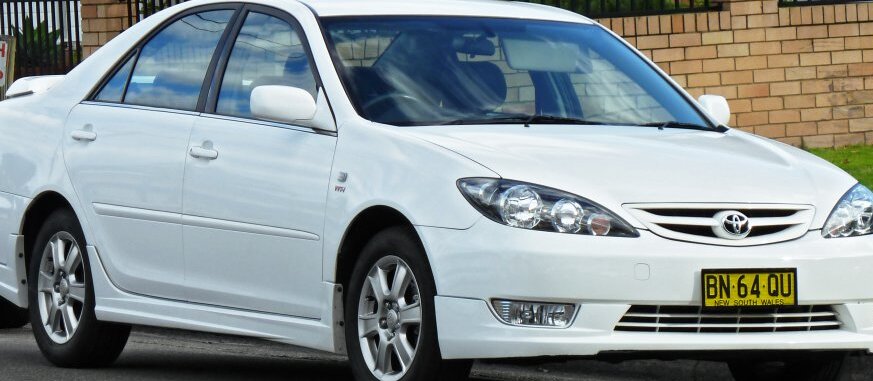
The Toyota Camry V (XV30 series, specifically the 2005 facelift) equipped with the 2.4-liter 16V engine producing 160 horsepower and paired with a 5-speed automatic transmission represents a significant iteration in the Camry’s ongoing success within the mid-size sedan segment. Introduced as part of the fifth-generation Camry, the XV30, produced from 2001-2006, aimed to elevate the Camry’s reputation for reliability and practicality with improved refinement and a more contemporary design. The 2005 facelift brought subtle styling updates and continued the focus on providing a comfortable and dependable vehicle for the North American market, where the Camry consistently ranked among the best-selling cars.
Technical Specifications
| Brand | Toyota |
| Model | Camry |
| Generation | Camry V (XV30, facelift 2005) |
| Type (Engine) | 2.4 16V (160 Hp) Automatic |
| Start of production | 2005 |
| End of production | 2005 |
| Powertrain Architecture | Internal Combustion engine |
| Body type | Sedan |
| Seats | 5 |
| Doors | 4 |
| Fuel consumption (urban) | 9.8 l/100 km (24 US mpg) |
| Fuel consumption (extra urban) | 6.9 l/100 km (34.1 US mpg) |
| Fuel Type | Petrol (Gasoline) |
| Weight-to-power ratio | 9 kg/Hp |
| Weight-to-torque ratio | 6.5 kg/Nm |
| Power | 160 Hp @ 5700 rpm |
| Power per litre | 67.7 Hp/l |
| Torque | 221 Nm @ 4000 rpm (163 lb.-ft. @ 4000 rpm) |
| Engine layout | Front, Transverse |
| Engine Model/Code | 2AZ-FE |
| Engine displacement | 2362 cm3 (144.14 cu. in.) |
| Number of cylinders | 4 |
| Engine configuration | Inline |
| Cylinder Bore | 88.5 mm (3.48 in.) |
| Piston Stroke | 96 mm (3.78 in.) |
| Compression ratio | 9.6:1 |
| Number of valves per cylinder | 4 |
| Fuel injection system | Multi-port manifold injection |
| Engine aspiration | Naturally aspirated engine |
| Valvetrain | DOHC, VVT-i |
| Engine oil capacity | 3.8 l (4.02 US qt | 3.34 UK qt) |
| Coolant capacity | 6.2 l (6.55 US qt | 5.46 UK qt) |
| Kerb Weight | 1435 kg (3163.63 lbs.) |
| Trunk (boot) space | 472 l (16.67 cu. ft.) |
| Fuel tank capacity | 70 l (18.49 US gal | 15.4 UK gal) |
| Length | 4805 mm (189.17 in.) |
| Width | 1795 mm (70.67 in.) |
| Height | 1490 mm (58.66 in.) |
| Wheelbase | 2720 mm (107.09 in.) |
| Front track | 1544 mm (60.79 in.) |
| Rear track | 1534 mm (60.39 in.) |
| Ride height (ground clearance) | 140 mm (5.51 in.) |
| Drag coefficient (Cd) | 0.28 |
| Minimum turning circle | 10.6 m (34.78 ft.) |
| Drivetrain Architecture | Front wheel drive |
| Number of gears | 5 |
| Gearbox type | Automatic transmission ECT-i |
| Front suspension | Independent, type McPherson with coil spring and anti-roll bar |
| Rear suspension | Independent multi-link spring suspension with stabilizer |
| Front brakes | Ventilated discs |
| Rear brakes | Drum |
| Assisting systems | ABS (Anti-lock braking system) |
| Steering type | Steering rack and pinion |
| Power steering | Hydraulic Steering |
| Tires size | 205/65 R15 |
| Wheel rims size | 6.5J x 15 |
INTRODUCTION
The 2005 Toyota Camry 2.4L with the automatic transmission was positioned as the mainstream offering within the XV30 lineup. It wasn’t the base model, nor was it the more luxurious or performance-oriented variant. Instead, it aimed to strike a balance between affordability, fuel efficiency, and a comfortable driving experience. This trim level was intended for buyers prioritizing practicality and Toyota’s renowned reliability over sporty handling or premium features. It served as the volume seller for Toyota, appealing to a broad demographic including families, commuters, and those seeking a dependable daily driver.
Powertrain & Engine Architecture
At the heart of this Camry variant lies the 2AZ-FE engine, a 2.4-liter inline-four cylinder powerplant. This engine utilizes a cast iron block with an aluminum cylinder head, a common configuration for balancing durability and weight. The 2AZ-FE features Toyota’s Variable Valve Timing-intelligent (VVT-i) system, which optimizes valve timing based on engine speed and load, improving both fuel efficiency and power output. Fuel delivery is managed by a multi-port fuel injection system. The engine produces 160 horsepower at 5700 rpm and 221 Nm (163 lb-ft) of torque at 4000 rpm. Paired with this engine is a 5-speed automatic transmission, designated ECT-i (Electronically Controlled Transmission – intelligent). This transmission offers smooth shifts and contributes to the Camry’s overall ease of driving. The ECT-i transmission also includes overdrive and manual shift modes for added driver control.
Driving Characteristics
The 2.4L automatic Camry delivers a comfortable and predictable driving experience. Acceleration is adequate for everyday driving situations, but it’s not particularly sporty. The 5-speed automatic transmission is well-tuned for smooth shifts and generally selects the appropriate gear for the driving conditions. Compared to the available V6 engine, the 2.4L offers significantly less power, resulting in slower acceleration and a less engaging driving experience. However, it provides better fuel economy. Compared to the manual transmission versions of the 2.4L, the automatic sacrifices some responsiveness and driver involvement, but gains in convenience. The gear ratios are optimized for fuel efficiency and cruising comfort, rather than outright performance. The overall feel is one of refinement and ease of use, prioritizing a relaxed driving experience over spirited performance.
Equipment & Trim Levels
The 2005 Camry 2.4L automatic typically came standard with features such as air conditioning, power windows and locks, a CD player, and cloth upholstery. Safety features included dual front airbags, side airbags, and ABS brakes. Optional extras included a sunroof, upgraded audio system, alloy wheels, and keyless entry. The interior design was functional and straightforward, with a focus on ergonomics and ease of use. The dashboard layout was clean and uncluttered, with clearly labeled controls. Higher trim levels offered leather upholstery, woodgrain trim, and additional convenience features, but the 2.4L automatic represented a well-equipped base for comfortable transportation.
Chassis & Braking
The Camry XV30 utilizes an independent McPherson strut suspension in the front and an independent multi-link suspension in the rear. This suspension setup provides a comfortable ride and decent handling characteristics. The front suspension incorporates a stabilizer bar to reduce body roll during cornering. The rear suspension also features a stabilizer bar. Braking duties are handled by ventilated discs in the front and drum brakes in the rear. ABS (Anti-lock Braking System) is standard, enhancing braking performance and stability, especially in adverse conditions. The chassis was designed to prioritize ride comfort and noise isolation, contributing to the Camry’s reputation as a quiet and refined vehicle.
Market Reception & Comparison
The 2005 Toyota Camry 2.4L automatic was generally well-received by critics and consumers alike. It was praised for its reliability, fuel efficiency, and comfortable ride. However, some reviewers noted that the engine lacked the power of the available V6 and that the handling was not particularly sporty. Compared to other mid-size sedans of the time, such as the Honda Accord and Nissan Altima, the Camry offered a similar level of refinement and reliability. The Camry’s fuel economy was competitive, and its maintenance costs were generally low. The 2.4L automatic offered a compelling value proposition for buyers seeking a dependable and practical sedan.
Legacy
The 2AZ-FE engine and the 5-speed automatic transmission used in the 2005 Camry 2.4L have proven to be remarkably durable and reliable. These powertrains are known for their longevity and relatively low maintenance requirements. In the used car market today, these Camrys continue to be sought after for their dependability and affordability. While they may not offer the latest technology or the most exciting driving experience, they remain a practical and sensible choice for buyers seeking a reliable and fuel-efficient vehicle. The XV30 Camry, and particularly the 2.4L automatic variant, solidified Toyota’s reputation for building long-lasting and dependable automobiles.