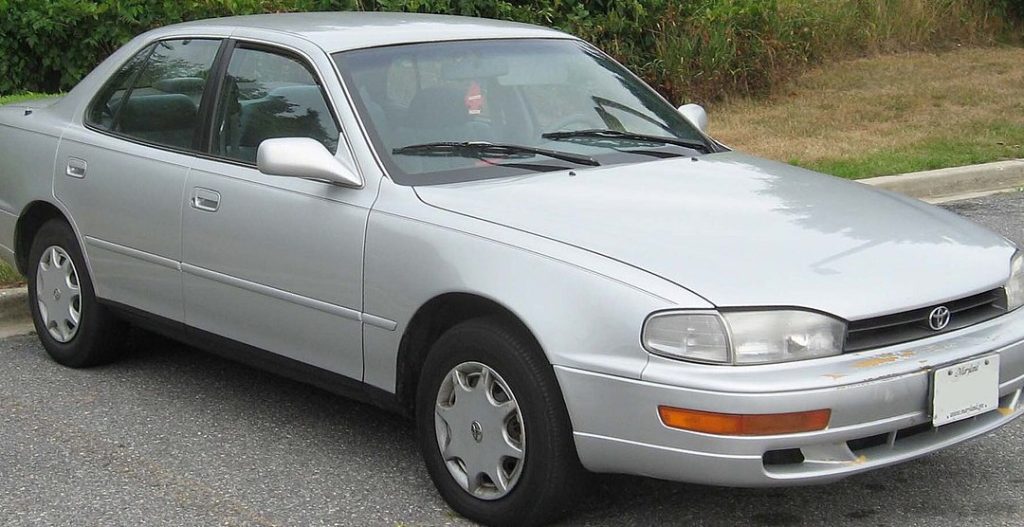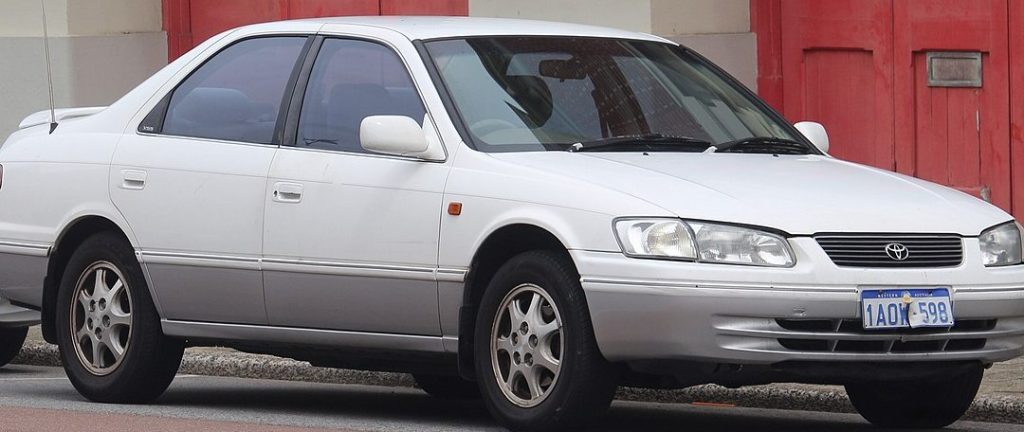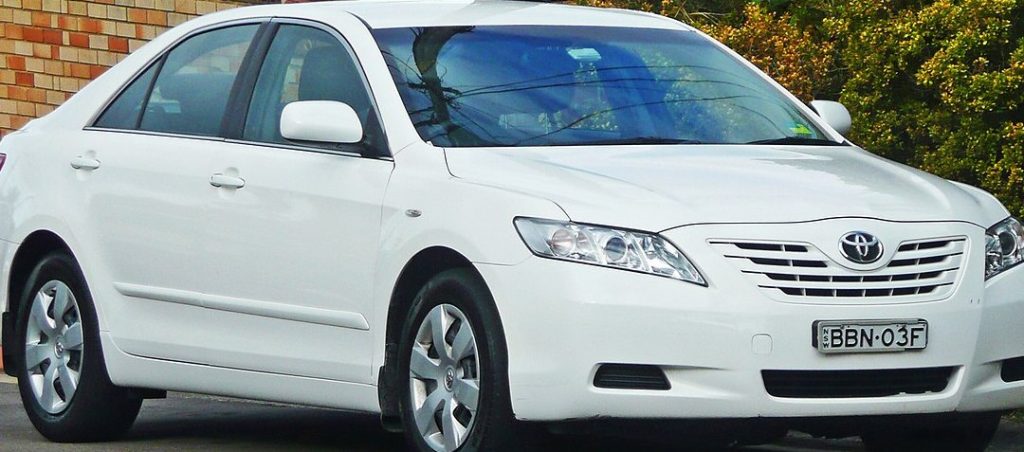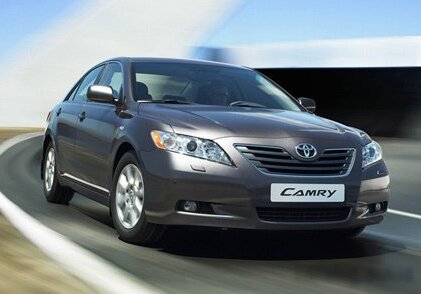
The Toyota Camry VI (XV40) 2.4 Hybrid, produced from 2006 to 2009, represented a significant step forward for Toyota in the mid-size sedan segment, particularly in the burgeoning hybrid market. This variant, utilizing Toyota’s Hybrid Synergy Drive, combined a 2.4-liter inline-four gasoline engine with an electric motor, offering a blend of fuel efficiency and respectable performance. Positioned as a mid-range offering within the XV40 Camry lineup, it aimed to attract buyers seeking an environmentally conscious vehicle without sacrificing the comfort and reliability the Camry was known for. The XV40 generation Camry was specifically designed for the North American market, with a focus on increased interior space and a more refined driving experience compared to its predecessors.
Technical Specifications
| Brand | Toyota |
| Model | Camry |
| Generation | Camry VI (XV40) |
| Type (Engine) | 2.4 (187 Hp) Hybrid e-CVT |
| Start of production | 2006 |
| End of production | 2009 |
| Powertrain Architecture | FHEV (Full Hybrid Electric Vehicle) |
| Body type | Sedan |
| Seats | 5 |
| Doors | 4 |
| Fuel consumption (urban) | 7.1 l/100 km (33.1 US mpg) |
| Fuel consumption (extra urban) | 6.9 l/100 km (34.1 US mpg) |
| Fuel consumption (combined) | 6.9 l/100 km (34.1 US mpg) |
| Fuel Type | Petrol (Gasoline) |
| Emission standard | AT-PZEV |
| Weight-to-power ratio | 8.9 kg/Hp |
| Weight-to-torque ratio | 8.9 kg/Nm |
| Battery voltage | 244.8 V |
| Battery technology | Nickel-metal hydride (NiMH) |
| Battery location | Behind the back wall of the passenger cabin |
| Electric motor power | 143 Hp @ 4500 rpm |
| Electric motor Torque | 270 Nm @ 0-1500 rpm (199.14 lb.-ft. @ 0-1500 rpm) |
| Electric motor location | Integrated into the transmission |
| Electric motor type | Synchronous |
| System power | 187 Hp |
| Internal combustion engine power | 147 Hp @ 6000 rpm |
| Power per litre | 62.2 Hp/l |
| Engine Torque | 187 Nm @ 4400 rpm (137.92 lb.-ft. @ 4400 rpm) |
| Engine layout | Front, Transverse |
| Engine Model/Code | 2AZ-FXE |
| Engine displacement | 2362 cm3 (144.14 cu. in.) |
| Number of cylinders | 4 |
| Engine configuration | Inline |
| Cylinder Bore | 88.3 mm (3.48 in.) |
| Piston Stroke | 96.5 mm (3.8 in.) |
| Compression ratio | 12.5:1 |
| Number of valves per cylinder | 4 |
| Fuel injection system | Multi-port manifold injection |
| Engine aspiration | Naturally aspirated engine |
| Valvetrain | DOHC, Dual VVT-i |
| Engine oil capacity | 4.3 l (4.54 US qt | 3.78 UK qt) |
| Coolant capacity | 6.2 l (6.55 US qt | 5.46 UK qt) |
| Kerb Weight | 1669 kg (3679.52 lbs.) |
| Max. weight | 2116 kg (4664.98 lbs.) |
| Max load | 447 kg (985.47 lbs.) |
| Trunk (boot) space – minimum | 300 l (10.59 cu. ft.) |
| Fuel tank capacity | 65 l (17.17 US gal | 14.3 UK gal) |
| Length | 4805 mm (189.17 in.) |
| Width | 1820 mm (71.65 in.) |
| Height | 1460 mm (57.48 in.) |
| Wheelbase | 2776 mm (109.29 in.) |
| Front track | 1575 mm (62.01 in.) |
| Rear (Back) track | 1565 mm (61.61 in.) |
| Minimum turning circle | 11.0 m (36.09 ft.) |
| Drivetrain Architecture | FHEV (Full Hybrid Electric Vehicle) |
| Drive wheel | Front wheel drive |
| Number of gears and type of gearbox | automatic transmission e-CVT |
| Front suspension | Independent, type McPherson with coil spring and anti-roll bar |
| Rear suspension | Independent multi-link spring suspension with stabilizer |
| Front brakes | Ventilated discs, 294 mm |
| Rear brakes | Disc, 279 mm |
| Assisting systems | ABS (Anti-lock braking system) |
| Steering type | Steering rack and pinion |
| Power steering | Electric Steering |
| Tires size | 215/60 R16; 215/55 R17 |
| Wheel rims size | 6.5J x 16 |
Powertrain & Engine Architecture
The heart of the XV40 2.4 Hybrid is the 2AZ-FXE engine, a 2.4-liter inline-four cylinder gasoline engine. This engine utilizes a multi-port fuel injection system and Toyota’s Dual VVT-i (Variable Valve Timing-intelligent) technology for both intake and exhaust valves, optimizing performance and fuel efficiency. The engine produces 147 horsepower at 6000 rpm and 137.92 lb-ft of torque at 4400 rpm. Crucially, this engine is Atkinson-cycle, which prioritizes efficiency over outright power. The electric motor, a synchronous type, adds another 143 horsepower at 4500 rpm and 199.14 lb-ft of torque between 0-1500 rpm. The combined system output is 187 horsepower. The e-CVT (electronically controlled Continuously Variable Transmission) is a key component of Toyota’s Hybrid Synergy Drive. Unlike traditional CVTs with belts, the e-CVT uses a planetary gearset to seamlessly blend power from the gasoline engine and electric motor, providing a smooth and efficient driving experience. The NiMH battery pack, located behind the rear seats, provides energy storage for the electric motor.
Driving Characteristics
The 2.4 Hybrid Camry offers a noticeably different driving experience compared to its conventionally powered siblings. The e-CVT provides smooth, linear acceleration, although it lacks the responsiveness of a traditional automatic transmission. The electric motor provides instant torque, particularly at lower speeds, making city driving effortless. While the combined 187 horsepower isn’t particularly sporty, it’s adequate for most driving situations. Compared to the 2.4-liter four-cylinder Camry without hybrid assistance, the hybrid version offers improved fuel economy and quieter operation. It doesn’t have the punch of the V6 models, but it prioritizes efficiency. The gear ratios are optimized for fuel economy, meaning highway passing maneuvers require a bit more planning.
Equipment & Trim Levels
The 2.4 Hybrid Camry typically came well-equipped, reflecting its position as a mid-range offering. Standard features generally included air conditioning, power windows and locks, keyless entry, a CD player with MP3 compatibility, and cruise control. Higher trim levels added features like leather upholstery, a sunroof, upgraded audio systems, and automatic climate control. Safety features such as ABS, front and side airbags were standard. Optional extras included navigation systems and premium wheel designs.
Chassis & Braking
The XV40 Camry utilizes an independent McPherson strut suspension in the front and an independent multi-link suspension in the rear, providing a comfortable and controlled ride. Stabilizer bars are included on both axles to reduce body roll. Braking duties are handled by ventilated discs in the front and solid discs in the rear. The ABS (Anti-lock Braking System) is standard, enhancing safety during emergency braking situations. The suspension tuning is geared towards comfort rather than sporty handling.
Market Reception & Comparison
The Camry Hybrid was generally well-received by critics and consumers alike. It was praised for its fuel efficiency, smooth ride, and Toyota’s reputation for reliability. Compared to the standard 2.4-liter Camry, the hybrid version offered significantly better fuel economy, making it an attractive option for environmentally conscious buyers. However, some critics noted the lack of sporty driving dynamics and the higher initial cost compared to the non-hybrid models. Compared to other hybrids on the market at the time, the Camry Hybrid offered a compelling combination of price, practicality, and fuel efficiency.
Legacy
The Toyota Camry XV40 2.4 Hybrid powertrain has proven to be remarkably reliable over the long term. The Hybrid Synergy Drive system is known for its durability, and many examples have exceeded 200,000 miles with minimal issues. The NiMH battery pack, while eventually requiring replacement, typically lasts for 8-10 years or 100,000-150,000 miles. On the used car market today, these Camrys are sought after for their fuel efficiency and reputation for dependability, commanding a reasonable premium over their non-hybrid counterparts. They represent a significant milestone in Toyota’s hybrid technology development and helped to popularize hybrid vehicles in the mainstream market.