Technical Specifications
| Brand | Toyota |
| Model | Camry |
| Generation | Camry VI (XV40) |
| Type (Engine) | 2.4i 16V (158 Hp) |
| Start of production | 2006 |
| End of production | 2009 |
| Powertrain Architecture | Internal Combustion engine |
| Body type | Sedan |
| Seats | 5 |
| Doors | 4 |
| Fuel consumption (urban) | 9.6 l/100 km (24.5 US mpg) |
| Fuel consumption (extra urban) | 6.4 l/100 km (36.8 US mpg) |
| Fuel Type | Petrol (Gasoline) |
| Weight-to-power ratio | 9.4 kg/Hp |
| Weight-to-torque ratio | 6.7 kg/Nm |
| Power | 158 Hp @ 6000 rpm |
| Power per litre | 66.9 Hp/l |
| Torque | 224 Nm @ 4000 rpm (165.21 lb.-ft. @ 4000 rpm) |
| Engine layout | Front, Transverse |
| Engine Model/Code | 2AZ-FE |
| Engine displacement | 2362 cm3 (144.14 cu. in.) |
| Number of cylinders | 4 |
| Engine configuration | Inline |
| Cylinder Bore | 88.5 mm (3.48 in.) |
| Piston Stroke | 96 mm (3.78 in.) |
| Compression ratio | 9.8:1 |
| Number of valves per cylinder | 4 |
| Fuel injection system | Multi-port manifold injection |
| Engine aspiration | Naturally aspirated engine |
| Valvetrain | DOHC |
| Engine oil capacity | 4.3 l (4.54 US qt | 3.78 UK qt) |
| Coolant capacity | 6.2 l (6.55 US qt | 5.46 UK qt) |
| Kerb Weight | 1490 kg (3284.89 lbs.) |
| Max. weight | 1946 kg (4290.2 lbs.) |
| Max load | 456 kg (1005.31 lbs.) |
| Trunk (boot) space – minimum | 425 l (15.01 cu. ft.) |
| Fuel tank capacity | 70 l (18.49 US gal | 15.4 UK gal) |
| Length | 4805 mm (189.17 in.) |
| Width | 1820 mm (71.65 in.) |
| Height | 1460 mm (57.48 in.) |
| Wheelbase | 2775 mm (109.25 in.) |
| Front track | 1575 mm (62.01 in.) |
| Rear track | 1565 mm (61.61 in.) |
| Minimum turning circle | 11 m (36.09 ft.) |
| Drivetrain Architecture | Front wheel drive |
| Number of gears | 5 |
| Gearbox type | Manual transmission |
| Front suspension | Independent, McPherson with coil spring and anti-roll bar |
| Rear suspension | Independent multi-link with stabilizer |
| Front brakes | Ventilated discs |
| Rear brakes | Disc |
| Assisting systems | ABS (Anti-lock braking system) |
| Steering type | Steering rack and pinion |
| Power steering | Hydraulic |
| Tires size | 215/60 R16; 215/55 R17 |
| Wheel rims size | 16; 17 |
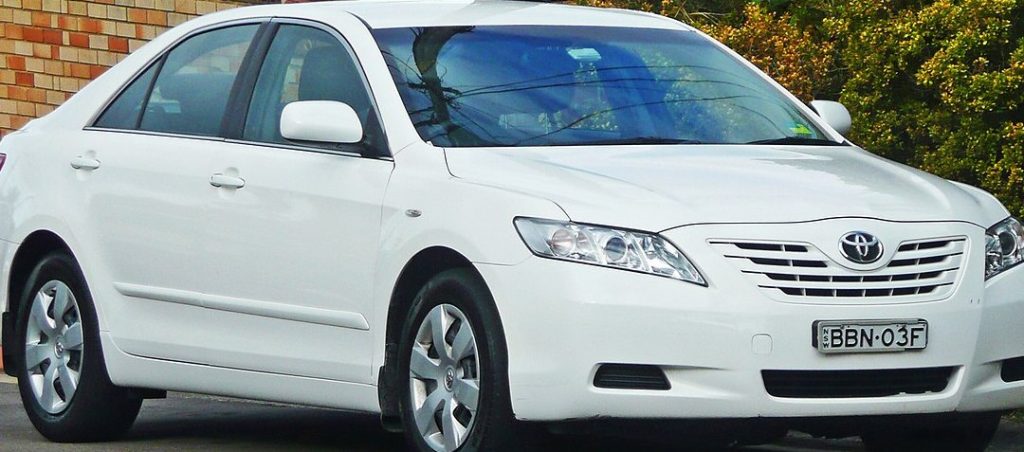
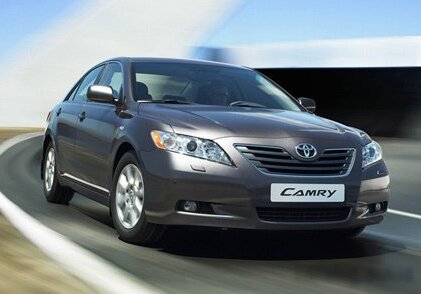
The Toyota Camry XV40 2.4i 16V, manufactured from 2006 to 2009, was a cornerstone of Toyota’s North American and global sales strategy. Built on the XV40 platform, this generation Camry aimed to address criticisms of previous models by offering a more spacious interior, improved ride quality, and a more contemporary design. The 2.4-liter engine option provided a compelling alternative to both the base 2.0L engine and the more expensive 3.5L V6, appealing to a broad range of customers prioritizing fuel economy and everyday usability. It was a key player in a highly competitive segment, facing rivals like the Honda Accord, Nissan Altima, and Ford Fusion.
Powertrain & Engine Architecture
At the heart of the 2.4i model lies the 2AZ-FE inline-four cylinder engine. This 2.4-liter powerplant utilizes a cast iron block with an aluminum cylinder head, a common configuration for Toyota engines of this era. The engine employs multi-port fuel injection, delivering fuel directly into the intake ports, and a double overhead camshaft (DOHC) valvetrain with four valves per cylinder. This configuration optimizes airflow for improved performance and efficiency. The 2AZ-FE is known for its robust construction and reliability. The 5-speed manual transmission paired with this engine offered precise shifts and contributed to the car’s relatively engaging driving experience. The engine’s timing chain, rather than a belt, further enhanced its longevity and reduced maintenance requirements.
Driving Characteristics
The Camry 2.4i with the 5-speed manual transmission provided adequate, though not exhilarating, performance. With 158 horsepower and 165 lb-ft of torque, acceleration was sufficient for everyday driving situations, including highway merging and passing maneuvers. The manual gearbox allowed drivers to take greater control over the engine’s powerband, extracting the most from the available horsepower. Compared to the V6 models, the 2.4i felt less powerful, but it offered a more balanced driving experience, with less front-end weight and a more predictable handling characteristic. The gear ratios were tuned for fuel efficiency, meaning the engine could feel strained at higher RPMs. The 2.4i was generally considered more enjoyable to drive than the automatic transmission equipped versions, offering a more connected feel.
Equipment & Trim Levels
The 2.4i trim level typically included standard features such as air conditioning, power windows and locks, a CD player with auxiliary input, and basic cloth upholstery. Higher sub-trims within the 2.4i range often added features like keyless entry, cruise control, and upgraded audio systems. Optional extras included a sunroof, leather upholstery, and a navigation system. Safety features, such as anti-lock brakes (ABS) and front airbags, were standard across the XV40 Camry range. The interior design was functional and well-built, though it lacked the premium feel of some competitors. The dashboard layout was straightforward and easy to use, prioritizing practicality over stylistic flair.
Chassis & Braking
The Camry XV40 utilized an independent McPherson strut suspension in the front and an independent multi-link suspension in the rear. This setup provided a comfortable ride quality, absorbing bumps and irregularities in the road surface effectively. The 2.4i models typically featured ventilated disc brakes in the front and solid disc brakes in the rear, providing adequate stopping power for everyday driving. The hydraulic power steering offered a light and responsive feel, making maneuvering in tight spaces easy. Stabilizer bars were included both front and rear to reduce body roll during cornering, enhancing handling stability. The chassis was designed to prioritize comfort and refinement over sporty handling, resulting in a predictable and stable driving experience.
Market Reception & Comparison
The Camry 2.4i was generally well-received by automotive critics, who praised its reliability, fuel efficiency, and comfortable ride. However, some reviewers noted that the engine lacked the power and refinement of its V6 counterpart. Compared to the 3.5L V6 models, the 2.4i offered significantly better fuel economy, achieving around 24 mpg in the city and 36 mpg on the highway. The 2.4i also had a lower purchase price, making it a more accessible option for budget-conscious buyers. Against competitors like the Honda Accord and Nissan Altima, the Camry 2.4i held its own, offering a similar level of features and performance at a competitive price point.
Legacy
The Toyota Camry XV40 2.4i has proven to be a remarkably durable and reliable vehicle. The 2AZ-FE engine is known for its longevity, and many examples are still on the road today with high mileage. The car’s simple design and readily available parts contribute to its relatively low maintenance costs. In the used car market, the XV40 Camry 2.4i remains a popular choice for buyers seeking a dependable and affordable mid-size sedan. Its reputation for reliability and fuel efficiency continues to make it a desirable option, even after many years of service. While not a performance icon, the 2.4i variant cemented the Camry’s position as a benchmark for practicality and dependability in the automotive landscape.