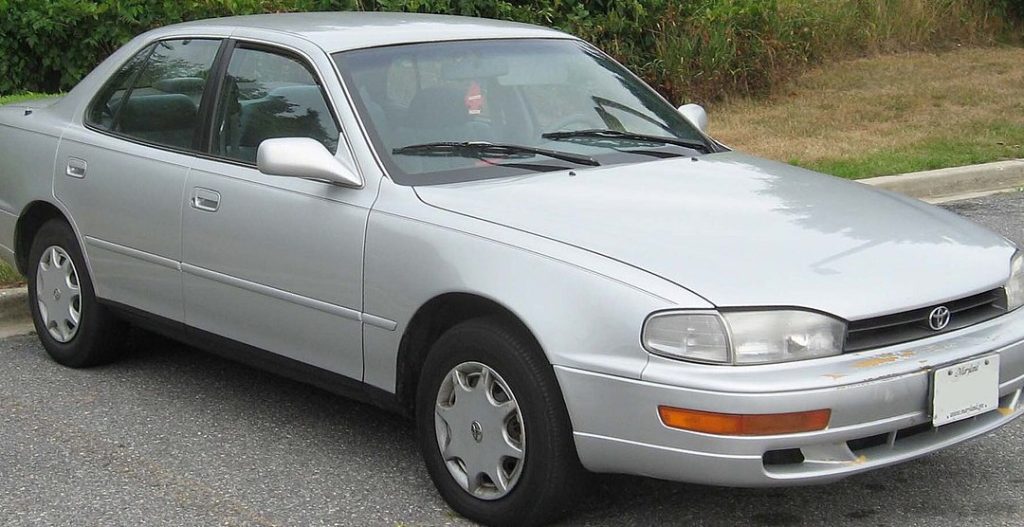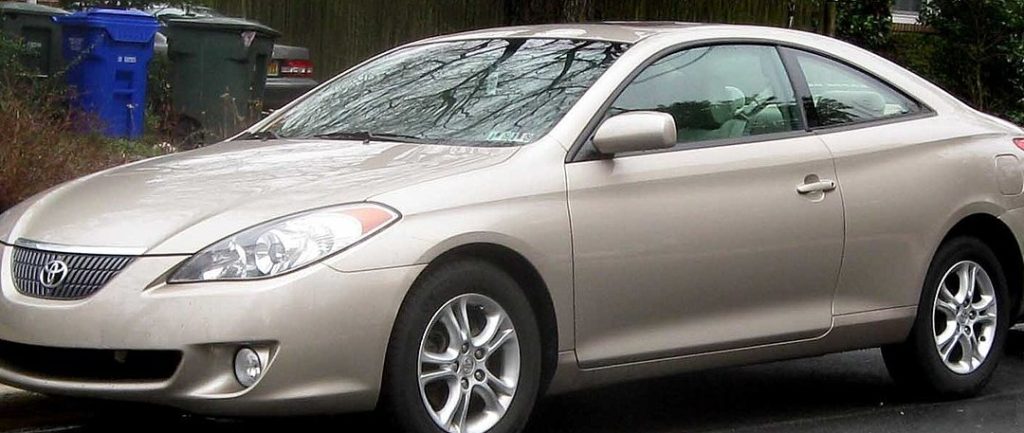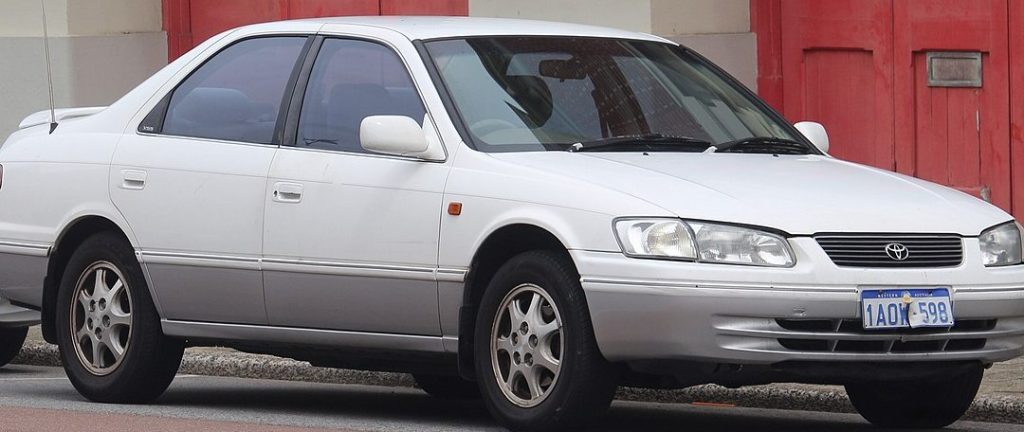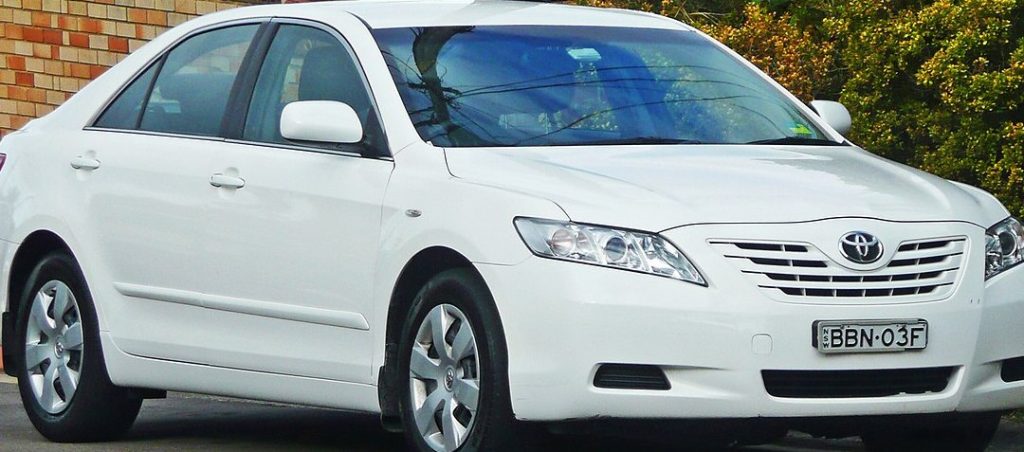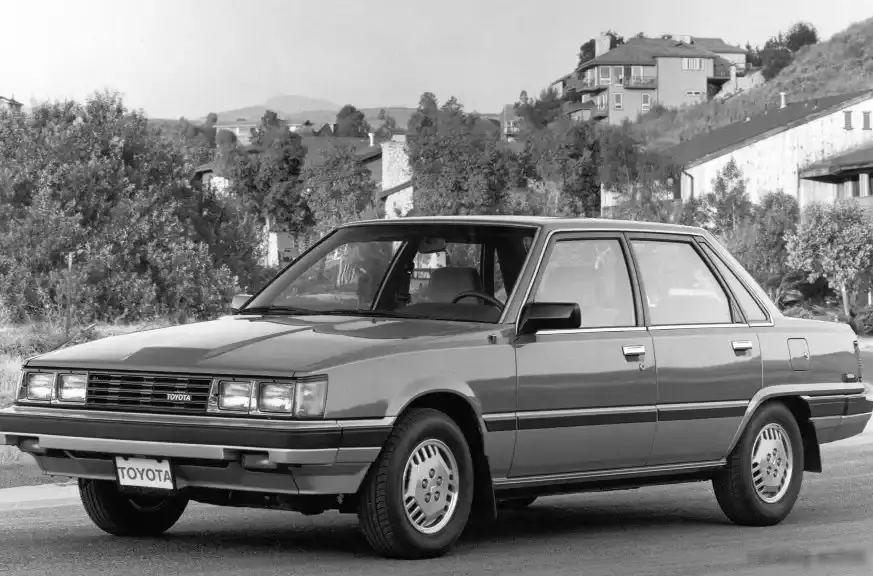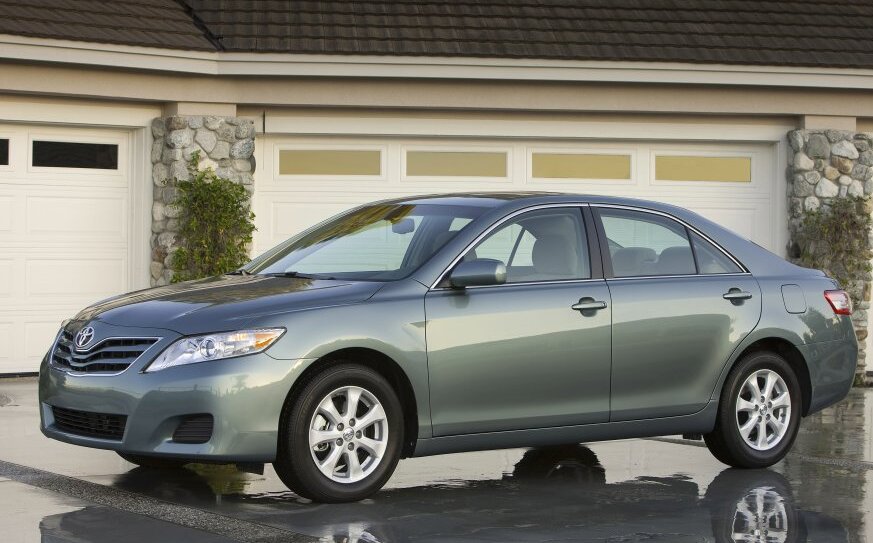
The Toyota Camry VI (XV40), specifically the facelifted model produced from 2009 to 2011, represented a significant evolution of Toyota’s mid-size sedan. This generation Camry, built on the XV40 platform, aimed to balance comfort, reliability, and a more contemporary design compared to its predecessor. Within the XV40 lineup, the 2.5-liter (169 horsepower) variant occupied a middle ground, offering a step up in performance from the base 2.4-liter engine while remaining more accessible than the hybrid model. This configuration was primarily targeted towards buyers seeking a comfortable and well-equipped family sedan with adequate power for everyday driving.
Technical Specifications
| Brand | Toyota |
| Model | Camry |
| Generation | Camry VI (XV40, facelift 2009) |
| Type (Engine) | 2.5 (169 Hp) |
| Start of production | 2009 |
| End of production | 2011 |
| Powertrain Architecture | Internal Combustion engine |
| Body type | Sedan |
| Seats | 5 |
| Doors | 4 |
| Fuel consumption (urban) | 10.6 l/100 km (22.2 US mpg) |
| Fuel consumption (extra urban) | 7.1 l/100 km (33.1 US mpg) |
| Fuel consumption (combined) | 9 l/100 km (26.1 US mpg) |
| Fuel Type | Petrol (Gasoline) |
| Weight-to-power ratio | 8.8 kg/Hp |
| Weight-to-torque ratio | 6.5 kg/Nm |
| Power | 169 Hp @ 6000 rpm |
| Power per litre | 67.8 Hp/l |
| Torque | 226 Nm @ 4100 rpm (166.69 lb.-ft. @ 4100 rpm) |
| Engine layout | Front, Transverse |
| Engine Model/Code | 2AR-FE |
| Engine displacement | 2494 cm3 (152.19 cu. in.) |
| Number of cylinders | 4 |
| Engine configuration | Inline |
| Cylinder Bore | 90 mm (3.54 in.) |
| Piston Stroke | 98 mm (3.86 in.) |
| Compression ratio | 10.4:1 |
| Number of valves per cylinder | 4 |
| Fuel injection system | Multi-port manifold injection |
| Engine aspiration | Naturally aspirated engine |
| Valvetrain | DOHC, VVT-i |
| Engine oil capacity | 4.4 l (4.65 US qt | 3.87 UK qt) |
| Coolant capacity | 7.1 l (7.5 US qt | 6.25 UK qt) |
| Kerb Weight | 1480-1490 kg (3262.84 – 3284.89 lbs.) |
| Trunk (boot) space | 410 l (14.48 cu. ft.) |
| Fuel tank capacity | 70 l (18.49 US gal | 15.4 UK gal) |
| Permitted trailer load with brakes (12%) | 454 kg (1000.9 lbs.) |
| Length | 4806 mm (189.21 in.) |
| Width | 1820 mm (71.65 in.) |
| Height | 1465-1470 mm (57.68 – 57.87 in.) |
| Wheelbase | 2775 mm (109.25 in.) |
| Front track | 1575 mm (62.01 in.) |
| Rear track | 1565 mm (61.61 in.) |
| Ride height (ground clearance) | 135 mm (5.31 in.) |
| Drag coefficient (Cd) | 0.280 |
| Minimum turning circle | 11.0 m (36.09 ft.) |
| Drivetrain Architecture | Front wheel drive |
| Drive wheel | Front wheel drive |
| Number of gears | 6 |
| Type of gearbox | Automatic transmission |
| Front suspension | Independent, type McPherson with coil spring and anti-roll bar |
| Rear suspension | Independent multi-link spring suspension with stabilizer |
| Front brakes | Ventilated discs |
| Rear brakes | Disc |
| Assisting systems | ABS (Anti-lock braking system) |
| Steering type | Steering rack and pinion |
| Power steering | Electric Steering |
| Tires size | 215/60 R16; 215/55 R17 |
| Wheel rims size | 6.5J x 16; 6.5J x 17 |
Introduction
The 2009-2011 Toyota Camry 2.5, powered by the 2AR-FE engine, was a key offering in Toyota’s North American lineup. Following the XV40’s initial launch in 2006, the 2009 facelift brought revised styling, enhanced safety features, and refinements to the interior. This 2.5-liter variant was positioned as a sweet spot for buyers who desired more power than the base 2.4-liter engine, but didn’t necessarily require the fuel efficiency of the hybrid model. It aimed to provide a comfortable and reliable driving experience, consistent with the Camry’s long-standing reputation.
Powertrain & Engine Architecture
At the heart of the Camry 2.5 was the 2AR-FE, a 2.5-liter inline-four cylinder engine. This engine utilized a cast-iron block with an aluminum cylinder head, a common configuration for balancing durability and weight. The 2AR-FE featured Toyota’s VVT-i (Variable Valve Timing-intelligence) system on both the intake and exhaust valves, optimizing engine performance and fuel efficiency across a wider range of engine speeds. Fuel delivery was handled by a multi-port fuel injection system. The engine produced 169 horsepower at 6000 rpm and 226 Nm (166.69 lb-ft) of torque at 4100 rpm. Paired with this engine was a six-speed automatic transmission, replacing the older four-speed unit in earlier XV40 models. This new transmission contributed to improved fuel economy and smoother shifting. The transmission was tuned for comfort and efficiency, with gear ratios optimized for relaxed cruising and adequate acceleration.
Driving Characteristics
The Camry 2.5 with the six-speed automatic offered a noticeable improvement in driving experience compared to the earlier four-speed automatic versions. While not a sports sedan, the 2.5-liter engine provided sufficient power for merging onto highways and passing other vehicles. The automatic transmission generally shifted smoothly, although it wasn’t particularly quick to downshift when demanding more power. The gear ratios were spaced to prioritize fuel economy, meaning the engine sometimes felt strained during aggressive acceleration. Compared to the base 2.4-liter Camry, the 2.5-liter version felt more responsive and capable, especially when fully loaded with passengers and cargo. It didn’t offer the same level of engagement as a manual transmission, but it provided a comfortable and predictable driving experience.
Equipment & Trim Levels
The 2.5-liter Camry typically came standard with features such as air conditioning, power windows and locks, a CD player with MP3 compatibility, and keyless entry. Higher trim levels, such as the XLE, added features like leather upholstery, a sunroof, upgraded audio systems (often with navigation), and automatic climate control. Optional extras included features like a backup camera, Bluetooth connectivity, and alloy wheels. Interior materials were generally of good quality, with a focus on durability and comfort. The dashboard layout was straightforward and user-friendly, prioritizing ease of use over flashy design.
Chassis & Braking
The Camry 2.5 utilized a front-wheel-drive layout with an independent McPherson strut suspension in the front and an independent multi-link suspension in the rear. This suspension setup provided a comfortable ride, absorbing bumps and imperfections in the road effectively. Stabilizer bars were included on both axles to reduce body roll during cornering. Braking duties were handled by ventilated discs in the front and solid discs in the rear. Anti-lock brakes (ABS) were standard, enhancing safety and control during emergency braking situations. The steering was power-assisted, providing light and easy steering feel, although it lacked the directness of some competitors.
Market Reception & Comparison
The 2009-2011 Toyota Camry 2.5 was generally well-received by automotive critics. It was praised for its comfortable ride, spacious interior, and Toyota’s renowned reliability. However, some critics noted that the driving experience was somewhat bland and lacked the sporty feel of some competitors. Compared to the base 2.4-liter Camry, the 2.5-liter version offered a noticeable performance improvement, justifying the slightly higher price. Fuel economy was competitive for its class, although the hybrid model offered significantly better mileage. Compared to other mid-size sedans like the Honda Accord and Nissan Altima, the Camry 2.5 was often seen as a more conservative and reliable choice.
Legacy
The 2AR-FE engine and the six-speed automatic transmission proved to be reliable powertrains. Camry models equipped with this combination have generally held up well over time, with many examples still on the road today. The 2.5-liter Camry remains a popular choice in the used car market, particularly for buyers seeking a dependable and affordable family sedan. While not a particularly exciting vehicle, its reputation for reliability and low maintenance costs continues to make it a practical and sensible option.