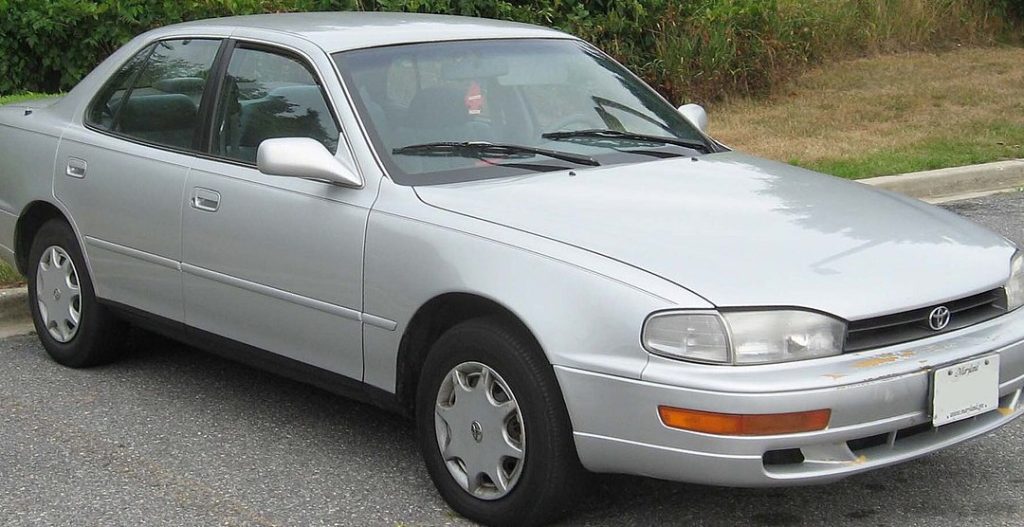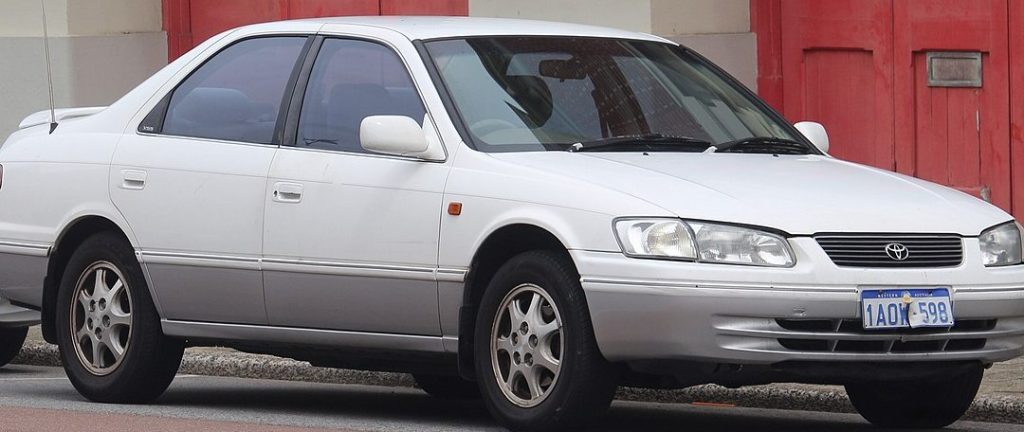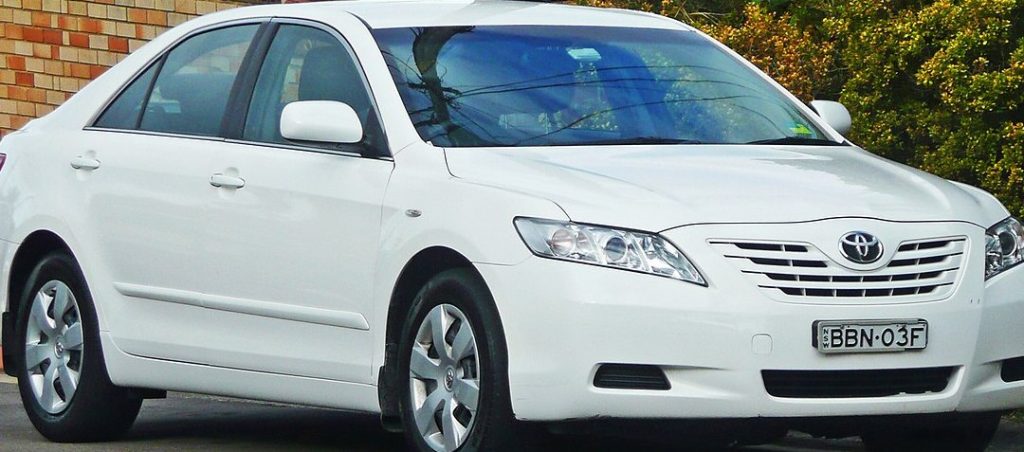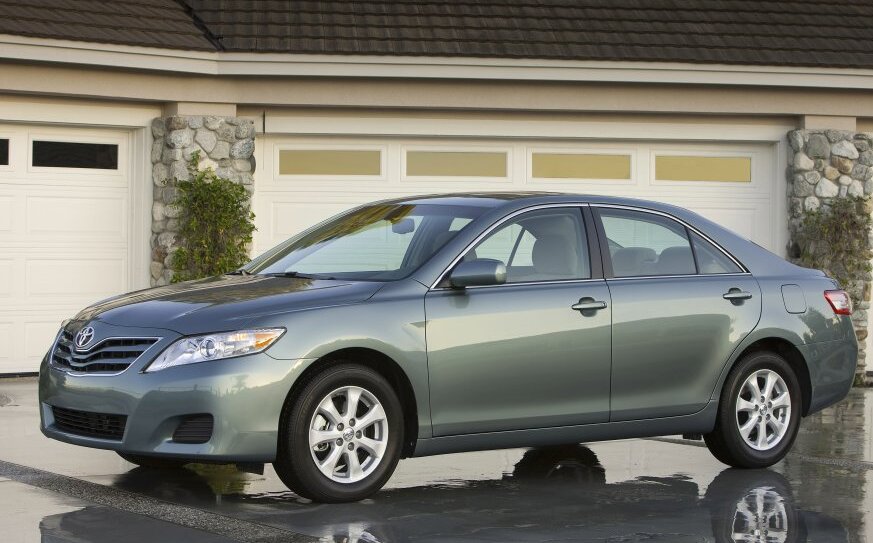
The Toyota Camry VI (XV40), specifically the facelifted model produced from 2009 to 2011, represented a significant evolution of Toyota’s mid-size sedan. Within the XV40 generation, the 3.5-liter V6 engine paired with a six-speed automatic transmission occupied the top performance tier. This variant aimed to provide a more engaging driving experience and premium features compared to the base 2.4-liter four-cylinder models. Positioned as the flagship trim, it catered to buyers seeking a blend of comfort, refinement, and robust power in a family sedan. The XV40 Camry was a crucial model for Toyota in the North American market, where it consistently ranked among the best-selling vehicles in its class.
Technical Specifications
| Brand | Toyota |
| Model | Camry |
| Generation | Camry VI (XV40, facelift 2009) |
| Type (Engine) | 3.5 V6 (268 Hp) Automatic |
| Start of production | 2009 |
| End of production | 2011 |
| Powertrain Architecture | Internal Combustion engine |
| Body type | Sedan |
| Seats | 5 |
| Doors | 4 |
| Fuel consumption (urban) | 12.3 l/100 km (19.1 US mpg, 23 UK mpg, 8.1 km/l) |
| Fuel consumption (extra urban) | 8.4 l/100 km (28 US mpg, 33.6 UK mpg, 11.9 km/l) |
| Fuel consumption (combined) | 10.2 l/100 km (23.1 US mpg, 27.7 UK mpg, 9.8 km/l) |
| Fuel Type | Petrol (Gasoline) |
| Weight-to-power ratio | 5.9 kg/Hp, 170.7 Hp/tonne |
| Weight-to-torque ratio | 4.7 kg/Nm, 214 Nm/tonne |
| Power | 268 Hp @ 6200 rpm |
| Power per litre | 77.5 Hp/l |
| Torque | 336 Nm @ 4700 rpm (247.82 lb.-ft. @ 4700 rpm) |
| Engine layout | Front, Transverse |
| Engine Model/Code | 2GR-FE |
| Engine displacement | 3456 cm3 (210.9 cu. in.) |
| Number of cylinders | 6 |
| Engine configuration | V-engine |
| Cylinder Bore | 94 mm (3.7 in.) |
| Piston Stroke | 83 mm (3.27 in.) |
| Compression ratio | 10.8:1 |
| Number of valves per cylinder | 4 |
| Fuel injection system | Multi-port manifold injection |
| Engine aspiration | Naturally aspirated engine |
| Engine oil capacity | 6.1 l (6.45 US qt | 5.37 UK qt) |
| Coolant | 9 l (9.51 US qt | 7.92 UK qt) |
| Kerb Weight | 1570-1595 kg (3461.26 – 3516.37 lbs.) |
| Trunk (boot) space | 506 l (17.87 cu. ft.) |
| Fuel tank capacity | 70 l (18.49 US gal | 15.4 UK gal) |
| Permitted trailer load with brakes (12%) | 454 kg (1000.9 lbs.) |
| Length | 4806 mm (189.21 in.) |
| Width | 1820 mm (71.65 in.) |
| Height | 1465-1470 mm (57.68 – 57.87 in.) |
| Wheelbase | 2775 mm (109.25 in.) |
| Front track | 1575 mm (62.01 in.) |
| Rear track | 1565 mm (61.61 in.) |
| Ride height (ground clearance) | 130-135 mm (5.12 – 5.31 in.) |
| Drag coefficient (Cd) | 0.280 |
| Minimum turning circle | 11.0 m (36.09 ft.) |
| Drivetrain Architecture | The Internal combustion engine (ICE) drives the front wheels of the vehicle. |
| Drive wheel | Front wheel drive |
| Number of gears and type of gearbox | 6 gears, automatic transmission ECT-i |
| Front suspension | Independent, type McPherson with coil spring and anti-roll bar |
| Rear suspension | Independent multi-link spring suspension with stabilizer |
| Front brakes | Ventilated discs |
| Rear brakes | Disc |
| Assisting systems | ABS (Anti-lock braking system) |
| Steering type | Steering rack and pinion |
| Power steering | Electric Steering |
| Tires size | 215/60 R16; 215/55 R17 |
| Wheel rims size | 6.5J x 16; 7.0J x 17 |
Powertrain & Engine Architecture
The heart of this Camry variant is the 2GR-FE 3.5-liter V6 engine. This engine is a naturally aspirated, 24-valve DOHC (Double Overhead Camshaft) powerplant. It utilizes multi-port fuel injection to deliver fuel directly into the intake ports, optimizing combustion efficiency. The 2GR-FE is known for its smooth power delivery and relatively high reliability. The six-speed automatic transmission, designated ECT-i (Electronically Controlled Transmission – intelligent), was specifically chosen to handle the V6’s output. This transmission featured adaptive shift logic, adjusting shift points based on driving conditions and driver input. The transmission’s gear ratios were tuned to balance acceleration with fuel economy, providing a comfortable and responsive driving experience.
Driving Characteristics
The 3.5-liter V6 Camry offered a noticeable performance upgrade over the base four-cylinder models. Acceleration was brisk, with the car capable of reaching 60 mph in around 6.5 seconds. The automatic transmission provided smooth and seamless gear changes, although it wasn’t as sporty or engaging as some of the dual-clutch transmissions found in competing vehicles. The steering was light and precise, making the car easy to maneuver in city traffic. However, it lacked the feedback that some driving enthusiasts might desire. The suspension was tuned for comfort, providing a smooth ride over most road surfaces. Compared to the manual transmission versions of the Camry, the automatic offered less driver involvement but greater convenience, particularly in stop-and-go traffic.
Equipment & Trim Levels
The 3.5 V6 Camry typically came standard with a generous array of features. These included power-adjustable front seats, a premium audio system, automatic climate control, and alloy wheels. Higher trim levels, such as the XLE, added features like leather upholstery, a sunroof, and navigation system. Optional extras included a rear-seat entertainment system, upgraded sound systems, and advanced safety features like lane departure alert and adaptive cruise control. Interior upholstery was typically cloth on lower trims and leather on higher trims. The dashboard layout was functional and user-friendly, with clearly labeled controls and a straightforward infotainment system.
Chassis & Braking
The Camry XV40 featured an independent front suspension with McPherson struts and a multi-link rear suspension. This setup provided a good balance of ride comfort and handling. The front suspension included a stabilizer bar to reduce body roll during cornering. Braking duties were handled by ventilated disc brakes at the front and solid disc brakes at the rear. Anti-lock brakes (ABS) were standard, enhancing safety and control during emergency braking situations. The chassis was designed to provide a quiet and comfortable ride, with extensive sound insulation to minimize road and engine noise.
Market Reception & Comparison
The 3.5 V6 Camry was generally well-received by automotive critics. It was praised for its smooth engine, comfortable ride, and spacious interior. However, some critics noted that the handling wasn’t as sporty as some of its competitors, such as the Honda Accord V6. Fuel economy was also a concern for some, as the V6 engine consumed significantly more fuel than the four-cylinder models. Compared to the 2.4-liter Camry, the V6 offered a substantial performance advantage but came at a higher price and with lower fuel efficiency. The V6 also proved to be more reliable than some of the early hybrid Camry models, avoiding some of the battery-related issues that plagued those vehicles.
Legacy
The 2GR-FE engine, in general, has proven to be a remarkably durable and reliable powerplant. The 3.5-liter V6 Camry from the XV40 generation continues to be a popular choice in the used car market, prized for its dependability and relatively low maintenance costs. While not a sports car, this Camry variant offers a comfortable and refined driving experience with ample power for everyday driving needs. Common maintenance items include regular oil changes, timing belt replacement (typically around 90,000 miles), and inspection of the cooling system. Overall, the 2009-2011 Toyota Camry 3.5 V6 Automatic remains a solid and dependable choice for buyers seeking a well-rounded mid-size sedan.