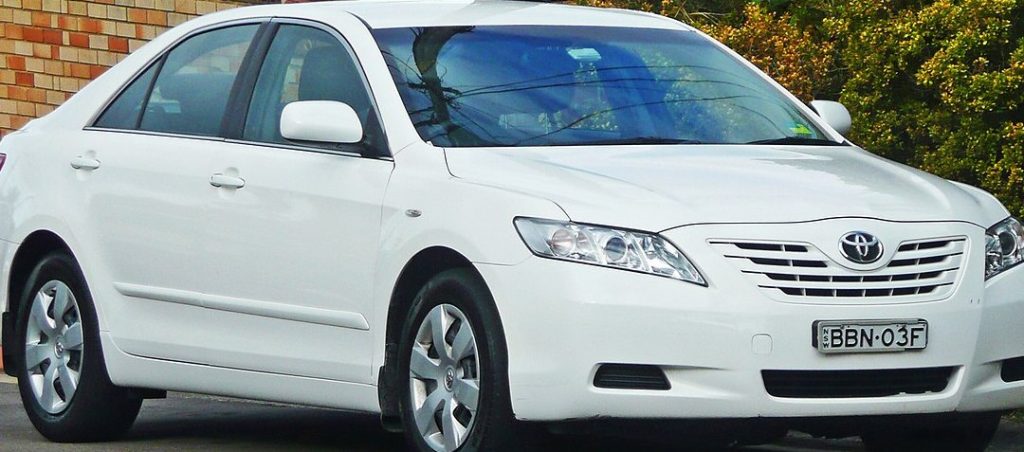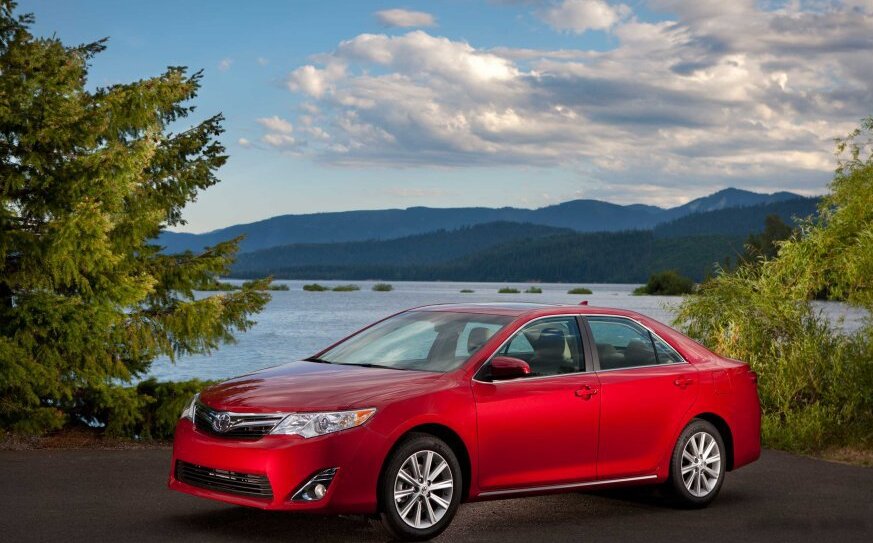
The Toyota Camry VII (XV50) 3.5 V6 Automatic, produced between 2011 and 2014, represented the top-tier performance option within the seventh generation of Toyota’s globally successful Camry sedan. Positioned as the premium trim, it catered to buyers seeking a blend of comfort, refinement, and substantial power in a mainstream mid-size package. This variant was primarily sold in North America, where larger displacement engines remained popular, and served as a direct competitor to models like the Honda Accord V6 and Ford Fusion Sport. The XV50 generation Camry, built on the Toyota K platform, aimed to elevate the Camry’s image beyond its reputation for reliability and practicality, offering a more engaging driving experience and improved interior quality.
Technical Specifications
| Brand | Toyota |
| Model | Camry |
| Generation | Camry VII (XV50) |
| Type (Engine) | 3.5 V6 (275 Hp) Automatic |
| Start of production | 2011 |
| End of production | 2014 |
| Powertrain Architecture | Internal Combustion engine |
| Body type | Sedan |
| Seats | 5 |
| Doors | 4 |
| Fuel Type | Petrol (Gasoline) |
| Acceleration 0 – 100 km/h | 7.1 sec |
| Acceleration 0 – 62 mph | 7.1 sec |
| Acceleration 0 – 60 mph | 6.7 sec |
| Maximum speed | 210 km/h (130.49 mph) |
| Weight-to-power ratio | 5.9 kg/Hp, 170.3 Hp/tonne |
| Weight-to-torque ratio | 4.7 kg/Nm, 214.2 Nm/tonne |
| Power | 275 Hp @ 6200 rpm |
| Power per litre | 79.6 Hp/l |
| Torque | 346 Nm @ 4700 rpm (255.2 lb.-ft. @ 4700 rpm) |
| Engine layout | Front, Transverse |
| Engine Model/Code | 2GR-FE |
| Engine displacement | 3456 cm3 (210.9 cu. in.) |
| Number of cylinders | 6 |
| Engine configuration | V-engine |
| Cylinder Bore | 94 mm (3.7 in.) |
| Piston Stroke | 83 mm (3.27 in.) |
| Compression ratio | 10.8:1 |
| Number of valves per cylinder | 4 |
| Fuel injection system | Multi-port manifold injection |
| Engine aspiration | Naturally aspirated engine |
| Engine oil capacity | 6.1 l (6.45 US qt | 5.37 UK qt) |
| Coolant | 9.2 l (9.72 US qt | 8.09 UK qt) |
| Kerb Weight | 1615 kg (3560.47 lbs.) |
| Max. weight | 2100 kg (4629.71 lbs.) |
| Max load | 485 kg (1069.24 lbs.) |
| Trunk (boot) space – minimum | 506 l (17.87 cu. ft.) |
| Fuel tank capacity | 70 l (18.49 US gal | 15.4 UK gal) |
| Length | 4825 mm (189.96 in.) |
| Width | 1825 mm (71.85 in.) |
| Height | 1480 mm (58.27 in.) |
| Wheelbase | 2775 mm (109.25 in.) |
| Front track | 1575 mm (62.01 in.) |
| Rear (Back) track | 1565 mm (61.61 in.) |
| Ride height (ground clearance) | 160 mm (6.3 in.) |
| Drivetrain Architecture | The Internal combustion engine (ICE) drives the front wheels of the vehicle. |
| Drive wheel | Front wheel drive |
| Number of gears and type of gearbox | 6 gears, automatic transmission |
| Front suspension | Independent, type McPherson with coil spring and anti-roll bar |
| Rear suspension | Independent multi-link spring suspension with stabilizer |
| Front brakes | Ventilated discs |
| Rear brakes | Disc |
| Assisting systems | ABS (Anti-lock braking system) |
| Steering type | Steering rack and pinion |
| Power steering | Electric Steering |
| Tires size | 215/55 R17 |
| Wheel rims size | 17 |
Introduction
The 2011-2014 Toyota Camry 3.5 V6 Automatic represented a significant step up in performance for the XV50 generation. While the base 2.5-liter four-cylinder engine focused on fuel efficiency, the 3.5-liter V6 was designed to appeal to drivers who prioritized acceleration and a more refined driving experience. This trim typically included more luxurious features as standard, or offered them as readily available options, solidifying its position as the flagship model. The XV50 Camry aimed to address criticisms leveled at previous generations regarding bland styling and a lack of driver engagement, and the V6 model was a key component of that strategy.
Powertrain & Engine Architecture
At the heart of the Camry 3.5 V6 lies the 2GR-FE engine, a 3.5-liter, naturally aspirated V6. This engine utilizes a 60-degree V-angle configuration, contributing to a smoother power delivery and reduced vibrations. The 2GR-FE employs multi-port fuel injection, delivering fuel directly into the intake ports, and features dual independent variable valve timing with intelligence (VVT-i) on both intake and exhaust camshafts. This system optimizes valve timing based on engine speed and load, enhancing both performance and fuel efficiency. The engine produces 275 horsepower at 6200 rpm and 255 lb-ft of torque at 4700 rpm. Paired with the engine is a six-speed automatic transmission, designed to provide smooth and responsive shifts. This transmission featured sequential manual shifting capability, allowing drivers some control over gear selection. The transmission was tuned to balance performance with fuel economy, with gear ratios optimized for both acceleration and highway cruising.
Driving Characteristics
The Camry 3.5 V6 Automatic delivered noticeably quicker acceleration than its four-cylinder counterpart. The 0-60 mph sprint was consistently achieved in around 6.7 seconds, making it one of the fastest sedans in its class at the time. The six-speed automatic transmission contributed to a refined driving experience, offering smooth gear changes and a willingness to downshift when needed. While not a sports sedan, the V6 Camry provided ample power for merging onto highways and overtaking slower traffic. The steering was light and precise, and the suspension provided a comfortable ride without feeling overly soft. Compared to the manual transmission equipped V6 models, the automatic offered greater convenience for daily driving, although it did slightly diminish the sense of driver involvement.
Equipment & Trim Levels
The 3.5 V6 Automatic trim typically came standard with a generous array of features. These included leather upholstery, power-adjustable front seats, a premium audio system (often with navigation), automatic climate control, and alloy wheels. Optional extras included a sunroof, upgraded audio systems, and advanced safety features like blind-spot monitoring and rear cross-traffic alert. The interior design emphasized comfort and convenience, with a focus on user-friendly controls and ample passenger space. The dashboard layout was clean and functional, with a clear instrument cluster and a centrally mounted touchscreen display.
Chassis & Braking
The Camry 3.5 V6 utilized an independent McPherson strut suspension in the front and an independent multi-link suspension in the rear. This setup provided a good balance of ride comfort and handling. The V6 models often featured slightly stiffer springs and dampers compared to the base models, to better manage the increased power and weight. Braking duties were handled by ventilated disc brakes on all four wheels, providing ample stopping power. Anti-lock brakes (ABS) were standard, along with electronic brake-force distribution (EBD) and brake assist. The steering system employed an electric power steering (EPS) system, which provided light and precise steering feel.
Market Reception & Comparison
Critics generally praised the Camry 3.5 V6 for its smooth and powerful engine, comfortable ride, and well-equipped interior. However, some reviewers noted that the handling wasn’t as sporty as some of its competitors, such as the Honda Accord V6. Fuel economy was also a point of consideration, as the V6 engine consumed more fuel than the four-cylinder options. Compared to the 2.5-liter four-cylinder Camry, the V6 offered a significant performance upgrade, but at the cost of increased fuel consumption and a higher price tag. The V6 was also positioned as a more premium alternative to the hybrid Camry, offering a different driving experience and a more traditional powertrain.
Legacy
The 2GR-FE engine, found in the Camry 3.5 V6, has proven to be a remarkably reliable powertrain. Known for its durability and relatively low maintenance costs, these engines continue to operate reliably in many used Camrys today. The six-speed automatic transmission has also demonstrated good longevity. While not a collector’s item, the XV50 Camry 3.5 V6 holds its value reasonably well in the used car market, particularly those examples that have been well-maintained. It remains a popular choice for buyers seeking a comfortable, reliable, and reasonably powerful mid-size sedan.