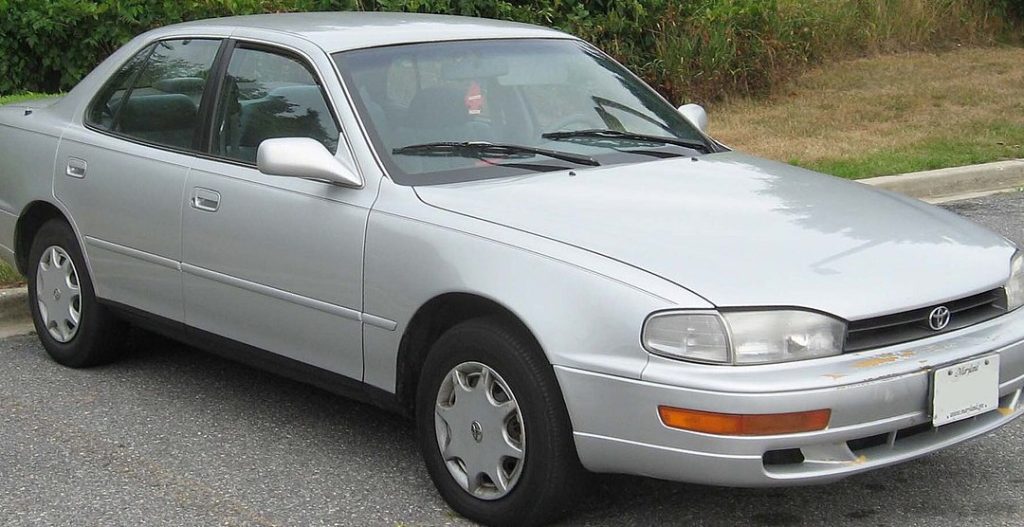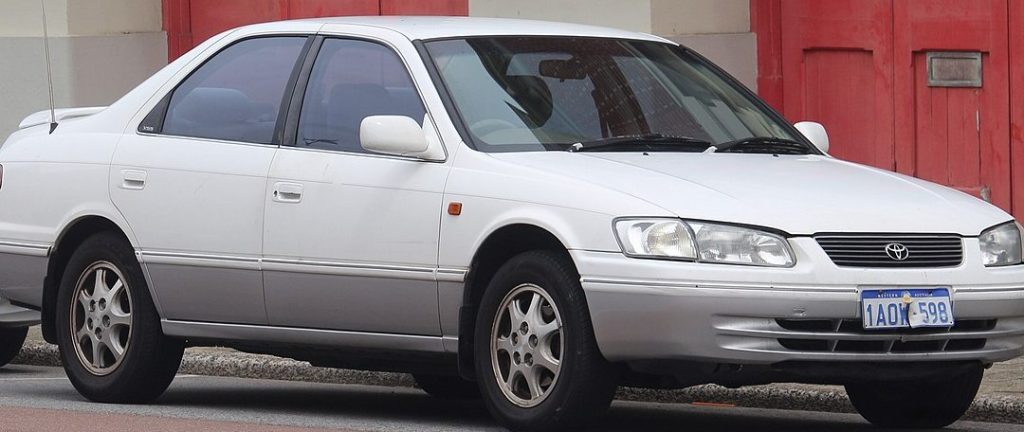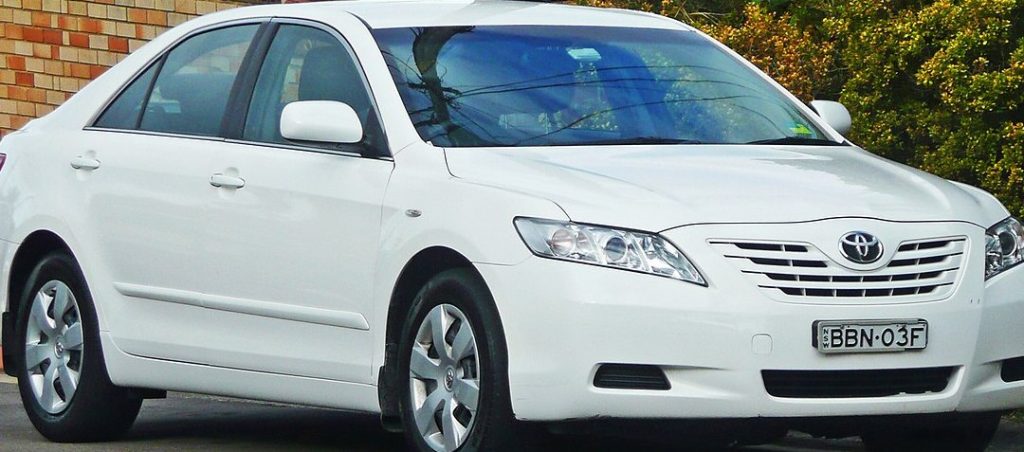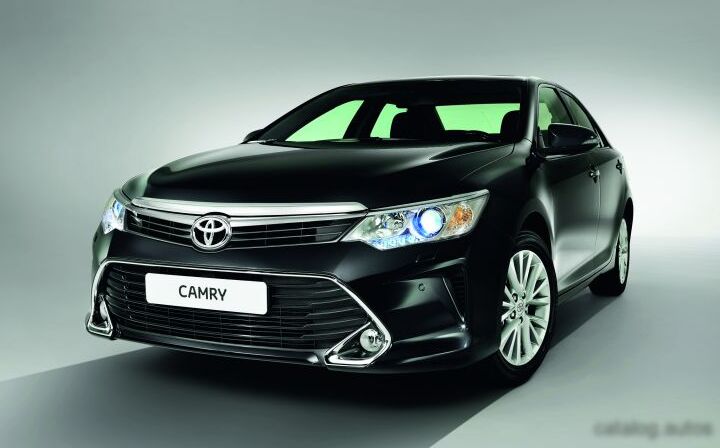
The Toyota Camry VII, specifically the XV50 facelift model produced between 2014 and 2017, represented a significant evolution of Toyota’s best-selling mid-size sedan. Within the XV50 generation (2012-2017), the 2014-2017 facelift brought revised styling, enhanced features, and refinements to the powertrain. The 2.5-liter (178 hp) automatic variant occupied a central position in the Camry lineup, offering a balance of performance, fuel efficiency, and comfort aimed at a broad customer base. It served as the primary volume seller, bridging the gap between the more economical base models and the more premium XLE trims.
Technical Specifications
| Brand | Toyota |
| Model | Camry |
| Generation | Camry VII (XV50, facelift 2014) |
| Type (Engine) | 2.5 (178 Hp) Automatic |
| Start of production | 2014 |
| End of production | 2017 |
| Powertrain Architecture | Internal Combustion engine |
| Body type | Sedan |
| Seats | 5 |
| Doors | 4 |
| Fuel consumption (urban) | 9.4 l/100 km (25 US mpg) |
| Fuel consumption (extra urban) | 6.7 l/100 km (35.1 US mpg) |
| Fuel consumption (combined) | 8.4 l/100 km (28 US mpg) |
| Fuel Type | Petrol (Gasoline) |
| Weight-to-power ratio | 8.3 kg/Hp |
| Weight-to-torque ratio | 6.4 kg/Nm |
| Power | 178 Hp @ 6000 rpm |
| Power per litre | 71.4 Hp/l |
| Torque | 230 Nm @ 4100 rpm (169.64 lb.-ft. @ 4100 rpm) |
| Engine layout | Front, Transverse |
| Engine Model/Code | 2AR-FE |
| Engine displacement | 2494 cm3 (152.19 cu. in.) |
| Number of cylinders | 4 |
| Engine configuration | Inline |
| Cylinder Bore | 90 mm (3.54 in.) |
| Piston Stroke | 98 mm (3.86 in.) |
| Compression ratio | 10.4:1 |
| Number of valves per cylinder | 4 |
| Fuel injection system | Multi-port manifold injection |
| Engine aspiration | Naturally aspirated engine |
| Valvetrain | DOHC. Dual VVT-i |
| Engine oil capacity | 4.4 l (4.65 US qt | 3.87 UK qt) |
| Coolant capacity | 6.9 l (7.29 US qt | 6.07 UK qt) |
| Kerb Weight | 1470 kg (3240.8 lbs.) |
| Trunk (boot) space | 436 l (15.4 cu. ft.) |
| Fuel tank capacity | 64 l (16.91 US gal | 14.08 UK gal) |
| Length | 4849 mm (190.91 in.) |
| Width | 1821 mm (71.69 in.) |
| Height | 1470 mm (57.87 in.) |
| Wheelbase | 2776 mm (109.29 in.) |
| Front track | 1595 mm (62.8 in.) |
| Rear track | 1585 mm (62.4 in.) |
| Ride height (ground clearance) | 155 mm (6.1 in.) |
| Drag coefficient (Cd) | 0.28 |
| Minimum turning circle | 11.1 m (36.42 ft.) |
| Drivetrain Architecture | Front wheel drive |
| Number of gears | 6 |
| Gearbox type | Automatic transmission ECT-i |
| Front suspension | Independent, type McPherson with coil spring and anti-roll bar |
| Rear suspension | Independent multi-link spring suspension with stabilizer |
| Front brakes | Ventilated discs |
| Rear brakes | Disc |
| Assisting systems | ABS (Anti-lock braking system) |
| Steering type | Steering rack and pinion |
| Power steering | Electric Steering |
| Tires size | P205/65 R16; 215/55 R17; 225/45 R18 |
| Wheel rims size | 16; 17; 18 |
Introduction
The 2014-2017 Toyota Camry 2.5-liter automatic represented a continuation of the Camry’s reputation for reliability, practicality, and comfortable transportation. Built on the XV50 platform, this iteration of the Camry aimed to address criticisms of previous generations regarding interior design and driving engagement, while maintaining the core values that made it a top seller. The 2.5L engine, paired with a 6-speed automatic transmission, was positioned as the sweet spot in the lineup, offering sufficient power for most driving situations without the higher price tag of the XLE or the fuel economy focus of the base 2.5L model.
Powertrain & Engine Architecture
At the heart of this Camry variant lies the 2AR-FE 2.5-liter inline-four cylinder engine. This engine is a naturally aspirated powerplant utilizing multi-port fuel injection. The 2AR-FE benefits from Toyota’s Dual VVT-i (Variable Valve Timing-intelligence) system, which optimizes valve timing on both the intake and exhaust sides for improved efficiency and performance across the rev range. The engine produces 178 horsepower at 6000 rpm and 230 Nm (169.64 lb-ft) of torque at 4100 rpm. The 6-speed automatic transmission (ECT-i – Electronically Controlled Transmission with intelligence) was designed to provide smooth and responsive shifting. It features overdrive and selectable driving modes (typically ‘D’ for normal driving and ‘S’ for sportier performance). The transmission’s gear ratios were tuned to prioritize fuel economy during cruising while still providing adequate acceleration when needed.
Driving Characteristics
The Camry 2.5L automatic delivers a comfortable and predictable driving experience. While not a performance-oriented vehicle, the 178 hp engine provides adequate power for everyday driving, including highway merging and passing maneuvers. The automatic transmission shifts smoothly, and the ‘S’ mode offers slightly more responsive downshifts. Compared to the base 2.5L Camry, the increased horsepower is noticeable, providing a more confident feel. However, it doesn’t match the acceleration of the optional V6 engine. The steering is light and precise, contributing to ease of driving in urban environments. The suspension is tuned for comfort, absorbing bumps and imperfections in the road well, but it doesn’t offer the sporty handling of some competitors.
Equipment & Trim Levels
The 2.5-liter automatic Camry typically came standard with a respectable array of features. These generally included air conditioning, power windows and locks, keyless entry, a touchscreen infotainment system with Bluetooth connectivity, and a rearview camera. Higher trim levels, such as the SE, added features like sport seats, alloy wheels, and a more aggressive exterior styling. Optional extras available for this trim included a sunroof, leather upholstery, a navigation system, and advanced safety features like blind-spot monitoring and rear cross-traffic alert. Interior upholstery was typically cloth on the base models, with leather available as an upgrade.
Chassis & Braking
The Camry XV50 utilizes a front-wheel-drive layout with an independent McPherson strut suspension in the front and an independent multi-link suspension in the rear. This setup provides a good balance of ride comfort and handling. The front suspension incorporates a stabilizer bar to reduce body roll during cornering. Braking duties are handled by ventilated discs in the front and solid discs in the rear. Anti-lock brakes (ABS) are standard, enhancing safety during emergency braking situations. The brake system is generally reliable and provides adequate stopping power for the vehicle’s weight and performance.
Market Reception & Comparison
The Camry 2.5L automatic was generally well-received by critics and consumers alike. It was praised for its reliability, fuel efficiency, and comfortable ride. Compared to the base 2.5L model, the automatic transmission was often preferred for its convenience and smooth operation. However, some reviewers noted that the engine could feel strained when accelerating hard, and the transmission wasn’t as quick-shifting as some competitors. Fuel economy figures of around 28 mpg combined were competitive for the segment. Compared to the V6 Camry, the 2.5L offered a significant fuel economy advantage, albeit at the expense of performance.
Legacy
The 2AR-FE engine and the 6-speed automatic transmission used in the 2014-2017 Camry have proven to be remarkably reliable. These powertrains are known for their longevity and relatively low maintenance costs. In the used car market, these Camrys continue to be popular choices due to their reputation for dependability and affordability. While not particularly exciting to drive, they represent a sensible and practical option for buyers seeking a reliable and fuel-efficient mid-size sedan. Common maintenance items include regular oil changes, coolant flushes, and occasional replacement of wear items like brake pads and tires. The overall build quality and Toyota’s commitment to reliability have ensured that many of these Camrys remain on the road today with high mileage.