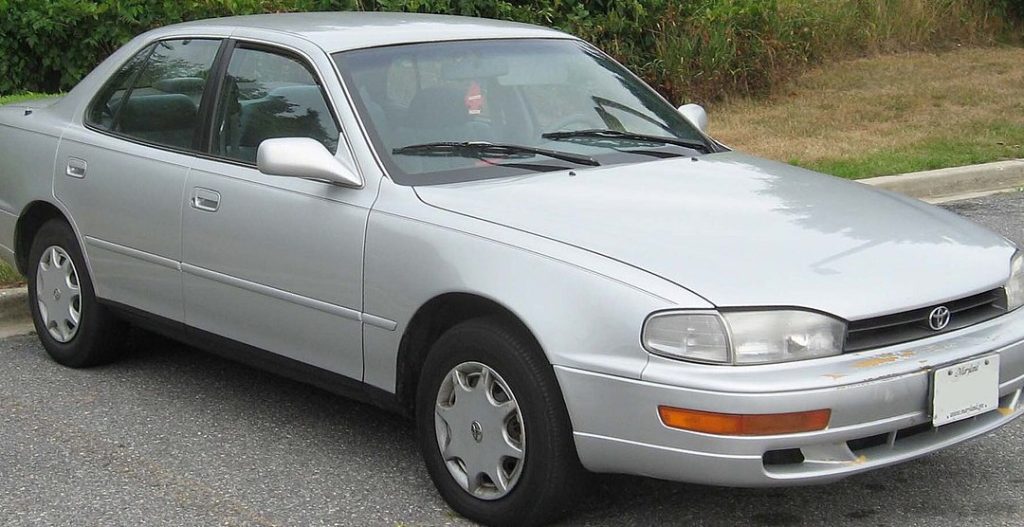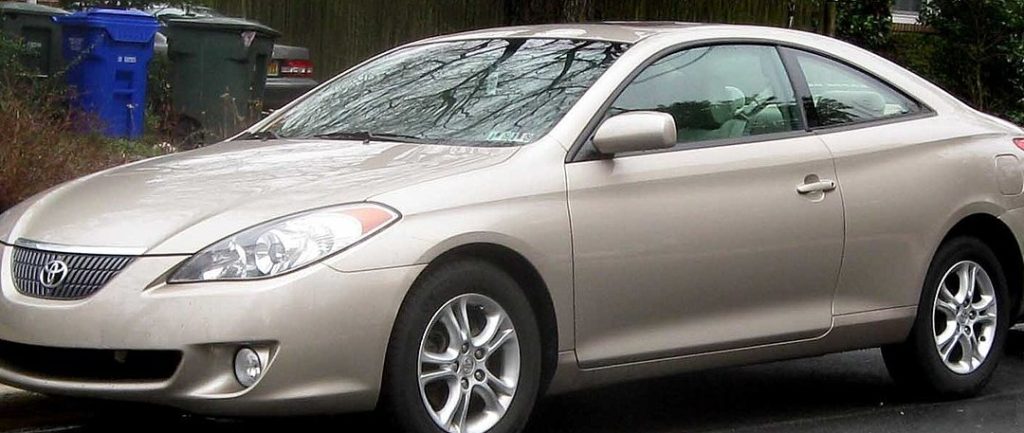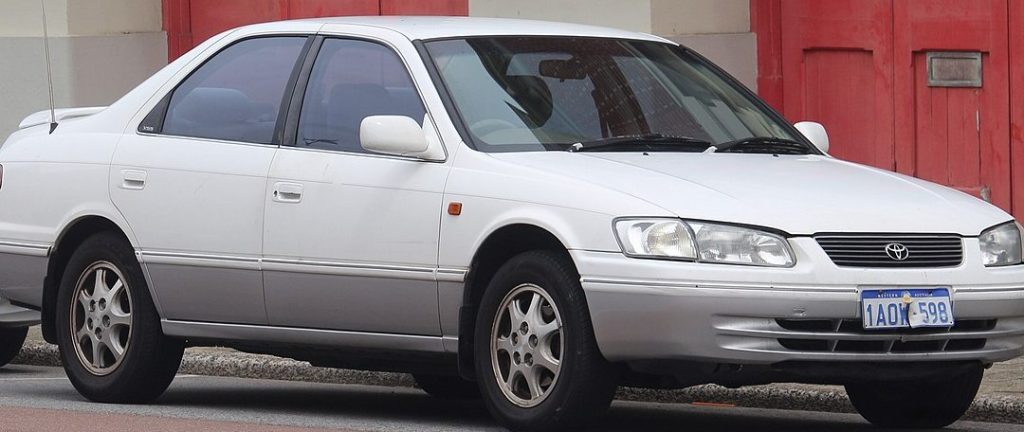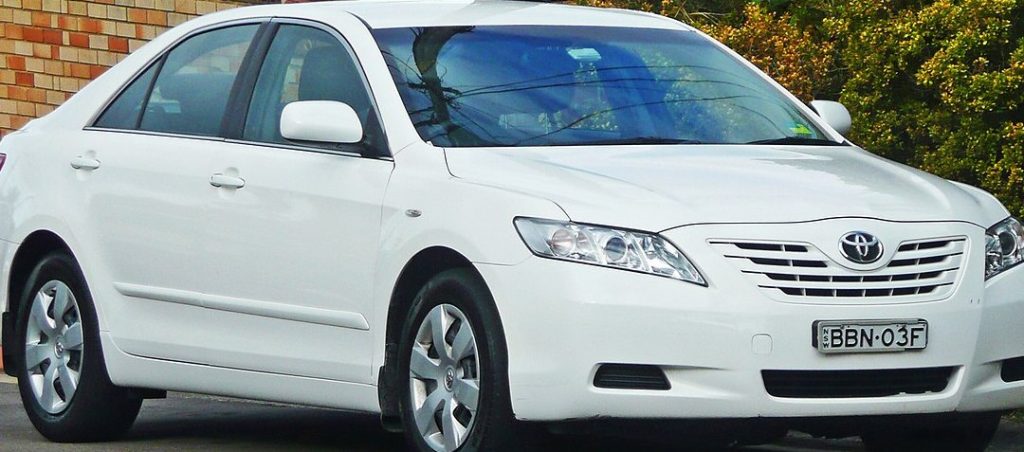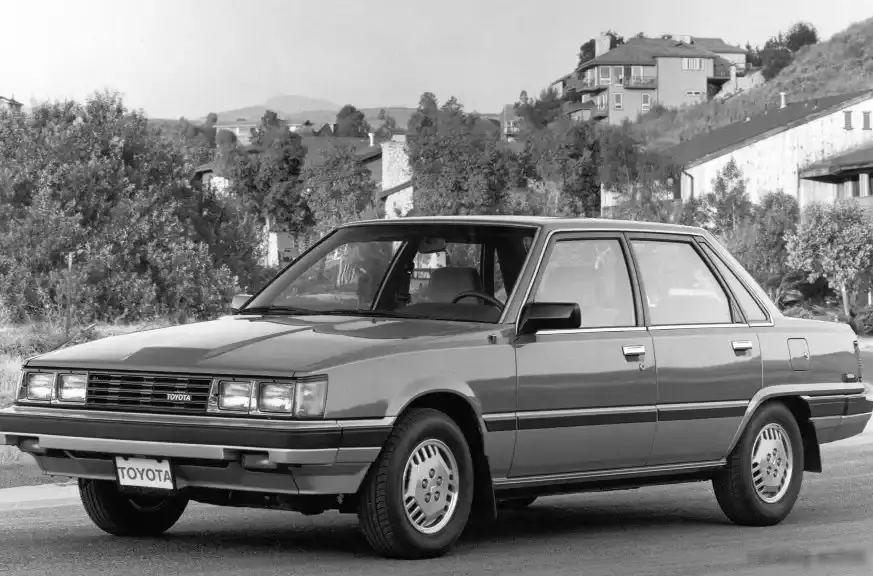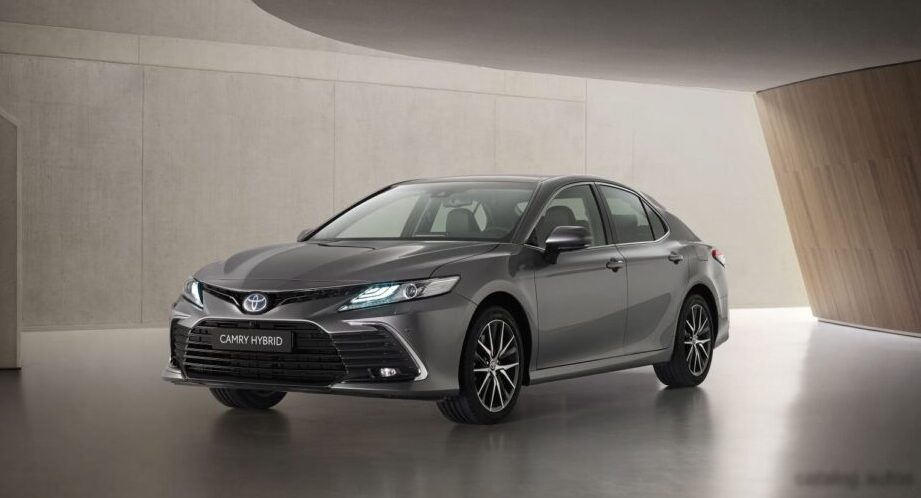
The Toyota Camry VIII (XV70), particularly the facelifted 2020-2024 model year, represents a significant evolution in Toyota’s mid-size sedan offering. The 2.5-liter (202 horsepower) variant equipped with All-Wheel Drive (AWD) and the ECT-i (Electronically Controlled Transmission – intelligent) automatic transmission was a key component of the lineup, positioned as a premium offering balancing performance, fuel efficiency, and all-weather capability. Introduced as part of the XV70’s mid-cycle refresh, this configuration aimed to broaden the Camry’s appeal to buyers seeking a more sophisticated and secure driving experience. It built upon the established reputation of the XV70 platform, known for its reliability and comfortable ride.
Technical Specifications
| Brand | Toyota |
| Model | Camry |
| Generation | Camry VIII (XV70, facelift 2020) |
| Type (Engine) | 2.5 (202 Hp) AWD ECT-i |
| Start of production | 2020 |
| End of production | 2024 |
| Powertrain Architecture | Internal Combustion engine |
| Body type | Sedan |
| Seats | 5 |
| Doors | 4 |
| Fuel consumption (economy) – urban (EPA) | 9.4 l/100 km (25 US mpg) |
| Fuel consumption (economy) – extra urban (EPA) | 6.9 l/100 km (34.1 US mpg) |
| Fuel consumption (economy) – combined (EPA) | 8.1 l/100 km (29 US mpg) |
| Fuel Type | Petrol (Gasoline) |
| Emission standard | ULEV-II |
| Weight-to-power ratio | 7.8 kg/Hp, 128.2 Hp/tonne |
| Weight-to-torque ratio | 6.4 kg/Nm, 156.7 Nm/tonne |
| Power | 202 Hp @ 6600 rpm |
| Power per litre | 81.2 Hp/l |
| Torque | 247 Nm @ 4400 rpm (182.18 lb.-ft. @ 4400 rpm) |
| Engine layout | Front, Transverse |
| Engine Model/Code | A25A-FKS |
| Engine displacement | 2487 cm3 (151.77 cu. in.) |
| Number of cylinders | 4 |
| Engine configuration | Inline |
| Cylinder Bore | 87.5 mm (3.44 in.) |
| Piston Stroke | 103.4 mm (4.07 in.) |
| Compression ratio | 13:1 |
| Number of valves per cylinder | 4 |
| Fuel injection system | Direct injection and Multi-port manifold injection |
| Engine aspiration | Naturally aspirated engine |
| Valvetrain | DOHC, VVT-i, VVT-iE |
| Engine oil capacity | 4.5 l (4.76 US qt | 3.96 UK qt) |
| Coolant | 6.9 l (7.29 US qt | 6.07 UK qt) |
| Kerb Weight | 1576-1606 kg (3474.49 – 3540.62 lbs.) |
| Trunk (boot) space – minimum | 428 l (15.11 cu. ft.) |
| Fuel tank capacity | 55 l (14.53 US gal | 12.1 UK gal) |
| Length | 4880 mm (192.13 in.) |
| Width | 1840 mm (72.44 in.) |
| Height | 1450 mm (57.09 in.) |
| Wheelbase | 2825 mm (111.22 in.) |
| Front track | 1580-1590 mm (62.2 – 62.6 in.) |
| Rear (Back) track | 1595-1605 mm (62.8 – 63.19 in.) |
| Ride height (ground clearance) | 145 mm (5.71 in.) |
| Minimum turning circle (turning diameter) | 11.8 m (38.71 ft.) |
| Drivetrain Architecture | The Internal combustion engine (ICE) drives the front wheels permanently, and the rear wheels are driven through an electrically or mechanically operated clutch if necessary. |
| Drive wheel | All wheel drive (4×4) |
| Number of gears and type of gearbox | 8 gears, automatic transmission ECT-i |
| Front suspension | Independent, type McPherson with coil spring and anti-roll bar |
| Rear suspension | Independent multi-link spring suspension with stabilizer |
| Front brakes | Ventilated discs, 305 mm |
| Rear brakes | Disc, 281 mm |
| Assisting systems | ABS (Anti-lock braking system) |
| Steering type | Steering rack and pinion |
| Power steering | Electric Steering |
| Tires size | 215/55 R17; 235/45 R18 |
| Wheel rims size | 7.5J x 17; 8J x 18 |
Powertrain & Engine Architecture
At the heart of this Camry variant lies the 2.5-liter A25A-FKS inline-four engine. This engine utilizes Toyota’s D-4S fuel injection system, combining direct injection and port injection to optimize combustion efficiency and power delivery. The engine features a dual overhead camshaft (DOHC) valvetrain with Variable Valve Timing-intelligence (VVT-i) on both intake and exhaust camshafts, and VVT-iE on the exhaust side, further enhancing performance and fuel economy. The 8-speed ECT-i automatic transmission is a crucial component, offering smooth and responsive shifting. Unlike some competitors who were moving towards continuously variable transmissions (CVTs), Toyota retained a traditional geared automatic, favored by many drivers for its more definitive shift points and perceived responsiveness. The AWD system employs a dynamic torque control system, seamlessly distributing power between the front and rear axles as needed, enhancing traction in various driving conditions.
Driving Characteristics
The 202-horsepower and 247 Nm (182 lb-ft) of torque provided by the 2.5L engine and 8-speed automatic delivers adequate, though not exhilarating, performance. Acceleration from 0 to 60 mph is typically in the 7.5-8.5 second range. The ECT-i transmission is well-tuned for everyday driving, offering smooth upshifts and downshifts. Compared to the base 2.0-liter engine, the 2.5L provides noticeably more power, especially during highway merging and overtaking maneuvers. However, it doesn’t match the quicker acceleration of the Camry’s optional V6 engine. The AWD system provides enhanced stability and grip, particularly in inclement weather, making it a compelling choice for drivers in regions with snow or rain. The gear ratios are optimized for a balance of fuel efficiency and responsiveness, with a relatively tall final drive contributing to good highway cruising economy.
Equipment & Trim Levels
The 2.5L AWD variant typically occupied a mid-to-upper trim level within the Camry lineup, often designated as the XLE or XSE. Standard features generally included leather upholstery, heated front seats, a touchscreen infotainment system with Apple CarPlay and Android Auto compatibility, Toyota Safety Sense (TSS) suite of driver-assistance features (including adaptive cruise control, lane departure alert, and automatic emergency braking), and automatic climate control. Optional extras could include a premium audio system, a panoramic sunroof, and blind-spot monitoring with rear cross-traffic alert. Interior materials and finishes were generally of high quality, reflecting the Camry’s reputation for comfort and refinement.
Chassis & Braking
The Camry XV70 utilizes a MacPherson strut front suspension and a multi-link rear suspension, providing a comfortable and controlled ride. The AWD system adds some weight, but the suspension is tuned to compensate, maintaining a balanced handling feel. Front brakes are ventilated discs measuring 305mm, while rear brakes are solid discs measuring 281mm. Anti-lock Braking System (ABS) is standard, along with Electronic Brake-force Distribution (EBD) and Brake Assist. The steering is electric power-assisted, providing a light and responsive feel.
Market Reception & Comparison
Critics generally praised the Camry 2.5L AWD for its comfortable ride, spacious interior, and comprehensive suite of safety features. The AWD system was particularly well-received in regions prone to harsh weather conditions. Fuel economy was considered competitive for its class, averaging around 29 mpg combined. Compared to other trims, the 2.5L AWD offered a noticeable performance upgrade over the base 2.0L engine, while remaining more affordable than the V6 model. Reliability was also a strong point, consistent with Toyota’s reputation for building durable vehicles.
Legacy
The A25A-FKS engine, paired with the 8-speed automatic and AWD system, has proven to be a reliable powertrain combination. While not without its minor issues (such as potential oil consumption in some early production units), the engine is generally considered robust and long-lasting. On the used car market, the 2020-2024 Camry 2.5L AWD models hold their value well, due to their combination of practicality, reliability, and all-weather capability. They remain a popular choice for buyers seeking a dependable and well-equipped mid-size sedan.