
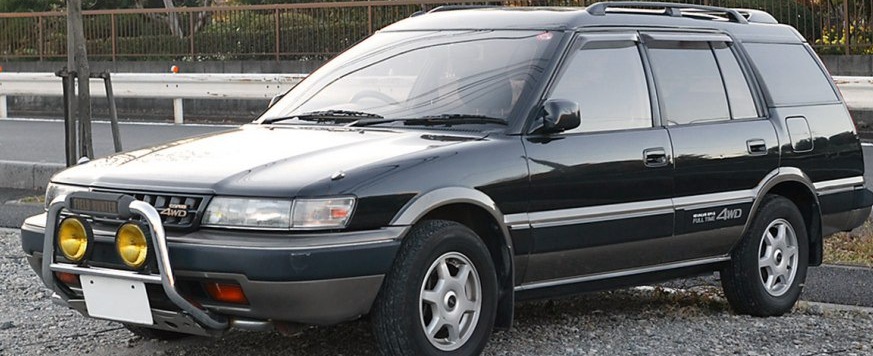
The Toyota Carib 1.6 i, produced from 1987 to 2002, represents a practical and relatively affordable entry point into the compact station wagon market, primarily aimed at buyers in Japan and Australia. Positioned within the broader Carib (also known as the Corolla Wagon in some markets) lineage, the 1.6 i variant offered a balance between fuel efficiency, usability, and a reasonable level of equipment. It served as a workhorse vehicle for families and small businesses, prioritizing functionality over outright performance. This model occupied the mid-range position in the Carib lineup, slotting below the more powerful engine options and above the base models with smaller displacement engines.
Technical Specifications
| Brand | Toyota |
| Model | Carib |
| Generation | Carib |
| Type (Engine) | 1.6 i (115 Hp) |
| Start of production | 1987 |
| End of production | 2002 |
| Powertrain Architecture | Internal Combustion engine |
| Body type | Station wagon (estate) |
| Seats | 5 |
| Doors | 5 |
| Fuel Type | Petrol (Gasoline) |
| Power | 115 Hp @ 6600 rpm |
| Power per litre | 72.5 Hp/l |
| Torque | 135 Nm @ 4800 rpm |
| Torque (lb-ft) | 99.57 lb.-ft. @ 4800 rpm |
| Engine layout | Front, Transverse |
| Engine Model/Code | 4A-FE |
| Engine displacement | 1587 cm3 |
| Engine displacement (cu. in.) | 96.84 cu. in. |
| Number of cylinders | 4 |
| Engine configuration | Inline |
| Cylinder Bore | 81 mm |
| Cylinder Bore (in.) | 3.19 in. |
| Piston Stroke | 77 mm |
| Piston Stroke (in.) | 3.03 in. |
| Compression ratio | 9.5:1 |
| Number of valves per cylinder | 4 |
| Fuel injection system | Multi-port manifold injection |
| Engine aspiration | Naturally aspirated engine |
| Valvetrain | DOHC |
| Engine oil capacity | 3 l |
| Engine oil capacity (US qt) | 3.17 US qt |
| Engine oil capacity (UK qt) | 2.64 UK qt |
| Coolant capacity | 5.6 l |
| Coolant capacity (US qt) | 5.92 US qt |
| Coolant capacity (UK qt) | 4.93 UK qt |
| Fuel tank capacity | 50 l |
| Fuel tank capacity (US gal) | 13.21 US gal |
| Fuel tank capacity (UK gal) | 11 UK gal |
| Drivetrain Architecture | Internal Combustion engine (ICE) drives the front wheels |
| Drive wheel | Front wheel drive |
Powertrain & Engine Architecture
The heart of the Carib 1.6 i is the 4A-FE engine, a 1.6-liter inline-four cylinder gasoline engine. This engine is a member of Toyota’s A-series engine family, known for its reliability and relatively simple design. The 4A-FE features a double overhead camshaft (DOHC) valvetrain operating four valves per cylinder, contributing to its respectable power output for its displacement. Fuel delivery is managed by a multi-port fuel injection system, optimizing combustion efficiency and reducing emissions. The engine’s 9.5:1 compression ratio strikes a balance between performance and fuel economy. The 4A-FE is a naturally aspirated engine, meaning it doesn’t utilize a turbocharger or supercharger to force air into the cylinders.
The 1.6 i variant was typically paired with a four-speed automatic transmission. This transmission, while not known for its sporty responsiveness, prioritized smooth shifts and ease of use, aligning with the Carib’s overall focus on practicality. The automatic transmission’s gear ratios were geared towards fuel efficiency and comfortable cruising, rather than rapid acceleration. Manual transmission options were available in other Carib trims, offering a more engaging driving experience but were less common in this specific configuration.
Driving Characteristics
The Carib 1.6 i with the automatic transmission delivers a comfortable, if not particularly exciting, driving experience. Acceleration is adequate for everyday driving, with 0-60 mph times estimated around 11-12 seconds. The automatic transmission provides smooth shifts, but can feel somewhat sluggish when attempting quick overtaking maneuvers. The engine’s torque peak at 4800 rpm means that drivers need to maintain a reasonable engine speed to access its full power. Compared to the manual transmission versions, the automatic suffers a slight performance penalty due to the transmission’s inherent efficiency losses. Against higher-powered Carib variants (such as those equipped with larger engines), the 1.6 i feels noticeably less responsive, particularly when fully loaded with passengers and cargo.
Equipment & Trim Levels
The 1.6 i trim level generally included features such as power steering, central locking, and basic audio system. Interior upholstery was typically cloth, with a durable and practical design. Dashboard configuration was straightforward and functional, prioritizing ease of use over aesthetic flair. Optional extras available for the 1.6 i could include air conditioning, upgraded audio systems, and power windows. Higher trim levels within the Carib range offered features like alloy wheels, more luxurious interior materials, and advanced audio systems.
Chassis & Braking
The Carib 1.6 i utilizes a MacPherson strut front suspension and a torsion beam rear suspension. This suspension setup provides a comfortable ride quality, absorbing bumps and irregularities in the road surface effectively. Braking is typically accomplished with front disc brakes and rear drum brakes. The braking system is adequate for normal driving conditions, but lacks the stopping power of more advanced braking systems found in higher-performance vehicles. Stabilizer bars were often included to reduce body roll during cornering, enhancing handling stability.
Market Reception & Comparison
The Toyota Carib 1.6 i was generally well-received by consumers seeking a practical and reliable station wagon. Critics praised its fuel efficiency and spacious interior, but noted its lack of sporting pretensions. Compared to other trims in the Carib lineup, the 1.6 i offered a more affordable entry point, making it accessible to a wider range of buyers. Fuel economy was a strong point, typically achieving around 28-32 mpg in mixed driving conditions. Reliability was also a key strength, with the 4A-FE engine proving to be exceptionally durable and long-lasting.
Legacy
The Toyota Carib 1.6 i, and the 4A-FE engine it utilized, have earned a reputation for long-term reliability. Many examples are still on the road today, testament to Toyota’s engineering quality. In the used car market, these vehicles are often sought after for their affordability and dependability. While not a collector’s item, the Carib 1.6 i remains a practical and economical choice for those seeking a simple, reliable station wagon. Maintenance costs are generally low, thanks to the readily available parts and the engine’s inherent robustness. The 4A-FE engine is known to withstand high mileage with proper maintenance, making it a popular choice for budget-conscious buyers.
